
If your sleep sounds like a lawnmower trying to start in February (snore… gasp… silence… repeat), you’re not aloneand you’re not imagining it.
Sleep apnea is common, underdiagnosed, and (rude of it) can make daytime you feel like you’re running on a phone battery stuck at 9%.
The good news: for many people, you don’t always need an overnight stay in a sleep lab to get answers. A home sleep apnea testoften called an HSATcan be a practical first step.
This guide walks through the at-home sleep apnea testing procedure, the benefits, the trade-offs, and what happens after the results.
You’ll also see real-world-style experiences at the end (composite stories based on common patterns) to make the whole thing feel less like a medical pamphlet and more like something a human would actually read.
First, a quick reality check: what sleep apnea is (and why testing matters)
“Sleep apnea” is an umbrella term for repeated breathing disruptions during sleep. The most common type is obstructive sleep apnea (OSA),
where the upper airway narrows or collapses and airflow dropsoften paired with loud snoring, choking/gasping, or restless sleep.
There’s also central sleep apnea, where breathing issues are driven more by the brain’s signaling to breathe.
The reason testing matters is simple: untreated sleep apnea can affect mood, learning, driving safety, athletic performance, and overall health.
And because symptoms can look like “I’m just tired,” it’s easy to blame school, work, stress, screens, or “my personality.”
A proper test helps turn “maybe” into a measurable answerso you can treat the right problem the right way.
Important: This article is informational, not personal medical advice. If you suspect sleep apnea, a clinician (often a primary care provider or sleep specialist)
can help you pick the right test and interpret the results in context.
What is a home sleep apnea test (HSAT)?
A home sleep apnea test is a simplified sleep study you do in your own bed. It focuses mainly on breathing-related signalslike airflow,
breathing effort, and oxygen levelsrather than capturing everything an in-lab study records.
Think of it as: “Let’s confirm whether your breathing is repeatedly getting interrupted,” not “Let’s map every stage of sleep and every movement.”
What HSAT usually measures
- Airflow (often through a small nasal cannula or sensor near the nose)
- Breathing effort (usually via belts around the chest/abdomen)
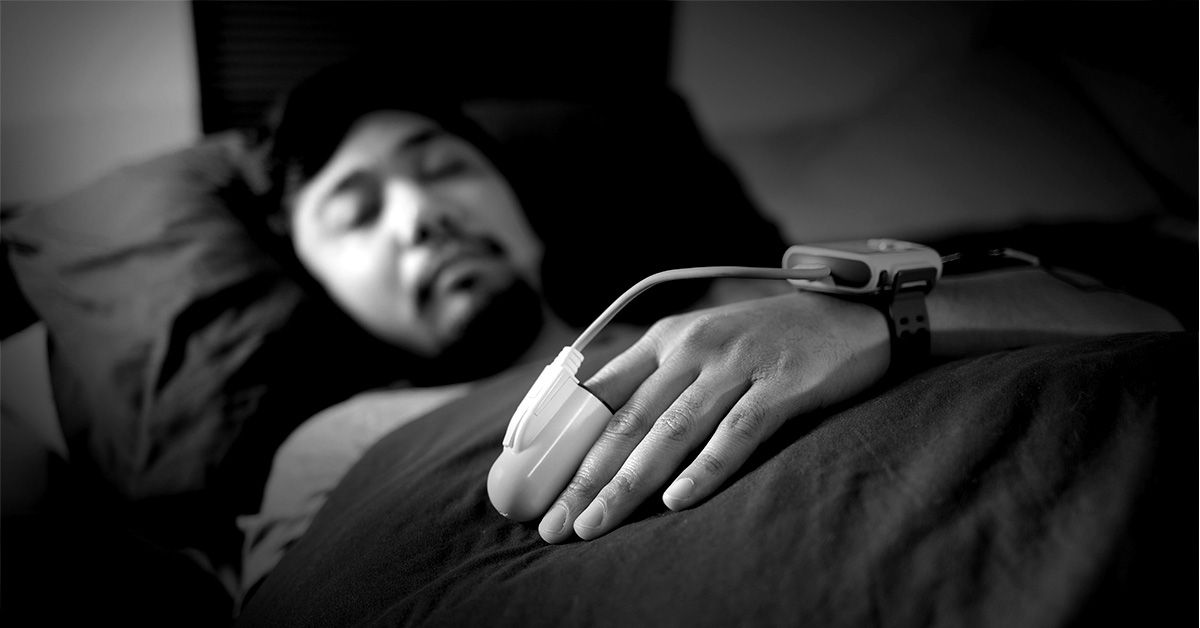
- Blood oxygen saturation (often a fingertip sensor)
- Heart rate (often through the same fingertip sensor)
- Body position (some devices track whether you sleep on your back, side, etc.)
Because many HSAT devices don’t record brain waves (EEG), they typically don’t confirm exact sleep stagesand may not know precisely when you’re asleep vs. awake.
That’s one reason a home test can miss milder cases or underestimate severity.
How HSAT compares to an in-lab sleep study (polysomnography)
An in-lab study (polysomnography) measures a broader set of signals, often including brain activity, eye movement, muscle tone, breathing,
oxygen levels, and leg movements. It’s the most comprehensive option and can diagnose a wider range of sleep disorders.
HSAT is narrower: it’s designed mainly to evaluate suspected obstructive sleep apnea in appropriate candidates.
Who is a good candidate for sleep apnea testing at home?
Home sleep apnea testing is generally intended for uncomplicated adults who have signs and symptoms suggesting
moderate to severe obstructive sleep apnea. It’s not meant to screen people who have no symptoms, and it’s not the best tool
when other medical conditions or other sleep disorders are in the mix.
People who often fit the “home test” bucket
- Loud snoring plus witnessed pauses in breathing (a partner notices the “stop… then gasp” pattern)
- Excessive daytime sleepiness, morning headaches, or waking unrefreshed
- High likelihood of obstructive sleep apnea based on symptoms and clinician evaluation
- Need for a more convenient, lower-burden diagnostic option than a sleep lab
When an in-lab sleep study is often the better (or safer) choice
A sleep specialist may steer you toward an in-lab study instead of HSAT if you have certain complicating factors or if the goal is to evaluate more than OSA.
Common examples include:
- Significant heart or lung disease
- Neuromuscular conditions that may affect breathing
- Chronic opioid use (can raise concern for certain breathing patterns during sleep)
- History of stroke
- Severe insomnia (when a home device may record lots of “time in bed” but not enough actual sleep)
- Suspicion of other sleep disorders (like narcolepsy, certain movement disorders, or parasomnias)
- Kids and teens: HSAT is generally discussed for adults; pediatric evaluation often uses different standards
Also: if a home test comes back negative, inconclusive, or technically messy, many guidelines recommend following up with an in-lab study
if clinical suspicion remains high. In plain English: if your symptoms are screaming “sleep apnea,” one imperfect home night shouldn’t be the final verdict.
Sleep apnea testing at home: the procedure (step by step)
Step 1: Start with a clinician visit (yes, even for a home test)
A proper HSAT is usually ordered after a clinician reviews your symptoms and medical historysometimes via telemedicine.
This matters because HSAT is best used when the question is “Do you likely have obstructive sleep apnea?” (not “What is every possible thing happening in my sleep?”).
Step 2: Get the device (pick-up or shipped)
Depending on the clinic and insurance setup, you may:
- Pick up the device from a sleep center or clinic, or
- Receive it by mail with instructions and return packaging
Step 3: Unbox the kit and do a low-stress practice run
Most home sleep apnea testing kits are designed to be user-friendly. Still, do yourself a favor:
open the kit earlier in the evening, not at midnight when you’re already tired and emotionally fragile.
Typical kit parts (varies by device):
- Nasal tubing/cannula or airflow sensor
- One or two elastic belts for chest/abdomen effort
- Finger sensor for oxygen/heart rate
- Small recorder unit (may clip onto clothing or sit by your bed)
- Instruction sheet and sometimes a troubleshooting guide
Step 4: Prepare for the night (keep it normal)
The goal is to capture a typical nightnot your “I’m auditioning for Perfect Sleeper of the Year” night.
- Avoid heavy alcohol use unless your clinician tells you otherwise.
- Try not to radically change caffeine habits the day of the test (unless you regularly avoid it at night anyway).
- Charge/confirm batteries if needed.
- Wash your face or finger if sensors need clean contact (lotions can interfere).
- Follow any clinic instructions about medications.
Step 5: Put on the sensors and start recording
This is the “astronaut cosplay” portion of the evening. The setup is usually quick once you’ve seen it once.
You’ll place the airflow sensor, attach belts, and put on the oxygen sensor, then start the device.
Pro tip: take a quick photo of your setup once everything looks right. If something comes loose at 3 a.m., you’ll have a referencebecause at 3 a.m.,
your brain is basically running on dial-up.
Step 6: Sleep (as best you can)
You can typically move and change positions. If a sensor pops off, reattach it if you wake up and notice.
Many people find the equipment mildly annoying at first, then forget about it.
Step 7: Return the device and wait for interpretation
After the test night, you’ll return the device (drop-off or mail-back). A trained professional downloads the data, checks for signal quality,
and a clinician interprets the results in the context of your symptoms.
Benefits of sleep apnea testing at home
1) Comfort and realism
Sleeping in your own bed can help you get a more typical night. No unfamiliar room, no new pillow, no wondering if the hallway light is judging you.
2) Convenience
For many people, the biggest barrier to diagnosis is logistics. HSAT reduces travel, scheduling hassles, and time away from school or work.
3) Often lower cost
While costs vary by location and insurance, home testing is often less expensive than an overnight lab study because it uses fewer resources.
(Translation: fewer specialized sensors, no overnight staffing, and less facility overhead.)
4) Faster path to treatment for the “right” patient
In uncomplicated adults with high suspicion of moderate to severe OSA, home testing can speed up diagnosis and treatment decisions.
Limitations (and why a “negative” home test isn’t always the end of the story)
HSAT is usefulbut it’s not a universal sleep detective. Limitations matter because they affect both accuracy and what the test can (and can’t) rule out.
HSAT may miss mild sleep apnea or underestimate severity
If a home test doesn’t accurately capture when you’re asleep, it may calculate breathing events across “time in bed,” which can dilute the event rate.
That can make sleep apnea look milder than it actually is, especially if you had a restless night.
HSAT usually doesn’t measure sleep stages
Many HSAT devices don’t track brain activity or sleep stages, so they can’t provide the same depth of information as polysomnography.
HSAT can’t diagnose every sleep disorder
If symptoms suggest something besides (or in addition to) obstructive sleep apnealike certain movement disorders, seizures during sleep,
or narcolepsyan in-lab study is often more appropriate.
Technical problems can happen
Sensors can slip. Batteries can die. A device can record half a night of excellent data… and half a night of “abstract art.”
If the test is technically inadequate, you may need to repeat it or move to an in-lab study.
Understanding your results: AHI, severity, and what the numbers generally mean
Many sleep apnea results center on a measurement called the apnea-hypopnea index (AHI),
which reflects how many breathing disruptions (apneas + hypopneas) occur per hour.
Some home tests report a closely related value based on recording time rather than confirmed sleep time.
In adults, commonly used AHI categories are:
- Normal: fewer than 5 events per hour
- Mild OSA: 5–14 events per hour
- Moderate OSA: 15–29 events per hour
- Severe OSA: 30+ events per hour
Numbers aren’t the whole story. Clinicians also consider symptoms, oxygen drops, sleep quality, and health history.
Two people can have the same AHI and feel very different during the day.
What if the home test is negative, but symptoms are strong?
This is where follow-up matters. If clinical suspicion remains high, many guidelines recommend an in-lab polysomnography
after a negative, inconclusive, or technically inadequate home test. In other words: don’t let one “meh” test night overrule
a pattern that’s been going on for months or years.
Home sleep apnea test vs. smartwatch vs. “I used a pulse ox once”
Consumer wearables and fingertip pulse oximeters can provide helpful clues, but they are not the same as a medical-grade HSAT interpreted by a clinician.
Wearables may flag trends (like frequent oxygen dips or unusual movement patterns), but they typically can’t confirm the full breathing-event picture
the way clinical testing can.
Pulse oximeters also have limitations and can produce inaccurate readings depending on conditions and device quality.
If a gadget is making you anxiousor giving you false reassurancebring the data to a clinician and ask what it means in context.
Practical tips for a smoother at-home sleep apnea test night
- Do a practice setup: Put on the sensors once before bedtime so you’re not learning under pressure.
- Secure the sensors: If allowed, use skin-safe tape where sensors tend to slip.
- Keep your routine: Go to bed around your usual time.
- Don’t overthink it: A “perfect” night isn’t requiredusable data is the goal.
- Write down anything unusual: Illness, terrible allergies, or a night of unusually little sleep can help interpretation.
What happens after diagnosis?
If results suggest obstructive sleep apnea, the next step is a treatment plan tailored to severity, symptoms, and preferences.
Common options include:
- CPAP/APAP therapy: Delivers air pressure to keep the airway open during sleep.
- Oral appliance therapy: A dental device that helps reposition the jaw/tongue in some cases.
- Positional strategies: For people whose apnea is worse on their back.
- Addressing nasal obstruction/allergies when relevant.
- Lifestyle and risk-factor changes (guided by a clinician), which may improve symptoms for some people.
- Further evaluation: If the picture is complex or symptoms don’t match the data.
If you’re a teen or you’re reading this for a teen: treatment decisions should go through a clinician experienced in pediatric or adolescent sleep medicine,
because thresholds and approaches can differ.
FAQ: quick answers people usually want
Can I buy a home sleep apnea test online?
Some services market home testing directly, but a reliable path usually involves clinician oversightboth to choose the right test and to interpret results properly.
A test without appropriate evaluation can lead to false reassurance, wrong conclusions, or missed conditions.
How accurate is a home sleep apnea test?
In the right candidatetypically an uncomplicated adult with a high suspicion of moderate to severe obstructive sleep apneahome testing can be quite useful.
It’s generally less detailed than an in-lab study, and it may miss mild disease or underestimate severity, which is why follow-up is important when symptoms persist.
What if I barely slept during the test?
Tell the clinic. A restless night can affect interpretation. Sometimes a repeat night or an in-lab study is the best way to get a clear answer.
Will insurance cover a home sleep apnea test?
Coverage varies by insurer and plan. Many insurers cover HSAT when it’s ordered appropriately and medically indicated.
Your clinic can often run benefits verification before you test.
Real-world experiences (composite examples) with at-home sleep apnea testing
The stories below are composite examples based on common experiences people reportnot one person’s medical journey.
They’re here to make the process feel less mysterious and to highlight practical “what it’s actually like” moments.
Experience 1: “I didn’t realize my ‘normal tired’ wasn’t normal”
One common experience is the slow creep: a person gets used to waking up exhausted, relying on coffee like it’s a personality trait,
and blaming everything elseschool stress, late-night scrolling, a busy schedule. Then someone (a parent, roommate, partner) mentions the snoring
and the weird pauses in breathing. The person thinks, “Sure, I snore… but who doesn’t?” Spoiler: not everyone stops breathing long enough
to make the room go silent like a dramatic movie scene.
With an at-home sleep apnea test, the biggest surprise is often how straightforward it is. The setup looks intimidating for five minutes,
and then it becomes: belt on, sensor on finger, little tube near the nose, press start, sleep. Many people say the first 20 minutes are the hardest
because they’re hyper-aware of the equipment… then they fall asleep and forget about it.
Experience 2: “The test night wasn’t perfectand that was okay”
Another frequent experience: the person worries they “ruined the test” because they woke up, tossed around, or got up to use the bathroom.
Here’s the realitysleep studies (including home studies) don’t require you to sleep like a meditation app model.
They need enough signal to capture breathing patterns across the night.
People often report one annoying moment: the finger sensor can feel like a tiny clamp that’s mildly offended by your existence.
Or the nasal tubing shifts if you roll onto your side. The workaround many people learn: spend two minutes at the start making sure the sensor wires
have slack and won’t tug when you move. Some say it helps to route wires under a loose shirt, so they don’t catch on bedding.
Experience 3: “Getting results felt validatingnot scary”
For many, the emotional punch isn’t fearit’s relief. There’s something grounding about a clinician saying,
“This isn’t you being lazy or dramatic. Your sleep is getting interrupted repeatedly, and that can absolutely make you feel awful.”
When results point to sleep apnea, people often describe it as finally having a name for the problem that’s been following them around.
And when results don’t show sleep apnea (or don’t fully explain symptoms), that can be helpful toobecause it redirects the next step.
In some cases, that means repeating the test, doing an in-lab study, or exploring other causes of fatigue.
The best experiences usually happen when people treat the HSAT as one data point in a bigger conversationnot a magic eight ball.
Experience 4: “Treatment didn’t feel like an instant personality transplantmore like a slow upgrade”
People sometimes expect that treatment (like CPAP) will turn them into a brand-new human after one night.
Some do notice a fast improvement, but a lot of people describe it as gradual: fewer morning headaches, less dozing off in class,
better mood stability, and energy that doesn’t vanish by mid-afternoon.
The most realistic “success stories” usually include small troubleshooting wins: adjusting mask fit, finding the right humidity setting,
learning that side-sleeping helps, or dealing with nasal congestion. It’s not glamorousbut it’s doable.
And for many, the at-home test is the first step that makes the rest of the path possible.
Conclusion
Sleep apnea testing at home can be an accessible, practical way to evaluate suspected obstructive sleep apneaespecially for uncomplicated adults
with strong symptoms. The procedure is usually simple, the benefits are real (comfort, convenience, often cost), and the limitations are manageable
when you treat HSAT as part of a clinician-guided process. If the results are unclear or don’t match the symptoms, that’s not failureit’s a signal
to level up to more comprehensive testing. Either way, getting tested is a step toward better sleep, better days, and fewer “why am I exhausted?”
moments on repeat.