
Pork chops have a reputation problem. One minute they’re juicy, golden, and living their best life.
The next minute? They’re as dry as a group chat after someone says “we need to talk.”
This recipe fixes thatby pairing thick, well-seared pork chops with a fast, fragrant tomato-and-garlic pan sauce that basically does the emotional labor for the whole dinner.
You get a one-skillet meal that tastes like you planned it days ago (you didn’tyou’re busy), with tomatoes that turn jammy,
garlic that smells like the best kind of trouble, and pork chops that stay tender because we cook them like grown-ups: by temperature, not vibes.
Let’s make something weeknight-easy that still feels a little “restaurant candlelight,” even if your dining room light is… your phone flashlight.
Why This Pork Chop Recipe Works
This dish is built on a few smart moves that show up again and again in the best pork chop techniques:
pick the right cut, season early, sear hard, then finish gently in a flavorful sauce.
Tomatoes bring acidity and sweetness, garlic brings attitude, and the fond (those browned bits in the pan) brings the “wow, what did you do?” factor.
- Thick chops stay juicier: A 1 to 1½-inch chop gives you time to brown the outside without overcooking the center.
- Dry-brining boosts flavor and moisture: Salting ahead helps season the meat deeper and improves texture.
- A quick tomato pan sauce protects the chops: Finishing in sauce reduces dryness risk and adds instant flavor.
- A thermometer ends the guessing game: Pork is best when cooked to a safe temp, then rested.
Recipe Snapshot
- Servings: 4
- Prep time: 15 minutes (plus optional dry-brine time)
- Cook time: 20 minutes
- Total time: About 35 minutes
- Skill level: Easy
- Best for: Weeknights, “I need dinner to feel like a win,” and people who love dipping bread in sauce.
Ingredients
For the pork chops
- 4 bone-in pork chops, 1 to 1½ inches thick (or thick-cut boneless)
- 1½ to 2 teaspoons kosher salt (plus more to taste)
- ½ teaspoon black pepper
- 1 teaspoon sugar (optional, helps browning and balances acidity)
- 1 to 2 tablespoons olive oil
For the tomato garlic sauce
- 1 small onion, thinly sliced or finely chopped
- 6 cloves garlic, minced (yes, sixthis is a garlic-friendly household)
- 2 cups chopped fresh tomatoes or 1 pint cherry/grape tomatoes, halved
- 1 tablespoon tomato paste (optional, for deeper tomato flavor)
- ½ cup low-sodium chicken broth (or water in a pinch)
- 1 teaspoon dried oregano or 1 tablespoon chopped fresh oregano/basil
- ¼ teaspoon red pepper flakes (optional, for a gentle kick)
- 1 to 2 teaspoons balsamic vinegar or fresh lemon juice (for brightness)
- 2 tablespoons chopped fresh basil or parsley
- 1 tablespoon butter (optional, for a glossy finish)
Ingredient Notes and Smart Swaps
Bone-in vs. boneless
Bone-in pork chops tend to cook a bit more forgivingly and often come with a helpful fat edgeaka flavor insurance.
Boneless works great too, especially if they’re thick-cut. If your chops are thin, see the “thin chop rescue plan” below.
Fresh tomatoes vs. canned
Fresh tomatoes give you a brighter, lighter sauceperfect when you want a clean, garlicky tomato vibe.
If tomatoes are out of season, you can use canned diced tomatoes (drain lightly if they’re very wet) and simmer a few minutes longer.
For extra richness, the optional tomato paste is your secret weapon.
Garlic: minced, sliced, or smashed?
Minced garlic melts into the sauce and perfumes everything. Thin slices give you sweet little garlic ribbons.
Smashing cloves gives a softer, gentler garlic flavor. Any of these workjust don’t burn it.
Burnt garlic tastes like regret.
Step-by-Step: Pork Chops With Tomatoes and Garlic
1) Optional (but excellent): Dry-brine the pork chops
Pat the chops dry. Season both sides with kosher salt, pepper, and (if using) the sugar.
Place on a plate or small rack and refrigerate uncovered for at least 45 minutes (or up to overnight).
If you’re short on time, even 15 minutes helpsjust keep going.
2) Bring chops closer to room temp
If your chops were in the fridge, let them sit on the counter for 10 to 15 minutes while you prep the onion, garlic, and tomatoes.
This helps them cook more evenly. (Translation: fewer “why is the outside done but the middle still cold?” moments.)
3) Sear for a golden crust
Heat a large skillet (cast iron or stainless steel is ideal) over medium-high heat. Add olive oil.
When the oil shimmers, add the pork chops. Sear 3 to 5 minutes per side, depending on thickness,
until deeply browned. If your chops have a fat cap, use tongs to briefly sear the fat edge too.
Transfer chops to a plate. They won’t be fully cooked yetand that’s perfect.
Leave the browned bits in the pan. That’s not “mess.” That’s flavor.
4) Build the tomato-garlic pan sauce
Lower heat to medium. Add onion to the same pan and cook 2 to 3 minutes, stirring,
until it softens and picks up the browned bits. Add garlic and cook 30 seconds, just until fragrant.
Add tomatoes and oregano. Cook 3 to 6 minutes, stirring occasionally, until the tomatoes soften and release juices.
If using tomato paste, stir it in now and cook 30 seconds to bloom the flavor.
5) Deglaze and simmer
Add the broth and scrape the bottom of the pan to dissolve the fond into the sauce.
Simmer 2 minutes. Taste, then season with a pinch of salt and pepper if needed.
Add red pepper flakes if you want a gentle heat.
6) Finish the chops in the sauce (the juicy part)
Nestle the pork chops back into the skillet, along with any juices on the plate.
Spoon some sauce over the top, reduce heat to medium-low, and simmer gently until the chops reach
145°F in the thickest part (avoid the bone).
For thick chops, this usually takes 5 to 8 minutes. For boneless, it can be slightly faster.
If the sauce thickens too much, splash in a little more broth.
7) Rest, finish, and serve
Turn off the heat. Remove the chops to a plate and let them rest 3 minutes.
Stir basil/parsley into the sauce. If you want a silky finish, stir in the butter until glossy.
Add balsamic vinegar or lemon juice a little at a time to brighten the sauce.
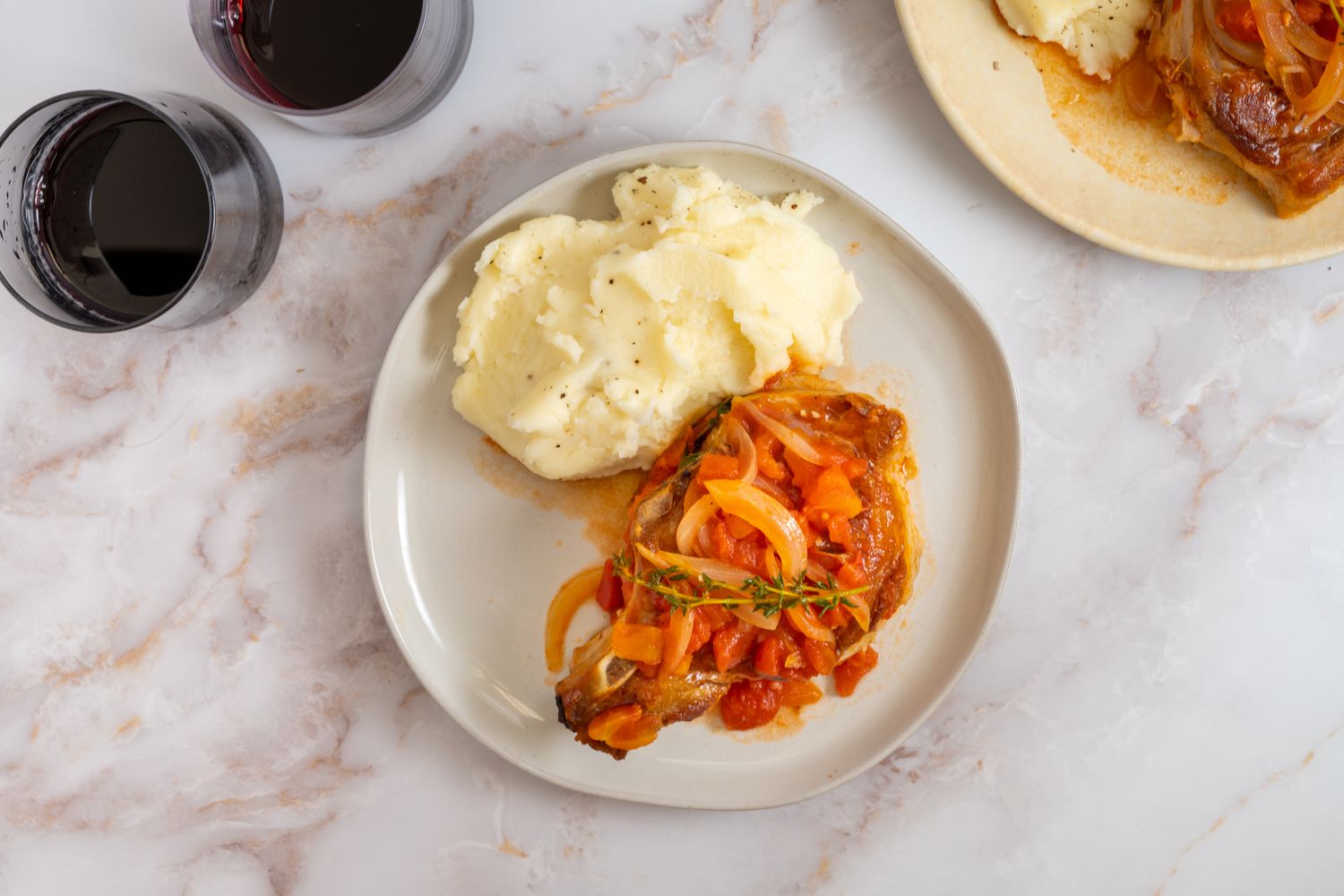
Serve pork chops topped with the tomato garlic sauce. And pleaseconsider bread for “sauce cleanup.”
It’s not optional. It’s a lifestyle.
Thin Chop Rescue Plan (Because It Happens)
If your pork chops are under ¾-inch thick, they can overcook quickly.
Here’s how to keep them from turning into pork-flavored coasters:
- Sear fast: 1½ to 2 minutes per side, just to brown.
- Pull early: Don’t simmer them long in saucebriefly warm them through at the end.
- Use the thermometer: Pull at 140–145°F and rest. Carryover heat finishes the job.
- Make extra sauce: More sauce covers a multitude of sins (and tastes amazing).
Flavor Variations (Pick Your Mood)
Italian-style comfort
Add a pinch of crushed fennel seed and serve with polenta or pasta.
Finish with extra basil and a sprinkle of grated Parmesan.
Spicy tomato-garlic
Increase red pepper flakes or add a small diced jalapeño with the onion.
The tomatoes mellow the heat, so you can be bold without setting off alarms.
Olive and caper punch
Stir in a tablespoon of capers and a handful of sliced olives at the simmer stage.
It turns the sauce briny and brightgreat if you love big flavors.
Extra cozy (tomato “gravy”)
Add another tablespoon of tomato paste and simmer 5 to 8 minutes longer.
The sauce thickens into something you’ll want to spoon over everything in your zip code.
What to Serve With Pork Chops With Tomatoes and Garlic
- Garlic mashed potatoes: Classic pairingsoaks up sauce like a champ.
- Rice or orzo: Easy, neutral base that lets the tomato-garlic sauce shine.
- Crusty bread: For dipping and dramatic sighing.
- Roasted broccoli or green beans: A crisp vegetable balances the saucy vibe.
- Simple salad: Something lemony and fresh keeps the meal from feeling heavy.
Common Mistakes (and How to Avoid Them)
Overcooking the chops
Pork chops dry out when they go too far past the target temperature.
A digital thermometer is the easiest upgrade you can make. Pull at 145°F, rest, and you’ll get tender chops.
Burning the garlic
Garlic cooks quickly. Add it after the onion softens and keep it moving.
If it starts browning aggressively, lower the heat immediately.
Watery sauce
Some tomatoes release a lot of liquid. Simmer longer, add a spoonful of tomato paste,
or finish with butter to help the sauce feel fuller and silkier.
Storage and Reheating
Refrigerator
Store pork chops and sauce together in an airtight container for up to 3 to 4 days.
The flavors get even better overnighttomato-garlic sauce is a “glow up” kind of sauce.
Freezer
Freeze in a freezer-safe container for up to 2 to 3 months.
Thaw overnight in the refrigerator for best texture.
Reheating without drying out
Reheat gently in a covered skillet over low heat with a splash of broth or water.
Microwaving works toouse medium power and stop as soon as the chops are warmed through.
High heat is where tenderness goes to disappear.
FAQ
Can I bake instead of simmering on the stove?
Yes. After searing, build the sauce in an oven-safe skillet, nestle chops in,
and bake at 375°F until the chops reach 145°F. This is especially helpful for extra-thick chops.
Can I use pork loin chops, rib chops, or shoulder chops?
Rib chops and center-cut loin chops are ideal for quick cooking. Shoulder chops have more connective tissue
and can be tougher; they’re better for longer braising. If you use shoulder chops, simmer them low and slow.
My sauce tastes too acidicwhat now?
Add a small pinch of sugar, a knob of butter, or a splash more broth.
Also make sure you salted enoughsalt doesn’t just make things salty; it makes tomato flavor feel rounder.
My sauce tastes flatwhat’s missing?
Usually one of three things: salt, acidity (lemon or balsamic), or herbs.
Add a little at a time, taste, and repeat until it tastes like you meant it.
Conclusion
Pork Chops With Tomatoes and Garlic is the kind of recipe that makes you feel like a competent adulteven if your “plan” was just
opening the fridge and hoping inspiration would jump out.
You get crisp-edged, juicy chops, a garlicky tomato sauce that tastes like it simmered all day (it didn’t),
and an easy method you can remix a dozen ways depending on what’s in your kitchen.
The real magic is how practical it is: one pan, straightforward ingredients, and a foolproof finish line (145°F plus a short rest).
Make it once, and it’ll quietly join your weeknight “repeat forever” list.
Kitchen Experiences: What You’ll Notice When You Make This Dish (and Why It Matters)
Cooking Pork Chops With Tomatoes and Garlic tends to teach you a few things the fun wayby smell, sound, and the occasional
“wait, that actually worked?” moment. First, the sear. When the chops hit a hot pan, you’ll hear that confident sizzle that basically says,
“Relax, I’ve got this.” If you don’t hear it, the pan probably isn’t hot enough, and you’ll end up steaming instead of browning.
Browning matters here because it’s what makes the final sauce taste deeper and more savory once those browned bits dissolve into it.
Then comes the tomato transformation. Fresh tomatoes start out firm and a little shy, but once they warm up, they collapse into something
saucier and sweeter. Cherry tomatoes, especially, tend to burst dramaticallylike tiny flavor balloonsso you’ll see pockets of juice pooling
in the pan. That’s good. That liquid picks up garlic, oregano, and fond, and suddenly your “simple sauce” tastes like it has a backstory.
If your tomatoes aren’t very sweet (hello, winter grocery store tomatoes), you’ll probably notice the sauce tasting sharper.
That’s where a small pinch of sugar or a little butter can make everything feel more balanced without turning it sweet.
Garlic is the star, but it’s also the diva. You’ll notice it goes from “fragrant and wonderful” to “why does it smell bitter?”
in what feels like one dramatic blink. The trick is to add it after the onions soften and keep it moving30 seconds is often enough.
When you get it right, the kitchen smells warm and savory, like the kind of dinner people magically show up early for.
When you get it wrong, the smell is… let’s call it “motivational,” because it motivates you to pay closer attention next time.
Another common experience: realizing how much the thermometer changes your confidence. Without it, you might poke a chop,
stare at it, and start negotiating with fate. With it, you simply check the thickest part and pull the meat at the right moment.
You’ll also notice how resting changes texture. Cutting immediately makes juices run out and the chop feels drier.
Letting it sit those few minutes makes the meat feel tender and more evenly juicy when you slice.
Finally, you’ll learn what “brightness” means in a saucenot as a vibe, but as a flavor.
A splash of lemon juice or a tiny drizzle of balsamic at the end can make the tomato taste fresher and the pork taste richer at the same time.
Many home cooks describe this as the moment the dish goes from “good” to “why does this taste like a real recipe?”
And once you’ve felt that click, you’ll start using the same finishing move on other skillet dinners too.
That’s the sneaky bonus: this recipe doesn’t just feed youit upgrades your instincts.