
On Valentine’s Day, 1900, a group of schoolgirls in crisp white dresses head out for a day trip to a strange volcanic outcrop in the Australian bush. Some of them never come back. No one can explain exactly what happenedand for almost sixty years after Joan Lindsay published
Picnic at Hanging Rock, readers and viewers have been arguing about it, ranking it, and quietly rewatching it after dark to see if they missed a clue.
Today, Picnic at Hanging Rock is more than a mystery. It’s a novel, a landmark 1975 film, a 2018 TV miniseries, multiple stage adaptations, and a kind of cultural Rorschach test. Is it a ghost story? A parable about colonialism? A coming-of-age tragedy in a corset? Or just a really good excuse never to sit on a rock ledge without checking what’s behind you?
In this in-depth guide, we’ll look at how Picnic at Hanging Rock ranks among Australian and world cinema, what critics and fans really think of it, why it remains so divisive, and how the novel, film, and TV series stack up. Then we’ll close with a longer, experience-based section about actually watching (and even visiting) Hanging Rockbecause opinions are one thing, but goosebumps are another.
From Mysterious Novel to Global Cult Classic
Joan Lindsay’s uncanny little book
Joan Lindsay published Picnic at Hanging Rock in 1967, framing it as a kind of “found” historical account of a school picnic gone wrong in 1900. The book never clearly admits whether it’s fact or fiction, which has helped fuel decades of pub debates, school essays, and late-night internet rabbit holes.
On the surface, the story is simple: Appleyard College, an exclusive girls’ school in rural Victoria, takes students on a St. Valentine’s Day excursion to Hanging Rock. Four girls and one teacher climb higher than they’re supposed to. Only one girl returns, hysterical and unable to remember what happened. After that, the schooland the broader colonial community around itslowly comes apart.
Critics often file the novel under “Australian Gothic.” The landscape isn’t just a backdrop; it’s a character with moods. The rock is described as ancient, indecipherable, and faintly hostile to the neat white gloves and manners of Edwardian settlers. Underneath the book’s polite narration lies a deep unease about colonial intrusion, repressed sexuality, and the limits of rational explanation. We never get a neat solution, and that’s the point: the mystery exposes how fragile the orderly British world really is.
Peter Weir’s film that changed Australian cinema
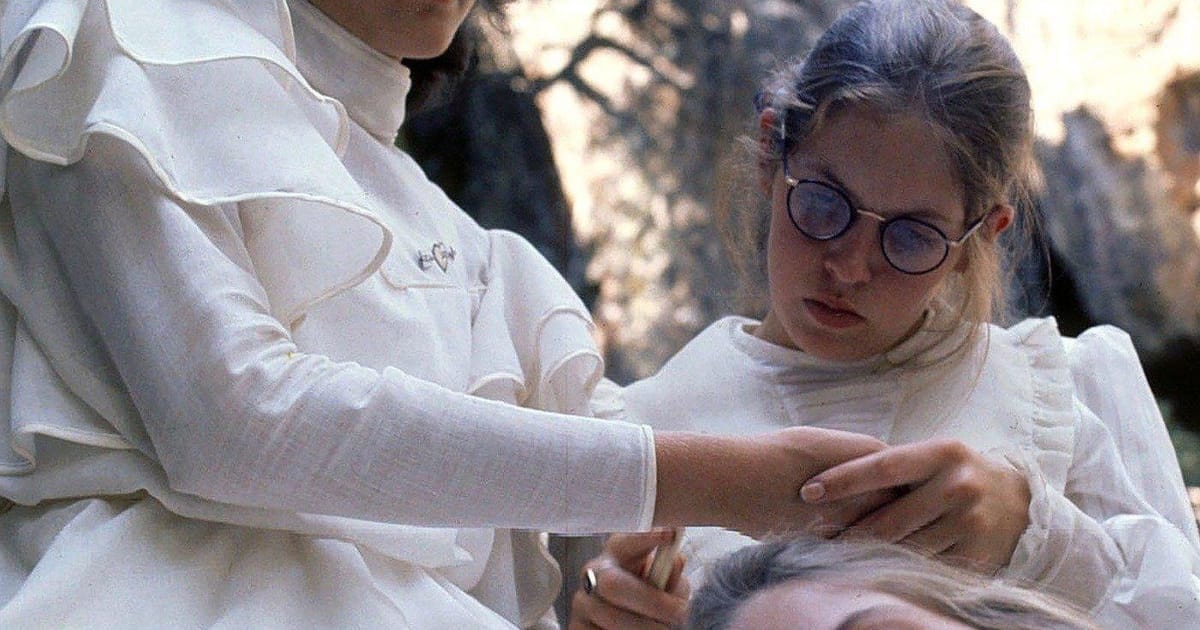
Most people outside Australia first met the story through Peter Weir’s 1975 film adaptation. Shot with hazy, dreamlike lenses and a soft, pastel palette, the movie turns the story into something that feels like half-remembered memory. Pan flutes and distant bird calls float over images of girls in lace drifting through the scrub, while the rock towers in the background like a patient, unblinking witness.
The film was a breakout hit of the Australian New Wave, a burst of 1970s movies that put Australia firmly on the global cinema map. It was a commercial success at home and abroad and later topped a major mid-1990s poll as the “best Australian film of all time,” voted on by critics, academics, and film industry professionals. That’s not just good; that’s “national treasure” territory.
Internationally, the movie has aged remarkably well. Review aggregators still show sky-high critic approval scores and “universal acclaim.” Critics single out its intoxicating visuals, ambiguous storytelling, and refusal to explain itself as the reasons it still feels so modern. The film has been restored, re-released, and re-evaluated multiple times, including a recent 4K restoration that sent it back into cinemas for a new generation to argue about.
How High Does Picnic at Hanging Rock Rank?
National treasure: greatest Australian film lists
If you look at rankings of Australian cinema, Picnic at Hanging Rock is about as unavoidable as sunscreen in an Aussie summer.
- In a major 1990s poll coordinated by film institutions and critics, it was voted the best Australian film ever madeahead of other heavyweights like Gallipoli and Wake in Fright.
- Modern “100 greatest Australian films” lists continue to place it near the top, typically in the upper tier alongside landmark titles that define the national film identity.
- On global ranking platforms, it usually lands in strong company, often labeled a must-see art-house mystery and a cornerstone of the Australian New Wave.
That’s significant. It’s not just that the film is loved; it’s become shorthand for a certain idea of Australiawide skies, unsettling nature, polite surfaces, and weirdness lurking under the gum trees.
Critics’ scores and modern reception
Decades after its release, the film still pulls in glowing reviews. On Rotten Tomatoes, it sits in the 90-plus percent range for critics, with an average rating well above 8 out of 10 and a consensus that calls it visually mesmerizing, moody, and enigmatic. Metacritic gives it an “universal acclaim” metascore in the low 80s, a label usually reserved for top-tier classics.
What’s interesting is that these scores aren’t just a nostalgia bubble. New reviews appear when restorations and anniversaries roll around, and younger critics echo much of what their 1970s predecessors said: the film doesn’t behave like a normal whodunnit. Instead of clues and reveals, it offers texturespanicked breathing, sun-bleached grass, corset laces, and the crunch of boots on stone. Some reviewers describe it as hypnotic; others confess that they went in expecting a tidy mystery and had to recalibrate once they realized the film would never “explain itself.”
How fans rate it
Audiences overall like the filmbut it’s not as universally adored by viewers as it is by critics, and that gap is where many of the most interesting opinions live.
On user-rating platforms, the film typically sits in the high-7s out of 10, which is very solid but not quite in the “everyone agrees this is perfect” zone. That’s partly because the movie breaks a lot of mainstream expectations. If you’re used to tightly plotted thrillers, its deliberate pacing and lack of resolution can feel slow or “thin,” as one modern reviewer put it.
Among fans, common talking points include:
- The atmosphere. Viewers rave about the feeling of the film: the uncanny silence at the rock, the way time seems to melt, the contrast between strict school rules and the wild landscape.
- The ambiguity. People either love that the mystery is never solved, or they absolutely do not. Entire comment threads are basically “I adore that we never find out” versus “I waited two hours for… vibes?”
- The performances. Particular praise goes to Rachel Roberts as the severe school headmistress, and to the haunting, almost otherworldly presence of Miranda, the golden girl who seems to belong to the rock more than to the school.
Put simply, critics tend to rank the film higher than general audiencesbut even viewers who don’t fall in love with it usually admit that it gets under their skin and stays there.
What Makes Picnic at Hanging Rock So Divisive?
The power (and frustration) of no answers
Most mysteries offer comfort. They tell you: yes, the world is dangerous, but with enough clues and cleverness, everything can be explained. Picnic at Hanging Rock does the opposite. It suggests there are places and events that cannot be neatly filed under “solved.”
The novel deliberately withholds information, dropping hints about lost time, faulty watches, and strange sensations at the rock, then walking away. The film amplifies this by lingering on shots where nothing “happens” except the sound of wind and insects. Even the later discovery of an “alternative final chapter” to the novel, which attempts to explain the disappearance, hasn’t settled anythingmany readers find that explanation less satisfying than the original mystery and treat it as an optional extra rather than canon.
For some viewers, this unresolved quality feels profound, even spiritual. For others, it feels like a broken promise. Your ranking of the story will probably depend on whether you see ambiguity as elegant or infuriating.
A Gothic lens on colonial Australia
Underneath the lace and parasols, the story is deeply political. Scholars read it as a Gothic take on colonization: European settlers bring rigid rules, religion, and architecture to a land they don’t fully understand, and that land quietly resists them.
Hanging Rockknown as Ngannelong to local First Nations communitieshas a long Indigenous history. Modern stage adaptations and critical essays have increasingly foregrounded this, exploring how the girls’ disappearance might symbolically echo the violence and silencing that accompanied colonization. In some interpretations, the rock doesn’t “attack” the girls; instead, the story reveals how settlers projected fear and fantasy onto a landscape they built their fortunes on but never truly listened to.
Visual style: lace, sunlight, and menace
One reason the film ranks so highly is purely visual. Cinematographer Russell Boyd helped create an ethereal look using diffusion filters and soft lighting that make the scenes feel like old photographs briefly coming to life. The white dresses, straw hats, and corsets against rough stone and scrubby trees create a contrast that fashion designers, photographers, and filmmakers have been quoting ever since.
Directors like Sofia Coppola have openly cited Picnic at Hanging Rock as an influence, especially in works like The Virgin Suicides, which share its blend of adolescence, danger, and sun-drenched melancholy. That stylistic impact keeps the film high in critical rankings even for viewers who are less invested in the mystery itself.
Novel vs. Film vs. 2018 TV Series: Which Ranks Highest?
The original novel
For literary readers, the 1967 novel often ranks highest. It allows more room for internal states, small social observations, and subtle humorthe narrator occasionally undercuts the school’s stiff propriety with quiet irony. The book also builds a stronger sense of Appleyard College as a failing social experiment, full of fragile hierarchies that collapse after the picnic.
That said, some modern readers find the novel’s pacing uneven and its characters more sketched than deeply explored. If you want clear psychological portraits, you may prefer the later TV adaptation.
The 1975 film
Among critics and casual viewers alike, the film usually ranks top of the pile. It distills the essence of the bookthe mystery, the landscape, the tension between order and chaosinto a lean, visually driven experience. Whole subplots and characters are trimmed away so the movie can focus on the schoolgirls, the rock, and the immediate fallout.
The director’s cut, released decades after the original, removes several minutes and streamlines things even further. Some purists prefer the longer theatrical version; others feel the shorter cut intensifies the dreamlike quality. Either way, when people make “best of” lists, they overwhelmingly mean the film.
The 2018 TV miniseries
The 2018 TV version, starring Natalie Dormer, arrives in a very different cultural moment and leans into more explicit psychological and social themes. It expands backstories, diversifies the cast of perspectives, and spends more time on the inner lives of characters like headmistress Mrs. Appleyard.
Critical and fan rankings of the series are more mixed than for the film. Reviewers praise its lush production design and its willingness to explore sexuality, class, and power in ways that the original film only implied. However, some also argue that turning a mysterious, elliptical story into a multi-episode drama makes the pacing feel stretched and occasionally heavy-handed. Depending on your tastes, that extra detail either enriches the mythos or over-explains it.
If you’re new to the story, a common route is: watch the 1975 film first, then explore the series and the novel if you’re craving more time in that unsettling world. If you’re a reader who loves ambiguous literary fiction, starting with the book can be even more rewarding.
Where Should You Start? A Quick Guide for New Viewers
Because rankings and opinions are so varied, here’s a quick cheat sheet:
- You love art-house cinema and don’t mind slow burns: Go straight to the 1975 film. Watch it in a dim room with no distractions and let it wash over you.
- You’re a reader who enjoys eerie classics: Start with the novel, then use the film as a visual companion piece.
- You prefer serialized storytelling and deeper character arcs: Try the 2018 miniseries, then circle back to the film to see where the whole phenomenon began.
- You just want to know what happened: Honestly, this might not be your story. But you can always read the “lost” final chapter and decide whether you accept its explanation or keep the mystery intact.
However you approach it, expect to have an opinion afterwardsmaybe even a very strong one. That’s part of why Picnic at Hanging Rock keeps appearing in rankings year after year: people don’t just watch it; they debate it.
Experiences: Living With the Mystery of Hanging Rock
Rankings and scores tell you how a story performs on paper. Experiences tell you what it feels like to live with it. With Picnic at Hanging Rock, those experiences can be surprisingly intense.
The first time you watch the film, you might spend the opening act trying to decode it like a puzzle. You note the stopped watches, the odd behavior of animals, the way the girls seem drawn up the rock as if in a trance. You mentally file away small details for later: the geometry lesson about time, the Valentine’s Day symbolism, the way Miranda is framed like some mythic creature instead of a normal teenager.
Then the movie ends… and no final explanation arrives. The credits roll. You stare at the screen, slightly annoyed and slightly enchanted. In that moment, you understand why this story divides people: it refuses to pay off the way genre conventions say it should. Instead, it leaves you alone with your thoughtsand if you’re honest, maybe with a few of your own fears about control, nature, and the unknown.
On rewatch, the experience changes. You’re no longer focused on “solving” the mystery, so you notice the smaller textures. Mrs. Appleyard’s barely contained panic. The way the teachers’ authority cracks when faced with something they can’t discipline or expel. The quiet despair of the girls who don’t disappear, condemned to live in a community that suddenly feels cursed. You start to see the story less as a whodunnit and more as a slow emotional landslide.
Watching with friends is its own kind of fun. Someone will always try to offer a theoryaliens, parallel dimensions, spiritual ascension, you name it. Another friend will insist that the rock is simply a metaphor and nothing supernatural happens at all. A third will mostly talk about the costumes. By the end of the night, you’ve basically held a mini film-studies seminar in your living room.
Then there’s the real Hanging Rock, in Victoria. If you ever visit, you’ll find a very tangible landscape behind all the myths: a reserve with walking trails, lookouts, and a climb that’s steep in places but manageable for most reasonably fit visitors. Families picnic on the grass, kids race up the paths, and hikers pose for photos on the outcrops. On a bright day, it can feel lively and cheerful, with barbecues sizzling and magpies eyeing your snacks.
And yet, if you step away from the crowds and find a quieter nook among the rocks, the atmosphere can shift. The wind whistles strangely through the formations; shadows fall in sudden, jagged shapes. It’s easy to see how someone like Joan Lindsay could sit there, half in the sun and half in the shade, and imagine a story where time bends and people simply slip out of the known world.
Reading or watching Picnic at Hanging Rock after such a visit adds another layer. The places described stop being hypothetical. When a character leans against a boulder or looks down over the plain, you know exactly what that view feels likethe space, the height, the sense that the rock was there long before you and will be there long after.
Ultimately, whether you rank Picnic at Hanging Rock as an all-time masterpiece or a beautiful curiosity, the experience tends to linger. You might forget the exact critic scores, but you remember a girl in a white dress walking calmly toward a gap in the rocks, as if answering a call you can’t quite hear. That image alone is enough to keep the story high on lists and permanently lodged in the cultural imagination.
Conclusion: Why Picnic at Hanging Rock Still Matters
In an era of spoiler-filled trailers and endlessly explained cinematic universes, Picnic at Hanging Rock stands out because it refuses to tidy itself up. Its rankingstop tier on “best Australian films” lists, strong critical scores, and steady fan admirationreflect more than technical quality. They reflect a work that risks leaving viewers unsettled and trusts them to sit with that feeling.
Whether you meet the story on the page, the screen, or the stage, it invites you to think about what gets lost when a culture demands clear answers for everything. It hints that some mysteries are worth preservingnot because they hide a solution, but because they reveal something about us. And that, more than any single ranking number, is what keeps Picnic at Hanging Rock near the top of so many lists and so deeply lodged in so many imaginations.