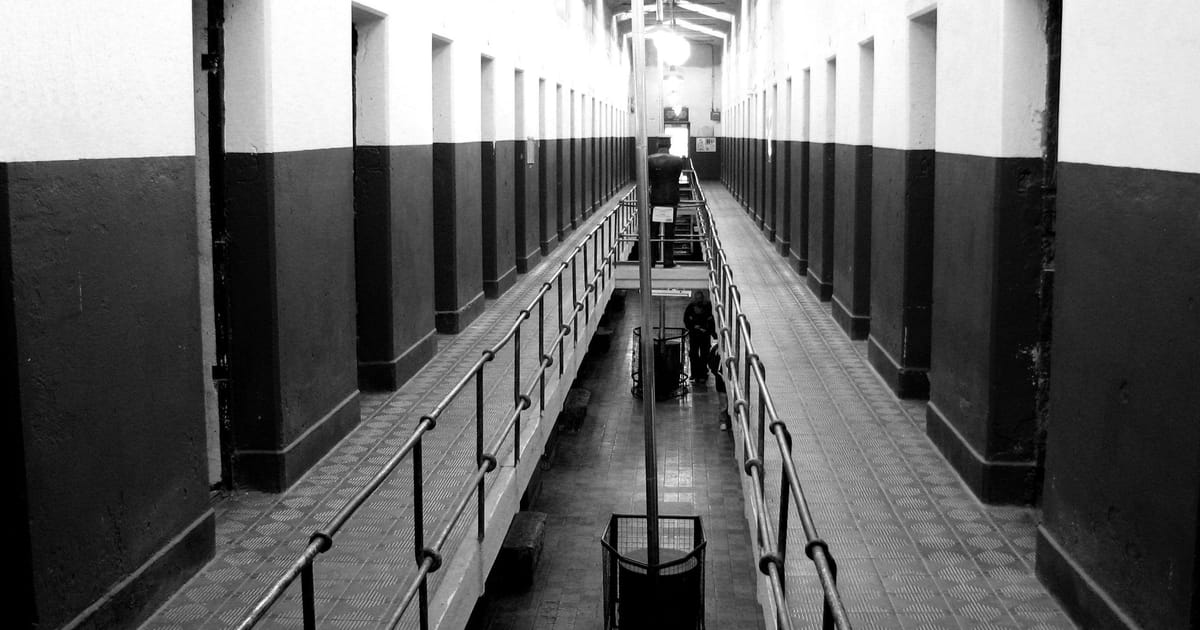

Undercover work in a correctional facility sounds like a Hollywood plot: a tough hero, a secret mission, and a dramatic reveal. Real life is less cinematic and more… fluorescent. What people consistently describewhether they volunteered for a jail “inmate” program, embedded as staff, or reported from the edges of the systemis a world built on routines, invisible rules, and the constant tension between boredom and danger.
Note: This article summarizes patterns and lessons reported in reputable U.S. journalism, research, and official oversightwithout glamorizing violence or offering “how-to” tips.
Quick reality check: “prison” isn’t always prison
When people say they went “undercover in prison,” a lot of the time they mean county jail: the place where many people are held pretrial (they haven’t been convicted yet) or serve shorter sentences. That matters, because jail life tends to be faster-moving, more chaotic, and more crowded in ways that feel unpredictable day-to-day.
And the numbers explain why undercover projects end up in jails so often. The United States holds hundreds of thousands of people in local jails on any given day, and a huge share are there pretriallegally innocent, waiting for court. Meanwhile, state and federal prisons hold well over a million people, with different rhythms and longer timelines.
So if you’ve ever read a first-person “this is what it’s like inside” story and wondered why it feels like a bizarre blend of DMV lines and survival chess… it’s because it often is.
Why go undercover at all?
Undercover efforts show up for three big reasons:
- To expose blind spots: contraband routes, unsafe housing areas, weak supervision, or staff shortages.
- To capture lived reality: what daily life feels like when doors control your time, your food, your calls, your sleep.
- To push reform with receipts: oversight reports and investigations can be hard to ignore when they come with concrete examples.
What hits first: the intake machine
People who’ve gone undercover routinely describe the same opening punchless “scared straight,” more “processed.” Intake is a conveyor belt of forms, property rules, waiting, and uncertainty. You’re not fully “in” yet, but you’re not out either. Time stops being yours almost immediately.
Then come the sensory details that stick: the slam of doors that sounds like punctuation, the echo that makes every cough feel public, the bright lights that never quite let your brain settle, and the feeling that your body has become an item on a checklist.
Even without describing specific procedures, it’s important to say this plainly: a modern facility is supposed to be governed by policy and standardsespecially around sexual safety and staff conduct. But what people experience can still depend heavily on staffing, supervision, and culture.
The undercover mind game: “act normal” is not a real instruction
In the outside world, “be normal” is easy. Inside a jail or prison, “normal” is a local dialect you don’t speak yet. Undercover participants have described how quickly they realize that the goal isn’t to look toughit’s to avoid looking confused.
Confusion draws attention. Attention draws questions. And questions are the last thing you want when you’re trying to blend into a place where everyone has time… and curiosity… and a very accurate radar for weird behavior.
The social math: respect, space, and the rules nobody posts on the wall
Undercover accounts often sound like this: “I expected violence; I didn’t expect etiquette.” Not polite etiquettecorrectional-facility etiquette. The kind that’s less about manners and more about keeping the air from catching fire.
People describe an environment where small actions carry weight: where you sit, how you look at someone, whether you cut a line, whether you “borrow” something without asking. Most conflict doesn’t start as a movie-style confrontation. It starts as a tiny disrespect that grows legs.
The surprising part? Many describe a kind of informal order that exists alongside official control. It doesn’t mean the place is safe. It means people improvise stability because instability is exhausting.
Everyone is watchingbecause there’s nothing else to do
A lot of undercover participants say the hardest part wasn’t fear; it was the awareness that you’re always being observed. In a locked environment, information becomes currency. If you don’t have cash, time, or privacy, you trade in stories, reputations, and access.
Time is the boss: monotony, lockdowns, and the tyranny of routines
Here’s the part that disappoints action-movie fans and devastates actual humans: people inside often describe prison/jail as a monotony engine. Your day is broken into small chunks controlled by keys, counts, and schedules.
Even when nothing dramatic happens, the mental grind is intense. Undercover accounts repeatedly mention how boredom becomes pressure. It’s not “relaxing.” It’s a trapped feeling. A buzzing in the brain. The same walls, the same conversations, the same sounds, over and overuntil your thoughts start to sound like the facility.
Lockdowns amplify that. A lockdown can mean less movement, fewer calls, fewer showers, fewer chances to breathe like a person instead of a file folder. Undercover participants describe the strange psychology of it: your body gets used to “waiting,” and then the waiting becomes your personality.
Food, sleep, and the small comforts people build
Undercover stories often linger on basic needs because basics become big deals. Food isn’t just food; it’s schedule. Sleep isn’t just sleep; it’s escape. Commissary isn’t just snacks; it’s leverage, community, and a way to feel slightly in control.
And yes, people build humor in bleak places. Undercover folks describe jokes that sound ridiculous outsidebecause inside, a joke is a pressure valve.
Violence is the headline. Boredom is the soundtrack.
Many undercover participants go in expecting nonstop danger. What they often report is more complicated: long stretches of nothing punctuated by moments that spike fastarguments, sudden fights, medical emergencies, threats that feel casual but aren’t.
When violence happens, it’s frequently tied to the same underlying drivers that oversight investigations flag again and again: staff shortages, poor supervision, gang influence, contraband, and inadequate protection for vulnerable people.
In some systems, official investigations have found conditions so dangerous that they violate constitutional standardspointing to understaffing and breakdowns in basic safety as gasoline on every conflict.
Contraband changes everything
Undercover accounts repeatedly mention an underground economy. Some of it is predictable (snacks, hygiene). Some of it is dangerous: drugs, weapons, phones. Contraband isn’t a side plot; it’s often the infrastructure of power.
Phones in particular come up in oversight discussions because they can extend criminal activity outside facility walls, enable intimidation, and complicate investigations. Facilities have responded with detection tech and tougher screeningbut the cat-and-mouse game evolves.
The “hole” and restrictive housing: where the temperature drops
Even people who never experience restrictive housing describe it as a shadow that shapes behavior: “If you mess up, that’s where you go.” Undercover accounts (from incarcerated writers, staff, and observers) describe the psychological weight of isolationhow it can warp time, amplify anxiety, and make small sensations feel huge.
Research and policy debates around restrictive housing are intense for a reason. Some studies and evidence briefs emphasize the mental health risks of isolation and the way it can worsen symptoms rather than stabilize them. Others note staff perspectives vary and that facilities use restrictive housing for a range of reasons, including safety and control. What’s consistent is that it’s not a neutral toolit changes people, and it changes staff, too.
Undercover takeaway: “control” can look like chaos from the inside
One theme you see across accounts: the same practice can be described as “keeping order” by one person and “breaking people” by another. Undercover experiences don’t solve that debatebut they expose how messy the reality can be when staffing is thin and options are limited.
Going undercover as staff: what you learn when you carry keys
Not every “undercover” prison story involves posing as an incarcerated person. Some of the most influential accounts involve embedding as staffbecause staff see everything, and also because staff are under pressure from every direction at once.
When someone goes in as a rookie officer (or reports closely on that experience), the recurring themes are: training that emphasizes safety and procedure, the constant need to project calm, and the moral friction between “follow the rules” and “treat people like humans.”
And the job isn’t just hard emotionallyit can be physically and psychologically punishing. Public health research has flagged high rates of stress, burnout, and mental health consequences among correctional workers. Some studies even link the work environment to PTSD symptoms and job burnout among jail officers. Undercover staff-style accounts often read like someone trying to stay compassionate in a system that rewards numbness.
The weirdest part, according to many staff accounts
It’s not the loud moments. It’s the quiet compromises. The “I’ll let that slide because today can’t handle one more crisis.” The “I followed policy but still feel wrong.” Undercover observers often describe staff as both enforcers and caretakerssometimes in the same five-minute span.
What undercover people say follows them home
Undercover accounts often end with a twist nobody expects: the hardest part might come after you leave. People describe lingering hypervigilanceflinching at sudden noises, scanning exits, feeling weird in open spaces because your brain got used to walls.
Some also describe a stubborn change in empathy. Even participants who entered with a “teach them a lesson” attitude report leaving with a messier view: that accountability and humanity can exist in the same sentence, and that the system’s daily reality is shaped by policy choicesstaffing levels, mental health care, safety standards, and pretrial practicesnot just by individual behavior.
In other words: undercover experiences don’t always produce easy answers, but they often produce permanent questions.
What they wish the rest of us understood (without a lecture)
If you mash up a decade of undercover-style accountsvolunteers, journalists, incarcerated writers, oversight reportsyou get a short list of shared “aha” moments:
- Safety is staffing-dependent. When supervision collapses, informal power fills the gap.
- Human dignity is not a luxury feature. It’s a stabilizer. When dignity goes, disorder rises.
- Monotony is a mental health issue. A facility can be “quiet” and still psychologically brutal.
- Contraband is a systems problem. It’s not just about individual bad choices; it’s about access points and incentives.
- Policy debates are personal inside. PREA, restrictive housing, and pretrial detention aren’t abstract topics when you’re living them.
Extra : The most common “this surprised me” moments from undercover prison/jail experiences
If you’re looking for the part of the story that feels most “real,” it’s usually not the dramatic confrontation. It’s the tiny, grinding realities that add upespecially in the first couple of weeks, when your brain is still trying to understand the new physics of life behind locked doors.
First surprise: how fast you become schedule-shaped. Outside, your day is elastic. Inside, time is chopped into hard rectanglescount times, meal times, movement times, “now you can” and “now you can’t.” Undercover participants describe noticing their thoughts change. Instead of planning weeks ahead, they start planning hours ahead. Instead of “What do I want to do today?” it becomes “What is today allowing me to do?” That’s a subtle shift, but it’s also the seed of institutional fatigue.
Second surprise: the emotional noise is louder than the physical noise. Yes, facilities can be loudshouting, metal doors, intercoms. But people often report the emotional soundscape as the real stressor: the constant low-grade tension of not knowing what version of the day you’re getting. A normal morning can turn into a lockdown. A quiet pod can become a conflict because one person is having the worst day of their life and there’s nowhere to put it. Undercover folks talk about learning to read the room the way you read weather. Not because they’re trying to be toughbecause they’re trying to stay calm.
Third surprise: “privacy” becomes a fantasy word. Even basic thingsusing the restroom, changing clothes, cryingcan feel public. That lack of privacy isn’t just uncomfortable; it changes behavior. Some people withdraw. Some perform confidence. Some become louder to protect themselves from being seen as vulnerable. Undercover participants often describe the same realization: you’re not only living your life, you’re also managing how your life looks to everyone else in the room.
Fourth surprise: kindness exists, but it’s complicated. Undercover accounts frequently mention small, human moments: someone sharing a hygiene item, offering advice on navigating the day, or checking in after a rough call. But kindness can be tangled with expectation. Undercover participants sometimes describe how even generosity can feel like it comes with social weightbecause relationships are one of the few “currencies” available. That doesn’t make the kindness fake; it makes it contextual.
Fifth surprise: the “after” doesn’t end neatly. Many undercover people describe returning home and feeling strange about normal freedoms. Choosing what to eat becomes overwhelming. Quiet feels too quiet. Crowds feel unsafe. Some report feeling guiltybecause they can leave, and others can’t. Others feel angrybecause they saw preventable dysfunction up close. The most common takeaway isn’t a single opinion; it’s a permanent sensitivity to how policies translate into daily life when doors lock from the outside.
Undercover experiences are messy by nature. But that’s also their value: they replace stereotypes with specifics, and specifics are harder to ignore.