
Every so often, the internet proves it does not need a blockbuster movie trailer, a celebrity scandal, or a 400-page conspiracy board to have a good time. Sometimes, all it needs is a tiny duck beak, one suspiciously confident eye, two little feet, and the instruction: draw a duck.
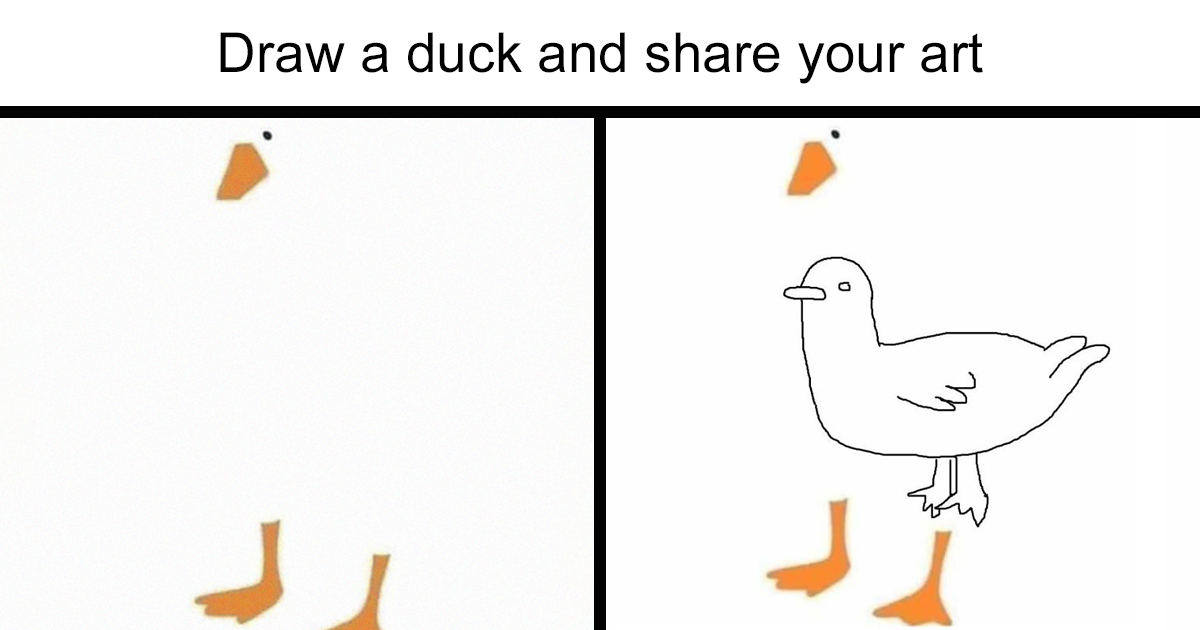
That is exactly why the viral Draw A Duck template became such a charming online phenomenon. The idea is almost aggressively simple. A mostly blank image gives you only a few duck parts: a beak, an eye, and feet. The rest is up to you. Is it a cute pond duck? A warrior duck? A duck with a briefcase and tax problems? A duck that somehow looks like it manages a small but emotionally intense coffee shop? The template does not judge. It merely waits.
When social media users began sharing their versions of the incomplete duck, people responded with drawings that ranged from adorable to unhinged, from surprisingly artistic to gloriously chaotic. The result was not just a meme. It was a miniature public art project wearing webbed feet.
What Is the “Draw A Duck” Template?
The Draw A Duck template is a simple drawing prompt that gives users a partial duck outline and asks them to complete it. The original viral versions circulated widely around 2019 through Facebook meme pages and creative communities. The template usually contains three fixed visual clues: a beak, an eye, and a pair of duck feet. Everything else is blank space.
That blank space is the magic. Unlike a finished meme image where users only add a caption, this challenge asks people to physically contribute. The person completing the template becomes part artist, part comedian, part chaos engineer. Some users drew classic yellow ducks. Others turned the duck into monsters, celebrities, superheroes, dragons, strange birds, office workers, bread thieves, and creatures that technically had beaks but probably should not be allowed near a pond.
It is easy to understand the appeal. The prompt is friendly, low-pressure, and instantly readable. You do not need professional drawing skills. You do not need expensive software. You do not even need to know much about ducks, beyond the fact that they waddle, quack, and look excellent in tiny hats.
Why People Went Wild for a Simple Duck Drawing Challenge
The internet loves a good template because templates remove the hardest part of creativity: starting from nothing. A blank page can feel intimidating. A blank page with duck feet, however, feels like a dare.
The Draw A Duck meme works because it gives users a structure but leaves enough room for surprise. That balance is important. If the prompt is too specific, everyone makes the same joke. If it is too open, people freeze. This template sits in the sweet spot. It says, “Here are the feet. Good luck explaining the rest.”
It Is Simple Enough for Everyone
One reason the challenge spread is that anyone can participate. Kids can do it. Professional illustrators can do it. People who have not drawn anything since elementary school can do it while saying, “I am not an artist,” which is often internet language for “prepare to see the weirdest masterpiece of your day.”
The template does not demand perfection. In fact, the funniest versions are often imperfect. A wobbly line, a giant body, a tiny head, or a duck that looks personally offended by gravity can make the result even better. That is the beauty of a participatory meme: polished art and messy doodles can both win attention.
It Turns Viewers Into Creators
Most viral posts ask people to react. This one asks people to make something. That shift changes everything. Instead of scrolling past another funny picture, users become part of the joke. They download the template, draw over it, upload their version, and invite others to compare results.
This creates a loop of participation. One person posts a duck. Another person thinks, “I can make a weirder duck than that.” Then a third person sees both and creates a duck that looks like it has survived three medieval battles and one bad relationship. Suddenly, the comment section becomes a gallery.
The Secret Power of Meme Templates
A meme template is a shared format that people can customize. It gives everyone the same starting point, which makes the differences more entertaining. That is why classic meme formats work so well. The audience understands the frame, then enjoys the twist.
The Draw A Duck template is especially strong because it is visual rather than text-heavy. There is no complicated setup. The fixed parts of the duck create immediate recognition, while the empty space invites personal interpretation. The humor comes from seeing how far people can stretch the same tiny clues.
Some participants treat the prompt literally, drawing a sweet, round duck with feathers and a happy little body. Others treat it like a creative loophole. They might turn the beak into a dinosaur snout, the feet into the base of a robot, or the eye into the expression of a villain who has just discovered online banking fees.
Popular Types of “Draw A Duck” Responses
The best part of the challenge is that no two ducks feel exactly alike. Even when users start with the same beak, eye, and feet, the final drawings reveal wildly different senses of humor and imagination.
1. The Classic Cute Duck
Some people choose the pure route: round body, soft feathers, cheerful smile, maybe a pond or a few bubbles. These ducks look like they belong in a children’s book, a nursery wall print, or a sticker pack called “Quack and Relax.” They may not be the loudest entries, but they bring wholesome balance to the chaos.
2. The Dramatic Duck
Then there are ducks with backstories. These are the ducks wearing capes, armor, sunglasses, crowns, lab coats, or detective hats. A dramatic duck does not simply stand there. It has a mission. It has enemies. It has probably said, “There is no time to explain,” at least once.
3. The Meme Duck
Some entries lean fully into internet humor. These ducks may include absurd captions, exaggerated anatomy, deadpan facial expressions, or references to other memes. A duck with the body of a bodybuilder? A duck shaped like a loaf of bread? A duck declaring war on crackers? Absolutely. The internet has room.
4. The “Technically Not a Duck” Duck
This category is where the template becomes truly funny. Some artists use the beak and feet in ways that barely resemble a duck at all. The final image might become a dragon, a fish, a strange alien, a tiny goblin, or a creature that raises more questions than it answers. The joke is not that the drawing is accurate. The joke is that the template tried to be a duck, and the artist said, “What if no?”
Why This Template Feels So Shareable
Shareable content often has three ingredients: it is easy to understand, easy to join, and easy to show others. The Draw A Duck challenge checks all three boxes.
First, the concept is clear in one second. Nobody needs a paragraph of instructions. Second, participation is simple. You can print the template, draw on your phone, use a tablet, open an editing app, or scribble over it with whatever digital tool is available. Third, the finished result is visual, which makes it ideal for social feeds.
The challenge also creates natural comparison. People enjoy seeing how different minds solve the same playful problem. One person sees a normal duck. Another sees a pirate. Another sees a haunted goose wearing duck shoes. The repeated structure makes every variation more noticeable.
The Psychology Behind Low-Stakes Creativity
Part of the appeal comes from the low stakes. Many adults avoid drawing because they believe they are “bad at art.” The duck template quietly removes that fear. It does not ask for a masterpiece. It asks for a duck, and even that requirement is negotiable if you are funny enough.
Creative prompts like this work because constraints can make imagination easier. When you only have a few fixed elements, your brain starts playing with possibilities. The beak could belong to a bird, a monster, a cartoon character, or a confused office intern. The feet could support a tiny duck body or a giant absurd creature. Limitations become fuel.
Doodling and casual drawing can also be relaxing. Many people use small creative activities to unwind, focus, or take a break from screen fatigue. A silly duck challenge may seem lightweight, but that is exactly why it works. It gives people a chance to make something without turning creativity into homework.
How to Make Your Own “Draw A Duck” Template Post
If you want to recreate the magic for a blog, social media page, classroom, art group, or brand community, the formula is simple: give people a recognizable starting point and enough freedom to surprise you.
Step 1: Keep the Template Minimal
The more you draw for people, the less room they have to play. A beak, an eye, and feet are enough. You can also experiment with other animals or objects: “draw a cat,” “finish the monster,” “complete the sandwich,” or “turn this circle into something dramatic.” The key is to leave space for interpretation.
Step 2: Make the Instructions Friendly
A good prompt should sound inviting, not demanding. Try something like: “Draw a duck and share your masterpiece. Bad ducks welcome. Weird ducks encouraged.” That small bit of humor tells people they do not have to be perfect. They only have to join.
Step 3: Encourage All Skill Levels
Make it clear that beginners are welcome. Some of the funniest internet drawings are made by people who are not trying to impress anyone. When the atmosphere is relaxed, more people participate, and the results become more diverse.
Step 4: Share a Gallery of Results
The best way to keep the challenge alive is to showcase submissions. A gallery makes participants feel seen and gives newcomers inspiration. It also turns one small template into an ongoing community event.
Why Brands and Creators Can Learn From the Duck
The viral duck template is more than a funny drawing challenge. It is also a smart lesson in online engagement. People do not always want to be passive consumers. They want a chance to participate, remix, joke, and add their own fingerprints.
For creators, this means interactive content can outperform polished but one-directional posts. A perfect graphic may get likes, but a playful template can get replies, shares, remixes, and conversations. For brands, it is a reminder that not every campaign needs to be complicated. Sometimes a simple prompt with personality can create more connection than a glossy advertisement.
Of course, the trick is authenticity. The duck challenge works because it feels playful, not forced. If a brand tries too hard to sound like a meme page, users can smell it from three ponds away. The best approach is to make participation fun and let the audience take ownership.
Using the Draw A Duck Template in Classrooms and Creative Groups
The Draw A Duck template is also useful beyond social media. Teachers can use it as a warm-up exercise. Art instructors can use it to show how different students interpret the same visual cue. Team leaders can use it as an icebreaker before brainstorming sessions. Parents can use it as a quick screen-free activity for kids.
The prompt works well because it is fast, funny, and non-threatening. Nobody has to reveal deep personal information. Nobody has to give a speech. Everyone just draws a duck, then laughs at the duck army that appears.
In a classroom, it can teach creative problem-solving. In a workplace, it can loosen people up before a meeting. In an online community, it can spark engagement without requiring controversial topics or complicated rules. In all cases, the duck does what ducks apparently do best: waddles in, causes joy, and leaves tiny footprints everywhere.
Tips for Creating a Memorable Duck Drawing
If you want your duck to stand out, do not worry about drawing “better.” Think about drawing with a clearer idea. A simple concept often beats a complicated sketch.
Give your duck a job, a mood, or a problem. Maybe it is a chef who keeps burning toast. Maybe it is a detective looking for missing breadcrumbs. Maybe it is a dramatic opera duck singing into a pond. Personality makes the drawing memorable.
You can also exaggerate one feature. Make the body enormous and the feet tiny. Give it a serious eyebrow. Add accessories like glasses, a hat, boots, a sword, a skateboard, or a coffee mug labeled “pond manager.” Small details help the viewer understand the joke instantly.
Most importantly, do not overthink it. The charm of the challenge is spontaneity. A quick silly drawing often has more life than a carefully polished one. The duck does not need to be perfect. It needs to be yours.
Experiences Related to the “Draw A Duck” Template
One of the most enjoyable things about the People Go Wild With This “Draw A Duck” Template trend is how it changes the mood of a group almost immediately. Give ten people the same duck template and you will not get ten ducks. You will get ten tiny windows into how people think. One person will draw the sweetest little duckling you have ever seen. Another will create a duck that looks like it sells questionable potions behind a gas station. Someone else will spend 30 seconds drawing a lumpy bird and somehow produce the funniest image in the room.
That experience is what makes the template special. It is not only about the final picture. It is about the moment when people stop trying to be impressive and start being playful. In many creative spaces, adults carry a quiet fear of being judged. They say things like, “I can’t draw,” before they even touch the pen. But the duck template lowers the pressure. It gives permission to be ridiculous. Once one person shares a strange duck, everyone else relaxes.
In online communities, the experience is even more entertaining because the responses arrive from people with completely different styles, backgrounds, and senses of humor. A professional illustrator may submit a beautifully shaded duck with elegant feathers. A casual user may upload a crooked doodle with a caption that makes everyone laugh harder than the polished version. That mix is healthy. It reminds people that creativity is not a private club guarded by people in black turtlenecks whispering about composition. Creativity can also be a duck with boots.
The template also creates a rare kind of positive internet interaction. Instead of arguing, users build on a shared joke. They compliment each other’s drawings, tag friends, remix ideas, and create mini-stories around the duck characters. The comment section becomes less like a battlefield and more like an art table where someone definitely spilled juice but nobody is upset about it.
For content creators, the experience offers a practical lesson: people love being invited into the process. A finished post can entertain, but an unfinished prompt can activate. The blank space is not a weakness. It is the doorway. When people complete the duck, they feel ownership. They are not just viewers; they are contributors. That emotional difference is why simple challenges often travel farther than expensive content.
Trying the template yourself is also surprisingly refreshing. It takes only a few minutes, yet it can wake up the part of the brain that enjoys play for its own sake. You may start by planning a normal duck, then suddenly decide it needs a crown, a tiny suitcase, and the exhausted expression of a bird who has missed three connecting flights. That is the point. The best duck is the one that appears when you stop trying to make the “right” duck.
In the end, the Draw A Duck template works because it celebrates ordinary creativity. It proves that a small prompt can generate a big response when it is easy, funny, and open-ended. It is silly, yes, but silliness is underrated. Sometimes a half-drawn duck is all it takes to remind people that making things together can still be one of the best parts of the internet.
Conclusion
The Draw A Duck template became popular because it understood the internet’s favorite kind of invitation: simple rules, endless possibilities, and plenty of room for nonsense. With only a beak, an eye, and two feet, the template inspired users to create cute ducks, weird ducks, heroic ducks, cursed ducks, and ducks that probably need their own legal department.
More importantly, it showed why participatory memes are so powerful. They do not just ask people to look. They ask people to play. Whether used for social media engagement, classroom creativity, team building, or personal fun, this tiny duck prompt proves that imagination does not always need a grand entrance. Sometimes it waddles in quietly, quacks once, and takes over the whole feed.
Note: This article is written in original American English for web publishing and is based on real viral meme coverage, digital culture research, social media behavior, and creative prompt practices.