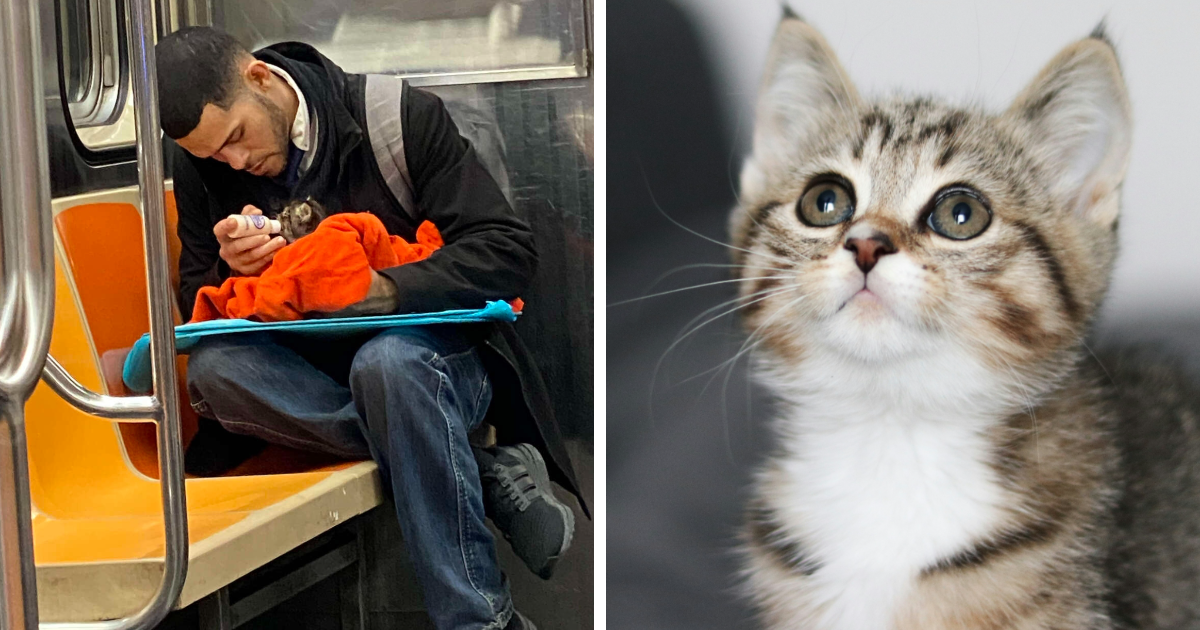

There are two unwritten rules on most big-city subways: don’t make eye contact, and don’t assume anything you see is the weirdest thing you’ll see all day.
Then one commuter spotted a guy doing something so gentleand so wildly out of place in a rattling train carthat the internet collectively went,
“Wait… are we allowed to feel hope down here?”
Picture it: a packed ride, fluorescent lights, people doom-scrolling like it’s an Olympic sport. And in the middle of that beautifully chaotic ecosystem,
a man sits quietly with a tiny kitten in his lap, wrapped in a towel like a burrito, calmly bottle-feeding her as if he’s in a nursery instead of a subway car.
No theatrics. No “Look at me, I’m a hero” energy. Just focused, careful, “you-eat-first” tenderness.
The moment went viral for a reason. In a world where kindness can feel like an endangered species, this one showed up on public transitunleashed, unfiltered,
and apparently not bothered by delays or loud announcements.
The Subway Scene That Broke the Internet (In the Best Way)
According to the account shared by a fellow rider, the encounter happened on the New York City subway. She noticed a man seated nearby,
and then noticed what he was holding: a very small kitten, curled into his lap, bundled in a towel for warmth.
The kitten wasn’t just along for the rideshe was being actively cared for, mid-feeding, with the kind of attention usually reserved for newborns and
fragile houseplants you promised you’d finally keep alive this time.
The witnesssomeone with animal rescue experiencedescribed how the man’s entire posture was “locked in.” No phone. No distractions. No multitasking.
Just a guy and a bottle and a kitten who clearly believed she’d found the world’s safest lap.
When the witness asked him about the kitten, he explained that he’d found her alone in an outdoor area (between buildings) and decided not to leave her behind.
He took her in, kept her warm, and made sure she was fedeven if that meant bringing her along during his commute.
That’s the part that hit people hardest: it wasn’t a one-time “rescue photo op.” It looked like ongoing carereal responsibility.
The kind that includes formula, schedules, and the inconvenient truth that tiny mouths get hungry at very inconvenient times.
Why Netizens Melted: It Wasn’t Just CuteIt Was Competence
Sure, kittens are basically living serotonin. But the viral punch here wasn’t just “aww.”
It was “aww… and also, this person knows what he’s doing.”
Bottle-feeding a kitten isn’t casual. It’s not something you do because you’re bored on the way to work.
It’s something you do because a kitten is too young (or too vulnerable) to eat on her ownand you’ve decided, deliberately, to fill in for a mother cat.
That’s not just kindness. That’s stepping into a role with a schedule and consequences.
Online reactions tended to orbit the same themes:
- Relief: “Okay, so humanity isn’t completely cooked.”
- Joy: “I didn’t know I needed this today, but I did.”
- Respect: “That’s not a random cat guy. That’s a caretaker.”
- Curiosity: “Where did he get the supplies? How did he know the kitten needed a bottle?”
The subway is typically where you perfect the art of emotional neutrality. And yet, one small kitten and one calm bottle-feeding session
melted an entire comment section like warm formula.
The Hidden Backstory: What “Bottle Baby” Really Means
If you’ve never cared for a very young kitten, here’s the quick reality check:
a kitten who needs a bottle is basically a tiny, fuzzy newborn with a dramatic personality and zero ability to self-manage.
They can’t just “grab a snack later.” They need warmth, consistent feeding, and careful handling.
Bottle-Feeding Basics (The Safe, Non-Scary Version)
Multiple veterinary and animal welfare guides agree on a few fundamentals that matter way more than vibes:
-
Use kitten milk replacer, not cow’s milk.
Cow’s milk can cause digestive upset, and kittens need species-appropriate nutrition. -
Feed in a belly-down position.
Kittens should nurse on their stomach, similar to how they feed from their mothernever on their back like a human baby. -
Warmth matters.
Kittens can’t regulate body temperature well; feeding a cold kitten is risky. Keeping them warm is part of feeding them safely. -
Slow and steady wins.
You don’t squeeze formula into their mouth. They should draw it out by nursing to reduce aspiration risk.
The Mistakes People Make (Because the Internet Loves a Shortcut)
Most bottle-feeding mishaps aren’t from bad intentionsthey’re from treating a kitten like a tiny human.
Animal care resources routinely warn against common errors:
- Feeding too fast (risking milk entering the lungs)
- Incorrect positioning (especially laying kittens on their backs)
- Improvised “formula” recipes (not nutritionally reliable and sometimes unsafe)
- Overfeeding (tiny stomachs are not built for “just a little extra”)
That’s why the subway moment stood out: the guy wasn’t winging it. The setup looked intentionalkitten wrapped for warmth, bottle handled with care,
and a calm pace that screamed “I have done this before” (or at least “I read the directions like my life depends on it”).
Subway Logistics: Yes, It’s SweetAnd Also a Safety Puzzle
Caring for an animal on public transit is a balancing act between compassion and practicality.
In New York City, transit guidance generally requires pets to be enclosed in a bag or container and carried in a way that doesn’t bother other riders
(service animals are treated differently).
If you’re thinking, “But the kitten was out,” you’re not wrong to notice the tension.
Sometimes rescuers make judgment calls in the momentespecially with fragile animals who need warmth, monitoring, and feeding.
The key is minimizing risk: keeping the animal secure, avoiding exposure, and not putting the pet (or other riders) in danger.
And safety isn’t just about rules; it’s about the environment. Subways have loud noises, sudden stops, crowded spaces, and (most dangerously) track areas
that are absolutely not a place for any animal. Recent reporting has highlighted real harm that can happen when pets are not properly secured in transit spaces.
The viral kitten scene, at its best, becomes a reminder of two truths that can coexist:
you can do something compassionate, and you should still think about how to do it safely.
If You See a Stray Kitten (Subway or Otherwise): What Actually Helps
Viral moments are cute, but real-world help is even better. If you encounter a kitten who seems abandoned or too young to be on their own,
here are practical steps that align with guidance from animal welfare organizations and veterinary resources:
1) Don’t assume “mom is nearby,” but don’t kidnap either
Very young kittens may be part of a litter with a mother cat returning periodically. If the kitten is in immediate danger (traffic, extreme weather,
unsafe locations), intervene. If the situation is stable, consider contacting local animal control or a rescue group for advice before moving the kitten.
2) Warmth first, then food
A chilled kitten is at higher risk. Prioritize warmth and safe handling. Feeding should be done carefully and with appropriate formula,
not whatever happens to be in your fridge.
3) Ask a rescue or vet for the “age guess”
Feeding frequency and weaning depend on age. Many reputable guides offer age-based feeding schedules and stress monitoring weight and hydration.
When in doubt, a vet or rescue can help you avoid the two big problems: underfeeding and unsafe feeding.
4) If you can’t foster, you can still assist
Transportation, supplies, and short-term holding can be a huge help to rescue networks.
Not everyone can be the bottle-feeding hero on the subwaybut plenty of people can be the “I can drive to the shelter” hero.
The Bigger Trend: The Rise of the “Cat Guy” (And Why It Matters)
Another reason this story resonated? It quietly bulldozed a stereotype.
A man caring for a kittenpatiently, gently, and with obvious competencepushes back against the tired idea that nurturing is “not masculine.”
In recent years, more stories and profiles have highlighted men who foster, bottle-feed, and advocate for kittens online,
helping normalize caregiving across genders. These narratives matter because fostering saves livesand because the demand is real,
especially during high-intake seasons when shelters need people willing to care for neonates and “bottle babies.”
The subway moment is a snapshot of that broader cultural shift:
caregiving is cool. Tenderness is not embarrassing. And if your commute includes a kitten, you might accidentally become the main character
of everyone’s day.
So… Did This One Small Moment Change the World?
It didn’t solve everything. It didn’t fix transit delays. It didn’t make rent cheaper.
But it did something surprisingly powerful: it reminded people what quiet goodness looks like.
The man didn’t appear to be performing for an audience. He was just feeding a kitten because she needed to be fed.
And in a time when so much online content is optimized for attention, that kind of unpolished sincerity lands like a warm light in a cold station.
If you needed a sign that compassion still belongs in public spaceseven chaotic, noisy onesthis was it.
A towel, a bottle, a tiny kitten, and a commuter choosing kindness over indifference.
Experiences That Mirror the Subway Kitten Moment (And What They Teach Us)
Not everyone will bottle-feed a kitten on a train, but many people have lived versions of the same storythose small, inconvenient moments where you
realize an animal needs help and you either step up or walk past. The experiences below are common among fosters, rescuers, and even everyday pet owners,
and they explain why the subway scene felt so authentic.
The “I’ll Just Hold Them for a Night” Myth
A classic rescue experience starts with a lie you tell yourself for emotional comfort: “I’ll just keep the kitten overnight.”
Then you learn what bottle-feeding implieswake-ups, careful measurements, warming formula, cleaning supplies, and the reality that tiny lives run on
tiny schedules. People who foster neonatal kittens often describe it as caring for a newborn: rewarding, exhausting, and weirdly joyful.
That’s why the guy on the subway earned instant respect. A person who has the bottle, the towel, and the calm energy is rarely on Day One.
Even if he was new to it, he looked like someone who had accepted the whole job, not just the cute part.
Commuting With a Tiny Passenger Changes Your Priorities
Anyone who has transported a fragile animal knows the mental checklist:
“Is the carrier secure? Is it too hot or too cold? Do I have wipes? Extra towel? Formula? What if they cry?”
That kind of vigilance makes you hyper-aware of your environmentcrowds, loud noises, sudden stops.
The subway story highlights how rescuers often build a mobile “kit” in their bag: essentials first, personal convenience second.
The Quiet Community of Helpers (Even in Loud Places)
One underrated part of animal rescue is how strangers show up. Someone offers directions to an emergency vet.
A barista sneaks you a cup of warm water to help heat a bottle in a pinch. A fellow passenger makes space so you can sit without bumping the carrier.
These micro-acts of support don’t go viral, but they’re commonand they’re the social glue behind many successful rescues.
The subway moment likely resonated because people recognized the possibility:
in a city that moves fast, kindness can still happen in real time. It can happen between stops.
Learning the Hard Parts: Positioning, Patience, and “Please Don’t Google Random Recipes”
Another experience rescuers share is the steep learning curve. They learn (sometimes the scary way) that kittens shouldn’t be fed on their backs,
that milk flow must be controlled, and that aspiration is a real risk if feeding is rushed.
They learn that “emergency formula” hacks floating around social media are not a substitute for proper kitten milk replacer and veterinary guidance.
That’s why the subway photo isn’t just cuteit’s educational. It subtly models careful handling: kitten supported, feeding paced,
and comfort prioritized. It’s the kind of visual that nudges viewers toward doing it right, not just doing it for likes.
The Emotional Aftermath: When One Kitten Restores Your Faith
People who foster often say the first successful feeding feels like winning an invisible marathon.
And the first time a kitten looks up mid-mealeyes half-closed, tiny paws kneading the airyou realize you’re not just feeding an animal.
You’re giving a vulnerable life a second chance.
That’s the emotional core of the subway scene. It’s not a grand speech about compassion. It’s the quiet proof:
sometimes, the best humans don’t announce themselves. They just show up with a bottle and do the work.