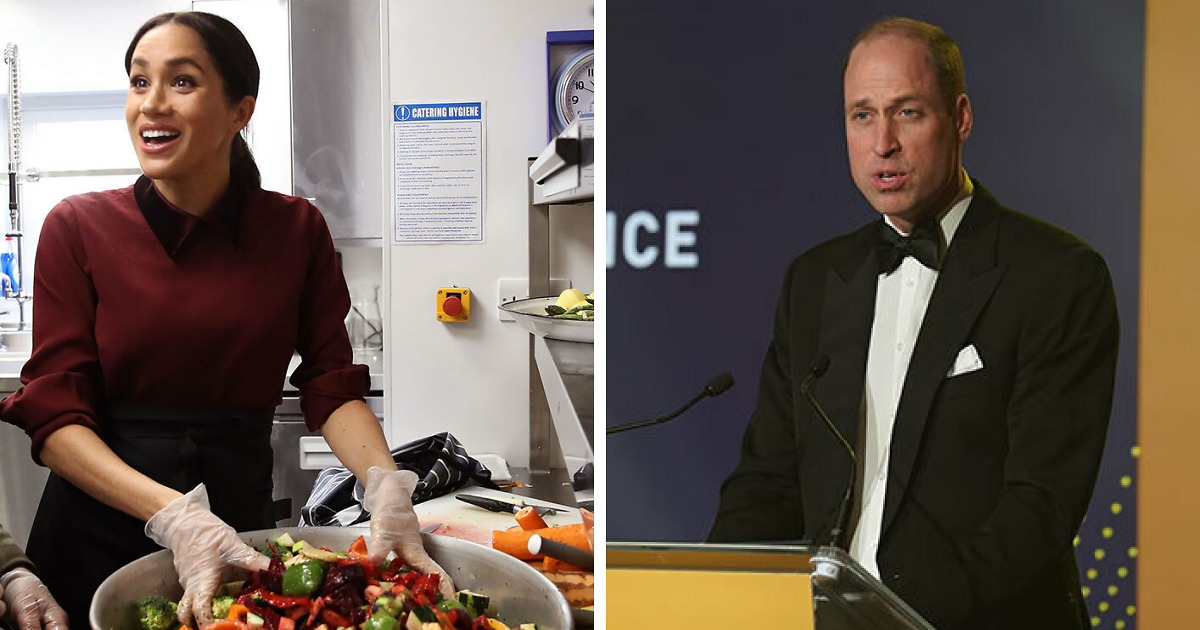

Royal news rarely moves at a walking pace. It sprints, changes outfits, grabs a microphone, and somehow still finds time to trend before dinner. That was certainly the case when Meghan Markle unveiled her surprise lifestyle brand just before Prince William took the stage at a major awards ceremony honoring Princess Diana. In one corner, there was a glossy new brand rollout with elegant visuals, domestic-lifestyle energy, and enough quiet mystery to keep social media buzzing. In the other, there was Prince William delivering a serious speech focused on service, youth leadership, and his mother’s legacy.
The result was a classic modern royal-media moment: two very different headlines, unfolding on the same day, each instantly competing for attention. Meghan’s launch was stylish, soft, and strategic. William’s appearance was formal, emotional, and rooted in duty. Put them side by side, and you get a perfect snapshot of how royal-adjacent stories now work in the digital age. Timing matters. Presentation matters. And yes, the internet will absolutely notice when one splashy announcement lands just before another family member steps up to a podium.
This moment mattered not simply because Meghan launched a brand or because William gave a speech. It mattered because both events reflected the two public paths that have emerged since Harry and Meghan stepped away from royal duties. Meghan’s path increasingly points toward media, lifestyle, and entrepreneurship. William’s path remains tied to monarchy, ceremony, legacy, and institution-building. Same family tree. Very different branches.
What Meghan Markle Actually Launched
Meghan’s surprise reveal introduced the world to American Riviera Orchard, a lifestyle brand that immediately signaled a polished California aesthetic. The launch arrived through a website and Instagram account, with branding that felt intentionally aspirational: soft gold lettering, carefully curated visuals, and a tone that suggested elegance without shouting. This was not a chaotic product dump or a discount-code bonanza. Nobody was yelling about “limited-time shipping.” The vibe was much closer to “come into my sunlit kitchen and pretend your pantry has its own publicist.”
From the beginning, the brand appeared to lean into the areas long associated with Meghan’s pre-royal identity: food, hosting, home style, and curated living. Reports at the time indicated that the business was designed to reflect interests like family life, cooking, entertaining, and home décor. That positioning made the launch feel less like a random celebrity cash-in and more like a return to familiar territory. Before royal life absorbed her public image, Meghan had already built a lifestyle voice through The Tig. American Riviera Orchard looked like an updated, more polished, more commercial continuation of that world.
The name itself also carried a message. “American Riviera” is a longtime nickname for the Santa Barbara area, and Montecito was referenced in the branding. In other words, the label was more than pretty; it was geographic storytelling. Meghan was not simply selling a product line. She was selling a mood board with a zip code.
The Product Categories That Fueled Curiosity
One of the biggest reasons the launch generated so much conversation is that it revealed just enough to spark interest without fully explaining itself. Trademark filings and follow-up reporting suggested a broad range of potential products: jams, jellies, spreads, tableware, linens, serving pieces, kitchen goods, cookbooks, candles, gardening items, and more. It was lifestyle branding with wide-open ambition. The message was clear: this was not meant to be one cute jar of preserves and a polite goodbye. It looked like the early blueprint for a full consumer brand.
That breadth made the rollout smart from an SEO and publicity angle. A narrow launch can create a headline. A flexible lifestyle universe can create months of follow-up stories. And that is exactly what happened. The internet moved from “What is this?” to “What will it sell?” to “When does it actually launch?” in almost no time at all. Later reports about branded jam sent to celebrity friends only added fuel. Nothing stirs curiosity like a chic jar appearing on famous kitchen counters while the public is still waiting for the checkout page to wake up.
Prince William’s Awards Ceremony Appearance
While Meghan’s brand rollout was making noise online, Prince William was preparing for a very different kind of public moment. He appeared at the Diana Legacy Awards at London’s Science Museum, where he honored young changemakers and reflected on the values associated with his late mother, Princess Diana. The occasion marked an important anniversary year for the Diana Award charity, and William’s remarks emphasized service, compassion, courage, and the idea that young people can help change the world.
That event was not a celebrity soft launch. It was a duty-driven appearance connected to legacy, remembrance, and institutional continuity. William’s role in that setting reinforced his identity as the future king: measured, ceremonial, and closely linked to causes that draw a straight line back to Diana’s humanitarian reputation. He praised the young honorees and spoke about the belief that everyone has something to give back. It was the kind of speech designed not to dominate gossip, but to underline responsibility.
Prince Harry also took part separately, appearing virtually after William’s in-person portion. That detail mattered because it underscored how even when both brothers are attached to the same charitable event, their public appearances are now carefully distinct. The brothers were connected by the cause, but separated by geography, schedule, and symbolism.
Why the Timing Turned Heads
The biggest reason this story exploded was timing. Meghan’s launch did not happen in some quiet media corner on a random Tuesday afternoon. It landed just before William’s speech at a high-profile event tied to Princess Diana. Whether one sees that timing as coincidence, savvy strategy, or simply the unavoidable reality of modern publicity, it instantly created a comparison the internet could not resist.
And once that comparison began, the framing almost wrote itself. Meghan’s announcement represented reinvention, brand-building, and commercial independence. William’s appearance represented remembrance, duty, and royal continuity. One was a soft-focus entrepreneurial reveal. The other was a formal tribute at a legacy awards ceremony. Put those side by side and the headlines become irresistible.
Royal watchers and entertainment outlets quickly began debating the optics. Some viewed the timing as bold and shrewd. Others saw it as distracting or unnecessarily provocative. Still others shrugged and concluded that in the royal news universe, every major move risks overlapping with another because the family remains one of the world’s most persistent content engines. Frankly, the monarchy has become part institution, part soap opera, part never-ending push notification.
What the Launch Said About Meghan’s Strategy
From a brand perspective, the rollout was revealing. Meghan did not announce American Riviera Orchard through a lengthy interview, a press conference, or a heavy corporate statement. She let aesthetics do the talking. The name, the visual identity, the waitlist, the sparse captions, and the quiet confidence all suggested a modern celebrity-brand playbook: create intrigue first, explain later. It is a strategy built for screenshots, speculation, and endless recaps.
That approach also fit Meghan’s broader post-royal evolution. Rather than trying to re-enter public life through formal palace-style appearances, she has repeatedly leaned into media and lifestyle spaces where personality, taste, and narrative control matter more than hierarchy. In that sense, the launch was not surprising at all. It was entirely on brand for where her career had been heading.
There was also a practical business logic behind the aesthetic softness. A lifestyle brand works best when it sells more than objects. It needs to sell aspiration. American Riviera Orchard seemed designed to promise a world: the kind of world where flowers are always arranged, snacks are served on good plates, linen napkins exist in the wild, and nobody has ever opened a junk drawer and immediately regretted everything. That is not just merchandising. That is identity marketing.
The Royal Contrast Was the Real Headline
What made this moment especially compelling was not Meghan’s launch by itself or William’s speech by itself. It was the contrast. Meghan’s public image that day was entrepreneurial and curated. William’s was ceremonial and grounded in public duty. The split captured the new reality of the royal story after the Sussex departure: two different models of influence operating under the same giant umbrella of global attention.
William’s appearance reminded audiences that he is still closely tied to Diana’s public legacy, especially on issues involving compassion and youth development. Meghan’s launch reminded audiences that she is building a business identity independent of palace structures. Those two realities can exist at once, but when they surface on the same day, they create friction. Not necessarily personal friction, but narrative friction. And narrative friction is what drives huge headlines.
It also helps explain why stories like this refuse to disappear quickly. They are about more than products or speeches. They are about symbolism. Every launch, every appearance, every quote gets folded into a bigger conversation about relevance, influence, image, and competition. Sometimes that conversation is overblown. Sometimes it is fair. But it is never boring.
Did the Surprise Brand Launch Work?
In the most basic sense, yes. People paid attention. A lot of attention. The launch sparked immediate coverage, social discussion, and weeks of follow-up reporting about what the brand might become. That is the first hurdle for any new celebrity venture, and Meghan cleared it easily. She re-entered the lifestyle conversation and got audiences talking without giving away everything at once.
But attention is only the opening act. A successful launch also needs clarity, product follow-through, and long-term trust. That is where American Riviera Orchard faced more questions. The initial reveal was strong on mood and mystery, but consumers eventually want details. What exactly is for sale? When can they buy it? Is this a luxury home line, a food label, a hosting brand, or all of the above? Curiosity can power a launch, but only substance can sustain it.
Even so, from a media standpoint, Meghan achieved something many brands struggle to do: she made a waitlist and a logo feel like an event. That takes audience recognition, cultural timing, and a clear understanding of how modern fame works. It may also take a little royal-level instinct for drama, though nobody ever admits that part out loud.
Experiences and Lessons From This Royal Media Moment
One of the most interesting experiences tied to this story is what it reveals about how people now consume royal news. Years ago, a speech at a charity ceremony and a separate lifestyle announcement might have lived in different media lanes. One would sit in traditional royal coverage. The other would settle into entertainment or celebrity business news. Now they collide in the same feed, on the same timeline, in the same scroll-happy afternoon. That changes everything.
For readers, the experience is less about absorbing one clean narrative and more about watching competing storylines race each other in real time. You open your phone to see Prince William honoring Diana’s legacy, and within minutes you are also being asked whether Meghan’s new brand name is clever, whether the launch was strategic, whether the logo is elegant, whether the timing was accidental, and whether jam can be political by association. Somewhere along the way, you realize the modern royal beat is no longer a polite news category. It is a multi-platform sport.
For brand observers, this moment offered a useful case study in controlled intrigue. Meghan’s rollout showed how a minimal launch can still dominate conversation if the public figure is recognizable enough and the visual identity is strong enough. She did not need a fully loaded store on day one to make people care. She needed atmosphere, timing, and a concept broad enough to keep people guessing. In digital branding, mystery is often a form of marketing. Too much mystery can frustrate consumers, but the right amount creates a fascination loop that news outlets happily amplify.
For royal watchers, the experience highlighted how difficult it is to separate personal history from public optics. William’s appearance at the Diana Legacy Awards carried emotional weight because it connected directly to his mother’s memory and his role within the monarchy. Meghan’s launch, meanwhile, represented reinvention outside royal structures. When both happen side by side, audiences naturally assign meaning. Some see rivalry. Some see coincidence. Some see professional timing in a crowded media ecosystem. The truth may be less dramatic than the internet prefers, but the perception still matters because perception drives coverage.
There is also a lesson here about audience fatigue and audience appetite oddly existing at the same time. Many people claim to be exhausted by royal headlines, yet stories like this keep performing because they blend familiar characters with new stakes. A speech becomes more than a speech when it sits next to a brand launch. A brand launch becomes more than a business move when it unfolds next to a Diana tribute. Context multiplies interest.
And then there is the human experience of it all. Casual readers may not remember every trademark detail or every quote from the ceremony, but they remember the feeling of the moment: one branch of the family talking legacy, another talking lifestyle, and the whole internet trying to decide what it meant before the coffee got cold. That is why this story stuck. It was not just about Meghan Markle, Prince William, or an awards ceremony. It was about modern fame, timing, and the strange way one family can generate headlines that feel personal, commercial, historical, and wildly online all at once.
Conclusion
Meghan Markle’s surprise brand launch just before Prince William spoke at the Diana Legacy Awards was more than a scheduling curiosity. It was a sharp illustration of how the royal story has split into two different public languages. Meghan’s language is increasingly entrepreneurial, lifestyle-focused, and visually curated. William’s remains formal, philanthropic, and rooted in royal continuity. When those languages appear on the same day, the contrast becomes the headline.
American Riviera Orchard gave Meghan a sleek re-entry into the lifestyle arena and signaled an effort to build something distinctly personal and commercial. William’s speech reinforced his connection to Diana’s legacy and his role within the institution he is preparing to lead. Together, those moments created a fascinating media clash that felt both inevitable and revealing. In the royal-news economy, timing is never just timing. It is message, mood, competition, and strategy wrapped into one very clickable package.