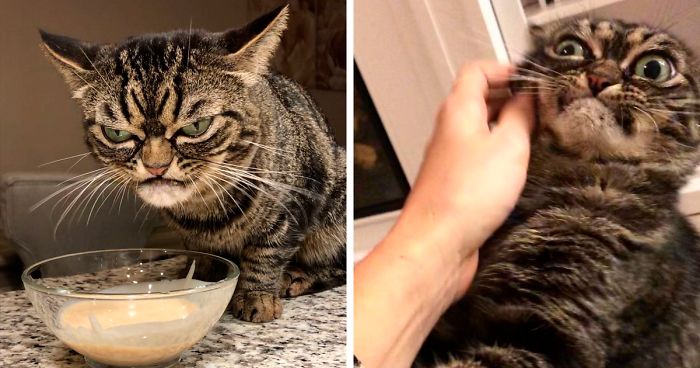

Some cats look sweet. Some cats look mysterious. And then there is Kitzia, a tabby cat with the facial expression of a tiny landlord who just discovered you paid rent three minutes late. She has the wide eyes, the stern mouth, the dramatic “I have reviewed your life choices and found them disappointing” stareand the internet, naturally, has fallen in love.
Kitzia, widely known online as Grumpy Kitzia, became famous because of her naturally severe expression, which many fans compare to the late, legendary Grumpy Cat. The comparison is understandable. Grumpy Cat, whose real name was Tardar Sauce, became one of the internet’s most recognizable animals after her frowning face went viral in 2012. Years later, Kitzia stepped into the online spotlight with a look that seems less “mildly annoyed” and more “I have already spoken to the manager, and the manager also disappointed me.”
But here is the charming twist: Kitzia is not actually angry. Like many pets with unusual faces, her expression does not tell the whole story. Reports and social media descriptions paint her as sweet, friendly, affectionate, and deeply photogenic. Her face may say “do not approach,” but her fan base hears “please send snacks, compliments, and possibly a velvet throne.”
Who Is Kitzia, the New Grumpy Cat?
Kitzia is a tabby cat living in Florida with her human, Viktoriia Otdielnova, a professional photographer originally from Ukraine. That detail matters because Kitzia’s rise is not only about having a funny face. It is also about the way her owner captures that face. Good lighting, clever timing, sharp focus, and a steady stream of expressive photos helped turn a naturally grumpy-looking cat into an online personality.
Kitzia’s name is said to mean “kitty,” which is almost comically gentle for a cat who looks like she is judging the weather, the furniture, the economy, and your sandwich. Her Instagram presence began gaining attention in the late 2010s, and by 2020 she was being widely introduced across pet and entertainment sites as a possible successor to the original Grumpy Cat. Early reports noted tens of thousands of followers; her audience has since grown into a much larger fan community across social platforms.
Part of Kitzia’s appeal is that she is not trying to be funny. She is simply existing. Sitting by a bowl? Furious. Looking at the camera? Furious. Lounging on a soft surface? Somehow still furious. That effortless contrastordinary cat behavior paired with an extraordinary scowlis exactly what makes her photos so shareable.
Why Kitzia Looks So Angry
Kitzia’s famous expression comes from the natural structure of her face, not from actual rage. Her eyes, markings, mouth shape, and intense stare combine to create the illusion of constant displeasure. The internet has a name for this kind of expression in humans: resting angry face. Kitzia has the feline deluxe edition.
Cat expressions can be tricky to interpret because humans tend to project human emotions onto animal faces. A downturned mouth or sharp stare may look angry to us, but cats communicate through a wider combination of signals: ears, tail, pupils, whiskers, posture, movement, vocalization, and overall context. A cat can look stern in a still photo while actually being relaxed, curious, hungry, or simply wondering why the human is holding a rectangle again.
That distinction is important. Kitzia’s brand is built on a funny visual misunderstanding. Fans love pretending she is furious, but the charm works because everyone is in on the joke. She is not a villain. She is a small tabby with blockbuster-level facial drama.
Kitzia vs. Grumpy Cat: Who Looks Angrier?
The late Grumpy Cat had a softer kind of gloom. Tardar Sauce looked unimpressed, disappointed, and beautifully over it. Her expression was the face of Monday morning, slow Wi-Fi, and someone saying “just one quick meeting.” Kitzia’s expression is different. She often appears sharper, more intense, and more actively offended by the universe.
Grumpy Cat’s frown was linked to feline dwarfism and an underbite, which gave her a permanent pout. Kitzia, on the other hand, is most often described as a tabby with a naturally stern face, dramatic markings, and a camera presence that makes every photo look like a tiny courtroom verdict. If Grumpy Cat looked like she had no patience left, Kitzia looks like she never had any patience to begin with.
The Original Grumpy Cat’s Legacy
Grumpy Cat was not just another viral pet. She became a full internet-era icon. After a photo of her was posted online in 2012, people quickly turned her face into memes, captions, merchandise, TV appearances, books, and a recognizable brand. Her official story notes that when some viewers doubted the original image and suspected editing, a video helped confirm that the famous frown was real.
Her appeal was simple but powerful: a cat who looked permanently annoyed made millions of people laugh. That contradictiongrumpiness creating happinessbecame her magic. She passed away in 2019 at the age of seven after complications from a urinary tract infection, but her influence on meme culture remains strong.
Why Kitzia Feels Like a Natural Successor
Kitzia arrived at the perfect time for fans who missed the golden age of famous internet cats. She did not replace Grumpy Cat, because no pet can truly replace another. Instead, she continues the tradition: a real animal, a naturally expressive face, and a human audience delighted by the absurdity of it all.
What makes Kitzia especially fun is the intensity of her look. She does not merely seem unimpressed. She seems professionally unimpressed. Her stare could silence a group chat. Her tiny mouth looks like it is holding back a 14-page complaint. Her photos invite captions before anyone even starts typing.
Why the Internet Loves Grumpy-Looking Cats
Grumpy-looking cats tap into a very specific kind of internet humor. They let people laugh at frustration without becoming mean or heavy. Instead of posting a long rant about a bad day, someone can share a photo of Kitzia staring into the camera like she just received cold fries. The emotion is instantly understood.
That is why cats like Kitzia work so well as memes. Their faces become emotional shortcuts. Exhausted? Kitzia gets it. Annoyed by emails? Kitzia has already deleted them. Waiting for coffee? Kitzia has filed a formal complaint against the concept of waiting.
At the same time, the humor stays light because the subject is adorable. A tiny cat looking furious is funny precisely because she is tiny and fluffy. There is no real threat. The worst thing she might do is knock a pen off the table while maintaining eye contact, which, admittedly, is powerful behavior.
The Role of Photography in Kitzia’s Fame
Kitzia’s owner being a photographer gives her an advantage in the crowded world of pet influencers. Many cats are cute. Many cats are expressive. But not every cat is photographed in a way that turns a funny expression into a memorable character.
Good pet photography depends on timing. A blink, head tilt, ear angle, or tiny mouth movement can completely change the feeling of an image. Kitzia’s best photos capture the exact second when her face looks most dramatic. The result is not just a picture of a cat; it is a miniature comedy scene.
There is also consistency. Kitzia’s online personality is easy to recognize: grumpy face, tabby markings, big eyes, and a mood that says she has seen your search history and disapproves. That consistent visual identity helps fans remember her and return for more.
Is Kitzia Really Angry?
Noat least not based on the public descriptions of her personality. Like the original Grumpy Cat, Kitzia is often described as sweet and friendly despite her severe expression. This is a useful reminder for all pet lovers: a single facial feature does not define an animal’s mood.
Veterinary and animal-behavior guidance often emphasizes reading the whole cat, not just the face. A relaxed cat may have soft eyes, neutral ears, loose posture, and calm movements. A stressed or frightened cat may show flattened ears, dilated pupils, crouching, tucked posture, or a tense tail. In other words, context matters.
Kitzia’s photos are funny because her face looks dramatic even during normal cat moments: lounging, eating, watching TV, or staring into the middle distance as though remembering a betrayal from 2016. Her expression is the brand, but her actual personality appears much warmer than her face suggests.
What Kitzia Teaches Us About Pet Fame
Kitzia’s popularity says a lot about modern pet fame. Viral animals often succeed because they have one unforgettable trait. For Kitzia, that trait is her epic scowl. For Grumpy Cat, it was the permanent frown. For other famous cats, it might be a tiny tongue, unusual eyes, extra toes, a dramatic meow, or a personality that bursts through the screen.
But long-term popularity requires more than one viral image. It needs storytelling. Fans want to feel like they know the pet. They want recurring jokes, familiar settings, and a sense of personality. Kitzia offers all of that. Her photos invite people into a playful universe where an adorable tabby runs a strict emotional department and everyone else is under review.
There is also a deeper reason people enjoy pets like Kitzia: they give us permission to laugh at moods we all recognize. Nobody is cheerful every second. Sometimes we wake up feeling like Kitzia looks. Sometimes we open one email and spiritually become a grumpy tabby in Florida. Seeing that feeling turned into something cute makes it easier to smile at ourselves.
Specific Examples of Kitzia’s Internet Appeal
One common type of Kitzia photo shows her staring straight at the camera with enormous eyes and a tightly serious mouth. This format works because it feels personal, almost like she is judging the viewer directly. The image does not need a complicated caption. A simple line like “When the meeting could have been an email” would fit perfectly.
Another popular style shows Kitzia near food or lounging around the house. These scenes are ordinary, but her face turns them into comedy. A cat eating from a bowl is normal. Kitzia eating from a bowl looks like a restaurant critic preparing a devastating review.
Then there are the cozy shots: Kitzia resting, sitting on a bed, or looking up from a comfortable spot. These are especially funny because comfort and anger do not usually belong together. She may be safe, loved, and relaxed, but her face says the throw blanket has failed to meet industry standards.
Experience Section: Living With a Cat Who Looks Mad at the World
Anyone who has lived with a cat knows that feline facial expressions can be wildly unfair. A cat may be perfectly content, warm, full, loved, and sitting in the best patch of sunlight in the house, yet still look like someone just canceled her favorite crime drama. That is why Kitzia feels so familiar. She represents the daily experience of loving an animal whose face does not always match her heart.
Imagine walking into the kitchen in the morning and finding a cat like Kitzia sitting near the food bowl. You say, “Good morning!” The cat looks back as if you have committed a historic offense by sleeping past 6:04 a.m. You pour the food. She inspects it. She eats it. She remains visually furious. You begin to understand that this is not a mood. This is a management style.
Many cat owners have similar stories. Their pets may glare from across the room, not because they are angry, but because that is simply their face. Some cats have naturally serious eyes. Some have markings that create the illusion of eyebrows. Some have little mouths that curve downward. Add a dramatic head tilt and suddenly your sweet companion looks like a retired judge hearing a weak argument.
The real experience, though, is full of tenderness. A grumpy-looking cat may still follow you from room to room, curl beside you during a movie, purr when you scratch the right spot, or gently bump your hand for attention. That contrast is what makes cats like Kitzia so lovable. Their faces perform comedy while their behavior quietly says, “You are my person.”
There is also something emotionally useful about a cat who looks annoyed. On difficult days, a cheerful image can sometimes feel too bright. But Kitzia’s face meets you where you are. Tired? She looks more tired. Irritated? She has already mastered the expression. Overwhelmed? She appears to have been overwhelmed since birth and is handling it with remarkable whisker control.
In that way, Kitzia is more than a funny pet account. She is a tiny mascot for honest moods. She reminds us that we do not have to look delighted all the time to be lovable. We can have our grumpy mornings, our silent stares, our “absolutely not” momentsand still be adored. If a cat can look like a thundercloud in tabby form and win the internet’s heart, maybe the rest of us can be a little less polished, too.
Conclusion: Kitzia Is Not Replacing Grumpy CatShe Is Continuing the Tradition
Kitzia may look even angrier than her late predecessor, but that is exactly why people love her. She carries forward one of the internet’s favorite traditions: turning a naturally dramatic cat face into shared joy. Grumpy Cat opened the door for pets with unusual expressions to become cultural icons. Kitzia strolls through that door with the confidence of someone who owns the building.
Her fame is a blend of natural expression, skilled photography, clever online presentation, and universal humor. She looks annoyed, but the effect is cheerful. She seems stern, but fans describe her as lovable. She appears ready to reject your application, but somehow makes your day better.
In a world full of polished influencer smiles, Kitzia’s scowl is refreshingly honest. She does not need to grin for the camera. She simply needs to be herself: a tabby cat with a legendary glare, a growing fan base, and enough attitude in one face to power the internet for another decade.