
Buying a mattress should be simple: pick a size, pick a feel, sleep like royalty. And yet here we arestaring at
“Twin XL,” “California King,” and “Split King” like they’re characters in a fantasy novel. This guide breaks down
standard U.S. mattress sizes, real-world bed dimensions, and how to choose the right fit for your room, your body,
and your lifestyle (including the lifestyle choice of letting a 60-pound dog sleep diagonally).
Quick Mattress Size Chart (U.S. Standard Dimensions)
Mattress dimensions are typically listed as width × length. Most manufacturers are very consistent,
but you may see small differences (often 0.5–1 inch) due to rounding, quilted edges, or brand-specific labeling.
Always check the exact specs before buying a frame, foundation, or sheets.
| Mattress Size | Dimensions (inches) | Dimensions (cm) | Best For |
|---|---|---|---|
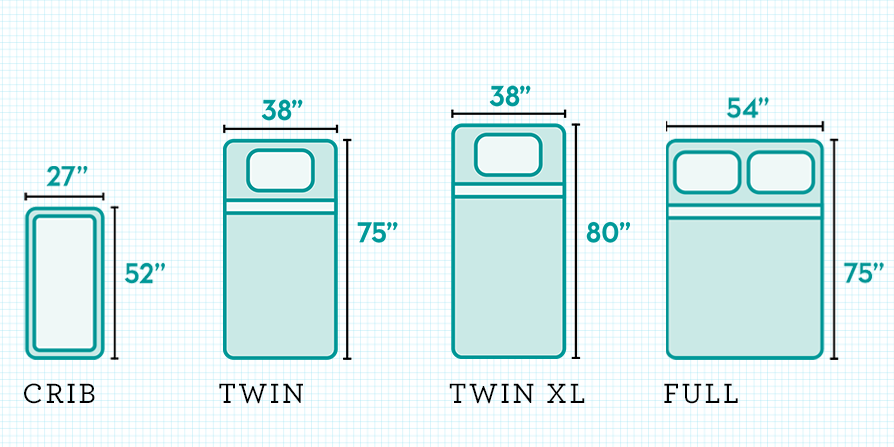
| Twin | 38″ × 75″ | 96.5 × 190.5 | Kids, bunk beds, small rooms, solo sleepers who don’t “starfish” |
| Twin XL | 38″ × 80″ | 96.5 × 203.5 | Taller teens/adults, dorms, adjustable bases, split king setups |
| Full (Double) | 54″ × 75″ | 137 × 190.5 | Solo sleepers who want wiggle room, guest rooms, teens |
| Queen | 60″ × 80″ | 152.5 × 203.5 | Most couples, guest rooms, “balanced” space-to-comfort ratio |
| King (Eastern King) | 76″ × 80″ | 193 × 203.5 | Couples who want maximum width, families/pets, roomy primary bedrooms |
| California King | 72″ × 84″ | 183 × 213.5 | Tall sleepers who need length more than width |
Common “Bonus” Sizes You’ll See (Not Always In-Store)
These sizes are real, useful, and occasionally annoying to shop formostly because sheets and frames may require
special ordering.
Full XL
A Full XL is typically around 54″ × 80″ (same width as Full, extra length).
It’s a great “tall person in a smaller room” compromiselike giving your feet permission to exist.
Olympic Queen
An Olympic Queen (also called an expanded queen) is usually 66″ × 80″.
It’s wider than a standard queen, but not as massive as a kingperfect for couples who want “just a little more”
without rearranging the entire bedroom like a furniture-themed chess match.
Split King
A Split King is essentially two Twin XL mattresses side-by-side.
Combined, they form 76″ × 80″the same footprint as a standard king. The perks: customized feel
on each side, compatibility with adjustable bases, and less motion transfer. The tradeoff: a seam in the middle
(which some people love to hate and others barely notice).
Oversized Specialty Kings (Wyoming, Texas, Alaskan)
If you’ve ever thought, “What if my bed could also be a small zip code?” welcome to oversized kings. Common
references include:
- Wyoming King: typically about 84″ × 84″
- Texas King: often listed around 80″ × 98″ (some sellers swap the numbersverify before ordering)
- Alaskan King: commonly 108″ × 108″ (a 9-foot-by-9-foot square)
These are usually custom-order mattresses with custom sheets, custom frames, and a custom moment where you realize
your staircase has opinions.
Mattress Size vs. Bed Frame Dimensions (Why Your “King” Doesn’t Fit)
Here’s the classic surprise: bed frames are bigger than mattresses. A frame adds thickness from
the side rails, headboard, footboard, or platform edges. Even a minimalist platform can add 1–4 inches per side;
a chunky frame can add much more. Translation: if your room is “exactly king-sized,” it might actually be
“exactly too small.”
What to measure before you buy
- Room size: measure the wall-to-wall space where the bed will live.
- Clearance: plan walking space around the bedespecially to closets, doors, and dressers.
- Frame footprint: check the product listing for overall frame width/length, not just “fits a queen.”
- Headboard depth: headboards can push the bed forward and steal valuable floor space.
How Much Space Do You Need Around a Bed?
A practical goal is 24–36 inches of clearance on the open sides of the bed so you can walk,
open drawers, and avoid doing that sideways crab-walk people do in tight hotel rooms. If your bedroom is small,
aim for at least one “good” side with comfortable clearance and make the other side work (we all have a “bad side”
of the bedsometimes literally).
Simple room-fit math
If you want roughly 30 inches of space on each side:
- Minimum room width ≈ bed width + 60″ (30″ on each side)
- Minimum room length ≈ bed length + 30–48″ (for headboard, walkway, and/or foot clearance)
This isn’t a strict rule (life is messy, bedrooms are messier), but it’s a good starting point.
Choosing the Right Mattress Size for Your Body
Height: don’t let your feet fall off the edge
A helpful rule: pick a mattress at least 6–8 inches longer than the tallest sleeper. If you’re
tall, that’s why Twin XL, Queen, King, or California King
tends to feel better than standard twin/full lengths.
Sleep style: starfish, side-sleeper, or “I rotate like a rotisserie chicken”
People who move a lot in their sleep usually benefit from more width. A full can work for one active sleeper, but
a queen often feels like a big upgrade because it gives you space to change positions without waking up in a new
time zone.
Choosing the Right Mattress Size for Couples (and Pets, and Kids, and Chaos)
For couples, size is about more than comfortit affects temperature, motion transfer, and whether you’ll wake up
annoyed because someone stole your pillow and your square footage.
Queen vs. King: the real difference
- Queen (60″ wide): best for most couples, easier to fit in mid-size bedrooms, widely available bedding.
- King (76″ wide): adds 16 inches of width over a queengreat if you share with a partner, kids, pets, or all three.
- California King (72″ wide): gives length but is narrower than a standard king. Great for tall sleepers, not always ideal if you want maximum width.
When a Split King makes sense
Consider a split king if:
- You and your partner want different firmness levels.
- One of you uses an adjustable base (or both want independent adjustment).
- You’re sensitive to motion transfer and want less “earthquake effect.”
- You like the idea of moving two smaller mattresses instead of one giant one.
Sheets, Bedding, and Accessories: The Hidden Sizing Trap
Mattress size is only half the story. The other half is: “Will my sheets fit?” and “Why does my fitted sheet
pop off like it’s escaping captivity?”
Watch the mattress height (thickness)
Sheet sizing depends on pocket depth. If you have a thicker mattress (or a topper), look for
“deep pocket” sheets. A queen is always 60″ × 80″ in footprint, but the height can vary a lotand sheets care about
height more than your mattress does.
Common bedding notes
- Split King: you typically need two Twin XL fitted sheets (or Twin XL sheet sets), plus one king flat sheet/comforter if you want a unified top layer.
- California King: requires California king sheets; standard king sheets usually won’t fit correctly.
- Olympic Queen / specialty sizes: plan for specialty sheets and possibly custom bedding.
Bed Dimension Examples: What Works in Real Rooms
Example 1: Small guest room (10′ × 10′)
A queen can fit, but it may dominate the spaceespecially with a bulky frame. A full often feels more balanced for
a guest room because it preserves walking space and leaves room for a small nightstand or dresser. If guests are
taller, a full XL is a clever upgrade (if you can source it easily).
Example 2: Primary bedroom (12′ × 14′)
This is usually king-friendlyespecially if your layout avoids huge furniture on the walking paths. If you love a
big headboard, factor that in so your bed doesn’t creep into your “getting dressed” zone.
Example 3: Kid’s room or shared siblings’ room
Twin is classic, twin XL is great for growing kids (and makes dorm life easier later). Bunk beds and trundles
often use twin sizesmeasure carefully because some frames are picky about thickness.
Before You Click “Buy”: A Practical Checklist
- Measure your room (and draw a quick sketch with door swings and closets).
- Measure your pathways (stairs, tight turns, elevators, hallways).
- Confirm the exact dimensions on the product page (especially for specialty sizes).
- Check return/trial policiessleep is personal, and your back is not interested in stubbornness.
- Plan your bedding (sheet pocket depth, split setups, duvet sizing).
- Decide on a frame type: platform, slats, box spring/foundation, adjustable base.
Frequently Asked Questions
Are all “queen” mattresses the same size?
In the U.S., a standard queen is generally 60″ × 80″. Minor variations can happen by brand,
and the mattress height can vary a lotso always verify before buying sheets and a frame.
Is a California king bigger than a king?
It’s bigger in one direction: California king is longer (84″) but narrower (72″)
than a standard king (76″ × 80″). If you want more width, choose standard king; if you want more length, consider
California king.
Can I use a king comforter on a queen bed?
Yesmany people do for extra drape. Just make sure it doesn’t swallow the bed so completely that it looks like a
blanket fort (unless that’s the vibe, in which case: carry on).
Real-World Experiences (What People Learn After Living With Their Mattress Size)
Let’s talk about the part no chart can capture: the lived experience of a mattress size. On paper, a queen looks
generous. In real life, it can feel either perfectly roomy or suspiciously smalldepending on who (or what) shares
the bed. One of the most common “I didn’t think this through” moments happens when couples upgrade from a full to
a queen expecting instant luxury. They get it… right up until the dog decides the middle is theirs and expands to
the size of a beanbag chair. Suddenly, that queen feels like a narrow canoe.
Another classic experience: the “tall sleeper surprise.” Plenty of people buy a twin or full because it fits the
room, then spend the next few years sleeping with toes hanging off the edge like they’re testing ocean water.
The fix often isn’t “buy the biggest bed.” It’s simply choosing the right lengthlike a twin XL or queenso your
body actually fits without negotiating with gravity every night.
Room layout realities also hit hard once the bed arrives. A king mattress can be amazing, but it changes how you
move through the room. People often discover that a bed isn’t just a bedit’s a traffic pattern. If the bed blocks
dresser drawers, crowds the closet, or forces you to shimmy sideways to reach a nightstand, you’ll feel that
friction daily. This is why some shoppers “size down” to a queen even if a king technically fits: quality of life
matters as much as square inches.
Then there’s the split king experience, which is basically the relationship counselor of mattress sizes. Couples
who want different firmness levels often love it because each person gets their own comfort zone. It can also be a
game-changer with adjustable basesone person sits up to read while the other stays flat, no compromise required.
The surprise? The seam. Some people never notice it; others become wildly aware of it at 2:00 a.m. when the fitted
sheets drift apart and the “crack” feels like a tiny canyon. The practical lesson is simple: plan your bedding
strategytwo Twin XL fitted sheets with a single king-size comforter on top is a popular peace treaty.
Finally, sheet shopping teaches its own life lesson: mattress height is a sneaky villain. You can buy the perfect
queen size and still hate bedtime if your sheets don’t fit your mattress thickness. People often remember the day
they discovered “deep pocket” sheets the way others remember discovering good coffee: why didn’t I do this sooner?
The takeaway from all these experiences is that the best mattress size isn’t the biggestit’s the one that fits
your body, your room, and your everyday routines without turning sleep into a nightly puzzle.