
When Barbie strutted into theaters in 2023 wearing pink confidence and existential panic like matching accessories, it became more than a movie. It became a cultural group chat. Suddenly, everyone had opinions about plastic, patriarchy, childhood nostalgia, and whether Ryan Gosling deserved a lifetime achievement award for saying “Kenough” with his whole soul.
But one character, in particular, cartwheeled straight into the internet’s heart: Weird Barbie. Played by Kate McKinnon, Weird Barbie was the doll who had clearly been loved, customized, tossed across the room, slept on, given an experimental haircut, and possibly introduced to permanent marker during a rainy afternoon. She was not broken. She was history with bangs.
So when Mattel released an official movie-inspired Weird Barbie doll, fans had a very natural reaction: “Wait… doesn’t that kind of miss the entire point?”
The debate is not really about whether the doll is cute. It is. The debate is about what Weird Barbie represents. Is she a collectible character from a blockbuster movie, or is she supposed to be the result of a child’s wild imagination? Can a mass-produced doll be authentically weird? Or is that like buying pre-ripped jeans, pre-distressed furniture, or a notebook labeled “spontaneous thoughts” in perfect corporate font?
What Is Mattel’s Movie-Inspired Weird Barbie?
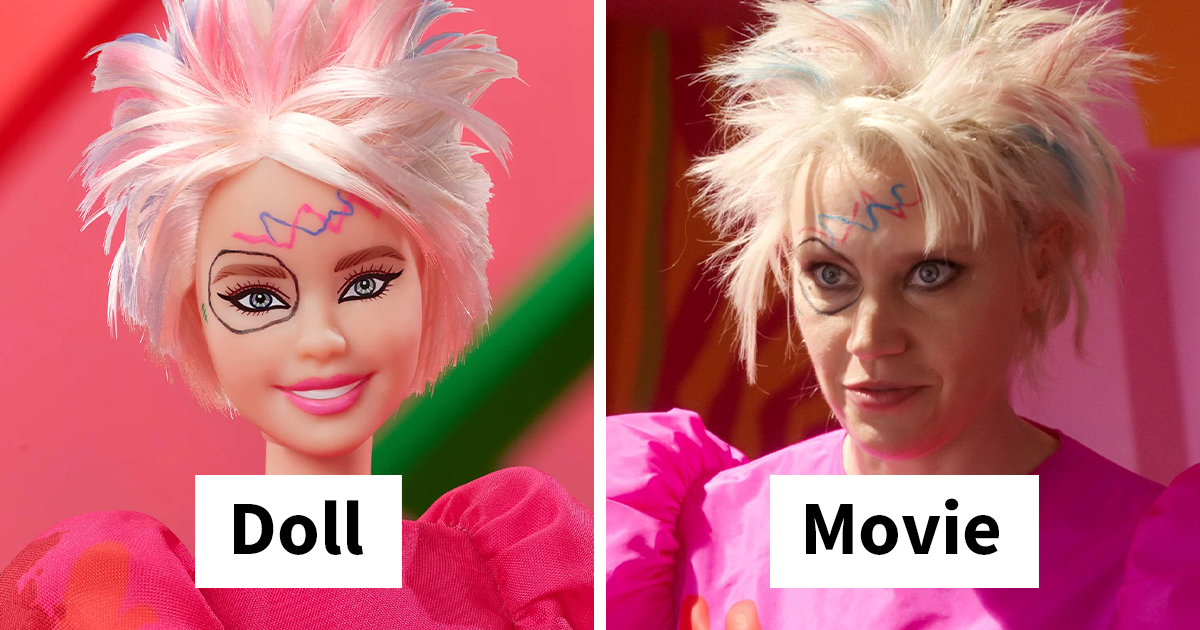
Mattel’s official Weird Barbie is part of the company’s Barbie The Movie merchandise collection. Inspired by Kate McKinnon’s character, the doll features short tousled hair with pink highlights, scribble-like markings on her face, a bright pink dress with colorful artwork, puffy sleeves, and green snakeskin-style boots. She also has a posable “Made to Move” body, so she can recreate the character’s memorable split pose without needing emergency physical therapy.
The doll was released as a Mattel Creations exclusive, priced at $50, with collectible packaging and a certificate of authenticity. In other words, this is not a random toy thrown into a bargain bin beside a lonely sock puppet. It is a curated collector’s item designed for fans who want to own a piece of the Barbie movie phenomenon.
On the surface, that makes perfect sense. Barbie was a massive box office hit, earning more than $1.4 billion worldwide and becoming the highest-grossing movie of 2023. Mattel would have needed superhuman restraint not to turn its breakout characters into merchandise. And corporations, historically, are not famous for looking at a money-printing opportunity and saying, “No thanks, we are emotionally fulfilled.”
Why Fans Think Mattel Is Missing The Point
The fan criticism comes down to one big idea: Weird Barbie was never supposed to be manufactured that way. In the movie, she is weird because someone played with her intensely. Her hair is chopped because a child got creative. Her face is drawn on because imagination got a little too close to the marker drawer. Her oddness is not a design flaw; it is evidence of play.
That is why some fans argue that buying a factory-made Weird Barbie defeats the joke. The original concept suggests that every Weird Barbie is personal. Your Weird Barbie is different from mine. Mine might have glitter glue on her knees, one missing shoe, and a tiny sticker on her forehead from a fruit snack box. Yours might be wearing a sock as a dress and have bangs that look like they were cut during an earthquake. Both are perfect. Neither needs a certificate of authenticity.
The internet reaction can be summed up like this: if the point of Weird Barbie is that kids make her weird through play, then a polished, packaged, intentionally designed Weird Barbie becomes the opposite of weird. She becomes official weird. Approved weird. Weird with a barcode.
The Irony Of Selling “Authentic Weirdness”
There is a delicious little irony here, and it is wearing pink boots. Weird Barbie represents the messy, handmade, unpredictable side of childhood. She is what happens when a toy stops being a product and becomes a companion. She is not pristine. She has survived. She has seen things. Probably a bathtub. Definitely a backpack.
By turning her into a finished product, Mattel creates a strange paradox: a doll designed to look overplayed, sold to people who may never remove her from the box. That is not necessarily bad, but it does create a funny tension. Weird Barbie, the symbol of reckless imagination, now comes with collectible packaging and a shipping estimate.
This is not a new problem in pop culture. The moment a subculture becomes popular, companies try to package it. Punk fashion becomes a luxury runway look. “Vintage” jeans arrive pre-faded. Coffee shops sell “authentic local vibes” in neighborhoods where the rent requires a heroic credit score. Weirdness is powerful because it feels unplanned. Once it is perfectly planned, people start squinting at it suspiciously.
But Mattel Also Has A Fair Point
Still, the criticism only tells half the story. Mattel is not pretending children cannot make their own Weird Barbie. Nobody is stopping anyone from giving an old doll a chaotic salon experience. In fact, if a child wants to make a Weird Barbie at home, the entire toy box is still open for business.
Mattel’s version is more like a character collectible. Fans loved Kate McKinnon’s performance. They loved the costume, the pose, the energy, and the fact that Weird Barbie seemed like the one person in Barbieland who had read a self-help book, ignored half of it, and still somehow became the wisest resident in town. For those fans, owning the official doll is not about replacing homemade weirdness. It is about celebrating a specific movie character.
Collectors also operate by different rules. A child might want to play with Barbie, redesign her hair, and send her on a dramatic rescue mission under the couch. A collector might want to preserve the doll as a snapshot of a cultural moment. Both approaches are valid. The toy aisle contains multitudes.
Why Weird Barbie Became So Popular
Weird Barbie worked because she felt familiar. Almost everyone who played with dolls, action figures, plush toys, or plastic dinosaurs had one toy that became “the weird one.” It was the toy that got customized beyond recognition. Maybe its hair was cut. Maybe its face was decorated. Maybe it lost an arm in a tragic stair accident involving “science.”
That toy often became more beloved, not less. It had a story. It had scars. It had personality. Kids do not always value perfection the way adults think they do. Adults see a doll with marker on her face and think, “Oh no, damage.” Kids think, “This is Queen Lightning Sparkle, ruler of the couch kingdom.”
In the movie, Weird Barbie is not treated as a failure. She is an outsider, but she is also a guide. She knows things the shinier Barbies do not. She understands that perfection is fragile and boring. She has been through play, and play has made her wise. That is why fans connected with her: she is the opposite of showroom beauty. She is proof that being changed by life does not make you less valuable.
Mattel, Barbie, And The Art Of Rebranding Imperfection
Barbie has always carried cultural weight. Since 1959, the brand has sold more than fashion and tiny shoes that disappear into carpets forever. Barbie has sold possibility. Mattel’s official brand message emphasizes inspiring limitless potential, and over the years, Barbie has expanded through new careers, body types, skin tones, hair textures, disabilities, and cultural identities.
The Barbie movie leaned directly into that complicated legacy. It celebrated Barbie while also poking fun at Mattel, beauty standards, corporate decision-making, gender expectations, and the strange emotional power of toys. That self-awareness is part of why the film worked. It did not simply say, “Buy Barbie.” It said, “Barbie is iconic, Barbie is complicated, and yes, we know this is all extremely pink.”
Weird Barbie fits perfectly into that self-aware universe. She is a joke about what actually happens to dolls in real homes. She is also a subtle critique of the idea that dolls must stay perfect to matter. So when Mattel turns her into a premium product, the company is both participating in the joke and becoming the joke. Honestly, that is very Barbie.
Is The Weird Barbie Doll A Smart Product Or A Creative Contradiction?
The answer is: both. From a business perspective, releasing Weird Barbie was smart. She was one of the movie’s most talked-about characters. Fans wanted merchandise. The design is instantly recognizable. The doll fits naturally into the larger Barbie The Movie collection, which includes different versions of Barbie, Ken, Allan, Gloria, and other movie-inspired items.
From a symbolic perspective, though, the product is a little contradictory. Weird Barbie’s whole charm is that she is not supposed to be standardized. Making one official version turns a personal childhood phenomenon into a fixed aesthetic. It says, “Here is what weird looks like,” when the real magic is that weird looks different in every house.
That contradiction is exactly why the debate is interesting. It is not simply “Mattel bad” or “fans too dramatic.” It is a collision between two different meanings of the same doll. To Mattel, Weird Barbie is a beloved character from a hit movie. To many fans, Weird Barbie is a symbol of creative play that cannot be boxed without losing a little sparkle.
The Larger Lesson: Fans Care About Meaning, Not Just Merch
The Weird Barbie conversation shows how modern audiences respond to brand storytelling. People are not only buying products; they are buying meanings. They care about what a character represents. They notice when a company turns an anti-polish symbol into a polished item. They can smell “limited edition authenticity” from three aisles away.
This does not mean fans hate merchandise. Fans love merchandise. Fans will buy hoodies, mugs, dolls, posters, and novelty items with the speed of someone who has already justified the purchase emotionally before checking the price. But fans also want the product to understand the story it came from.
That is the delicate balance for brands like Mattel. When a movie becomes a cultural event, merchandise is expected. But when the movie’s message includes satire, self-expression, and criticism of corporate perfection, every product becomes part of the conversation. Weird Barbie is not just a doll. She is a tiny plastic test of whether a brand can sell imperfection without sanding off the edges.
How Mattel Could Have Made The Concept Even Stronger
One way Mattel could have leaned further into the meaning of Weird Barbie would be to release a customizable kit. Imagine a standard Barbie bundled with washable markers, stickers, temporary tattoos, fabric scraps, and a guide encouraging kids and collectors to create their own version. That would turn the product into an activity rather than a finished statement.
Another option could be a “Make Your Own Weird Barbie” campaign where fans submit photos of their childhood dolls or newly customized creations. Mattel could highlight creativity instead of defining it. That approach would honor the character’s spirit while still supporting the brand’s larger movie merchandise strategy.
Of course, there are practical limits. A major toy company must consider safety standards, packaging, age recommendations, and brand control. A box of permanent markers and scissors labeled “Go wild” might make the legal department faint into a conference table. Still, the basic idea remains strong: Weird Barbie is at her best when she invites participation.
Why The Official Weird Barbie Still Matters
Even with the criticism, the official Weird Barbie doll has value. She captures one of the most memorable characters from a movie that reshaped how audiences talked about Barbie. She gives collectors a tangible piece of the film’s humor and style. She also proves that mainstream toy culture has room for characters who are odd, messy, and proudly imperfect.
That last point matters. For decades, Barbie was often criticized for being too perfect, too polished, too narrow in her beauty ideals. Weird Barbie flips that script. She is not glamorous in the traditional sense. She is chaotic, funny, and confident. She has marks on her face and uneven hair, and she still belongs in Barbieland. Actually, she might be the most emotionally stable person there, which is a sentence nobody expected to write about a doll with marker eyebrows.
So yes, the official doll may miss part of the point. But it also spreads the point to a wider audience: weirdness is not something to hide. It can be celebrated, displayed, and even given its own collector stand.
Personal Experiences And Reflections On The Weird Barbie Debate
The Weird Barbie conversation feels personal because almost everyone has a memory of “ruining” a toy in a way that secretly made it better. There is a special kind of childhood creativity that adults often misunderstand. A kid sees a doll’s long hair and thinks, “She needs a career change.” Five minutes later, Barbie has a bob, bangs, and the haunted expression of someone who trusted the wrong stylist. Adults call it damage. Kids call it character development.
That is why Weird Barbie feels so real. She reminds people of the toys that were not kept safe on a shelf. They were dragged through grass, dunked in sinks, buried in sand, dressed in mismatched clothes, and given dramatic backstories. Those toys were not perfect, but they were deeply loved. Sometimes the most meaningful objects are the ones that show evidence of being used.
There is also something funny about how adulthood changes our relationship with toys. As children, we personalize them without hesitation. As adults, we protect them. We keep them in boxes, check resale prices, and worry about whether opening the packaging will reduce value. Childhood says, “Let’s make this doll weird.” Adulthood says, “Do not touch the limited-edition certificate.” Somewhere between those two instincts is the whole Weird Barbie debate.
For many fans, the official Weird Barbie is charming but incomplete. She looks weird, but she does not feel weird in the same way a homemade Weird Barbie does. The homemade version carries a specific story. Maybe a sibling drew on her face. Maybe the dog chewed one shoe. Maybe a child decided she was a rock star, astronaut, pirate, therapist, and mayor all in the same afternoon. That kind of weirdness cannot be mass-produced because it comes from time, accident, and imagination.
At the same time, the official doll can inspire people to revisit that playful mindset. A collector might buy her because she loves Kate McKinnon. A parent might use the character to tell a child that toys do not have to stay perfect. A fan might look at Weird Barbie and remember that creativity is supposed to get a little messy. In that sense, even a manufactured Weird Barbie can point back to the original idea: play is not about preserving perfection. It is about making something yours.
The best version of this conversation is not “Should people buy the doll?” but “What does the doll make us remember?” It reminds us that imagination often looks like chaos before it looks like art. It reminds us that imperfections can become personality. It reminds us that the toys we loved most were not always the prettiest ones. Sometimes they were the ones with missing accessories, strange outfits, and a mysterious mark that nobody in the family would admit to making.
So, is Mattel missing the point? A little. But maybe fans are also proving the point by arguing about it so passionately. Weird Barbie means something because people recognize themselves in her. She is the doll who survived play, judgment, reinvention, and a very questionable haircut. Whether she comes from a factory or a childhood bedroom, she represents the freedom to be changed and still be loved.
Conclusion: Weird Barbie Is More Than A Doll In A Box
Mattel’s movie-inspired Weird Barbie is both a clever collectible and a fascinating contradiction. As merchandise, it makes sense. As a symbol, it raises questions. The whole point of Weird Barbie is that she became weird through imagination, not manufacturing. She is the result of play that went gloriously off-script.
But perhaps that is why the discussion has lasted. Weird Barbie sits at the intersection of nostalgia, branding, creativity, and childhood memory. She asks whether weirdness can be sold, whether imperfection can be standardized, and whether a doll can be both a product and a punchline. That is a lot of responsibility for someone in green boots.
In the end, the official Weird Barbie does not erase the homemade Weird Barbies of the world. It may even remind people to celebrate them. The real Weird Barbie is not just the one Mattel sells. She is every doll that got played with too hard, loved too loudly, and transformed into something no factory could have predicted.