
Few names in Hollywood history shine as brightly as Marilyn Monroe. Her platinum
curls, bedroom eyes, and megawatt smile helped define mid-century glamour. But
behind the iconic photographs and movie posters, there’s a quieter story: the
story of a woman who, like many of us, felt pressure to “fix” perceived flaws.
And yes, that story almost certainly includes at least a little plastic surgery.
Today, leaked medical files, auctioned X-rays, and expert analysis have given
fans a closer look at what Monroe may have done to subtly refine her features.
These aren’t tales of extreme makeovers or unrecognizable transformations.
Instead, we’re talking about tiny tweaks that were designed to look completely
natural on camera.
In this deep dive, we’ll explore the evidence behind Marilyn Monroe’s possible
procedures, the beauty standards of old Hollywood that fueled those choices, and
what her story can teach us about modern cosmetic culture. Think of it as a
backstage pass to one of the most famous faces of all timeno studio pass
required.
First, a Reality Check: What We Actually Know
Let’s start by separating gossip from documentation. Over the years, people have
speculated about everything from Monroe’s nose and chin to her bustline. Some of
those rumors are little more than wild guesses based on side-by-side photos. But
in the early 2010s, something more concrete surfaced: a cache of her medical
records and facial X-rays, reportedly from Beverly Hills plastic surgeon
Dr. Michael Gurdin.
These records, covering roughly 1950 to 1962, were auctioned in Beverly Hills.
They referenced prior surgery on Monroe’s chin and noted changes to her nasal
bones that suggested a subtle nose refinement. The files stopped short of
reading like a modern “before-and-after” brochure, but they did give historians
and medical experts enough to reasonably conclude that she’d had some cosmetic
work done, especially early in her career as she transitioned from Norma Jeane
Baker to the star the world knows as Marilyn Monroe.
Importantly, there’s still some debate and interpretation. Not every surgeon or
historian agrees on the exact procedures or timing, and some details are based
on expert opinion rather than written confirmation. So when we say “secrets
revealed,” it’s less about scandal and more about carefully reading the
available clues.
From Norma Jeane to Marilyn: A Carefully Crafted Transformation
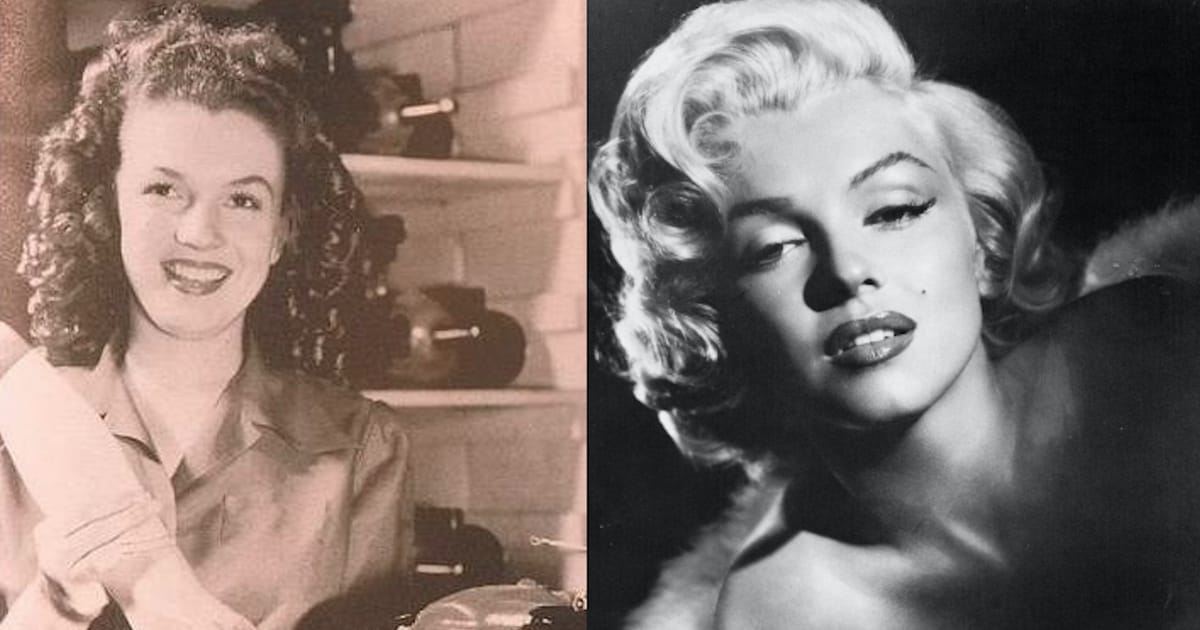
If you look at early photos of Norma Jeane from the 1940s and compare them with
her mid-1950s film stills, the transformation is striking. But not all of that
change came from a scalpel. In fact, much of her new look came from:
- Professional hair styling (goodbye, mousy brown; hello, bombshell blonde).
- Expert makeup: contoured cheeks, over-drawn lips, and strategic shading on the nose and eyes.
- Dental work and orthodontic improvements to straighten and brighten her smile.
- Studio-approved wardrobe and lighting that emphasized curves and softened angles.
Old Hollywood was notorious for “manufacturing” beauty. Studios routinely sent
contract players to dentists, dermatologists, and yes, plastic surgeons. Nose
jobs, chin implants, and even hairline adjustments weren’t unusual. Monroe’s
transformation fits right into that system: she was a working actress in a
highly competitive environment where small features could mean big box office.
The Chin Story: Subtle Support, Big Impact
Chin augmentation evidence
One of the most widely discussed procedures associated with Marilyn Monroe is a
chin augmentation. According to analyses of her medical records and X-rays,
Monroe appears to have had a small piece of cartilage or a similar implant
placed in the front of her chin early in her career.
In early photos, Norma Jeane’s chin looks slightly softer and less defined. By
the early 1950s, her jawline appears more structured, with a gentle but clearer
projection. Experts who have reviewed the X-rays note the presence of a
small fracture or irregularity consistent with an old implant or graft that may
have shifted over time.
Was this some dramatic “jawline snatching” transformation? Not at all. In most
pictures, the effect is subtlea little extra balance between her nose, lips,
and chin. But that modest adjustment helped create the camera-ready symmetry
that audiences subconsciously read as “classic beauty.”
Why the chin mattered so much on camera
In black-and-white close-ups, bone structure is everything. A slightly stronger
chin helps define the lower face, prevents it from disappearing under studio
lighting, and gives profiles a cleaner line. For an actress being groomed as a
romantic lead, that tiny tweak could make a big difference in how she photographed
from every angle.
Today, chin implants and jawline contouring are still popular procedures
whether done surgically or by using dermal fillers. Monroe’s experience is an
early example of how small structural changes can shift a face from “cute” to
“screen siren” without making it look obviously altered.
Rhinoplasty Rumors: A Nose That May Have Been “Quietly Refined”
The other major question mark around Marilyn Monroe’s appearance is her nose.
Early photos show a slightly wider bridge and rounder tip, while later images
reveal a narrower, more refined shape that still looks soft and naturalnot the
ultra-sharp “Instagram nose” that’s trendy today.
The medical files that surfaced in the 2010s mention nasal bones and changes
consistent with prior surgery, and several plastic surgeons who’ve studied the
X-rays believe she underwent a conservative rhinoplasty. Rather than drastically
changing her nose, the surgeon likely:
- Narrowed the nasal bridge by a few millimeters.
- Refined the tip to be a bit less bulbous.
- Adjusted the angle between the nose and upper lip for a more feminine profile.
If that sounds small, it isthat’s the point. A well-done rhinoplasty in
Hollywood’s golden age was supposed to be invisible. The idea wasn’t to give
Monroe someone else’s nose; it was to make her own look like the best possible
version of itself.
Could some of the perceived change also come from makeup, camera angles, and
lighting? Absolutely. Makeup artists were geniuses at subtly shading the sides
of the nose to make it appear slimmer and lifting the tip with highlight. Still,
the combination of photographic evidence and medical notes strongly suggests at
least one minor surgical refinement.
What About Breast Implants and Other Rumors?
Let’s talk about the rumor that refuses to die: did Marilyn Monroe have breast
implants? Short answer: there’s no credible evidence for that.
Modern surgeons and historians who have reviewed her medical files and studied
her films generally agree that Monroe did not have silicone or saline
implants. Those technologies either didn’t exist in their modern form during
her lifetime or were too experimental and risky to be widely used on major
stars. Instead, any changes in her bustline are likely due to:
- Natural weight fluctuations.
- Hormonal changes, including pregnancies and miscarriages.
- Highly structured undergarments and costume design.
Old Hollywood costume designers were masters at sculpting the body with boned
corsets, padded bras, and strategically placed seams. If you’ve ever worn a
really good push-up bra, you already know how different your shape can look
without a single medical bill.
As for other rumored surgerieslike eye lifts or faceliftsthere’s no solid
documentary proof. Given her age at the time of her death (36), and the quality
of photographic records, most experts believe her facial aging was largely
natural, aided by careful makeup and lighting rather than major surgical lifts.
The Emotional Side: Insecurities Behind the Icon
Focusing only on procedures can make Monroe’s story sound clinical, but there’s
a deeply human side here. She grew up in foster homes, weathered trauma, and
spent years hearing criticism about her looks, intelligence, and worth. By the
time she became famous, she’d already internalized the idea that she needed to
be “perfect” to be loved.
According to biographers, she was often self-conscious about what she saw as a
“baby face” and weak chin. In that light, a small chin implant or refined nose
isn’t just a career moveit’s a coping mechanism. It was a way for her to feel a
little more in control of how the world saw her, especially in an industry that
made a business out of judging women’s bodies from head to toe.
It’s also important to remember the era. In the 1950s, mental health support
was limited, body positivity wasn’t a cultural conversation, and cosmetic work
was generally kept secret. Monroe’s decisionswhatever their exact detailswere
made in a world that rewarded “perfect” looks and punished visible vulnerability.
Old Hollywood vs. Today’s Cosmetic Culture
If Marilyn Monroe were alive today, she’d probably be on endless “before and
after” lists, with social media accounts zooming in on pixels of her face.
Ironically, her supposed “plastic surgery secrets” were much more private in her
own time than they would be now.
Yet her story still feels incredibly current. We’re living in a world where
filters, fillers, and full-blown surgeries are openly discussed on TikTok and
Instagram. Celebrities and influencers admit toor denyprocedures while the
internet obsessively dissects every photo.
Marilyn’s experience offers a few key lessons for modern audiences:
- Subtlety ages better. Tiny refinements that respect a person’s natural features tend to look timeless.
- Makeup and styling still matter. You can do a lot with contour, hair, and wardrobe before considering surgery.
- Emotional health is crucial. No amount of physical tweaking can fully fix deep-rooted insecurity or trauma.
- Perfection is an illusion. Even the ultimate Hollywood “bombshell” had doubts and sought help to feel better in her own skin.
So, What Were Marilyn Monroe’s “Plastic Surgery Secrets” Really?
When you strip away the hype, Marilyn Monroe’s so-called plastic surgery
secrets aren’t so shocking:
- A likely chin augmentation to subtly strengthen her jawline.
- A conservative rhinoplasty that refinedbut did not radically changeher nose.
- No solid evidence of breast implants or extreme surgeries.
- Extensive use of makeup, hair color, lighting, and costuming to perfect her on-screen image.
In other words, Marilyn was not a “fake” beauty. She was a real woman in a
demanding industry who used every tool availablesome surgical, many notto
craft an image that still captivates the world. If anything, the small scale of
her alleged procedures underscores just how powerful subtle, strategic changes
can be.
And here’s the twist: even with X-rays, doctor’s notes, and auctions, parts of
her story remain mysterious. That feels fitting. Marilyn Monroe’s magic was
never just about bone structure; it was about vulnerability, charm, and an
almost impossible mix of innocence and seduction. No surgical record can fully
explain that.
of Takeaways and Reflections on Marilyn’s “Secrets”
Stepping back from the forensic details, it’s worth asking why Marilyn Monroe’s
plastic surgery story still fascinates us. After all, plenty of modern stars
openly admit to far more dramatic procedures, and social media is full of
everyday people chronicling their own journeys with Botox, fillers, and
surgery. So why are we still obsessed with a few small tweaks made more than
half a century ago?
One reason is that Marilyn feels like the “original.” She’s the blueprint for
the blonde bombshell archetype that later iconsthink Madonna, Gwen Stefani, or
even contemporary influencershave referenced in one way or another. When the
blueprint turns out to have a chin implant or a refined nose, it forces us to
question our idea of “natural beauty.” If even Marilyn had help, what does that
say about the standards everyone else is trying to meet?
Another reason is that her story exposes how long these pressures have been
around. It’s easy to blame Instagram filters or reality TV for today’s beauty
anxiety, but the truth is that Hollywood was engineering faces long before
social media existed. The difference now is transparency. Where Monroe’s
procedures were kept quiet, many modern celebrities talk openly about their
choicesor at least about “non-surgical” tweaks. We’ve gone from hush-hush to
how-to.
There’s also a personal takeaway here for anyone considering cosmetic work.
Marilyn’s rumored surgeries were modest, but they appear to have been carefully
chosen to match her goals: balancing her profile, enhancing symmetry, and
making sure she photographed well from every angle. Today, people sometimes
feel pressure to overhaul everything all at once, chasing a trending look
rather than a timeless one. Monroe’s approachsmall changes, big impactis a
reminder that less can absolutely be more.
At the same time, her life is a cautionary tale about expecting any procedure
to fix deeper issues. Despite her fame and beauty, she battled loneliness,
mental health struggles, and intense scrutiny. No chin implant can make the
tabloids kinder. No nose job can guarantee love or stability. Cosmetic
procedures can offer a confidence boost, but they’re not a shortcut to
happiness, and they’re certainly not a substitute for therapy, healthy
relationships, or self-acceptance.
For fans, maybe the healthiest way to view Marilyn’s plastic surgery “secrets”
is with compassion rather than judgment. She wasn’t “cheating” at beauty any
more than anyone using braces, hair dye, or skincare is cheating. She was a
woman navigating impossible expectations with the tools available to her. If
anything, her journey makes her feel more relatable. Who hasn’t looked in the
mirror and wished for a slightly different nose, jawline, or smile?
Ultimately, the legacy of Marilyn Monroe’s cosmetic tweaks isn’t about the
specific procedures she may or may not have had. It’s about the conversation
they continue to spark: about how we define beauty, how far we’re willing to go
to chase it, and whether we can extend a little more graceto icons and to
ourselvesalong the way.
If you come away from her story with anything, let it be this: even the most
glamorous faces have insecurities, and even the most famous “bombshells” are
still human. Marilyn Monroe’s light didn’t come from a scalpel. It came from
something far harder to replicate: a presence that made the world stop and
stare, then keep wondering long after the credits rolled.