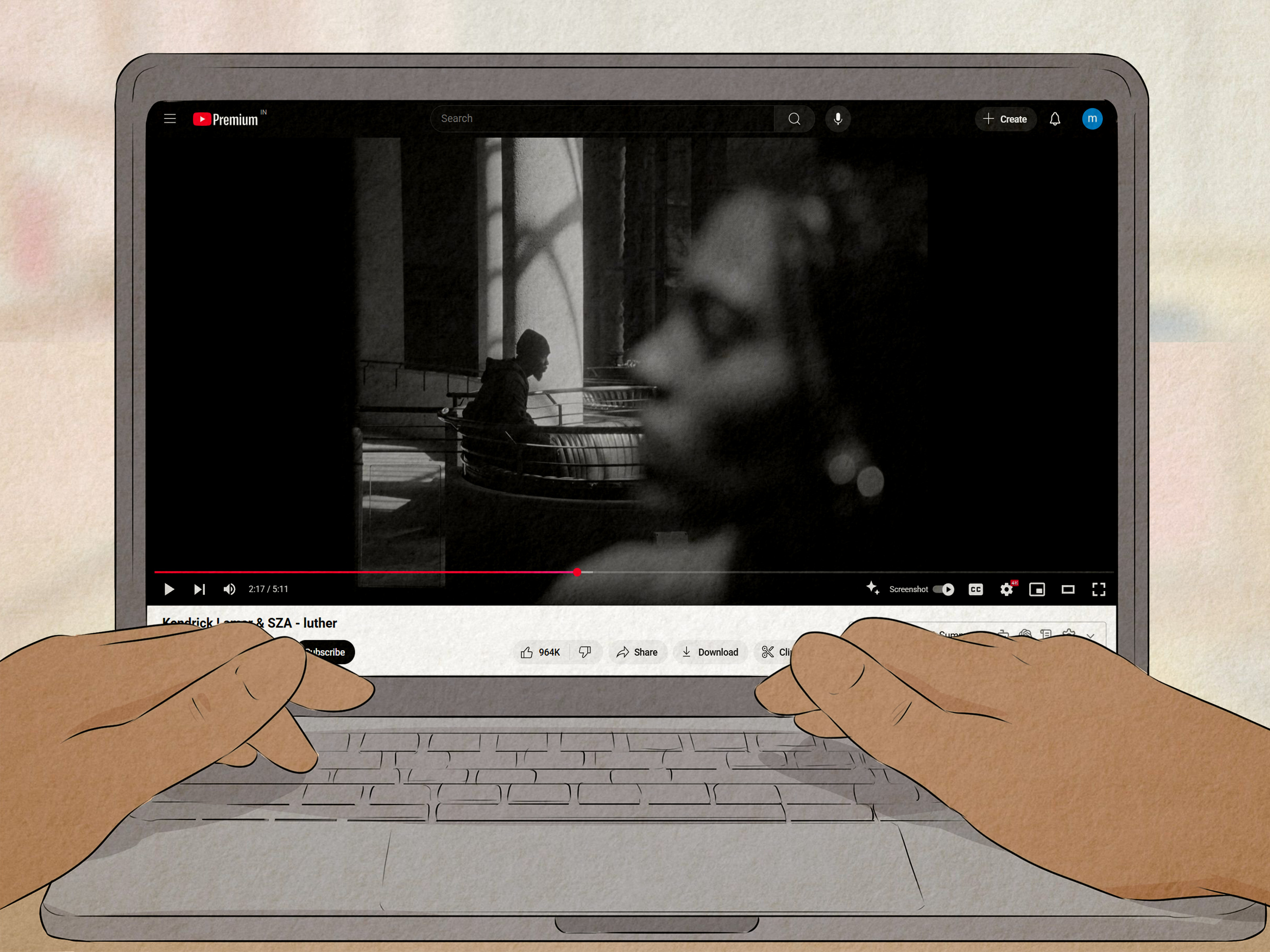

“Luther” sounds like the musical equivalent of someone finally putting their phone on Do Not Disturb, lighting a candle, and deciding they’re going to be emotionally available for three minutes and change. And coming from Kendrick Lamaran artist who can turn a parking-lot conversation into a thesisthis softer, romantic pivot feels both surprising and… weirdly inevitable.
If you’ve been looping the track and thinking, “Okay, this is beautiful, but what exactly is he saying?”you’re in the right place. Let’s break down the meaning, the references, the emotional math, and why this song’s hook hits like a warm coat in a cold world.
Quick context: where “Luther” sits in Kendrick’s universe
“Luther” arrived as part of GNX, a project that reminded everyone Kendrick can still dominate the conversation without yelling to do it. Sonically, “Luther” is a smooth, radio-friendly slow-burn with an old-soul backbone and modern polishless “sparring match,” more “slow dance in the kitchen.” It’s also a high-profile duet with SZA, which matters, because their chemistry has always been a cheat code for emotional clarity.
In other words: “Luther” is a breather. A palate cleanser. A track that steps away from flexing and instead asks, “What if love was the main event?”
What does the title “Luther” mean?
1) It’s a nod to Luther Vandross (and the song’s entire vibe)
The title points directly at Luther Vandrosssynonymous with velvet-voiced romance, grown-folks R&B, and songs that make you want to text someone “hope you got home safe” even if you barely like them. Naming the song “Luther” is basically Kendrick and SZA hanging a neon sign that says: this is a love song, and it’s going to be unapologetically tender.
2) The sample is the secret narrator
The track draws power from a familiar refrain“If this world were mine”which sets up the whole premise: love as imagination, devotion as world-building. That idea isn’t just a cute romantic line; it’s the spine of the song. Kendrick isn’t merely describing a relationship. He’s offering a fantasy of protection, comfort, and control over chaos.
The big idea: love as a “make-the-world-better” promise
At its core, “Luther” is about one question: What would I change if I had the power to make life easier for the person I love?
That’s why the song feels so soothing. It doesn’t pretend the world is fine. It quietly admits the oppositelife is heavy, people get hurt, and sometimes the most romantic thing you can say is: “I can’t fix everything, but I want to try.”
This is the emotional engine that drives the track:
- Devotion (I’m here, I’m locked in.)
- Protection (I want to shield you from what harms you.)
- Elevation (I want you to feel bigger, safer, freer.)
- Wish-fulfillment (If I could rewrite the rules, you’d never have to suffer.)
The chorus: why “If this world were mine” hits so hard
That hook isn’t just romanticit’s escapist in a way that feels honest. It’s the sound of someone staring at real life and saying, “Yeah, I know how this goes… but let me dream for a second.”
In love songs, “I’ll give you the world” is a common line. “Luther” flips it: the world is obviously not yours to givebut the longing to improve someone’s life is still real. That tension is the magic: the song is a fantasy, but the emotion underneath it is practical and human.
Verse-by-verse meaning: what Kendrick and SZA are really doing
Kendrick’s approach: tender confidence, not performance
Kendrick’s writing here feels intentionally uncluttered. Instead of stacking metaphors or doing narrative gymnastics, he leans into clear intention: he’s expressing the desire to provide, to protect, to be a steady presence. That’s a big deal because Kendrick’s catalog often interrogates powerwho has it, who abuses it, who survives it.
In “Luther,” power is reimagined as caretaking. It’s not “I run things.” It’s “I want you safe.” The flex is emotional consistency.
SZA’s role: vulnerability with boundaries
SZA doesn’t show up to be a side character in Kendrick’s fantasy. She adds the lived-in emotional detail: the cautious optimism, the desire to believe, the awareness that love can be healing but also risky. Her presence keeps the song from becoming a one-sided promise. It becomes a conversationtwo people trying to meet each other in the middle of real life.
Where Kendrick offers the dream of a better world, SZA brings the question underneath: Can I trust this dream? Can we keep it?
The hidden tension: devotion vs. control
Here’s where “Luther” gets more interesting than a standard slow jam: the fantasy of “If this world were mine” can sound like pure romance, but it can also carry a subtle edgebecause the one imagining control over the world is still imagining control.
That doesn’t make the song sinister. It makes it human. Love often contains a contradiction:
- We want to protect someone… but we can’t manage their entire life.
- We want to fix their pain… but we can’t delete their past.
- We want certainty… but relationships are built in uncertainty.
“Luther” lives inside that contradiction. It’s a song about wanting to do the impossiblethen turning that impossible desire into something you can do: show up, stay present, and speak love out loud.
Why the Luther Vandross connection matters beyond the sample
Invoking Luther Vandross isn’t just a nostalgic wink. It’s also a statement about lineageabout placing Kendrick and SZA inside a tradition of Black love songs that prioritize intimacy, softness, and devotion.
That matters because Kendrick’s public image often centers on intensity: the thinker, the moral critic, the cultural lightning rod. “Luther” reminds listeners that softness is also part of the storyespecially for artists who are expected to be “serious” all the time. This track says: romance is serious too.
The sound: why it feels like a slow exhale
Musically, “Luther” doesn’t rush. It’s built to feel suspended in timelike a scene where everything else fades and you only hear what matters. The production blends classic R&B warmth with modern hip-hop structure: space for vocals, a steady groove, and an atmosphere that suggests candlelight without being corny about it.
That pacing helps the message land. You’re not just hearing lyricsyou’re sitting inside a mood.
The music video: romance as architecture
When the “Luther” video arrived, it leaned into the song’s quiet luxury. Visually, it plays like a stylish short film: romantic tension, composed shots, and a sense of emotional distance closing into intimacy. Kendrick and SZA aren’t “acting” like pop stars mugging for the camerathey’re moving through spaces that feel designed to echo the song’s theme: private love inside a loud world.
Even if you don’t analyze a single frame, the video reinforces what the track already says: this isn’t about drama; it’s about devotion.
So what’s the meaning of “Luther,” in one sentence?
“Luther” is a love song about imagining a world where the person you love is protected, cherished, and freeand admitting that even if you can’t control the world, you can still choose tenderness.
FAQ: quick answers people keep searching for
Is “Luther” about SZA?
Not necessarily in a literal, autobiographical way. Think of it as a duet built around a shared ideadevotionrather than a public relationship confirmation. The song works because it feels universal: two voices playing roles in a romantic “what if.”
What does “Luther” sample?
The song draws from a classic “If this world were mine” motif associated with Luther Vandross’ era and romantic tradition. That phrase becomes the song’s mission statement: love as a reimagined reality.
Why is the song so different from Kendrick’s harder tracks?
Kendrick has always moved between intensity and intimacy. “Luther” is the intimate laneproof that restraint can be as impactful as aggression.
Conclusion: why “Luther” sticks
“Luther” doesn’t try to win you over with shock value. It wins with calm. It takes the familiar language of love songspromise, devotion, fantasyand makes it feel grounded again. Kendrick and SZA aren’t just singing about romance; they’re singing about relief. About the hope that someone can be a safe place in a world that doesn’t always feel safe.
And that’s why the song keeps replaying. It isn’t only catchy. It’s comforting.
Afterword: of real-life “Luther” experiences (the part you feel, not just analyze)
There’s a special category of song that doesn’t just sound goodit behaves like a friend. “Luther” lives there. People don’t only listen to it; they use it. It’s background music for emotional maintenance, the kind of track you put on when you’re trying to re-enter your body after a long day of being perceived.
For some listeners, “Luther” is a late-night-drive song. You know the scene: the city’s still awake, but your brain finally quiets down. The traffic lights change like they’re keeping time with the beat. You’re not “sad,” exactlyyou’re just processing. And then that “If this world were mine” idea hits, and it feels like permission to want better things without having to justify them. Not a manifesto, not a rantjust a soft wish that someone you care about doesn’t have to carry so much.
For others, “Luther” is a relationship temperature-check. Couples play it while cooking, not as a grand romantic gesture, but as a small one: a shared mood. It’s the soundtrack for chopping onions (the edible kind… and, okay, sometimes the emotional kind). It’s the song that makes someone lean on the counter and say, “We should take a weekend trip,” and you both know the trip is really code for “Let’s breathe again.”
And then there are the solo listenersthe ones who play “Luther” as self-soothing. Because here’s the twist: a love song doesn’t always make you think of someone else. Sometimes it makes you think about what you want for yourself. You hear the devotion in the writing and realize, “Wait, I want that kind of gentleness in my life.” It becomes less about romance and more about standards. About learning to recognize care that feels calm, not chaotic.
At parties, “Luther” functions like a social reset button. Someone puts it on after a run of louder tracks and suddenly the room shifts. People stop yelling over the music and start singing alongquietly, happily, like they’re letting their guard down for a minute. It doesn’t kill the vibe; it changes it. It turns the party into a movie scene where everyone is briefly nicer to each other.
And at the risk of sounding like an ad for feelings (use code: EMOTIONS), “Luther” also lands at moments of reconciliation. It’s the kind of track that plays after an argument when nobody’s ready to talk yet. The melody gives you a bridge back to each other. It says, “Let’s not make this bigger than it is.” It’s romance without theatricscommitment without a speech.
That’s the lived experience of “Luther”: it’s not just a song you understand. It’s a song you move through. And the reason it sticks is simplemost people aren’t searching for perfect love. They’re searching for a little more peace.