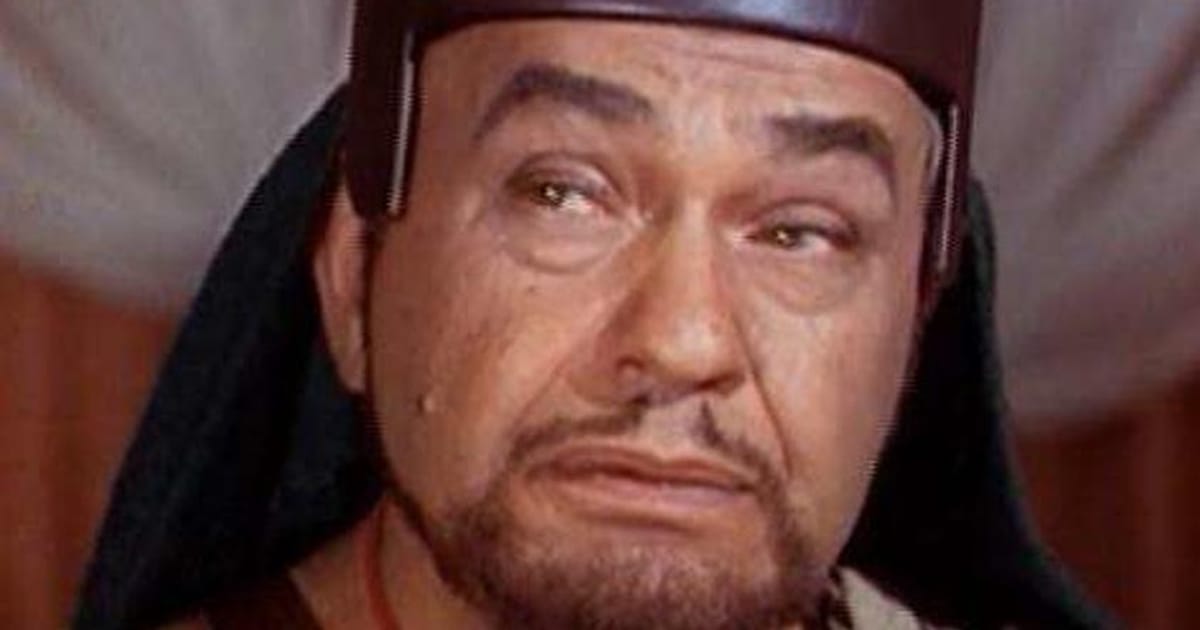

If you love classic Hollywood but somehow haven’t done a proper Edward G. Robinson marathon yet, consider this your friendly nudge. Robinson wasn’t just the guy saying “Yeah, see?” in old gangster movies (though, yes, he absolutely helped invent that vibe). He was one of the most versatile actors of the studio era, moving from snarling mob bosses to moral crusaders, broken clerks, and even biblical villains with ridiculous ease.
Because his filmography is huge, this ranked list focuses on the most essential Edward G. Robinson movies the ones consistently praised by critics, film historians, and fans on sites like IMDb, Rotten Tomatoes, Ranker, the AFI Catalog, and more. Think of it as your curated watchlist: start at the top, work your way down, and you’ll see exactly why Robinson is still considered one of the greats of classic American cinema.
1. Double Indemnity (1944)
Most people remember Double Indemnity for Barbara Stanwyck’s anklet and Fred MacMurray’s terrible life choices, but Robinson is the movie’s moral center. As insurance investigator Barton Keyes, he’s sharp, relentless, and oddly lovable.
This film noir classic regularly tops lists of Robinson’s best work, and for good reason: his rapid-fire monologues about statistics and “the little man” inside him are some of the most quoted moments in film history. His performance balances the movie’s cynicism with an underlying belief in justice, making him the one person you really don’t want to disappoint.
2. Key Largo (1948)
In Key Largo, Robinson goes full gangster again as Johnny Rocco, a mob boss hiding out in a Florida hotel during a hurricane. He shares the screen with heavyweights Humphrey Bogart and Lauren Bacall, but he still manages to dominate nearly every scene just by glowering and sweating in a white shirt.
Fans and critics frequently place this high on Robinson rankings because it feels like the “mature” version of his early gangster persona from Little Caesarstill dangerous, but also pathetic and aging, clinging to past power that’s clearly slipping away.
3. Scarlet Street (1945)
If you like your film noir pitch-black, Scarlet Street is essential. Robinson plays Christopher Cross, a meek cashier and amateur painter who gets tangled up with a manipulative femme fatale and her abusive boyfriend. Things go very wrong, very fast.
On sites that rank Edward G. Robinson films, Scarlet Street often lands in the top three because it flips his usual tough-guy image. Instead of controlling the plot, his character is slowly crushed by it. The performance is heartbreaking and quietly terrifying proof that Robinson could play vulnerable as convincingly as vicious.
4. Little Caesar (1931)
This is the one that made him a star. In Little Caesar, Robinson’s Rico Bandello claws his way from small-time hood to mob boss and then inevitably crashes back down. The film helped establish the entire Hollywood gangster template, and Robinson’s staccato line delivery and intense stare became instant cultural shorthand for “mobster.”
Modern viewers might find the pacing a bit slower than later crime films, but Rico’s rise-and-fall arc still hits hard. If you’re watching his movies in order, this is the perfect “origin story” for the Edward G. Robinson image that pop culture has been copying ever since.
5. The Woman in the Window (1944)
Once again teaming with director Fritz Lang, Robinson stars as Richard Wanley, a mild-mannered professor whose fascination with a portrait turns into a nightmare involving murder and blackmail.
This psychological noir leans less on gunfights and more on moral panic, and Robinson’s performance anchors it. He makes Wanley feel like a completely ordinary person who makes one bad choice and then spends the rest of the film trying (and failing) to wriggle free. It pairs beautifully with Scarlet Street as a double feature of “respectable men collapsing under pressure.”
6. The Ten Commandments (1956)
Yes, that’s Edward G. Robinson in a biblical epic. In Cecil B. DeMille’s technicolor spectacle, he plays Dathan, a scheming, opportunistic overseer who sides with Pharaoh and constantly undermines Moses.
While this isn’t “his” movie in the way some others are, it shows how flexible he was as a character actor. Surrounded by huge sets, hundreds of extras, and special effects, Robinson still manages to make Dathan feel distinctly human greedy, frightened, and completely unbothered by the idea of switching loyalties if it keeps him alive.
7. The Stranger (1946)
Directed by Orson Welles, The Stranger pits Robinson’s federal investigator against a Nazi war criminal hiding in a small American town. Robinson’s character, Wilson, slowly peels away the lies around Welles’s seemingly respectable teacher.
The movie is a tight, suspenseful thriller and a great showcase for Robinson’s intensity. He plays Wilson as calm but relentless someone who is never as fooled as the town thinks he is. Fans on classic film forums and noir communities often name this as one of his most underrated performances.
8. Our Vines Have Tender Grapes (1945)
Need a break from crime and doom? This gentle rural drama casts Robinson as Martinius Jacobson, a Norwegian-American farmer raising his family in Wisconsin. The story focuses on community, faith, and everyday struggles rather than bullets and betrayals.
Classic film fans often point to this movie as proof of Robinson’s range. After spending several titles as gangsters or men destroyed by temptation, here he’s warm, steady, and quietly moving. It’s an ideal “palette cleanser” if you’re binge-watching his darker work.
9. The Sea Wolf (1941)
Based on Jack London’s novel, The Sea Wolf isn’t always marketed as an “Edward G. Robinson film,” but his turn as brutal sea captain Wolf Larsen is a major reason it still gets discussed.
His Larsen is intelligent, cruel, and strangely philosophical a man who treats his ship like a floating experiment in power and fear. If you’ve mostly seen Robinson in suits and fedoras, watching him command a ship through fog and moral chaos is a fun change of pace.
10. Larceny, Inc. (1942)
Robinson doing comedy? Absolutely. In Larceny, Inc., he plays a crook who buys a luggage store purely to use it as a front for tunneling into a nearby bank vault. Things get complicated when his “fake” store suddenly becomes a real success.
The movie blends crime and screwball humor, and Robinson leans into the absurd premise while still keeping a bit of that Rico-style edge. It regularly gets recommended by classic film fans as a lighter entry in his filmography.
11. All My Sons (1948)
Adapted from Arthur Miller’s play, All My Sons casts Robinson as a businessman whose past wartime decisions come back to haunt him and his family.
Here, Robinson isn’t hiding behind genre conventions he’s right in the center of a moral drama about guilt, responsibility, and denial. It’s a powerful performance that often shows up in “best of” lists even if it isn’t as widely known as Double Indemnity or Key Largo.
12. Soylent Green (1973)
Robinson’s final film role is also one of his most poignant. In the dystopian sci-fi thriller Soylent Green, he plays Sol Roth, an aging researcher helping Charlton Heston’s detective uncover what’s really going on with the mysterious food product feeding an overpopulated world.
The movie’s twist is legendary, but Robinson’s tender, weary performance gives the story emotional weight. Knowing he died shortly after filming, many viewers find his final scenes especially moving it’s like watching one of Hollywood’s greats take a graceful bow.
How to Watch Edward G. Robinson’s Movies Today
Most of these films are widely available on classic movie channels, major streaming platforms, and digital rental services. Collections and boxed sets often bundle his gangster films together or pair his Fritz Lang collaborations (Scarlet Street and The Woman in the Window) as must-see noir double features.
If you’re new to classic cinema, a good route is:
- Start with Double Indemnity and Key Largo to see his most iconic mid-career work.
- Go back to Little Caesar for his breakout gangster role.
- Then dive into the darker noirs like Scarlet Street and The Woman in the Window.
- Finish with Soylent Green for a surprisingly moving farewell.
Why Edward G. Robinson Still Matters
Across rankings, fan polls, and historical writeups, Robinson is consistently cited as one of the key faces of classic Hollywood often ranked among the greatest male stars and described as one of the best actors never to receive a competitive Oscar nomination.
What makes his movies so rewatchable is the depth he brings even to genre roles. Gangsters aren’t just loud; they’re insecure. Investigators aren’t just righteous; they’re exhausted. Ordinary men aren’t just victims; they’re complicit. That complexity is why his films still show up in modern streaming queues and “must-watch” movie lists.
Personal Experiences: Getting the Most Out of an Edward G. Robinson Marathon
Spending time with Edward G. Robinson’s filmography is a bit like touring the golden age of Hollywood through one actor’s face. To get the most out of a “List of Edward G. Robinson Movies, Ranked” watch-through, it helps to think of it as both entertainment and film history in motion.
1. Feel the Shift in Genres and Eras
If you watch these movies in rough chronological order, you’ll feel the evolution of Hollywood itself. Early-1930s titles like Little Caesar have that raw, pre-Code energy; by the mid-1940s, films like Double Indemnity and Scarlet Street are drenched in noir shadows and moral ambiguity; then the 1950s and 1960s bring widescreen epics and genre experiments like The Ten Commandments and ultimately Soylent Green.
As you go, pay attention to how Robinson adjusts his acting stylehe starts sharp and theatrical, then grows more internal and controlled without ever losing that expressive face and voice.
2. Watch How He Plays Power and Vulnerability
One of the most fascinating parts of a ranked Robinson list is noticing the contrast between roles where he’s in charge and roles where he’s clearly not. Compare the swaggering Rico in Little Caesar with the worn-down clerk in Scarlet Street, or the calculating Johnny Rocco in Key Largo with the guilt-haunted figures in All My Sons and The Woman in the Window.
By tracking those performances side by side, you realize how rarely he repeats himself. The gestures might look similar at a glance, but the emotional temperature is completely different from film to film.
3. Pair Films for Themed Double Features
To make your marathon more fun, try organizing viewings around themes instead of strict ranking:
- “Fritz Lang Nights”: Watch The Woman in the Window and Scarlet Street back to back for a masterclass in noir psychology.
- “Gangsters Then and Now”: Pair Little Caesar with Key Largo to see Robinson’s gangster persona evolve from hungry upstart to decaying tyrant.
- “Unexpected Robinson”: Go with Our Vines Have Tender Grapes and Soylent Green to experience his gentler, more reflective side.
This kind of pairing helps you see patterns in his work while keeping the viewing experience fresh.
4. Notice the Supporting Players and Directors
These movies aren’t just about Robinson; they’re also a tour of classic Hollywood collaborators. You’ll run into directors like Fritz Lang and Billy Wilder, co-stars like Bogart, Bacall, Stanwyck, and Heston, and character actors who pop up repeatedly across the filmography. Spotting familiar faces and names from one title to the next turns the marathon into a kind of cinematic “where’s Waldo?” and deepens your appreciation for the studio-era ecosystem around him.
5. Let the Ranking Guide You, Not Boss You Around
Any “List of Edward G. Robinson Movies, Ranked” is ultimately a starting point, not sacred law. As you watch, you’ll probably reshuffle this list in your own head. Maybe you’ll decide that Larceny, Inc. deserves to be higher because you love seeing him lean into comedy, or that The Sea Wolf is your personal number one because that brooding sea captain hits you in just the right way.
The fun is in forming your own ranking and arguing (politely, preferably with snacks) about it with fellow classic movie fans. Robinson’s range ensures there’s a favorite for almost every type of viewernoir lovers, drama fans, epic enthusiasts, even people who just want to see where all those old gangster impressions originally came from.
6. Why This Ranked List Is Worth Returning To
Once you’ve worked through this list, it doubles as a roadmap you can revisit. Want a moody noir night? Revisit the top five. In the mood for something less bleak? Jump to Our Vines Have Tender Grapes or Larceny, Inc.. Craving something big and operatic? Back to The Ten Commandments you go.
Over time, you’ll likely find that the “ranked” part becomes less important than the feeling of spending time with an actor whose craft holds up decade after decade. Whether he’s playing a brutal mob boss, a terrified professor, or a gentle old researcher staring down a collapsing world, Edward G. Robinson brings a level of commitment that still feels completely alive today.
Conclusion
Edward G. Robinson’s filmography reads like an alternate tour through Hollywood history: gangsters, noirs, prestige dramas, biblical epics, and dystopian sci-fi all anchored by one unforgettable screen presence. This ranked list is designed to help you navigate his best and most influential work, but it’s really just the beginning. Once you’ve seen these titles, there are dozens more roles big and small where he steals scenes with a single look or line.
Whether you’re a seasoned classic film fan or someone just dipping into black-and-white movies for the first time, Robinson is a perfect guide. Start anywhere on this list, and you’ll quickly understand why critics, historians, and audiences keep returning to his movies and arguing (fondly) about which one deserves the top spot.