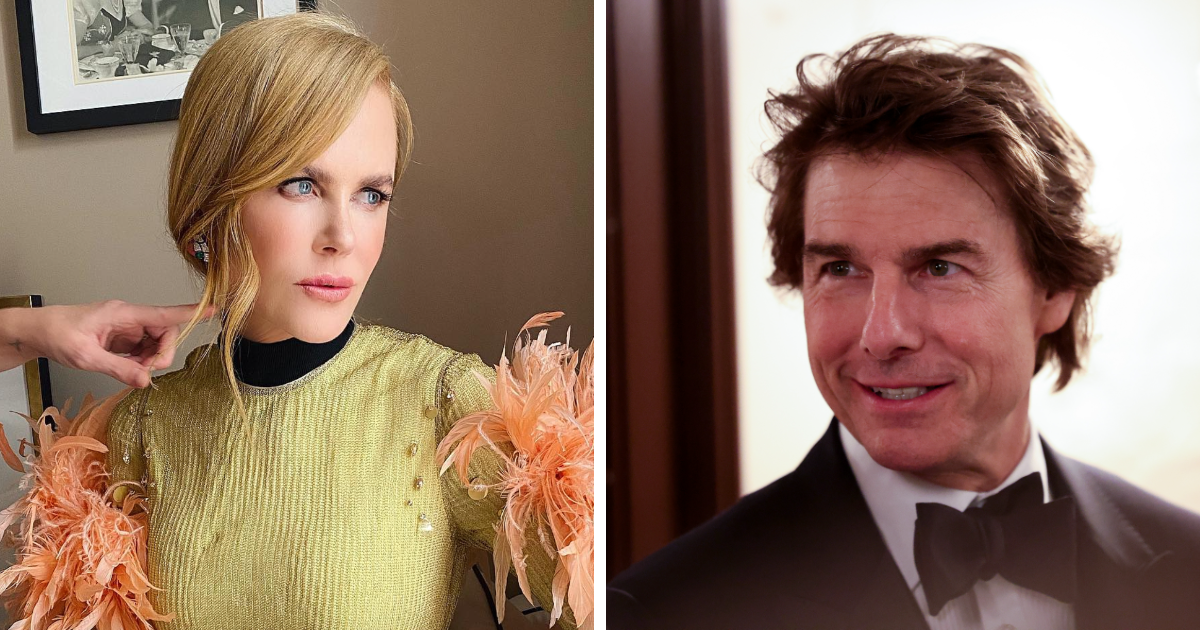

Celebrity breakups rarely arrive alone. They travel in a pack with old interviews, recycled grudges, suspicious “insiders,” and enough social-media moralizing to power a small city. That is exactly what happened when reports about Nicole Kidman’s split from Keith Urban collided with a supposedly brutal reaction from Tom Cruise, her famous ex-husband. The internet, naturally, did what the internet does best: it grabbed a juicy one-word hook, “karma,” and ran a marathon with it.
But here is where things get more interesting than the headline. The split between Kidman and Urban was reported across mainstream entertainment coverage and later followed by Kidman’s own carefully worded public remarks about family, privacy, and moving forward. The alleged Tom Cruise response, however, landed in murkier territory. It was framed as a reported reaction, not a confirmed public statement, and the story spread because it fit a narrative that audiences already understood: old wounds, public image, and the irresistible temptation to turn celebrity history into poetic justice.
So, was this really a case of Tom Cruise brutally breaking his silence on Nicole Kidman’s split from Keith Urban? Sort of, maybe, and not in the clean-cut way clicky headlines would like you to believe. The more revealing story is not just what may or may not have been said. It is why so many people were eager to believe it, repeat it, meme it, and crown it as proof that Hollywood karma never misses an address.
What Is Actually Confirmed About Nicole Kidman and Keith Urban?
Before the gossip confetti starts flying, it helps to separate the hardwood floor from the glitter. Nicole Kidman and Keith Urban’s breakup was widely reported by mainstream entertainment outlets, and Kidman later addressed the end of the marriage in public remarks that emphasized family unity, gratitude, and privacy rather than blame. The tone mattered. She did not go scorched-earth. She did not deliver a revenge speech. She did not reach for a flamethrower and a microphone. Instead, she leaned into the familiar language of dignity: family first, children protected, next chapter loading.
That posture is consistent with the way Kidman has often handled intensely public private matters. Even when the tabloids want a wrestling match, she tends to offer a closed-lip smile and a line polished enough to stop the questions without feeding the circus. In practical terms, that made the post-divorce coverage feel more restrained on her end than on the internet’s end, which had already decided there had to be villains, winners, losers, and preferably a cinematic callback to her earlier marriage to Cruise.
Why the Alleged Tom Cruise “Karma” Comment Blew Up So Fast
The rumored remark gained traction because it sounded like the kind of thing audiences think a wounded ex might say after decades of quiet. It had everything a gossip ecosystem loves: a famous former spouse, an emotional callback, a whiff of vengeance, and a single sharp word that could fit neatly into a headline, a TikTok caption, or a comment thread full of popcorn emojis. “Karma” is not just a word in celebrity coverage. It is a plot device.
And that is the real fuel here. People were not only reacting to an alleged comment. They were reacting to the architecture of the story. Cruise and Kidman were once one of Hollywood’s defining couples. Their divorce in the early 2000s was huge, and it never fully left pop culture memory. Add Kidman’s later marriage to Urban, then a reported split, then a rumor that Cruise saw it as cosmic payback, and suddenly the internet has a full three-act drama with callbacks, irony, and emotional symmetry. Screenwriters call that structure. The public calls it tea.
The internet loves a narrative with symmetry
There is a reason the alleged quote felt believable to so many people even before it was verified. Public memory does not store celebrity history as facts alone. It stores it as emotional shorthand. Cruise became linked with power, secrecy, and one of the most scrutinized divorces in modern celebrity culture. Kidman became linked with resilience, reinvention, and that icy-cool survival mode that makes a person look even stronger once the dust settles. When her marriage to Urban reportedly ended, the internet immediately reached backward and stitched the old story to the new one.
That instinct is understandable, but it is also sloppy. Human beings are pattern-hungry creatures. We love neat endings, deserved consequences, and storylines that feel balanced. Real life is usually much messier. Relationships do not end to satisfy the audience’s sense of cosmic accounting. They end because people change, drift, struggle, compromise, fail, protect themselves, or simply cannot keep the same emotional architecture standing forever.
The Long Shadow of Tom Cruise and Nicole Kidman’s Marriage
Any new headline linking these two will always carry the weight of their past. Cruise and Kidman were married for more than a decade, and their split became one of those celebrity events that lived far beyond the original news cycle. It was not just a breakup. It was a cultural moment. That is why even a rumored reaction now can travel so far so fast. Their history still has commercial value in the attention economy, and attention, as always, pays rent.
What complicates the “brutally broke silence” framing is that Cruise’s more clearly documented comment about Kidman in 2025 was not cruel at all. In a rare public reflection, he praised her as an actress while discussing Eyes Wide Shut. That does not magically prove he never felt privately bitter, of course. Exes are human, not decorative houseplants. But it does matter when evaluating whether the public should treat a tabloid-style “karma” line as the definitive return of Cruise’s voice on the matter. If anything, the on-record contrast makes the rumor look even more like a story that spread because it was delicious, not because it was solid.
Nicole Kidman’s old one-liners still have pop-culture mileage
Part of the renewed fascination also comes from how often Kidman’s post-divorce humor has been revived in public conversation. Her famous old quip about being able to wear heels after the end of her marriage to Cruise has enjoyed multiple lives online, because it is concise, cutting, and memorable. It has the mechanical efficiency of a perfect gossip quote: short enough for headlines, sharp enough for screenshots, and elegant enough to sound almost accidental.
That old remark became part of the emotional backdrop for the newer rumor. In other words, many readers did not process the alleged “karma” line in isolation. They processed it as a delayed reply in a conversation that the public has been eavesdropping on for twenty-plus years. Never mind that the conversation may not actually be happening in real time. In celebrity culture, archival quotes are forever young.
Why Fans Labeled It “Karma” Before the Facts Fully Settled
The word “karma” carries moral confidence. It tells readers that this is not just news; it is justice. And justice stories are catnip online because they let people feel both entertained and righteous at the same time. If you can react to celebrity drama while also pretending it confirms a larger moral law, then gossip suddenly feels noble. That is a pretty good bargain for the human ego.
But the danger of that framing is obvious. Once a breakup gets placed inside a “karma” narrative, the actual people involved start disappearing behind the symbolic roles assigned to them. One person becomes the villain, one becomes the lesson, and another becomes the audience’s avatar for triumph or humiliation. Nuance exits through the side door carrying a cardboard box.
In this case, that flattening effect hurt the story more than it helped. Kidman’s remarks after the split suggested a focus on family stability rather than public score-settling. Urban’s role in the story was often reduced to a background function in a much older Tom-and-Nicole myth. And Cruise, whether he said anything harsh or not, became useful mainly as a symbol of delayed revenge. That makes for strong engagement. It makes for weaker truth.
Keith Urban Keeps Getting Reduced to a Footnote in Someone Else’s Story
One of the stranger side effects of this media cycle is how easily Keith Urban became a prop in a drama that was not really about him. The minute Cruise’s name entered the frame, the conversation shifted from the actual marriage that had ended to the famous marriage that ended years earlier. That is rough on both accuracy and fairness. Urban is not just “the second husband in the Tom Cruise sequel.” He was part of a long, highly visible relationship that people once pointed to as proof that Kidman had found something steadier and more grounded after her first marriage.
That is why the collapse of that image hit so hard for fans. It was not just about celebrity fascination. It was about the crumbling of a story people had emotionally invested in. Audiences love a redemption arc, and for many years the Kidman-Urban marriage was framed that way. When redemption arcs crack, people look for old ghosts. Enter Cruise, stage left, dragged back into the scene by rumor, memory, and the unstoppable machinery of online storytelling.
So Did Tom Cruise Really Brutally Break His Silence?
If we are being careful with language, the strongest answer is this: the split was widely reported, Kidman did publicly address it, but the alleged “karma” response attributed to Cruise should be treated as reported gossip rather than settled fact. That is a less thrilling answer than the headline, but it is the sturdier one.
The more defensible reading is that the public wanted Cruise to have said it because the line completed a dramatic circle. It offered emotional closure, even if it did not offer documentary certainty. And that may be the biggest takeaway from the entire episode. Celebrity culture is not just about what stars do. It is about what audiences need stories about stars to mean.
What This Says About Celebrity Culture in 2026
The modern gossip machine does not merely report events. It remixes timelines, revives old clips, promotes alleged insider whispers, and asks the audience to act as editor, judge, and jury all at once. By the time a rumor reaches mass circulation, it often feels emotionally true even when its sourcing is shaky. That is precisely why stories like this move so quickly. They reward preexisting beliefs.
For some readers, the alleged Cruise quote confirmed that old wounds never heal in Hollywood. For others, it reinforced the idea that fame turns private pain into public sport. For still others, it was simply another irresistible dispatch from the Great Global Department of Celebrity Mess. All three responses can exist at once, which is why the story had such sticky longevity.
Related Experiences: Why This Story Feels So Familiar to So Many People
Even though almost nobody reading this article has spent years being photographed on red carpets while tabloids speculate about their emotional state, the underlying experiences in this story are surprisingly relatable. First, there is the experience of trying to move on while everyone around you insists on bringing up your past. Plenty of people know what it feels like to have an old relationship dragged into a new one, whether by friends, family, social media, or their own memory. Sometimes the breakup ends, but the narrative does not.
Second, there is the familiar sting of people assigning meaning to your life without asking you. When a relationship changes, outsiders often rush to explain who “won,” who “lost,” and what it all supposedly says about a person’s character. That can happen in a small town, in a group chat, at a workplace, or at a family dinner. In celebrity culture, it just happens louder and with better lighting.
Third, many people understand the pressure to stay graceful in public even when private emotions are messy. Kidman’s reported approach after the split, keeping the focus on family and dignity, mirrors a decision that ordinary people make all the time. They may want to rant. They may want to correct the record. They may want to throw metaphorical chairs. Instead, they choose restraint because children are involved, because peace is valuable, or because not every truth belongs in the town square.
Fourth, this story taps into a common emotional temptation: wanting life to prove that pain was meaningful. That is where “karma” stories gain so much power. If someone hurt you years ago, it can be oddly satisfying to believe that the universe eventually balances the books. But real healing usually does not arrive in a headline announcing cosmic revenge. It arrives quietly, through distance, perspective, boundaries, and the deeply unglamorous work of building a life that no longer revolves around the old wound.
Fifth, there is the awkward experience of having old jokes or old versions of yourself resurfaced long after you have changed. Many people have had a youthful comment, an old photo, or an outdated reputation dragged back into circulation just when they were trying to be seen for who they are now. Celebrity archives make that phenomenon extreme, but the emotional logic is universal. The internet never forgets, and unfortunately it also never develops manners.
Finally, this story reflects a truth that hits both famous people and ordinary people alike: breakups are rarely one-story events. They are connected to identity, memory, pride, children, public perception, and the strange way old relationships can echo inside new chapters. That is why audiences responded so intensely. Underneath the glittery scandal packaging was a set of emotions people recognize very well: embarrassment, curiosity, vindication, sadness, and the exhausting hope that someday your story will belong to you again.
Conclusion
The headline-friendly version of this saga is simple: Tom Cruise allegedly called Nicole Kidman’s split from Keith Urban “karma,” and the internet ate it up with a gold spoon. The fuller version is more revealing. Nicole Kidman’s breakup from Urban became a magnet for old narratives, recycled clips, unresolved public memory, and the audience’s endless hunger for symmetry. The alleged Cruise comment may have fit that pattern perfectly, but fit is not the same thing as proof.
In the end, the story says less about one brutal sentence and more about how celebrity culture works. People do not just consume updates. They hunt for meaning, moral payoff, and emotional geometry. That is why a rumored one-word reaction can overshadow a real family transition. The lesson here is not that karma always clocks in on time. It is that the public loves stories that pretend heartbreak comes with a scoreboard.