
In Fallout 4, Power Armor is not just armor. It is a stompy, clanky, fusion-powered declaration that you are no longer here to negotiate with raiders. You are here to absorb bullets, terrify Deathclaws, and carry enough desk fans to open a small appliance museum. But for new players, Power Armor can also feel weirdly intimidating. You get a suit early, the game hands you a Fusion Core, and suddenly you are wondering whether you should use this mechanical masterpiece now, save it forever, or park it like a classic car in the driveway and admire it from a respectful distance.
The good news is that using Power Armor in Fallout 4 is much simpler than it first appears. The better news is that once you understand the basics, it becomes one of the most satisfying systems in the game. Whether you are wearing a battered T-45 set from the early story or chasing an endgame X-01 suit like a wasteland fashion icon, the rules stay pretty manageable: get a frame, keep it powered, repair the pieces, and upgrade it with purpose.
This guide breaks the process down into six clear steps, along with practical examples, beginner-friendly tips, and a few common mistakes to avoid. If you have ever climbed into Power Armor and immediately felt like a fridge with legs, this article is for you.
Why Power Armor Matters in Fallout 4
Power Armor works more like a vehicle than a normal outfit. Instead of simply equipping it from your inventory, you enter a Power Armor frame and wear separate armor pieces mounted on that chassis. That design changes how you move, fight, survive radiation-heavy areas, and manage resources. It also changes your mindset. Outside the suit, you are a scavenger trying to make smart choices. Inside the suit, you are the smart choice.
The big trade-off is resource management. Power Armor runs on Fusion Cores, and careless use can drain them faster than you expect. Sprinting, V.A.T.S., power attacks, and certain mods all make that battery meter tick down faster. So yes, you can become a walking tank. You just cannot be a wasteful walking tank unless you enjoy being stranded in metal pants.
Step 1: Get Your First Power Armor Frame and a Fusion Core
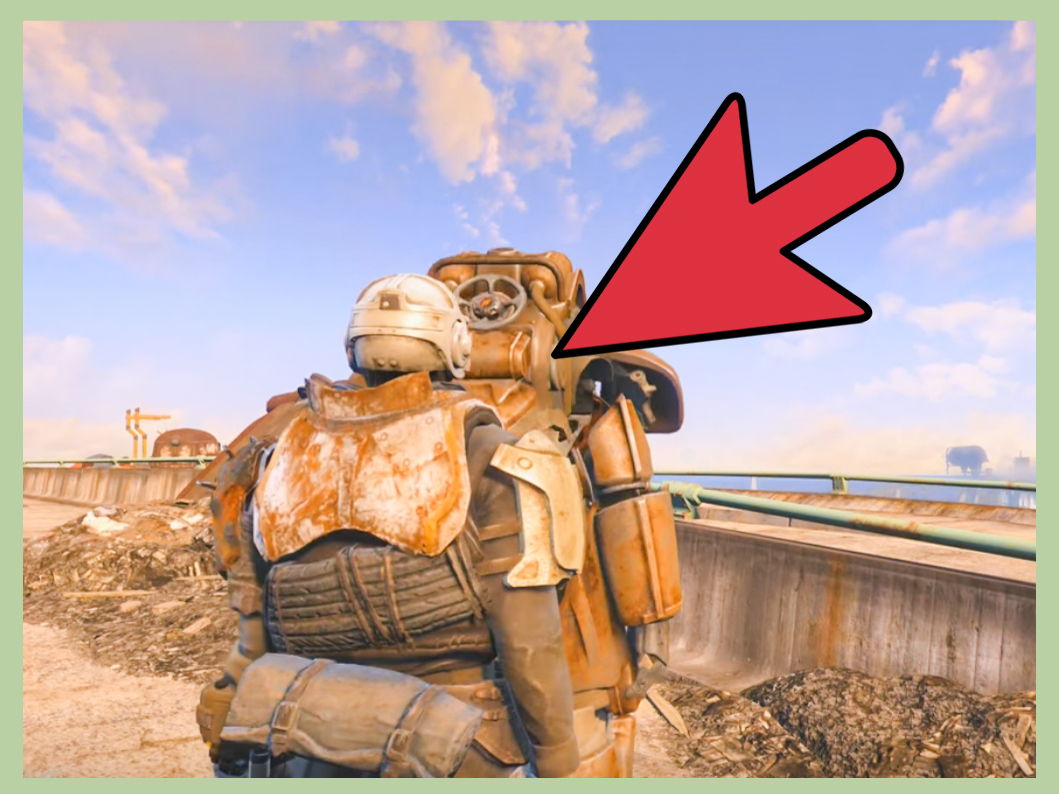
Your first meaningful experience with Power Armor usually comes very early in the main story during the Concord section. That moment is not subtle. The game practically grabs you by the shoulders and says, “Congratulations, you are Iron Man now, please go punch something horrible.” It is one of the most memorable early-game sequences because it teaches the basic loop: find Power Armor, install a Fusion Core, enter the suit, and use it in a high-pressure fight.
What you actually need
To use Power Armor, you need two things: a Power Armor frame and a Fusion Core. The frame is the skeleton of the suit. The armor pieces, such as the helmet, torso, arms, and legs, attach to that frame. Without a Fusion Core, the armor is basically a giant metal costume with commitment issues.
Beginner tip
Do not wait for some mythical “perfect moment” to try it. The game is designed to let you use Power Armor early. You are not breaking the balance. You are following the tutorial with extra footsteps. Start learning the system as soon as you get access to it, because confidence with Power Armor matters more than hoarding it untouched in a settlement corner.
You will also find additional frames and partial suits throughout the Commonwealth. Some are damaged, some are incomplete, and some are much better than what you are currently wearing. That is normal. Think of Power Armor collection in Fallout 4 as part scavenger hunt, part home improvement project, and part highly dangerous hobby.
Step 2: Learn the Enter, Exit, and Movement Basics
Once your Power Armor has a Fusion Core, walk up to it and enter. On PC, that usually means pressing and holding E. On Xbox, it is A. On PlayStation, it is X. To exit, you hold the same button. It is simple, but the game does not always make it feel elegant. Sometimes it can feel like you are negotiating with a stubborn vending machine.
What changes when you are inside
The HUD shifts to a Power Armor display, your movement feels heavier, and the suit starts delivering major defensive benefits. Falling becomes less terrifying, incoming damage feels more manageable, and irradiated or dangerous environments become much less stressful. You also get that distinct clunking sound that tells the world you have given up on stealth and embraced drama.
What to practice first
Before taking your suit into a brutal mission, test it in a safer area. Practice entering and exiting. Get used to how it turns, sprints, and handles combat spacing. New players often assume Power Armor automatically makes them invincible, then immediately stand in the open while several enemies turn them into a noisy suggestion. The suit is powerful, but it rewards smart positioning.
Also remember that Power Armor is not ideal for every tiny task. If you are sneaking through tight interiors, doing low-risk looting, or simply organizing junk in town, you may not need to wear it. Sometimes the best use of Power Armor is knowing when to park it.
Step 3: Manage Fusion Cores Like a Responsible Wasteland Adult
If Power Armor has one love language, it is Fusion Cores. Without them, your relationship is complicated. With them, everything runs beautifully. Managing Fusion Cores is the difference between loving Power Armor and muttering at it like a disappointed mechanic.
How Fusion Core drain works
Power Armor consumes Fusion Core charge over time, but not all actions drain it equally. Walking is relatively efficient. Sprinting, V.A.T.S., power attacks, and jet-assisted movement eat more charge. That means you should not treat every trip across the Commonwealth like a superhero landing montage.
How to stretch your power supply
Use Power Armor when the danger justifies it. Boss fights, heavily irradiated zones, tough firefights, and long loot hauls are great candidates. Running around town, chatting with vendors, or strolling through safe roads in full metal glory is fun, but it is not always efficient.
A smart habit is to exit your suit after a fight if you are going to spend time looting, crafting, or reorganizing inventory. Another smart habit is carrying spare Fusion Cores before long missions. Nothing ruins the wasteland power fantasy faster than realizing your battery strategy was “hope.”
Perks and long-term planning
If you build around Power Armor, look into perks that support energy efficiency and crafting. Advanced Power Armor play becomes much more comfortable once you can upgrade suits properly and make your Fusion Cores last longer. The early game is about survival. The mid-game is about efficiency. The late game is about looking at your upgraded suit and thinking, “Yes, I absolutely am the main character.”
Step 4: Repair and Upgrade Your Suit at a Power Armor Station
This is the step that turns Power Armor from a cool set piece into a reliable combat system. When parts get damaged, they lose effectiveness or break entirely. To fix that, bring your suit to a Power Armor Station. Exit the armor near the station, interact with the station, and enter the crafting menu. From there, you can repair broken pieces and add upgrades if you have the right materials and perks.
What you can repair
Each piece is handled individually. A damaged arm, torso, or leg does not mean the whole suit is finished; it means that specific part needs attention. Repairs usually require common crafting materials, so collecting junk is not glamorous, but it pays off. Every wrench, aluminum can, adhesive source, and random scrap item starts to look a lot more beautiful when your armor needs emergency maintenance.
Best upgrade categories to watch
Helmet upgrades can improve targeting or awareness. Torso mods can increase utility, including some of the most exciting movement options later in the game. Leg mods can improve mobility or carrying efficiency. Paint jobs can grant set bonuses if you wear matching pieces. In other words, Power Armor modding is not just cosmetic. It can shape how your character plays.
Do not ignore the crafting side
A lot of players use Power Armor casually but never fully commit to upgrading it. That is like buying a sports car and never changing the tires. Even moderate investment makes a huge difference. If you want a suit that feels genuinely powerful instead of merely loud, the Power Armor Station is where that transformation happens.
Step 5: Choose the Right Power Armor for Your Playstyle
Not all Power Armor sets are created equal. Early on, you will often see Raider and T-45 pieces. These are useful, but they are not the final word in wasteland engineering. As you progress, you can find stronger and more specialized sets such as T-51, T-60, and X-01. Some suits are easier to acquire, while others feel like trophies with hydraulics.
A quick, practical breakdown
Raider Power Armor is scrappy, rough, and better than nothing. It looks like someone built a tank out of spare fences, which is honestly on-brand for the Commonwealth.
T-45 is the classic early-game introduction and a dependable starter set. It gives you a solid feel for how Power Armor works without requiring you to chase rare gear immediately.
T-51 is often viewed as a strong all-around suit with excellent protection and a great balance of performance.
T-60 is a favorite for many players because it is sturdy, iconic, and commonly associated with the Brotherhood of Steel. It often feels like the practical workhorse option.
X-01 is the premium dream machine for players who want top-tier performance. Finding a full set can take planning, leveling, and a bit of patience, but it is worth the chase.
How to decide
If you are early in the game, use what you have and maintain it well. Do not sabotage your progress waiting for a perfect suit. If you are deeper into the game, start choosing based on your priorities: raw protection, upgrade potential, aesthetics, or availability. Sometimes the best Power Armor is the one you can keep repaired, powered, and ready.
Step 6: Avoid the Common Mistakes That Make Power Armor Annoying
Power Armor is amazing, but it comes with a few classic mistakes that can make players think the system is clunky when the real problem is habit. The good news is that most of these mistakes are easy to fix.
Mistake 1: Leaving Fusion Cores in parked suits
If you leave a Fusion Core in a suit you are not using, NPCs can sometimes decide that your expensive combat machine is now community property. Remove the core when parking your armor. Treat it like taking your keys out of the car. The Commonwealth has poor security and even worse boundaries.
Mistake 2: Wearing it for every little errand
You do not need Power Armor to buy noodles, sort adhesive, or stroll across a safe settlement. Save the suit for situations where its defense, radiation resistance, or carrying advantages matter. This keeps your Fusion Cores available for the moments that count.
Mistake 3: Forgetting normal apparel bonuses do not help inside the suit
One easy thing to miss is that many bonuses from regular apparel are effectively nullified while you are wearing Power Armor. So if your build depends on certain outfit perks, do not assume the suit is stacking neatly on top. Power Armor is not layering. It is replacing.
Mistake 4: Ignoring repairs until disaster strikes
Broken pieces are not just ugly. They reduce your suit’s effectiveness and can leave you unexpectedly vulnerable in serious fights. Check your armor regularly and repair it before a difficult mission, not after you have already been launched into the next postal code by a super mutant.
When You Should Absolutely Use Power Armor
Power Armor shines in specific scenarios. Use it when heading into highly irradiated areas, fighting powerful enemies, carrying heavy loot back to base, or tackling story missions with lots of incoming damage. It is also excellent for players who prefer a direct, aggressive playstyle rather than stealthy hit-and-run combat.
If your mission includes words like “fortress,” “deathclaw,” “military checkpoint,” or “glowing,” that is usually your cue to bring the suit. If your mission is “walk around Sanctuary and wonder where all your adhesive went,” maybe not.
Power Armor Experiences From the Wasteland
For many players, the first real Power Armor experience in Fallout 4 is unforgettable because it changes the emotional rhythm of the game. Up to that point, the Commonwealth often feels harsh, uncertain, and slightly humiliating. Every enemy looks dangerous, every building feels like a trap, and every stimpack feels precious. Then you climb into a giant metal suit, hear the mechanical locks engage, and suddenly the wasteland feels a little less like a horror story and a little more like a revenge tour.
That early confidence boost is a huge part of why Power Armor is so memorable. It gives new players a taste of raw durability before they fully understand the economy of Fusion Cores, repairs, and upgrades. At first, the feeling is pure excitement. You stomp around, jump off things you definitely should not jump off, and challenge enemies with the tactical sophistication of a thrown shopping cart. Then the practical lessons arrive. Your core drains faster than expected. A leg piece breaks. You realize repairs require materials you casually ignored two hours earlier. Welcome to the next stage of character growth.
Once players adjust, Power Armor often becomes less of a constant outfit and more of a strategic tool. That shift is where the system really gets interesting. Instead of asking, “Can I wear this all the time?” the smarter question becomes, “When does this suit give me the biggest advantage?” Veterans often describe a rhythm where Power Armor sits ready at a settlement like a trusted emergency option. When a difficult mission appears, when a radiation-heavy zone is coming up, or when a loot run is going to end with enough junk to sink a fishing boat, the suit comes out.
There is also a deeply satisfying collector mentality tied to Power Armor. Players who begin with a single battered frame often end up building a whole garage of suits, each with different paint jobs, upgrades, and sentimental value. One might be the dependable T-60 used for Brotherhood missions. Another might be a prized X-01 set reserved for the nastiest combat encounters. Another might just look fantastic lined up in a settlement, because let us be honest, half the joy of Power Armor is standing in front of it and admiring your questionable but glorious life choices.
Perhaps the most relatable Power Armor experience, though, is learning restraint. Nearly every player goes through a phase of wanting to use it for everything. Then they discover the hidden tax of overuse: drained Fusion Cores, unnecessary repairs, and the occasional moment of panic after leaving a core in a parked suit. Over time, that trial-and-error process turns into mastery. The best Power Armor users are not the ones who wear it nonstop. They are the ones who understand the suit’s value, prepare it properly, and deploy it when the situation calls for maximum controlled chaos.
In that sense, Power Armor in Fallout 4 is not just gear. It is a playstyle. It rewards preparation, planning, and a little mechanical affection. And when everything clicks, there are few better feelings in the game than marching into danger with a fresh core, fully repaired plates, upgraded mods, and absolutely no intention of being polite about it.
Conclusion
Using Power Armor in Fallout 4 is easy once you understand the loop: get a frame, power it with Fusion Cores, learn when to use it, repair it often, and upgrade it with intention. The six steps are simple, but mastering them transforms Power Armor from an occasional gimmick into one of the best systems in the game.
If you are new, do not overthink it. Use the first suit you get, practice with it, and let your confidence grow alongside your inventory of scrap and spare cores. If you are returning to the game, Power Armor is still one of the most satisfying ways to experience the Commonwealth. Loud? Yes. Heavy? Absolutely. Stylish in a post-apocalyptic bulldozer way? Without question.