
An EpiPen is like a seatbelt: you hope you never need it, but if you do, you want it to work instantlyand you want
you to know exactly what to do without Googling “help” with shaky hands.
This guide walks you through clear, real-world EpiPen instructions (plus emergency tips) in standard American English.
It’s designed to be easy to scan, easy to remember, and useful whether you’re the person at risk or the helper who
suddenly becomes the “most responsible adult in the room.”
Important: This article is general education, not personal medical advice. If someone may be having anaphylaxis, use epinephrine if available and call 911 right away.
What an EpiPen Does (and When It’s Used)
An EpiPen is a brand-name epinephrine auto-injector. Epinephrine (also called adrenaline) is the
first-line emergency treatment for anaphylaxis, a severe allergic reaction that can escalate quickly.
Epinephrine helps open airways, supports blood pressure, and reduces swelling and hivesbasically, it buys time while
emergency care is on the way.
Use an EpiPen for suspected anaphylaxis
Not every allergic reaction is an emergency, but anaphylaxis is. Anaphylaxis often involves symptoms in more than one
body system (for example, skin + breathing, or stomach + blood pressure symptoms). When in doubt, follow your
clinician-provided action plan. Many allergy specialists emphasize that epinephrine is time-sensitive: earlier use is
generally safer than waiting for symptoms to “prove themselves.”
Common anaphylaxis triggers
- Foods: peanuts, tree nuts, shellfish, milk, eggs, wheat, soy (and others)
- Stinging insects: bees, wasps, hornets, yellow jackets, fire ants
- Medications: antibiotics, pain relievers, and others
- Latex (less common than in the past, but still possible)
- Exercise-induced or “idiopathic” (no clear trigger)
How to Recognize Anaphylaxis Fast
Anaphylaxis can start with mild symptoms and then level up quicklylike a movie villain who refuses to stay down.
Signs can vary by person, so your best guide is the individual’s emergency action plan and known allergy history.
Red-flag symptoms that should raise urgency
- Breathing or throat symptoms: wheezing, trouble breathing, trouble swallowing, throat tightness, hoarseness
- Swelling: lips, tongue, face, or throat
- Circulation symptoms: dizziness, fainting, weak/rapid pulse, feeling “out of it”
- Skin symptoms: hives, widespread itching, flushing
- Gut symptoms: repeated vomiting, severe cramps, diarrhea (especially with other symptoms)
Practical rule of thumb: If someone with a known severe allergy has exposure (or likely exposure)
plus breathing trouble, throat symptoms, fainting/dizziness, or rapidly worsening symptoms, treat it as an emergency.
Epinephrine first, then 911don’t wait for a “perfect” symptom checklist.
EpiPen vs. EpiPen Jr: Dose Basics
EpiPen devices come in different doses. The right one depends mostly on body weight and what a healthcare professional
prescribed.
- EpiPen (0.3 mg): generally for people who weigh 66 lbs (30 kg) or more
- EpiPen Jr (0.15 mg): generally for people who weigh 33–66 lbs (15–30 kg)
Some other brands offer additional doses for smaller children. Use the device that was prescribed, and if you’re unsure
what your household should carry, ask the prescribing clinician.
How to Use an EpiPen (Step-by-Step Instructions)
Here’s the core sequence. Read it now, then practice with a trainer device laterbecause your brain is much smarter
before adrenaline shows up to the party.
The quick memory hook
Many people remember: “Blue to the sky, orange to the thigh.”
(Blue safety release on top. Orange tip is the needle end. Thigh is the target.)
Step 0: Set the scene (fast)
- Tell someone: “Call 911anaphylaxis.” If you’re alone, call after giving epinephrine (or use speakerphone).
- If the person can safely sit/lie down, get them stable. Avoid having them stand or walk.
- Grab two auto-injectors if available (a second dose may be needed).
Step 1: Remove and grip correctly
- Slide the EpiPen out of its carrier tube.
- Hold it in a fist with the orange tip pointing down.
- Keep fingers away from the orange tip. No “thumb over the end.” (This is not a microphone.)
Step 2: Remove the blue safety release
- With your other hand, pull off the blue safety release.
- Don’t remove it until you’re ready to inject.
Step 3: Place on the outer thigh and press
- Place the orange end against the middle of the outer thigh.
- You can inject through clothing if needed.
- Push firmly until you hear/feel a “click” or “pop” that signals injection has started.
Step 4: Hold in place for 3 seconds
Hold the device firmly against the thigh for 3 full seconds (count slowly: 1…2…3). Then remove it
straight out. The orange end will extend to cover the needle.
Step 5: After the injection
- Massage the injection area for about 10 seconds if the person tolerates it.
- Note the time of the injection (tell EMS).
- Give the used device to emergency responders or bring it to the ER for proper disposal and documentation.
Extra-important for young children
If you’re administering to a child, hold the child’s leg firmly during injection to reduce the risk
of movement-related injury. If you’re a parent/caregiver, it’s worth practicing the “leg stabilization” technique with
a trainer device ahead of time.
Emergency Tips: What to Do Immediately After Using an EpiPen
Using an EpiPen is a critical first step, not the finish line. Symptoms can return, and the person needs medical
evaluation even if they feel better.
Call 911 (or have someone call)
Say clearly: “Possible anaphylaxis. Epinephrine given.” If you know the trigger (peanut, bee sting,
medication), mention it. If you know the time of injection, share it.
Positioning while waiting for help
- Prefer lying flat on the back, staying still; elevate legs if tolerated.
- If vomiting, turn on the side (recovery position) to reduce choking risk.
- If breathing is very difficult, sitting up may helpbut avoid standing/walking.
Be ready for a second dose
Some people need a second epinephrine dose if symptoms continue, worsen, or return. Many clinical action plans and
pediatric guidance commonly use a window like 5–15 minutes after the first dose if there’s not enough
improvementfollow the person’s emergency plan if one exists, and keep 911 involved.
Don’t “substitute” with antihistamines
Antihistamines can help itching or hives, but they work too slowly and do not treat the life-threatening parts of
anaphylaxis. Epinephrine is the priority when anaphylaxis is suspected.
Common Mistakes to Avoid (So You Don’t Make a Bad Day Worse)
- Waiting too long: If anaphylaxis is likely, early epinephrine is generally safer than delay.
- Injecting in the wrong place: Use the outer thigh. Do not inject into buttocks, hands, feet, or veins.
- Thumb over the orange tip: Accidental finger/hand injection is an emergencyavoid it by gripping properly.
- Not holding long enough: Hold in place for 3 seconds.
- Not calling 911: Epinephrine can wear off; medical evaluation matters even if symptoms improve.
- Only carrying one device: Many people are advised to carry two auto-injectors.
Storage, Expiration, and Readiness: Keep Your EpiPen “Game-Day Ready”
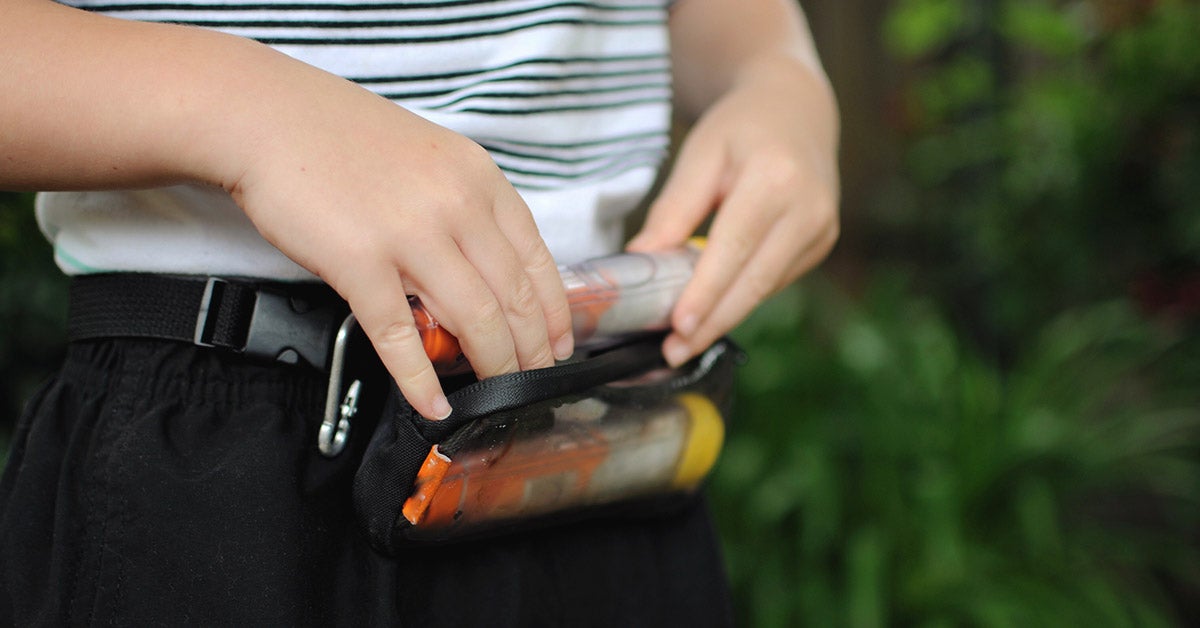
EpiPens are sensitive to temperature and light. Treat them more like medication than like a spare pen at the bottom of
a backpack.
Smart storage rules
- Store at room temperature (avoid extreme heat or cold).
- Do not refrigerate and do not freeze.
- Protect from light and keep in the original carrier tube.
- Avoid leaving it in a car (glove box dashboards can get dangerously hot).
Check the window and the date
- Look at the expiration date regularly. Set reminders a month or two ahead.
- Check the solution window when possible: it should be clear. Replace if discolored, cloudy, or contains particles.
Practice (without wasting a real dose)
Ask your pharmacist or clinician about a trainer device and practice a few times a year. The goal is
to make the motion automatic: remove, grip, blue off, orange to thigh, press, hold, call 911.
Side Effects and Safety Notes (Normal vs. Concerning)
Epinephrine commonly causes temporary effects that can feel intenseespecially when your body is already panicking from
an allergic emergency.
Common, expected side effects
- Fast or pounding heartbeat
- Shakiness or tremor
- Sweating
- Headache
- Nervousness or feeling “wired”
- Nausea
People with certain heart conditions or on certain medications may be at higher risk of side effects, but in a
life-threatening allergic reaction, epinephrine is still considered essential. In other words: anaphylaxis is the
bigger danger, and emergency clinicians can manage epinephrine effects.
If someone gets injected in a finger/hand by accident
Accidental injection into fingers, hands, or feet can reduce blood flow to the area. That’s an emergencygo to the ER
right away and tell staff what happened and where.
Real-World Scenarios: What It Looks Like in the Moment
Scenario 1: Restaurant exposure
A teen with a known peanut allergy tries a dessert that may have cross-contact. Within minutes, they develop hives and
start coughing and saying their throat feels tight. The family uses the EpiPen immediately, calls 911, and keeps the
teen lying down while waiting. Symptoms improve, but they still go to the ER because symptoms can return.
Scenario 2: Bee sting at a park
A person is stung, becomes dizzy, and starts wheezing. A friend uses the EpiPen in the outer thigh through shorts,
holds for 3 seconds, and calls 911. The friend keeps them still and watches breathing while waiting for EMS.
Scenario 3: Child at school
A child develops facial swelling and vomiting after a suspected allergen exposure. A trained staff member administers
epinephrine, calls 911, and notifies the school nurse and family. The child’s leg is stabilized during injection to
prevent movement injuries.
FAQ: Quick Answers to Common EpiPen Questions
Can I use an EpiPen through jeans?
Yes, the device is designed to inject through clothing in an emergency. Aim for the middle of the outer thigh.
Do I still need the ER if symptoms get better?
Yes. Medical evaluation is recommended after epinephrine because symptoms can return and additional treatment or
observation may be needed.
What if I’m not 100% sure it’s anaphylaxis?
Follow the person’s emergency action plan if they have one. Many clinicians teach that if anaphylaxis is strongly
suspected, delaying epinephrine can be riskier than giving it. When in doubt, treat it as an emergency and involve 911.
How many seconds do I hold the EpiPen?
Hold firmly in place for 3 seconds, then remove and follow emergency steps.
Should I carry one or two?
Many people at risk are advised to carry two auto-injectors, since a second dose may be needed.
Conclusion: The Goal Is Fast, Calm, and Confident
If you remember only a few things, remember these: outer thigh, press and hold for 3 seconds,
and call 911. Then practice with a trainer so your hands know what to do before your brain starts
overthinking. With anaphylaxis, speed mattersand a prepared response can be truly lifesaving.
Experiences People Commonly Share (and What You Can Learn From Them)
The internet is full of “I can’t believe that happened” stories about allergic emergenciesand while everyone’s details
differ, a few themes show up again and again. The examples below are composites of commonly reported experiences from
patients, parents, teachers, and caregivers (not personal stories from the author). Think of them as rehearsal: your
brain learns faster when it can picture a real moment.
1) “We waited because we didn’t want to overreact.”
One of the most common regrets people mention is waiting for symptoms to become “obvious enough.” In real life,
anaphylaxis doesn’t always start with dramatic movie-style breathing trouble. It can begin with hives and a weird
throat feeling, or nausea plus dizziness. Families often say the turning point was realizing that epinephrine isn’t a
“last resort” reserved for the final sceneit’s the first-line rescue medication. Takeaway: if the person has a known
severe allergy and symptoms are progressing, it’s usually safer to treat quickly and get medical help than to watch and
hope.
2) “I knew the steps… until I had to do them.”
People also describe an adrenaline-fueled moment where their brain suddenly forgets which end goes where. That’s why
practicing with a trainer is so powerful. Caregivers often say that repeating the motion a few times a year (and making
sure a babysitter/coach/grandparent can do it too) reduced panic later. Takeaway: practice turns a scary, unfamiliar
task into a familiar onelike a fire drill for allergies.
3) “The hardest part was keeping them still.”
Parents of young children frequently talk about the challenge of getting a squirmy kid to hold still long enough for a
safe injection. Some describe using a calm but firm “hug” hold, bracing the child’s leg, and having another adult call
911 at the same time. The key lesson is that leg stabilization isn’t optionalit prevents accidental movement injuries.
Takeaway: if you care for a child at risk, ask the clinician to demonstrate how to stabilize the leg and practice with a trainer.
4) “They felt better, so we thought we were done.”
Another frequent experience: symptoms improve after epinephrine, everyone exhales, and the temptation is to “just go
home and rest.” But many people later learn that reactions can return and observation in an emergency setting is
recommended. Some describe a second wave of symptoms during the ride or after arriving at carereinforcing why 911/EMS
and medical evaluation matter. Takeaway: improvement is great, but it’s not the finish line. Epinephrine is step one,
emergency evaluation is step two.
5) “We didn’t have the EpiPen on us.”
Probably the most painful lesson people share is realizing the device was left in a different bag, a different coat,
or a car (sometimes because it was “just a quick trip”). That regret often leads to a new routine: two-pack strategy,
consistent storage location, and a quick “phone-wallet-keys-epinephrine” check before leaving home. Takeaway: carrying
epinephrine becomes easier when it’s a habit, not a decision you re-litigate every time you walk out the door.
If you’re reading this as a teen, a parent, a friend, or a teacher: you don’t need to be fearlessyou just need a plan.
Learn the steps, practice them, and make sure someone around you knows them too. In an emergency, confidence is built
from preparation.