
A clogged toilet is one of life’s least glamorous pop quizzes. One minute you’re minding your business, the next you’re staring into the bowl like it just betrayed you.
The good news: most clogs are totally fixable with basic tools, a little patience, and the correct amount of “please don’t overflow” urgency.
This guide walks you through how to unclog a toilet step-by-step, from the fastest fixes to the “okay, we’re bringing out the real equipment” options.
Along the way, you’ll learn what not to do (spoiler: boiling water and harsh chemicals are rarely the heroes people want them to be), how to tell if the problem is bigger than one toilet,
and how to keep this from happening again.
First: Stop the Overflow (a.k.a. Prevent Bathroom Disaster)
1) Don’t flush again
Your toilet is already struggling. Giving it another flush is like hitting “refresh” on a frozen computer and expecting miracles.
If the water is high, step away from the handle.
2) Turn off the water
Find the shutoff valve behind the toilet near the floor (it usually looks like an oval knob). Turn it clockwise until it stops.
If you can’t find it or it won’t budge, take the tank lid off and lift the float up to stop the fillor gently press the flapper closed to limit water flow.
3) Protect the floor (future-you will be grateful)
Lay down old towels around the base. If you have rubber gloves, put them on now. Also: open a window if you have one.
You’re not “being dramatic.” You’re being prepared.
Quick Diagnosis: What Kind of Clog Are You Fighting?
The right method depends on what’s blocking the trapway (the curved passage inside the toilet).
Here’s a simple way to think about it:
-
Soft clog (most common): too much toilet paper, “normal” bathroom output, or something that breaks down with water and agitation.
These usually respond well to a flange plunger, dish soap + hot water, or a gentle bubbling treatment. -
Hard clog: a toy, toothbrush, cotton swab pile-up, “flushable” wipes, paper towels, or anything that doesn’t dissolve.
These often need a toilet auger (closet auger) and sometimes a plumber. -
Not-a-toilet-only problem: multiple drains backing up, gurgling sounds elsewhere, or water rising in the shower when you flush.
That can point to a bigger line issue, not just one unlucky bowl.
Method 1: Use a Toilet Plunger (The Correct Way, Like a Grown-Up Wizard)
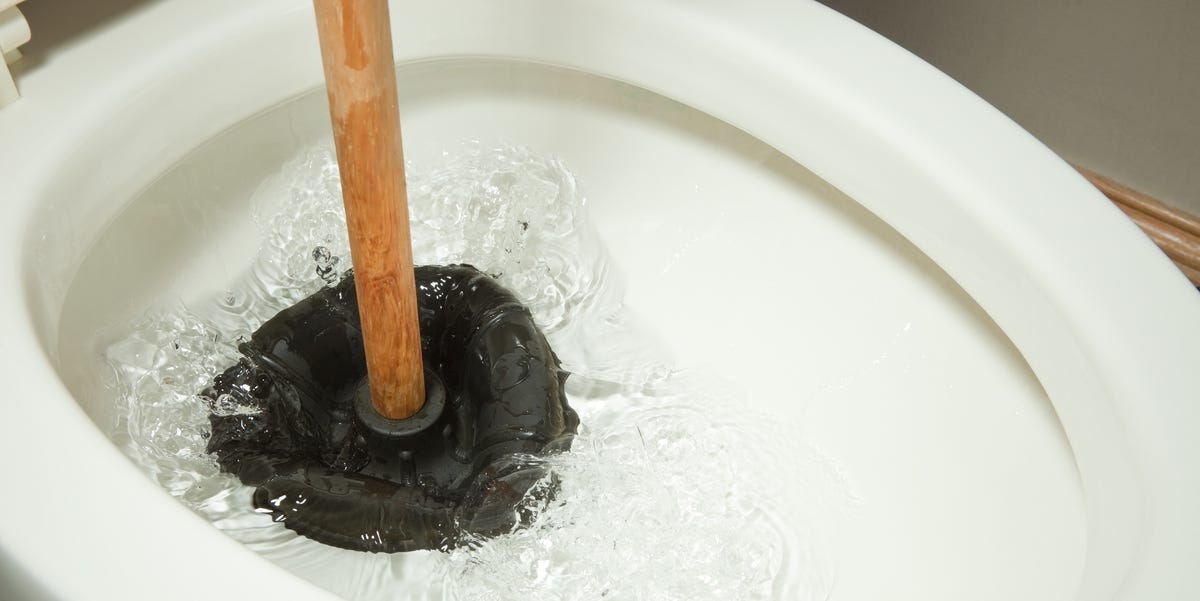
If you own one tool for bathroom plumbing, make it a flange plunger (also called a toilet plunger or beehive plunger).
A flat sink plunger often can’t seal properly on a toilet drain, which turns your effort into cardio with very little reward.
What you need
- Flange plunger
- Rubber gloves
- Old towels
Step-by-step plunging technique
-
Make sure there’s enough water in the bowl.
The plunger needs water to create pressure and suction. If the bowl is low, add water from a bucket until the rubber cup is covered. -
Soften the plunger (optional but helpful).
If the rubber is stiff, run hot tap water over it for 30–60 seconds to help it seal. -
Seat the plunger and remove trapped air.
Place the flange right over the drain opening. Press down gently at first to push air out. Air compresses; water doesn’t. You want water doing the work. -
Plunge with controlled force.
Use firm, quick strokes for 10–15 seconds, keeping the seal intact. Think “pump,” not “jackhammer.” -
Finish with a pull.
A strong upward pull can help break the clog loose. Repeat 2–4 cycles if needed. -
Test with a cautious flush.
Turn the water back on (if you shut it off), then flush once. If it drains normally, congratulationsyou just saved a service call.
Pro tip: If the water rises instead of draining, stop immediately, shut the water off again, and move to the next method.
The goal is “clear the clog,” not “create an indoor water feature.”
Method 2: Hot Water + Dish Soap (Surprisingly Effective for Soft Clogs)
For soft clogs, dish soap can help lubricate the blockage and the pipe walls. Hot (not boiling) water helps soften and move the mess along.
This method is especially useful when you suspect the clog is mostly toilet paper and… well, biology.
What you need
- Liquid dish soap
- Bucket
- Hot tap water (not boiling)
Steps
- Add dish soap. Pour about 1/2 cup into the bowl and let it sink toward the drain for 10–15 minutes.
-
Add hot water carefully.
Fill a bucket with hot tap water. If the toilet bowl is very cold (winter bathrooms are real), start with warm water first, then hotter water to reduce cracking risk.
Pour from waist height for a little extra force, but don’t go wild. - Wait. Let it sit for 15–30 minutes.
- Flush once. If it partially drains, repeat the hot water step and flush again.
Avoid boiling water. Boiling water can crack porcelain and may soften wax seals and certain plumbing components.
Hot tap water is the sweet spot: effective, safer, and less likely to turn your day into a repair saga.
Method 3: Baking Soda + Vinegar (The “Science Fair” Approach)
Baking soda and vinegar can help loosen certain soft clogs by creating fizzing agitation. It’s not magic, but it’s low-cost and gentle.
The big rule: don’t do this when the bowl is nearly overflowing, because fizz + high water level can equal… regret.
What you need
- 1 cup baking soda
- 1–2 cups white vinegar
- Hot tap water
Steps
- Lower the water level if it’s high. If needed, bail some water into a bucket so you have room for bubbling.
- Add baking soda first. Pour it in and let it settle.
- Add vinegar slowly. Pour gradually to control bubbling.
- Wait 20–30 minutes. Let the fizz do its thing.
- Follow with hot water. Add a bucket of hot tap water and wait another 10 minutes.
- Flush once. If improved but not cleared, repeat one more round or switch to an auger.
Method 4: No Plunger? Try These Backup Moves
Sometimes the clog strikes when you’re visiting someone else’s homeaka the worst possible time. If you don’t have a plunger, these can help in a pinch.
Use gentle force and protect the porcelain.
Option A: The toilet brush “mini-plunge”
Put the brush head in a plastic bag (if you have one), then work it up and down in the drain opening to create a small push-pull effect.
It’s not as strong as a plunger, but it can loosen light clogs enough to flush.
Option B: Pour water from a height
With the water level not too high, pour a bucket of warm-to-hot tap water from waist height into the bowl.
The added force can help push a soft clog through the trap. If the bowl is already near the rim, skip this and choose a different method.
Option C: Carefully use a wire hanger (for stubborn, reachable clogs)
Straighten a wire hanger, wrap the end with a rag (and tape if possible), then gently probe the drain opening.
You’re trying to break up or snag the clog, not scratch the bowl. If you feel solid resistance that seems like a toy, stop and move to an auger.
Method 5: Use a Toilet Auger (Best for Stubborn or “Hard” Clogs)
A toilet auger (also called a closet auger) is designed to navigate the toilet’s curves without damaging porcelain.
Plumbers often reach for an auger early because it physically attacks the clog instead of relying on pressure alone.
What you need
- Toilet auger (3–6 feet is common for home use)
- Gloves
- Towels
How to use a toilet auger
- Insert the auger tip gently. Place the curved end into the bowl opening, aiming into the drain.
- Crank slowly. Turn the handle clockwise while feeding the cable in. Don’t force it. Let the cable work through the curve.
-
When you hit resistance, work it.
Crank and push slightly to break up the clog, or try to snag it. If you suspect a foreign object, you may be able to retrieve it by slowly pulling the cable back. - Retract and rinse. Pull the cable out carefully. Flush once to test. If it’s still slow, run the auger againsome clogs need multiple passes.
Heads up: If the auger brings back plastic, fabric, or anything “not from the human body,” you’ve found your culprit.
That’s good news (identifiable problem) and also a sign to rethink what gets within three feet of your toilet.
What Not to Do (Because Some “Fixes” Make It Worse)
-
Don’t use chemical drain cleaners in toilets.
They can be hazardous to handle, may damage plumbing components, and can create dangerous splash risksespecially if you later plunge or auger.
If you’ve already used chemicals, be extremely cautious and consider calling a pro. -
Don’t pour boiling water into the bowl.
Hot tap water is safer. Boiling water can crack porcelain and create bigger problems than the clog. -
Don’t keep flushing “to see what happens.”
What happens is usually “overflow.” -
Don’t use a flimsy sink plunger and call it effort.
If it can’t seal, it can’t do its job.
When to Call a Plumber
DIY methods are greatuntil they aren’t. Call a plumber if you notice any of the following:
- Multiple drains backing up (toilet, tub, shower, sink acting up together)
- Gurgling sounds from other drains when you flush
- Sewage odors that linger
- Repeated clogs that return every few days
- Suspected foreign object (toy, hygiene product, large solid item) that won’t budge
- Water backing up elsewhere (like the shower filling when you flush)
These can indicate a deeper blockage in the drain line or even the main sewer linepro territory with specialized tools.
Also, if you’re renting, this is often a “call maintenance” situation, not a “buy three tools and a headache” situation.
How to Prevent Toilet Clogs (Future-Proof Your Bathroom)
Follow the “Two-Item Rule”
Toilets are designed for two things: human waste and toilet paper.
That’s it. Not “flushable” wipes (many don’t break down well), not paper towels, not tissues, not dental floss, not cotton products, not hygiene items, and definitely not “mystery objects children love.”
Use less paper than you think you need
If your household leans heavy on ultra-thick toilet paper, consider using a little less per flush.
Two smaller flushes can be better than one heroic flush that ends in betrayal.
Keep a toilet auger and flange plunger handy
A flange plunger handles most clogs. A toilet auger handles many of the rest.
Keeping both nearby is the home-maintenance version of carrying a phone charger: you don’t appreciate it until you really, really need it.
Teach kids (and guests) what not to flush
A small trash can with a lid in the bathroom isn’t just for looksit’s a practical way to keep non-flushables out of the plumbing.
of Real-World “Unclogging Experiences” (Common Scenarios & Lessons)
While every clog feels personal in the moment, most toilet disasters fall into a handful of very predictable storylines.
Here are some real-world-style scenarios homeowners commonly run intoplus what tends to work best.
Experience #1: “The Party Bathroom” Panic
Someone flushes. The bowl rises. Suddenly the hallway feels like a stage and you’re the main character in a plumbing thriller.
In this scenario, the clog is usually a soft one: too much toilet paper, flushed too quickly, sometimes paired with a low-flow toilet that didn’t have enough water force to move the load.
The best move is boringbut effective: shut off the water, wait a few minutes (the water level often drops slightly), then use a flange plunger with a solid seal.
People often fail here because they panic-plunge with a weak seal or they flush again “to help it.” It doesn’t help.
Once cleared, a quick “two flushes are okay” sign in your brain is the real victory.
Experience #2: “It Worked Yesterday… Now It’s Back”
You plunge, it drains, you celebrate. Then two days later, it clogs againsame toilet, same slow swirl.
Repeat clogs are a clue. Sometimes it’s just a habit issue (too much paper, wipes, or thick paper products).
But if you also notice gurgling in the tub or sink, or other drains acting sluggish, that’s when people realize the toilet might not be the true villain.
The lesson: if multiple fixtures are involved, stop throwing DIY tricks at one toilet and get the line checked.
Homeowners who switch early to “bigger picture thinking” often save money by avoiding repeated overflow cleanups and damage to flooring.
Experience #3: “The Toy That Launched a Thousand Sighs”
This one’s common in homes with kids (or, honestly, adults who treat the toilet like a portal to another dimension).
The toilet suddenly clogs hard, and plunging mostly splashes and insults your confidence.
Here, a toilet auger is usually the hero because it can reach into the trapway and either break the blockage or hook it.
The key is patience: slow cranking, gentle pressure, and multiple passes if needed.
If the auger keeps stopping at the same point and the toilet won’t improve, many people learn the hard way that the object may be wedged in a way that requires removing the toilet.
Not fun, but sometimes necessaryand a good reason to keep tiny objects away from bathrooms.
Experience #4: “No Plunger, No Problem (Until There Is)”
In a guest bathroom or while traveling, people often try the dish soap + hot water method first because it’s low-drama and uses common supplies.
When it works, it feels like a magic trick. When it doesn’t, the backup is usually “pour water from a height,” which can help light clogs but can also risk overflow if you misjudge the water level.
The consistent lesson from this scenario: if you’re improvising, keep the water shutoff in mind, move slowly, and favor gentle methods over aggressive ones.
It’s not about brute forceit’s about smart pressure and the right tool at the right time.