
Pond algae has one job: show up uninvited, throw a green party, and make you question every life choice that led to “backyard water feature.”
The good news? You can remove algae from a pond without turning it into a chemistry experiment (or stressing your fish into filing a complaint with HR).
The key is working with the pond ecosystem instead of carpet-bombing it.
This guide walks you through fish-friendly ways to clear string algae and green water, plus how to keep algae from coming back.
Expect practical steps, real-world examples, and a little humorbecause if we can’t laugh at pond scum, what can we laugh at?
Why pond algae happens (and why it’s not always “bad”)
Algae is a natural part of ponds. In small amounts, it can even be helpfulproducing oxygen during the day and supporting the food web.
The problem is the “all-you-can-eat buffet” conditions that lead to overgrowth: too many nutrients (especially phosphorus), lots of sunlight,
warm water, and not enough competition from plants or beneficial microbes.
Common nuisance algae types you’ll see
- String/filamentous algae: hair-like mats, clings to rocks, waterfalls, liner edges; you can often grab it like wet cotton candy (do not taste).
- Green water (planktonic algae): water turns pea-soup green; individual algae cells float in the water column.
- Blue-green “algae” (cyanobacteria): can look like paint slicks or surface scum; some blooms can be harmful to pets and people. Treat this seriously.
Before you remove algae: a quick fish-safety checklist
- Test basics: temperature, pH, ammonia, nitrite, nitrateespecially if fish are acting weird or you’ve had a sudden algae die-off.
- Run aeration: extra oxygen is your best friend during algae cleanup.
- Never “nuke” the pond: rapid die-off can trigger an oxygen crash. If you use any treatment, go slow and treat in sections.
- Avoid copper-heavy products in fish ponds unless you truly know what you’re doing (species sensitivity and water chemistry matter).
11 fish-friendly ways to remove algae from a pond
These are arranged like a smart game plan: start with immediate cleanup, then fix the conditions that cause algae in the first place.
Most ponds need a combothink “team effort,” not “one magic potion.”
1) Manually remove string algae (the oddly satisfying approach)
For filamentous algae, nothing beats hands-on removal. Use a pond net, pool skimmer, or a dedicated algae brush/rake.
Pull out mats, let them drain on the edge, then dispose of them away from the pond so nutrients don’t wash right back in.
Example: If your waterfall looks like it grew a green beard, twist algae around a toilet brush (yes, really) and lift it out in ropes.
It’s low-tech, but it worksespecially before you do anything else.
2) Skim daily and remove “algae food” (leaves, pollen, clippings)
Most algae problems are nutrient problems wearing a green costume. Skim out leaves, fallen petals, grass clippings, and uneaten fish food.
If you let organic debris sink and rot, it becomes a slow-release fertilizer for algae.
Pro tip: A surface skimmer is basically a bouncer for pond partiesit stops the mess at the door.
3) Do a partial water change (small ponds love this)
For green water in smaller ornamental ponds, a partial water change can dilute the bloomespecially if your refill water is clean and dechlorinated.
Replace 10–20% at a time rather than draining everything. Big, sudden changes can stress fish and destabilize beneficial bacteria.
Best use case: Container ponds and compact backyard ponds where you can refill slowly and safely.
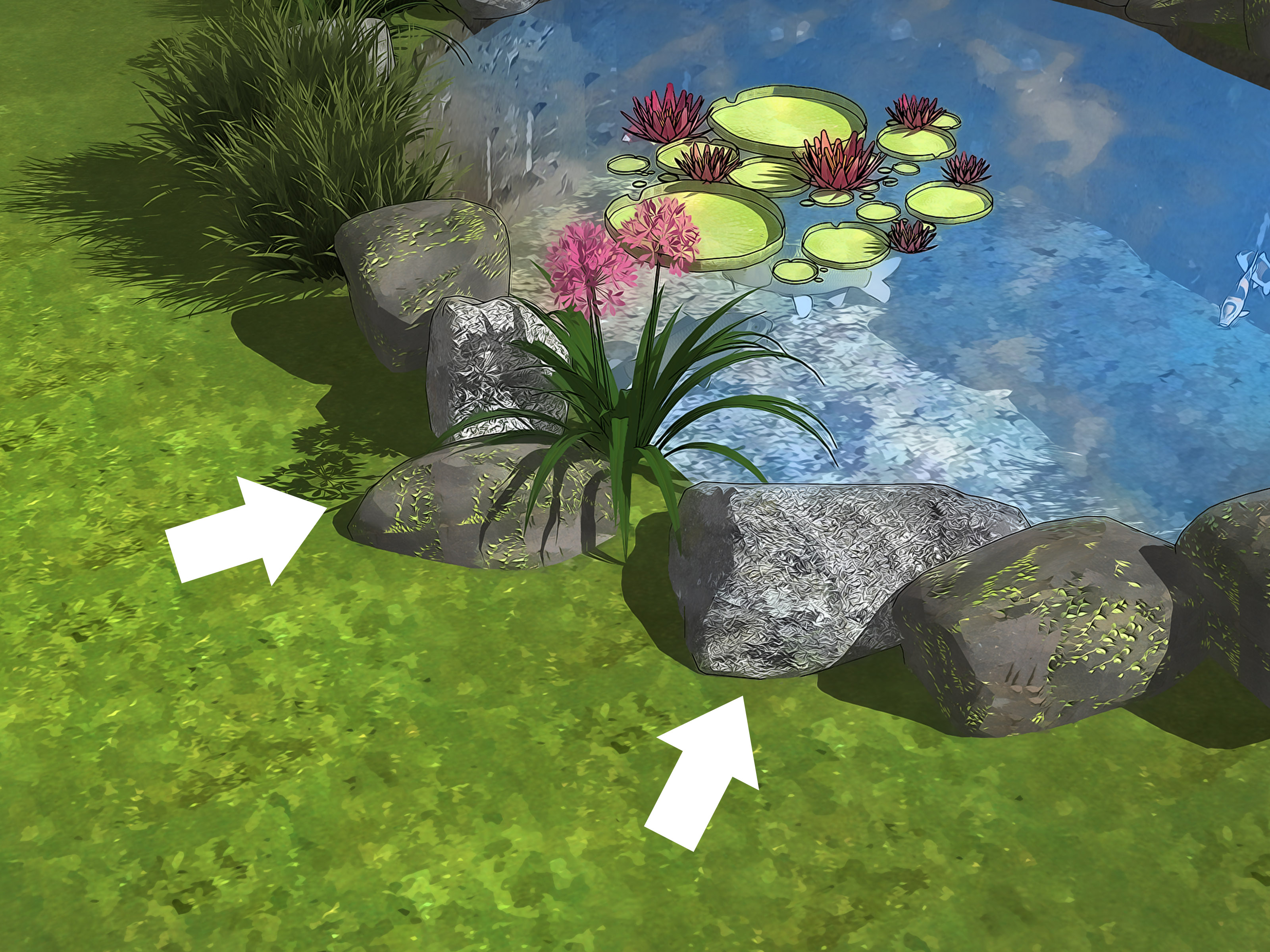
4) Add more aquatic plants to outcompete algae
Plants are the polite way to say, “Sorry algae, the buffet is closed.” They soak up nutrients and provide shade.
A strong mix can include water lilies (shade), marginals like pickerelweed or iris (nutrient uptake), and submerged plants (oxygen and competition).
- Shade goal: Aim for meaningful surface coverage in summer (often around half, depending on pond style).
- Fish benefit: Plants provide hiding spots and reduce stress.
5) Increase shade (without turning your pond into a cave)
Algae needs light. Reduce light penetration with floating plants, lily pads, a pergola/sail shade, or (in some ponds) fish-safe pond dyes.
Dyes don’t “kill algae”; they reduce sunlight so algae has a harder time multiplying.
Example: If your pond sits in full sun from 10 a.m. to 4 p.m., a simple shade sail can dramatically slow green-water blooms.
Your fish will also appreciate not living under a tanning lamp.
6) Improve aeration and circulation (give algae fewer “dead zones”)
Aeration supports fish, boosts beneficial bacteria, and reduces the risk of oxygen dipsespecially overnight or during algae die-off.
Options include air pumps with diffusers, fountains, and well-designed waterfalls.
Practical tip: If string algae dominates quiet corners, redirect a return line or add a small circulator to eliminate stagnant pockets.
7) Upgrade mechanical filtration (catch the gunk before it rots)
Mechanical filtration removes suspended debris and fine particles that cloud water and fuel algae. Clean filter pads regularly,
rinse media in pond water (not chlorinated hose water), and don’t let the filter become a compost bin with a pump attached.
Example: If your filter clogs every few days during leaf season, add a pre-filter sponge or a skimmer basket upgrade to intercept debris earlier.
8) Use beneficial bacteria and enzymes (especially for sludge)
Beneficial bacteria products are popular because they’re generally gentle on fish when used as directed.
Their job is to help break down organic waste (sludge, fish waste, decaying plant matter) so fewer nutrients are available for algae.
How to use: Dose consistently (weekly or as labeled), and pair with aeration for best resultsbacteria perform better with oxygen.
9) Try barley straw (or barley extract) as a preventive helper
Barley straw is often used as a natural support tool for algae control. Think of it as “pond wellness,” not “instant algae deletion.”
It tends to work better as prevention or early-season management than as a cure for a full-blown takeover.
- Timing matters: Start in early spring before algae explodes.
- Placement: Put it where water moves and oxygen is present (not buried in muck).
10) Install a UV clarifier for green water (single-celled algae)
If your pond water looks like green Gatorade, UV is one of the most reliable fish-friendly tools.
UV clarifiers work by clumping/neutralizing free-floating algae so filtration can remove it.
This is ideal for green water, but it won’t fix string algae stuck to rocks.
Quick setup notes: Size the unit to your pond volume, keep flow within the recommended range, and replace bulbs on schedule.
UV is not magicit’s teamwork with your filter.
11) Use oxygen-based spot treatments (only when needed, and slowly)
Some pond treatments use peroxide-based or oxygen-releasing chemistry (often sold for algae control) and can be used in ponds with fish
when the label explicitly says so and directions are followed carefully.
These can be helpful for stubborn string algae on waterfalls and edges.
- Treat in sections: Don’t treat the entire pond at oncerapid algae die-off can reduce oxygen.
- Run aeration: Extra oxygen is non-negotiable here.
- Observe fish: If fish gasp at the surface, stop and improve aeration immediately.
How to keep algae from coming back (the part everyone skips, then regrets)
Removing algae is step one. Preventing it is step two… and step two is where ponds become easy to own instead of a weekly green crisis.
Focus on three big levers: nutrients, light, and biological balance.
Cut nutrients at the source
- Stop fertilizing near the pond (and avoid runoff from lawns and garden beds).
- Add a vegetated buffer strip around the pond edge to catch nutrients before they enter the water.
- Feed fish less: only what they eat quickly; remove leftovers.
- Remove sludge seasonally with a pond vacuum or careful cleanout to reduce nutrient recycling.
Balance your pond “team roster”
- Plants compete for nutrients and provide shade.
- Beneficial bacteria break down waste before algae can use it.
- Filtration + circulation keep water cleaner and reduce dead zones.
- UV clarifier keeps green water from turning your pond into a smoothie.
FAQ: quick answers pond owners actually want
Is pond algae harmful to fish?
Usually, small amounts aren’t harmful. The bigger risk is when algae blooms get extremely dense and then die off,
which can reduce dissolved oxygenespecially overnight. Good aeration reduces this risk.
Why does algae come back so fast after I remove it?
Because you removed the “symptom,” not the “cause.” If nutrients keep entering (runoff, sludge, overfeeding),
algae will treat your pond like a subscription service.
Will barley straw fix my algae problem overnight?
Not typically. It’s better as prevention or a gentle support tool. If your pond is already thick with algae,
pair barley with manual removal, filtration, plants, and nutrient control.
What’s the most fish-friendly “fast fix” for green water?
A properly sized UV clarifier paired with decent filtration is usually the quickest fish-friendly path to clear water.
For very small ponds, careful partial water changes can also help.
Quick action plan (print this mentally and tape it to your forehead)
- Remove the algae you can physically grab.
- Remove debris and sludge that feed the next bloom.
- Add plants and shade to reduce light and compete for nutrients.
- Boost circulation and aeration.
- Support biology with beneficial bacteria.
- Use UV for green water, and spot-treat carefully only when needed.
Real-World Pond-Keeper Experiences (extra insights from the trenches)
Pond advice sounds simple until you’re standing outside in flip-flops at sunset, staring at a pond that looks like it’s been possessed by spinach.
Pond keepers often find that algae control isn’t one dramatic rescueit’s a series of small, boring wins that add up to clear water.
Here are a few common experience-based patterns that can save you time (and your sanity).
Experience #1: “I pulled out a mountain of string algae… and it came back in three days.”
This is incredibly common in ponds with heavy organic buildup. People manually remove algae, feel victorious, then watch it return like a sequel nobody asked for.
In many cases, the pond has a thick layer of sludge or constantly receives leaf litter. The “aha” moment happens when the owner starts skimming daily,
adds a pre-filter or better mechanical filtration, and uses beneficial bacteria consistently for a month. The algae doesn’t vanish overnight,
but it stops rebounding so aggressively. One practical trick: remove algae, then immediately remove the “fuel” tooclean the skimmer basket,
rinse filter pads (in pond water), and vacuum the worst sludge zones. That combo changes the next week’s outcome.
Experience #2: “My water is green, but there’s no algae on the rocks.”
That’s the classic green-water situation. Many pond owners waste time brushing rocks and netting (nothing to grab!)
before realizing the algae is suspended in the water. This is where UV clarifiers shine.
The most common mistake is undersizing the UV or running too much flow through itlike trying to toast a bagel by sprinting past the toaster.
When owners match the UV to pond volume, keep the flow in the recommended range, and clean the quartz sleeve,
they often report that water clarity improves in days rather than weeks. A nice side benefit: once the water clears,
they can finally see the bottom and spot areas where debris is collectingso the prevention work gets easier.
Experience #3: “I treated algae once and my fish looked stressed.”
Fish stress after aggressive algae treatment often comes from oxygen changes, not “poison.”
When algae dies quickly, decomposition can reduce oxygenespecially at night.
Pond keepers who succeed long-term almost always adopt a rule: treat in sections and run aeration like it’s your pond’s life support.
If they do use an oxygen-based spot treatment, they’ll treat only a portion of the pond, wait a week, and repeat if needed.
They also avoid treating right before a hot night, when oxygen naturally runs lower. This slow-and-steady approach feels less exciting,
but it’s how you keep fish acting normal while you fix the algae problem.
Experience #4: “The pond was perfect… until I fertilized the lawn.”
Nutrient runoff is the sneakiest algae trigger because it doesn’t look like “pond maintenance.”
Many pond owners eventually connect the dots: heavy rain + freshly fertilized grass + pond = green water festival.
The best real-world solutions are simple: stop fertilizing close to the pond, create a buffer strip of taller vegetation,
and redirect downspouts or runoff pathways away from the water. People are often shocked how much this changes algae pressure,
because it reduces the nutrient supply rather than fighting algae after it arrives.
Experience #5: “Once I added plants, everything got easier.”
This is a consistent theme. When pond owners increase plant coverageespecially lilies and marginal plantsalgae has less light and fewer nutrients.
The pond becomes more stable, fish behavior improves (more shade and shelter), and maintenance shifts from crisis-response to quick routines.
The best “plant lesson” from experienced keepers: choose plants that fit your pond size, prune dead leaves,
and don’t let decaying plant material become the next nutrient dump. Plants help most when they’re healthy and actively growing.
In the end, fish-friendly algae control is less about finding the “strongest” solution and more about building a pond that naturally resists blooms:
skim the inputs, support the biology, manage the light, and keep water moving. Do that, and algae goes from “weekly emergency” to “occasionally annoying neighbor.”
Whichhonestlyis the best we can hope for in any community.