
The Amazon sword plant sounds like it should come with a tiny scabbard and a heroic soundtrack, but it’s actually one of the most
beginner-friendly “big statement” plants you can add to a freshwater aquarium. If you’ve ever wanted a lush, bright-green centerpiece
that makes your tank look like it has its life togethereven when your fish are acting like chaotic roommatesthis is your plant.
In this guide, you’ll learn exactly how to plant an Amazon sword plant the right way (without burying the crown,
launching it across the tank, or accidentally creating a root-tab minefield). You’ll also get aftercare tips, troubleshooting,
and real-world “here’s what usually happens” experiences so you know what’s normal and what needs fixing.
Meet the Amazon Sword Plant (And Why Planting It Correctly Matters)
“Amazon sword” is a common name used for several Echinodorus species that look similar. You’ll often see
Echinodorus bleheri mentioned, but stores may label different varieties as “Amazon sword” anyway. The good news:
the planting method is basically the same because they share a similar growth style.
Amazon swords are rosette plants, meaning the leaves grow out from a central base in a circular pattern.
That central base is called the crown (sometimes described alongside a short rhizome-like base),
and it’s the single most important thing to get right during planting: bury the roots, not the crown.
If the crown is buried, the plant can rot and melt fast.
Amazon swords are also famous for being heavy root feeders. Translation: they “eat” mostly through their roots,
so a decent substrate and/or root tabs are your best friends.
Before You Plant: Quick Success Checklist
Take two minutes to set the stage. It’s the difference between “tropical rainforest glow-up” and “why is my plant dissolving?”
- Tank placement: Midground or background. These plants can get large and wide.
- Substrate: Nutrient-rich planted substrate is ideal, but gravel/sand can work with root tabs.
- Water parameters: Aim for a stable tropical range (commonly around 72–82°F) and near-neutral pH (often 6.5–7.5).
- Lighting: Low-to-medium can work; moderate is a sweet spot. Too much light without balance can invite algae.
- Fertilization plan: Root tabs at planting + ongoing schedule; optional water-column fertilizer if needed.
- Expectation management: Some leaf “melt” after planting is common, especially if the plant was grown emersed.
How to Plant an Amazon Sword Plant: 9 Steps
Step 1: Pick the Right Spot (Future You Will Thank You)
Amazon swords aren’t shy. Mature plants can reach impressive heights and throw broad leaves that shade anything nearby.
Choose a spot in the midground or background where the plant has room to expand and won’t block your favorite view.
If you’re planning a layout: put the sword behind shorter plants and away from delicate carpeting plants that need strong light.
Step 2: Unpack and Prep the Plant (Don’t “Pot-and-Drop”)
Many Amazon swords are sold potted with “plant wool” (a cotton-like material) wrapped around the roots.
Do not drop the whole pot into your aquarium and hope for the best. Instead:
- Remove the plant from the pot.
- Gently peel away as much of the plant wool as you can.
- If you see tiny fertilizer beads inside the wool, that’s normal.
- Rinse the roots lightly to remove debris without shredding them.
If you bought a tissue culture sword, remove all gel before planting. Tissue culture is popular because it’s grown
in sterile conditions and is typically free of pests like snails and algaebut that gel must go.
Step 3: Inspect Leaves and Roots (A Little Grooming Goes a Long Way)
Check the plant like a bouncer at a fancy club: you’re looking for anything that doesn’t belong.
Trim off leaves that are badly damaged, mushy, or clearly dying. For roots:
- Remove any rotten/mushy roots (they can foul water and slow recovery).
- If roots are extremely long and tangled, a small trim can make planting easier and encourage fresh root growth.
- Keep healthy roots intactdon’t turn this into an unnecessary haircut montage.
Step 4: Prep the Substrate (Because This Plant Likes a Full Pantry)
Amazon swords do best in a nutrient-rich substrate, but they can grow in inert gravel or sand if you feed the roots.
If you’re using inert substrate (or your planted substrate is older and depleted), plan on root tabs.
A practical approach many aquarists use is placing 2–3 root tabs near the initial planting zone for a new sword,
then replenishing root tabs on a regular schedule as the plant grows. (Big plant = bigger appetite.)
Step 5: Dig a Planting Hole (Yes, With Your FingersIt’s Fine)
Use your fingers or aquascaping tweezers to dig a hole deep enough to comfortably fit the roots.
The goal is to anchor the roots while keeping the crown above the substrate line.
If you’re using sand, make the hole a bit wider than you think you need; sand collapses like it’s practicing for a landslide audition.
Step 6: Place the Plant and Bury the Roots (But Not the Crown)
This is the headline moment. Lower the plant into the hole and gently spread the roots downward.
Then cover the roots with substrate while keeping the crown exposed.
You should be able to see the base where the leaves emerge. If substrate covers the crown, gently brush it away.
Think of the crown like your phone’s charging port: you do not want it packed with sand.
Roots can be buried; crown should breathe.
Step 7: Secure It So It Doesn’t Float Away Like a Dramatic Balloon
Newly planted swords can pop up if the substrate is shallow, the roots are short, or your fish are enthusiastic interior designers.
To help it stay put:
- Press substrate around the roots to anchor (gentlyno root-crushing).
- If needed, use planting tweezers to push substrate around the root zone.
- Make sure strong filter flow isn’t blasting directly at the plant base.
Step 8: Clean Up the Mess (Cloudy Water Is NormalForever Cloudy Is Not)
Planting stirs up debris. That’s normal. If the tank looks like a snow globe, do a small water change or run fine mechanical filtration.
Many aquarists like doing a post-planting water change to reduce floating debris and keep the tank looking crisp.
Step 9: Set the “First Month” Care Routine (This Is Where Winners Are Made)
The first 2–4 weeks decide whether your Amazon sword becomes a lush showpiece or a sad salad bar. Here’s a simple routine:
- Lighting: Start with a steady, moderate photoperiod (often 8–10 hours). If algae shows up fast, reduce hours.
- Feeding the roots: If using root tabs, follow a schedule (many hobbyists refresh monthly, increasing as the plant grows).
- Watch for transition melt: Emersed-grown leaves may fade while new submerged leaves emerge. This is common.
- Prune strategically: Remove truly dying leaves close to the base, but don’t strip the plant bare in one day.
- Stability beats perfection: Stable parameters and consistent care usually outperform constant tinkering.
Aftercare: What Healthy Growth Actually Looks Like
Healthy Amazon sword growth is often “slow and steady,” especially in low-tech tanks without added CO2.
You’ll typically see new leaves emerge from the center of the rosette. New leaves may start lighter and become deeper green as they mature.
If your plant was grown out of water (emersed), expect some older leaves to fade or melt while submerged leaves take over.
You can trim fading leaves or leave them until the plant rebalanceseither approach can work, as long as you remove leaves that are
actually decomposing.
Common Problems (And Fixes That Don’t Involve Panic)
Problem: Yellowing leaves
Yellowing can happen for several reasons: normal transition, low nutrients (especially in the root zone), or low iron.
If older outer leaves yellow while new growth looks okay, it may simply be the plant reallocating resources.
If most leaves pale, increase nutrition (root tabs and/or a balanced fertilizer) and check lighting consistency.
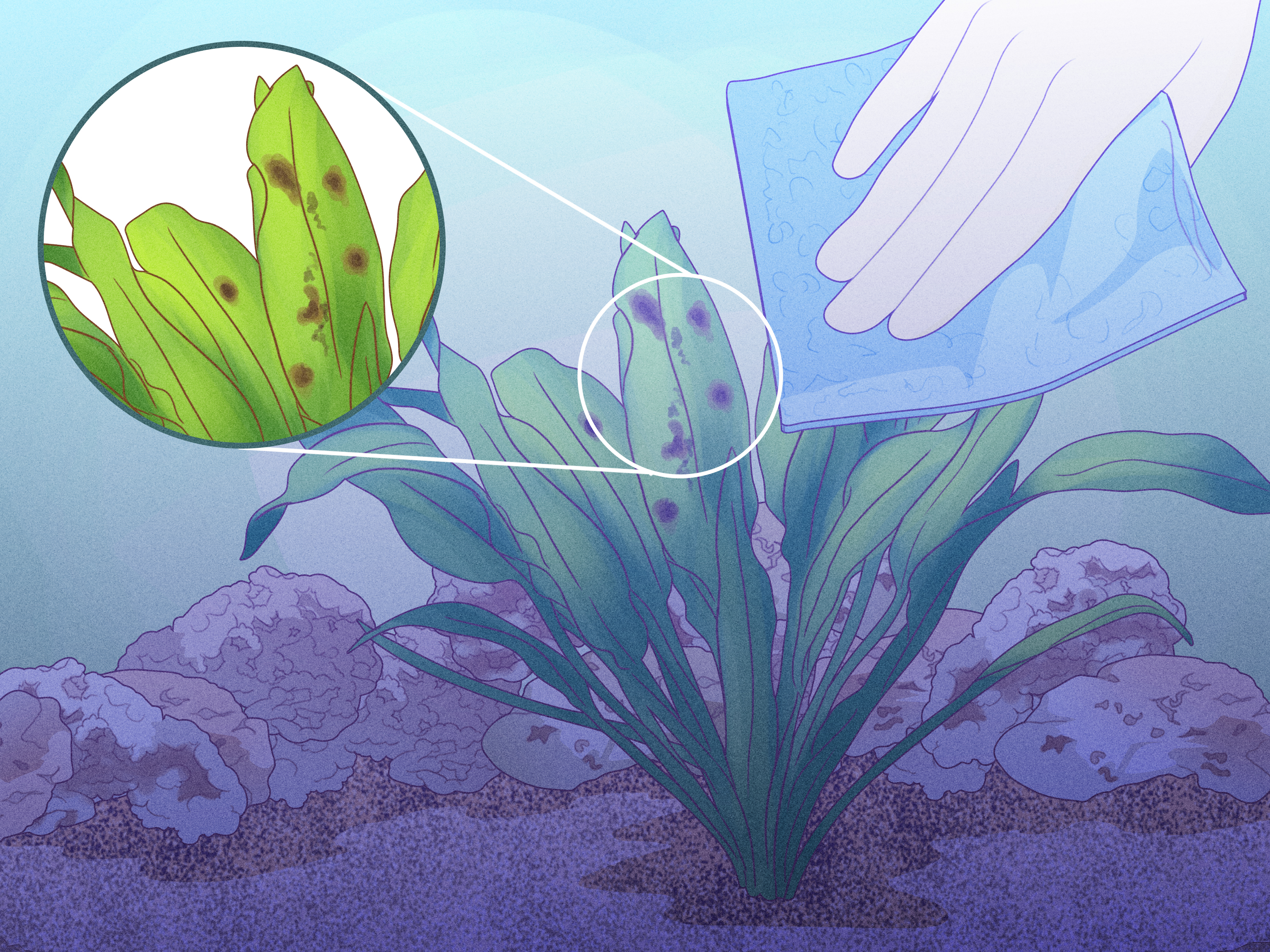
Problem: Leaves turning brown/transparent (“melt”)
Some melt is common after shipping and replanting. Trim leaves that are clearly melting and turning mushy.
Keep water parameters stable, avoid huge lighting swings, and give the plant time to produce new submerged leaves.
Problem: Algae on big leaves
Broad sword leaves can become algae magnets if lighting is high and nutrients are unbalanced. Instead of scrubbing (which can tear leaves),
focus on the root cause: reduce light duration, improve CO2/nutrient balance (even without injected CO2),
keep up with water changes, and consider algae-managing tank mates if appropriate.
Problem: Plant keeps uprooting
Usually this is shallow substrate, short roots, or fish activity. Replant deeper, firm the substrate around the roots,
and make sure the crown stays above the surface. If the plant is very small, patience helpsonce roots grab, it becomes much more stable.
Problem: “Root rot” or base rot
A common cause is planting too deep or compacting substrate so tightly that oxygen circulation around the base is poor.
Ensure the crown is exposed and the substrate isn’t packed like concrete.
Pruning and Propagation: Keeping the Sword Sharp
Amazon swords can get huge. Prune by removing the oldest outer leaves first, cutting close to the base.
This helps light reach inner growth and keeps the plant from shading the rest of your aquascape.
Propagation is often done through runners that form baby plants. Once a baby plant has its own roots, it can be separated and replanted.
Treat the baby plant like a mini version of the adult: bury roots, keep the crown exposed, and give it root-zone nutrition.
Conclusion: Plant It Once, Enjoy It for Years
Planting an Amazon sword isn’t complicatedbut it is specific. If you remember only two things, make them these:
don’t bury the crown, and feed the roots. Do that, keep conditions stable, and your sword plant will
reward you with a bold, green “wow” factor that makes your aquarium look professionally landscaped (even if you’re still learning).
Extra: Real-World Experiences Aquarists Commonly Report (So You Don’t Get Surprised)
Amazon sword plants have a reputation for being easy, and they generally arebut “easy” doesn’t mean “nothing ever looks weird.”
In fact, one of the most common hobbyist experiences is a brief emotional roller coaster right after planting. The plant arrives
looking pretty good, you do everything “right,” and thenwithin dayssome leaves start fading, yellowing, or turning translucent.
The first instinct is to assume you’ve done something catastrophic. In many cases, what’s happening is totally normal:
the plant is switching from emersed-grown leaves to submerged growth. Those older leaves often don’t last, and it’s your choice
whether to trim them early for aesthetics or let the plant reabsorb resources for a bit before removing the mushy parts.
Another common experience: the “floating sword” phase. New plantsespecially smaller onescan pop out of the substrate like they’re
trying to escape your aquascape and start a new life on the filter intake. This usually happens when the root mass is small,
the substrate is too shallow, or fish keep nosing around the base. Many aquarists learn to replant with a slightly deeper hole,
gently firm substrate around the roots, and adjust flow so the plant isn’t taking a constant water-blast to the face.
The funny part? Once the sword’s roots establish, it tends to stay put. It’s like the plant goes from “toddler on roller skates”
to “couch potato” in a few weeks.
Nutrients are another “aha” moment people talk about. Amazon swords are heavy root feeders, which means the plant can look okay at first
(living off stored nutrients), then stall or yellow weeks later if the substrate is inert and the root zone is hungry.
A common pattern hobbyists report is: “It didn’t grow for a month…then I added root tabs…and suddenly it took off.”
That doesn’t mean you should dump fertilizers like you’re seasoning fries. It means the sword responds when the nutrition strategy
matches its biology. Root tabs placed near (not on top of) the roots are often the game changer in gravel or sand setups.
Many aquarists also share the experience of discovering just how big “20 inches” feels inside a glass box.
The plant may start as a modest clump, then expand into a leafy umbrella that shades everything in its orbit.
People often end up repositioning it farther back, pruning more regularly, or intentionally using it to hide heaters and filter intakes.
In smaller tanks, the sword can become the main character whether you meant it to or not. The best strategy experienced hobbyists mention
is planning for adult size on day one: give it space, plant it where it won’t block your layout, and accept that pruning is part of the deal.
Finally, there’s the “algae reality check.” Big, slow-to-replace leaves can collect algae if lighting is intense or the tank balance is off.
Aquarists often learn not to aggressively scrub sword leaves (they tear easily). Instead, they tweak the system: shorten the photoperiod,
keep nutrients consistent, improve circulation, and stay on top of maintenance. Once the tank stabilizes, many report that newer leaves
come in cleaner and healthier. In other words: the Amazon sword is forgivingbut it’s also honest. If something’s off in your tank,
it will sometimes show you, politely, with a leaf that looks like it needs a nap.