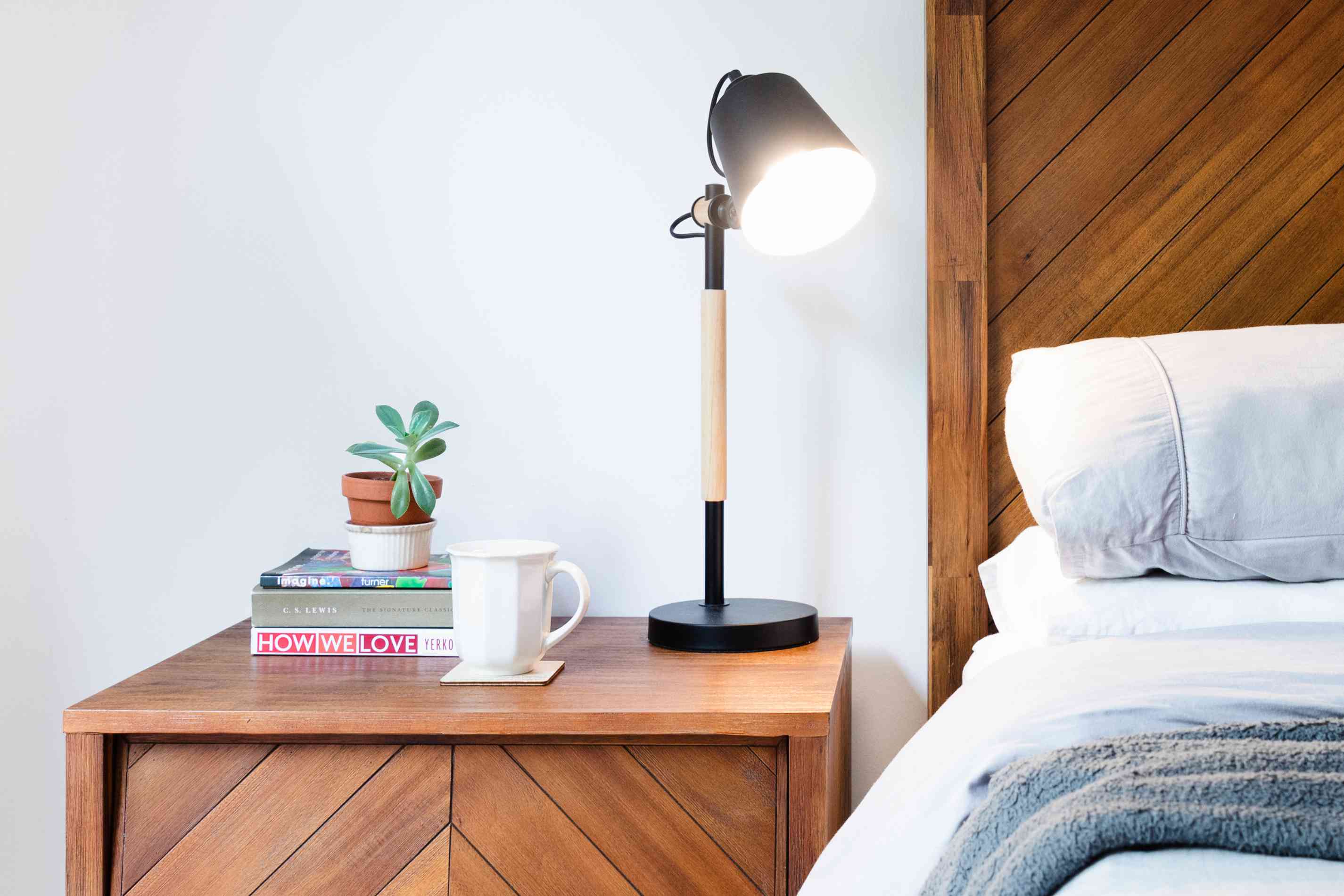

Your nightstand lamp does more than help you find the glass of water you inevitably knock over at 2 a.m. It sets the mood, affects how well you read in bed, and can even make your entire bedroom look more expensive (or oddly off) depending on the size and style you choose. The good news: picking the right nightstand lamps is not some mysterious interior-design secret. It’s a mix of proportion, brightness, and a little personality.
Whether you’re outfitting a minimalist studio or a primary suite with a king-size bed and dramatic headboard, this guide walks you through how to pick nightstand lamps that look great and work beautifully in real life.
Step 1: Match the Lamp to Your Bed and Nightstand
Before you fall in love with a pretty lamp on sale, start with the basics: the size of your bed and nightstand. Proportion is everything. If the lamp is too tiny, it looks like an afterthought. Too big, and it’ll feel like it’s looming over you while you sleep.
Height rules that actually help
A simple rule of thumb: aim for a lamp that’s about 1.5 times the height of your nightstand. For most bedrooms, this lands your lamp somewhere in the 24–36 inch range from base to top, but the sweet spot depends on how tall your mattress is and how you sit in bed.
- If your nightstand is 24 inches tall, a lamp around 26–30 inches usually feels balanced.
- If you have a tall bed with a thick mattress or big headboard, you can go taller with the lamp so it doesn’t look stubby next to the bed.
- When you sit up in bed, the bottom of the lampshade should be roughly at your eye or chin level. That helps you get light on your book without the bulb glaring in your eyes.
Don’t forget width and scale
The width of the lamp matters just as much as height. Designers often use a simple proportion trick: your nightstand should be about one-third to two-thirds the width of your mattress, and your lamp’s widest point should be about one-third the width of your nightstand. That way, the lamp fills the space nicely without eating the whole tabletop.
- Queen bed with a 20–24 inch nightstand? Look for a medium lamp with a shade that doesn’t overhang the edges.
- King bed with larger, 26–30 inch nightstands? You can go bold with bigger lamp bases or oversized shades.
- Skip skinny “buffet” lamps on a large bed. They tend to look spindly and under-scaled next to generous headboards.
Visually, you want the bed, nightstand, and lamp to feel like they belong to the same scene. If one piece is dramatically larger or smaller than the others, the whole wall starts to look lopsided.
Step 2: Choose the Right Shade and Shape
The lampshade is like the haircut of the lamp: get it wrong, and nothing feels quite right. Get it right, and everything suddenly looks polished.
Height and shape of the shade
A good rule is to choose a shade that’s about one-third the total height of the lamp. Many bedside lamps work well with shades that are around 8–12 inches tall. This usually creates a balanced silhouettenot too top-heavy, not too squat.
Common shapes and what they’re good for:
- Drum shades: Clean, modern, and easy to pair with most furniture styles. Great if you like a simple, streamlined look.
- Empire or tapered shades: Wider at the bottom than at the top. These feel classic, cozy, and can soften a more formal or traditional bedroom.
- Rectangular or square shades: Perfect for narrow nightstands or when your furniture has strong straight lines (think boxy headboards, Parsons-style tables).
Whatever shape you choose, make sure the shade isn’t wider than the nightstand itself. If it’s hanging over the edge, it’s not just awkward-lookingit’s also begging to be bumped.
Shade material and light quality
Shade fabric affects how bright and cozy the light feels:
- Linen or cotton in light colors: Great for general bedside lighting. They diffuse light softly and brighten the surrounding area.
- Darker or colored shades: Stylish and moody but more directional. You’ll get less overall light, which is great for ambiance but not ideal if you’re reading fine print.
- Opaque or metal shades: Best when you want focused downlight (for a task or accent) rather than room-filling glow.
If you read in bed, look for a shade that lets some light pass through the sides rather than blocking everything. That way, the light feels softer, and the room doesn’t become a harsh spotlight on your book and a dark cave everywhere else.
Step 3: Pick the Right Bulb, Brightness, and Color
You can have the prettiest lamp in the world, but if the bulb is wrong, you’ll either feel like you’re under an interrogation light or squinting in dim yellow gloom.
How bright should a nightstand lamp be?
Brightness is measured in lumens (not wattswatts are just how much energy the bulb uses). For most bedside lamps:
- 200–400 lumens is enough for soft, ambient light and winding down in bed.
- Around 450–600 lumens works well for reading without straining your eyes.
If your lamp has a dimmer or multiple brightness levels, you can get the best of both worlds: brighter light for reading, softer light for relaxing or watching TV.
Choose a comfortable color temperature
Color temperature is measured in Kelvins (K). This is what makes light feel “warm” and cozy or “cool” and energizing.
- 2700K–3000K (warm white): Ideal for bedrooms. It feels soft, comforting, and sleep-friendly.
- 3000K–3500K (neutral white): Slightly brighter and crisper if you often work or study in bed.
- 4000K+ (cool white): Usually too bright and “office-like” for a relaxing bedroom.
If you want flexibility, consider smart bulbs that let you adjust both brightness and color temperature from your phone or a smart speaker. You can have cool light while folding laundry and warm light for reading before bed.
Wattage and safety
Traditional lamps often list a maximum wattagecommonly 60 wattsfor safety reasons. With LED bulbs, this is easier to manage because they use far less power to produce the same brightness. Always check the lamp’s label and stay within the recommended maximum. Choose ENERGY STAR–rated or good-quality LED bulbs so you’re not constantly replacing burnt-out bulbs or dealing with flicker.
Step 4: Decide on Style and Finish
Once you’ve nailed the practical details, you can have fun with style. Your lamp is a small piece that can make a big design statement.
Coordinate (don’t clone) your decor
Think of your nightstand lamps as part of a larger story that includes your headboard, bedding, and wall art.
- Modern or minimalist bedrooms: Look for clean lines, simple shapes, and neutral finishes like black, white, brass, or matte metal.
- Traditional or cottage spaces: Try ceramic bases, soft curves, pleated or fabric shades, and warm materials like wood.
- Glam or luxe rooms: Go for glass, marble, gold finishes, or sculptural bases that feel like art pieces.
If your bedroom already has a lot going onpatterned bedding, bold wallpaper, colorful rugchoose simpler lamps that won’t compete. If your room is very calm and neutral, a more dramatic lamp can act as a focal point.
Do your lamps have to match?
If you have a bed with two nightstands, matching lamps is the easiest way to make the room feel pulled together. That said, “coordinated but not identical” can still work:
- Same lamp in different colors.
- Different bases with the same shade style and height.
- Table lamp on one side, wall sconce or pendant on the other, as long as the heights and brightness are similar.
The key is balance. You don’t want one side glowing like a stadium while the other side looks like a candlelit crypt.
Step 5: Think About Function and Features
Today’s nightstand lamps are not just “on/off” objects anymore. They often come with built-in tech and small conveniences that make everyday life easier.
Helpful bedside features
- Touch controls: Tap the base or shade to turn the lamp on or offmuch easier than fumbling for a tiny switch in the dark.
- Dimmable levels: Multiple brightness settings or a stepless dimmer help you go from bright reading mode to soft “I’m trying to be asleep” mode.
- USB or wireless charging: Perfect for charging your phone or earbuds without extra cluttered cords.
- Adjustable arms or heads: Great if you share a bed and don’t want to blast your partner with light while you read.
- Cordless or rechargeable lamps: Useful if your outlet is in an awkward spot or you want a cleaner look without dangling wires.
Think about how you actually use your bedroom. Do you read nightly? Scroll on your phone? Get up often with kids or pets? Choose features that match your real habits, not the fantasy version of your bedtime routine.
Step 6: Placement and Practical Details
Where you place your nightstand lamp is almost as important as which lamp you choose.
- Center the lamp on the nightstand, or slightly offset it if you need room for a clock, book stack, or glass of water.
- Ensure you can easily reach the switch or touch control from a seated and lying position.
- Hide excess cord length behind the nightstand or with simple cord clips or channels so the area looks tidy.
If you have art or a mirror above the nightstand, make sure the lamp doesn’t block it completelyor make the artwork look weirdly oversized next to a tiny lamp. Step back and take a picture of the wall; this often reveals proportion issues that are hard to see up close.
Common Nightstand Lamp Mistakes to Avoid
- Lamps that are too short: The light hits your bedside table more than your book, and you end up leaning forward into the light.
- Bulbs that are too bright or too cool: Great for an office, terrible for winding down before sleep.
- Shades that expose the bulb: If you can see the bare bulb while sitting in bed, it’s going to be harsh and uncomfortable.
- Ignoring scale: Tiny lamps with massive headboards or giant lamps on tiny tables will always look off.
- Forgetting function: Pretty but impractical lamps without enough light or without reachable switches will annoy you daily.
Putting It All Together
Choosing nightstand lamps comes down to a simple checklist: right height, comfortable brightness, flattering shade, style that matches your decor, and features that fit your lifestyle. If you can sit in bed and comfortably read, dim the light for relaxation, and look at your nightstand wall without feeling like something is wildly out of proportion, you’ve nailed it.
Now let’s talk about how all of this plays out in real lifeshopping, testing, and living with your lamps day after day.
Real-Life Nightstand Lamp Experiences (500-Word Deep Dive)
On paper, picking nightstand lamps seems straightforward. In real life, it usually involves at least one “How did this look so right in the store and so wrong in my bedroom?” moment. Here’s what tends to happenand how to learn from it.
Imagine you order a pair of gorgeous ceramic lamps online. The photos are perfect, the reviews are glowing, and the price is reasonable. They arrive, you unbox them, set them on your 20-inch-tall nightstands…and suddenly they look enormous. The shades practically kiss the bottom of your artwork, and when you sit up in bed, the light is in your face. Nothing is actually “wrong” with the lampsthey’re just scaled for taller tables or a higher bed. This is where the eye-level and 1.5x height rules become your best friends. Before your next purchase, you grab a tape measure and check your nightstand and mattress height instead of just trusting the product photo.
Another common experience: the “too bright, too cold” bulb mistake. You finally get lamps you love, pop in the brightest LED bulbs you can find, and proudly flip the switchonly to feel like you just turned on a warehouse. The light is cold and harsh, the white bedding looks almost blue, and your relaxed evening mood disappears instantly. Swapping to warm, dimmable bulbs around 2700K–3000K completely changes the vibe. Suddenly the same lamps feel cozy and inviting, and you realize the lamp wasn’t the problemthe bulb was.
Then there’s the tech upgrade moment. If you’ve ever tried to find a tiny switch on the cord behind your nightstand at midnight, you know why touch lamps and smart bulbs are so popular. Many people describe that once they switch to a touch lamp or a lamp with a built-in USB port, they never want to go back. Being able to tap the base to turn it on, bump the brightness up one level for reading, then dim it back down without leaving your pillow feels like a small luxury you use every single day.
Sharing a bedroom also changes how you think about lamps. One person might be a dedicated night reader; the other falls asleep five minutes after their head hits the pillow. A good compromise is a lamp with a directional or adjustable head or a slimmer shade that focuses light on the reader’s side. Over time, couples often realize that matching lamps are nice, but matching functionality is essentialif one side has a perfect reading lamp and the other has a decorative-but-dim light, someone will always be annoyed.
Another real-world lesson: your nightstand is not a museum pedestalit’s a working surface. Once you add your phone, a book or two, glasses, maybe a candle, a diffuser, or a glass of water, a lamp with an oversized base suddenly feels like it’s hogging the entire table. People who live with their lamps for a while often discover they prefer slimmer bases or slightly taller lamps that leave more usable space around them. A lamp can be beautiful and still practical; the test is whether you can live with it comfortably, not whether it looks stunning in a styled photo.
Finally, many people say that taking a quick photo of their bedroom from the doorway helps more than staring at the lamps up close. The photo shows how everything works together: bed, nightstands, lamps, art, and wall color. Lamps that felt “maybe a little tall” in person might look perfect in the pictureor vice versa. Using that simple trick makes you more confident about keeping, returning, or replacing a lamp before you fully commit.
In short, the real-life experience of picking nightstand lamps is a mix of measurements, trial and error, and noticing how the light makes you feel every evening. Once you have lamps that are the right size, the right brightness, and easy to use, you stop thinking about themand that’s the best sign you got them right.
Conclusion
The right nightstand lamps quietly support everything you do in your bedroom: reading, relaxing, scrolling, talking, and winding down. When size, height, lumens, color temperature, and style all work together, your lamps disappear into the room in the best way possibleeverything just feels calm, balanced, and comfortable. Use the simple rules in this guide as a starting point, then adjust for your habits and your space. Your future, well-lit, well-rested self will thank you.