
If you have ever stared at a court website like it personally offended you, welcome to the club. Looking up a docket number sounds simple, but once you start seeing terms like case number, index number, cause number, case locator, and public access portal, things can get weird fast. The good news is that finding a docket number is usually very doable when you know where to look and what information to gather first.
This guide walks you through exactly how to look up a docket number in the United States, including federal court records, state court portals, and even administrative agency dockets. Along the way, we will translate the legal jargon into plain English, save you from clicking seventeen wrong tabs, and help you find the right record with less stress and fewer browser tabs open in despair.
What Is a Docket Number?
A docket number is the identifying number assigned to a case or proceeding. Think of it as the court system’s version of a tracking number. It helps the court, lawyers, parties, reporters, and curious researchers locate the right matter quickly.
In many courts, the docket number connects you to the docket sheet, which is the running log of what has happened in a case. That can include filings, motions, hearings, orders, notices, deadlines, and judgments. In other words, the docket number is not just a label. It is the key that unlocks the timeline of the case.
Why You Might Need to Look Up a Docket Number
People search for docket numbers for all kinds of reasons. Maybe you were sued and want to verify the case details. Maybe you are following a business dispute, checking a bankruptcy filing, researching a criminal matter, or tracking an appeal. Journalists, students, legal assistants, compliance teams, and regular people with a perfectly reasonable need for answers do this every day.
You may also need a docket number to request copies from the clerk, confirm a hearing date, monitor filings, or search for related documents in court databases. Without it, a records search can become much slower, especially when the party name is common. Looking up “John Smith” in a court system is a little like searching for “dog” on the internet and hoping for one specific golden retriever.
Docket Number vs. Case Number vs. Index Number
Here is where the vocabulary starts doing cardio. In many places, people use docket number and case number almost interchangeably. Some state courts use terms like index number or cause number instead. Administrative agencies may call it a docket ID or file number.
The safest approach is this: search the official court or agency site using the number you have, and pay attention to the terminology used on that site. If the portal says “case number,” use that field. If it says “index number,” use that one. Same idea, different courthouse personality.
What You Need Before You Start
You can sometimes find a docket number with only a name, but your odds improve if you gather a few details first:
- The full name of a party or business involved
- The court or jurisdiction, if known
- The state where the case was filed
- An approximate filing year
- The case type, such as civil, criminal, bankruptcy, probate, family, or appellate
- The name of an attorney, judge, or agency, if available
Even one extra clue can dramatically narrow the search. If you know the county, year, and party name, you are already in much better shape than someone typing one surname into a statewide database and hoping the legal universe is feeling generous.
How to Look Up a Docket Number in Federal Court
1. Start with PACER
If the case is in federal court, the main system is PACER, short for Public Access to Court Electronic Records. Federal district courts, bankruptcy courts, and courts of appeals use PACER for public electronic access to docket information and filed documents.
If you know the exact federal court where the case was filed, search that court directly through PACER. If you do not know where the case was filed, use the PACER Case Locator, which searches federal courts through a nationwide index.
2. Search by Party Name, Case Number, or Other Details
Most federal searches work best when you enter a party name, business name, or an existing case number. If you have a partial number, you may still get lucky. Add the year if the portal allows it. Narrow by court type if necessary, especially if you suspect the matter is bankruptcy or appellate rather than a standard civil case.
3. Understand the Format
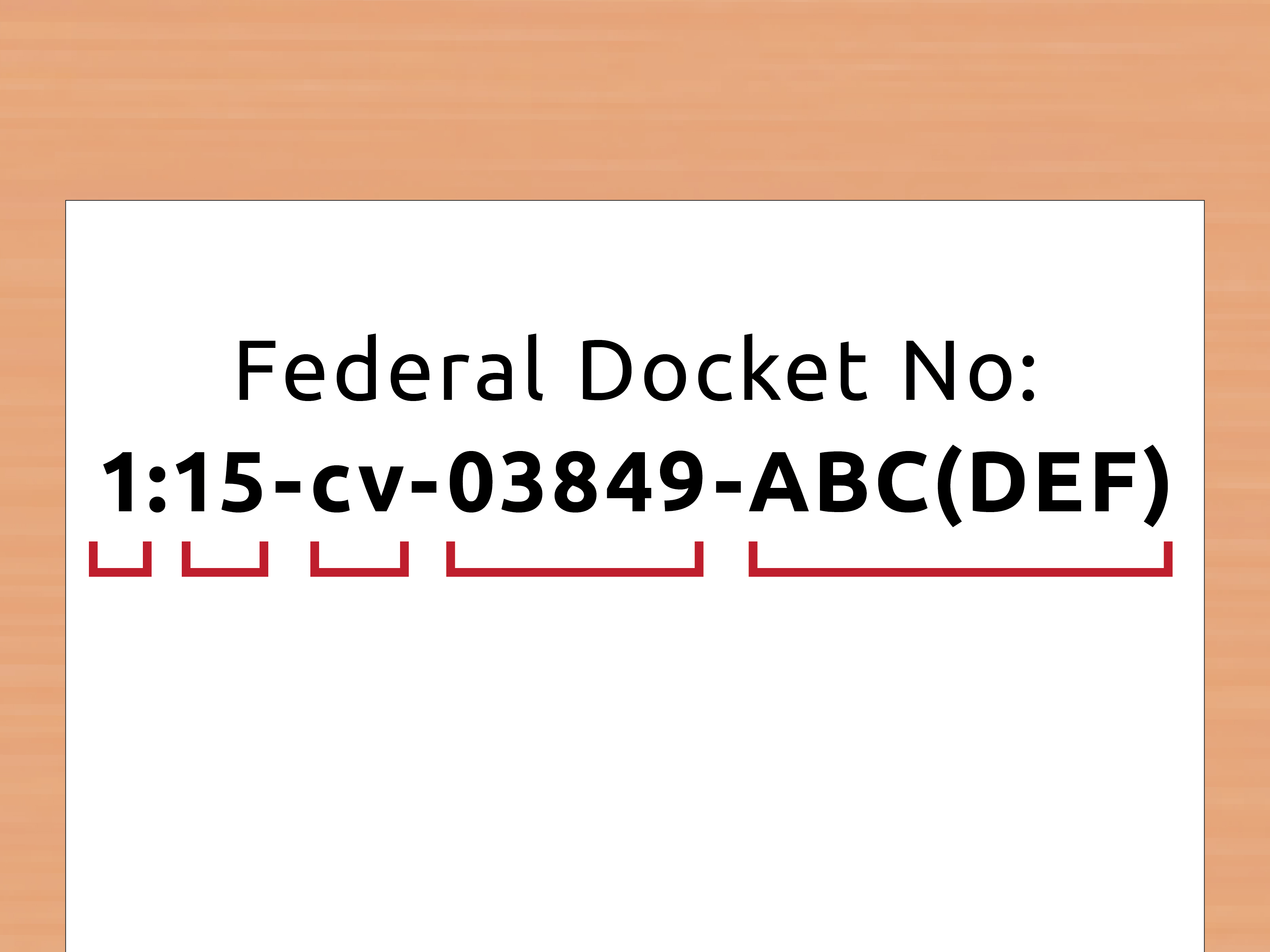
A federal docket number often contains pieces of useful information. For example, a civil case number might look something like this:
2:25-cv-01234
That format often signals the division or office, the filing year, the case type, and the sequence number. Not every court formats numbers identically, but many follow a similar logic. Once you recognize the structure, those strings of digits start looking less like robot poetry and more like useful information.
4. Watch for Fees
Federal court access is not always fully free. Searching and viewing records in PACER can involve charges, so use filters carefully and avoid opening giant docket reports unless you actually need them. If you only need the docket number, a targeted search is usually enough.
How to Look Up a Docket Number in State Court
State court systems are where things become delightfully inconsistent. There is no single PACER-style database for all state courts. Every state, and sometimes every county, may use a different portal, naming system, and access policy.
1. Go to the Official State Judiciary Website
Search for the official website of the state court system or the county clerk where the case may have been filed. Avoid random aggregator sites when accuracy matters. Some private databases are useful, but official court records should come from official court sources whenever possible.
2. Find the Public Case Search Tool
Look for terms such as:
- Case Search
- Docket Search
- Court Records
- Public Access
- eCourts
- Online Services
- Case Information
Some states let you search by name, case number, attorney, or filing date. Others are stricter and require a county, court type, or exact number format. If the portal asks for an index number or cause number, that may be the local version of the docket number.
3. Use Local Clues
Suppose you know the case was filed in a New York county civil court. The court may call the number an index number. In Texas, a portal may emphasize cause or case information. In appellate systems, the search may center on a docket or appellate case number. In California and Florida, statewide and court-specific tools may both exist, depending on the court level.
The lesson is simple: the search method changes by jurisdiction, but the strategy stays the same. Match your search to the local court’s language and structure.
4. Contact the Clerk if the Portal Fails
Not every case is available online, and not every online record is complete. Some files are older, sealed, restricted, partially digitized, or simply not included in the public portal. When that happens, contact the clerk’s office. Give them the party name, approximate filing date, case type, and any other identifying details you have. Clerks cannot always perform miracles, but they can often point you to the right records path.
How to Look Up an Administrative Docket Number
Not all dockets belong to courts. Federal agencies also use docket systems for rulemaking, enforcement, and administrative proceedings. If your search involves an agency rather than a lawsuit, the process changes.
For Federal Regulations and Rulemaking
Use the federal rulemaking portal and search by docket ID, agency name, rule title, or keyword. This is common when looking up public comments, proposed rules, notices, and related agency materials.
For Agency Enforcement or Proceedings
Some agencies publish administrative proceeding records by file number, proceeding number, or case name. If the matter involves securities, trade regulation, transportation, labor, environmental rules, or another agency-specific process, start on the agency’s official legal or enforcement page.
In plain English: if the case is not in court, it may still have a docket number, but the search tool will probably live on the agency’s site rather than a court portal.
Best Ways to Find a Docket Number When You Do Not Have One
Search by Party Name
This is the most common starting point. Use the exact legal name if possible, especially for businesses, estates, and government entities. Nicknames, abbreviations, and misspellings can throw off your search.
Search by Attorney Name
Some systems allow searches by attorney, which can be useful when the party name is very common or hard to spell.
Search by Filing Date Range
If you know the case was filed around a specific month or year, use that range. It helps trim the results and makes you feel like a detective instead of a person angrily clicking “next page.”
Search by Court Type
Choose civil, criminal, family, probate, appellate, or bankruptcy when that option is available. Searching every category at once may produce far too many results.
Use News Reports or Legal Filings You Already Have
A news article, demand letter, notice, order, email from counsel, summons, or agency notice may contain enough information to identify the record. Even a hearing notice or document caption may reveal the court, parties, and year, which is often enough to recover the docket number.
Common Problems People Run Into
The Number Does Not Work
You may be using the wrong jurisdiction, wrong format, or wrong court level. A state trial court number will not work in a federal portal, and an appellate docket may not appear in a trial-court search.
The Case Is Not Public
Some records are sealed, confidential, expunged, juvenile, or otherwise restricted. Family law and criminal matters may also display only limited public information depending on the jurisdiction.
The Portal Is Incomplete
Older records may not be digitized. Some courts offer online indexes but require an in-person or written records request for full documents. Others provide docket text but not downloadable filings.
The Name Is Too Common
If your search returns forty-seven results for a common name, add a county, filing year, middle initial, or case type. The more context you provide, the more manageable the results become.
Practical Tips for Faster Results
- Start with the official court or agency website, not a third-party summary site
- Use exact names and correct spelling
- Try both the party name and business name if applicable
- Search the specific court first if you know it
- Use statewide or national locators when you do not know the court
- Keep notes on every variation you tried so you do not repeat the same dead-end search
- Take screenshots or save the case details once you find the right docket number
Example Scenarios
Example 1: Federal Employment Lawsuit
You know the employer’s name and that the case was filed in federal court sometime last year. Start with PACER. If you do not know the district, use the PACER Case Locator and search by the company name plus a filing year range. Once the case appears, open the docket sheet and confirm the parties, judge, and case type.
Example 2: County Civil Case
You know the plaintiff and defendant names and that the case was filed in state court in one county. Go to the state judiciary website or county clerk site, open the public case search, and search by party name. If the portal uses index numbers, the result you need may be listed under that label rather than “docket number.”
Example 3: Agency Rulemaking Matter
You are trying to find comments on a proposed federal rule. Search the agency name and topic through the federal rulemaking docket portal. Use filters for document type, date, and docket ID once you identify the rule.
Final Thoughts
Learning how to look up a docket number is really about learning where a case lives. Once you identify the right system, whether that is federal court, state court, or an agency docket, the process gets much easier. The biggest mistakes people make are using the wrong portal, relying on the wrong terminology, or searching with too little detail.
Start with official sources, gather as many identifying facts as you can, and adapt to the local court’s language. Some systems will call it a docket number, some a case number, some an index number, and some a docket ID. Same treasure hunt, different map.
And once you find it, save it somewhere safe. Because nobody wants to repeat a one-hour records search just because they trusted their memory at 11:43 p.m. on a Tuesday.
Real-World Experiences and Practical Lessons From Looking Up a Docket Number
One of the most common experiences people have when trying to look up a docket number is assuming the search will take two minutes and then discovering they have entered a maze made of dropdown menus, county filters, and oddly specific number formats. That does not mean you are doing anything wrong. It usually means the court system was designed for legal precision, not for comforting first-time visitors.
A very typical experience starts with a person searching the web for a party name, landing on the wrong court site, and wondering why nothing appears. Then comes the first useful breakthrough: realizing that the right jurisdiction matters more than anything else. Once people switch from a general search engine result to an official court or agency portal, success rates go up quickly. This is the moment where the search stops feeling random and starts feeling strategic.
Another common lesson is that naming conventions can be sneaky. A person may search for a “docket number” in a state portal that only recognizes “case number” or “index number.” The information may be there the whole time, just labeled differently. Experienced researchers get better results because they adapt to the language of each system instead of expecting every court to behave the same way. In legal research, consistency is more of a dream than a guarantee.
People also learn that the smallest detail can save enormous time. Knowing a filing year, county, middle initial, business suffix, or case type can shrink a giant result list into a manageable one. That is why skilled searchers often spend a minute collecting clues before typing anything. It feels slower at first, but it is actually faster than opening twenty wrong results and muttering at your screen like it owes you rent.
There is also the very practical experience of discovering that not every record is fully online. Many users expect instant access to everything, only to find that older files, sealed cases, restricted records, or local filings may require a clerk request, written application, or in-person visit. That can be frustrating, but it is also normal. Public access rules are real, and so are privacy limits.
Finally, people who do this often get into one excellent habit: once they find the right docket number, they save it immediately. They copy it into notes, download the docket sheet, screenshot the result, or email it to themselves. That little step prevents repeat searches later and turns a messy process into an organized one. In short, the real experience of looking up a docket number is part research, part patience, and part learning how each court likes its information served. Once you understand that rhythm, the process becomes much less intimidating and a lot more efficient.