
If you have ever hung a frame, stepped back proudly, and then realized it was somehow both crooked and too high, welcome to the club. Installing wall frames looks easy until you’re holding a hammer in one hand, a level in the other, and your confidence is slipping down the wall faster than a cheap adhesive strip. The good news is that learning how to install wall frames is not complicated. You just need the right measurements, the right hardware, and a little patience.
Whether you’re hanging one family photo, building a polished gallery wall, or trying to make the space above your sofa look intentional instead of mysteriously empty, this guide walks you through the process from start to finish. You’ll learn where to place frames, how to choose the best wall anchors, when to find a stud, and how to avoid the most common mistakes that turn a simple decorating project into a mini home-improvement drama.
Why Proper Frame Installation Matters
Installing wall frames correctly is about more than looks. A well-hung frame feels balanced, safe, and connected to the room. A badly hung frame can look awkward, damage the wall, or in the case of heavy art, come crashing down at the worst possible moment. Nobody wants their favorite print to do a surprise swan dive at 2 a.m.
Good installation also protects your walls and your artwork. The right hanging hardware reduces unnecessary holes, helps distribute weight properly, and keeps frames from tilting. If you’re working with drywall, plaster, brick, or a rental-friendly setup, the installation method matters even more.
What You Need Before You Start
Before you install wall frames, gather your supplies. Running back and forth for one missing tool is the DIY version of cardio, but less fun.
Basic Tools
- Tape measure
- Pencil
- Level or laser level
- Hammer
- Drill and appropriate drill bits
- Stud finder
- Painter’s tape
- Picture-hanging hooks, screws, or wall anchors
Optional but Helpful Extras
- Paper templates for gallery wall planning
- Museum putty or frame bumpers to keep frames from shifting
- Step stool
- Microfiber cloth to clean the wall before adhesive products
Step 1: Choose the Right Location
The first step in installing wall frames is deciding exactly where they should go. That sounds obvious, but placement is where many people get tripped up. Frames should relate to the furniture and architecture around them, not float off by themselves like lost satellites.
For most walls, a reliable rule is to place the center of the frame about 57 inches from the floor. That is a classic eye-level guideline and works especially well for single frames. If you’re hanging art above a sofa, console, or bed, the bottom edge of the frame should usually sit about 8 to 10 inches above the furniture. That keeps the piece visually connected to the room instead of hovering in space like it missed its parking spot.
If you’re creating a gallery wall, think of the arrangement as one larger shape. Hang the center of the overall grouping near eye level rather than treating every frame as its own tiny kingdom.
Step 2: Plan the Layout Before Making Holes
Do not freestyle this part unless you enjoy patching drywall. Lay the frames on the floor first and experiment with the arrangement. Start with the largest piece, then build around it with smaller frames. Keep spacing consistent so the display looks deliberate.
A good spacing rule for most gallery walls is around 2 to 6 inches between frames, depending on the size of the wall and the scale of the art. Tighter spacing feels more collected and modern. Wider spacing feels airier. Use painter’s tape as temporary spacers if you want clean, repeatable gaps.
Another smart move is to create paper templates. Trace each frame onto kraft paper or butcher paper, cut the shapes out, and tape them to the wall. This lets you adjust the entire layout without making a single hole. It is not glamorous, but it is wildly effective.
Step 3: Know Your Wall Type
You cannot install wall frames the same way on every surface. Before you choose hardware, identify what kind of wall you’re working with.
Drywall
Drywall is common, easy to work with, and slightly dramatic when overloaded. Lightweight frames may hang fine on picture hooks or nails, but heavier items usually need anchors or studs.
Plaster
Plaster walls can crack if handled roughly. Drill carefully, use the right bit, and avoid pounding away like you’re auditioning for a demolition show.
Brick or Concrete
Masonry walls require a masonry bit and anchors designed for brick or concrete. Adhesive strips usually are not the best choice on rough or textured surfaces.
Wallpaper or Textured Walls
These surfaces are trickier. Some adhesive hanging products specifically warn against wallpaper, textured finishes, and delicate surfaces. In those cases, use mechanical hanging methods that suit the wall structure.
Step 4: Find a Stud When the Frame Is Heavy
If the frame is large, heavy, valuable, or all three, try to anchor it into a wall stud. Studs are typically spaced 16 or 24 inches apart, and they provide the strongest support. Use a stud finder and mark both edges of the stud so you can hit the center accurately.
Not every frame will line up perfectly with a stud, and that’s normal. When studs are not in the ideal location, use wall anchors rated for the weight of the frame and the wall type. Always check the package rating and think beyond the frame itself. Include the glass, backing, and hardware in your weight estimate.
Step 5: Choose the Right Hanging Hardware
This step matters more than people think. The hardware should match the frame size, weight, and wall surface.
Best Options for Lightweight Frames
- Picture-hanging nails or hooks
- Sawtooth hangers
- Adhesive picture-hanging strips, if the surface and frame qualify
Best Options for Medium to Heavy Frames
- D-rings with screws
- Wire hanging systems
- Drywall anchors
- Screws driven into studs
If you use adhesive hanging strips, follow the manufacturer instructions closely. Many products have strict surface limitations, require clean walls, and should not be used on wallpaper, textured walls, or for valuable or irreplaceable items. Some also require waiting about a week after painting so the finish can cure properly. In other words, adhesive products are convenient, but they are not magic.
Step 6: Measure the Hanging Point Correctly
This is the secret sauce. People often mark where they want the top of the frame to go, then forget that the hanger sits lower than that. The result is a frame that ends up too high.
To get it right, measure from the top of the frame down to the hanging hardware. For a wire-hung frame, pull the wire taut as if it were on the hook and measure from the top of the frame to the highest point of the wire. For D-rings, measure from the top of the frame to the top of the rings. Then use that number to calculate the wall mark.
Example: If you want the center of a 20-inch-tall frame at 57 inches, the top of the frame will be 67 inches from the floor. If the wire pulls up 3 inches below the top of the frame, the hook should go at 64 inches. Tiny math, huge difference.
Step 7: Mark, Install, and Hang
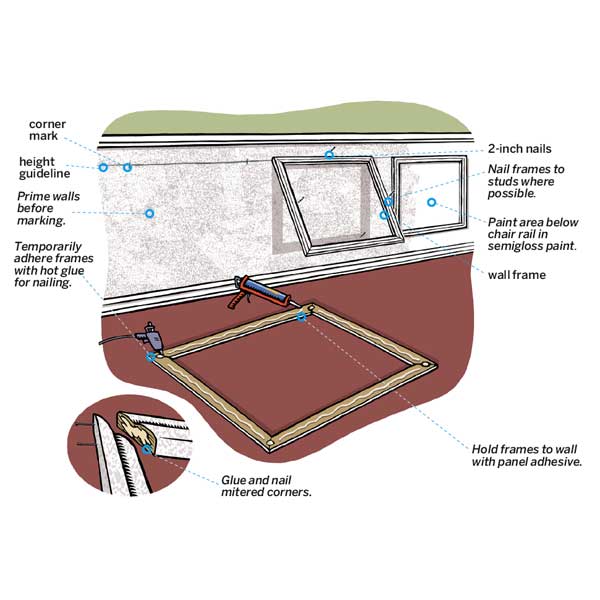
Once your measurements are locked in, mark the wall lightly with pencil. Use a level to draw a faint guide line if needed, especially for pairs of frames or gallery wall rows.
Install the hardware based on your wall type:
- For hooks or nails, tap them in at the recommended angle.
- For screws in studs, drill a pilot hole first.
- For drywall anchors, drill the correct pilot hole unless you are using self-drilling anchors.
- For masonry, drill carefully with the right bit and install anchors designed for that surface.
Then hang the frame and step back. Use the level again. Yes, again. The first glance lies. The level does not.
How to Install a Gallery Wall Without Losing Your Mind
Gallery walls look effortless only after someone has spent an hour measuring tiny rectangles and muttering at the wall. To make the process smoother, start by defining the outer boundaries of the display. Then choose a focal piece and hang that first. Work outward, checking spacing and alignment as you go.
If your frames are different sizes, keep something consistent, such as frame color, mat style, subject matter, or spacing. That shared element keeps the arrangement from feeling random. If the frames match exactly, you can go for a neat grid. If they vary, a balanced organic arrangement usually works best.
For wall frames above a sofa, aim for a grouping that spans roughly two-thirds of the furniture width. That proportion usually looks intentional and well-scaled.
Common Mistakes to Avoid
Hanging Frames Too High
This is the classic mistake. Unless the room has unusual proportions, stick close to eye level or keep the art visually tied to the furniture below it.
Ignoring Weight Limits
Never assume a tiny hook can support a giant frame just because it seems confident. Read the weight rating on the packaging.
Skipping the Layout Test
What looks great in your head can look weird on the wall. Floor planning and templates save time and holes.
Using the Wrong Hardware for the Wall
Drywall, plaster, brick, and textured surfaces all behave differently. Match the hardware to the material.
Forgetting About Safety
Heavy mirrors and large frames should be secured properly, especially in homes with children or pets. A beautiful frame is not worth a dangerous installation.
Smart Tips for a Cleaner, Better Finish
- Use painter’s tape on the wall to mark level lines and stud locations.
- Save drill dust by taping a folded piece of painter’s tape below the hole.
- Add felt bumpers or museum putty behind the lower corners of the frame to keep it from shifting.
- Check for glare before final placement, especially across from windows.
- When in doubt, go slightly lower instead of slightly higher. Lower almost always looks better indoors.
Real-World Experiences With Installing Wall Frames
One of the funniest things about learning how to install wall frames is realizing that the process is usually less about tools and more about tiny surprises. On paper, hanging a frame sounds simple: pick a spot, drive in a hook, and admire your good taste. In real life, there is often a very human sequence of events. First, you hold the frame against the wall and think, “Perfect.” Then you step back and realize it is too far left. Then too high. Then somehow not centered over the console table, even though you could have sworn it was. Installing wall frames teaches humility faster than yoga.
A lot of people discover their first real lesson when hanging art above furniture. A frame that looked fine on a blank wall suddenly seems disconnected once the sofa is underneath it. The fix is usually simple: lower it. That one adjustment can make the whole room feel more finished. People often assume artwork should be closer to the ceiling because it feels formal, but in lived-in rooms, art usually looks better when it relates to the furniture and the people actually using the space.
Another common experience is underestimating the weight of a frame. A piece may not seem heavy until you remember the glass, mat, backing, and hardware all count. Many DIYers start with a basic nail, feel proud for about ten minutes, then notice the frame leaning forward with suspicious energy. That is usually the moment when a trip for proper anchors, hooks, or a stud finder becomes non-negotiable. Annoying in the moment, yes. Better than hearing a crash later, absolutely.
Gallery walls bring their own set of adventures. What starts as “I’ll just hang a few family photos” can quickly evolve into a floor covered with frames, tape, measuring tools, and one person staring at the arrangement like it is a high-stakes puzzle. But this is also where the fun kicks in. Once you start moving pieces around and seeing the layout come together, the wall begins to tell a story. Maybe it mixes vacation photos, thrifted art, black-and-white prints, and one odd little piece you love for no logical reason. That is when the installation becomes less of a chore and more of a design decision.
Renters often have a different experience entirely. They become accidental experts in removable strips, patch kits, and strategic decorating. Many learn the hard way that not every surface loves adhesive products equally. Fresh paint, textured walls, humidity, and heavy frames can all change the outcome. Still, when the right product is matched to the right frame, the result can be surprisingly polished and low stress.
And then there is the final moment every DIYer knows: the step-back test. You hang the frame, adjust it twice, level it once more, and then back away across the room. If it looks balanced, safe, and natural in the space, that small victory feels ridiculously satisfying. Installing wall frames is one of those home projects that seems minor, but it can transform a room fast. Done well, it adds personality, structure, and warmth. Done badly, it gives you a new reason to keep spackle in a drawer. Either way, experience makes the next frame easier.
Conclusion
Learning how to install wall frames is one of the simplest ways to improve a room without a full renovation. With the right placement, the right hardware, and a little planning, you can hang frames that look polished, stay secure, and feel like they belong in the space. Measure carefully, respect the wall type, check the weight, and do not rush the layout stage. That combination solves most problems before they start.
Whether you are hanging one frame or building a full gallery wall, the goal is the same: make it look effortless, even if you had to do a little measuring, a little muttering, and one dramatic step back to get there.