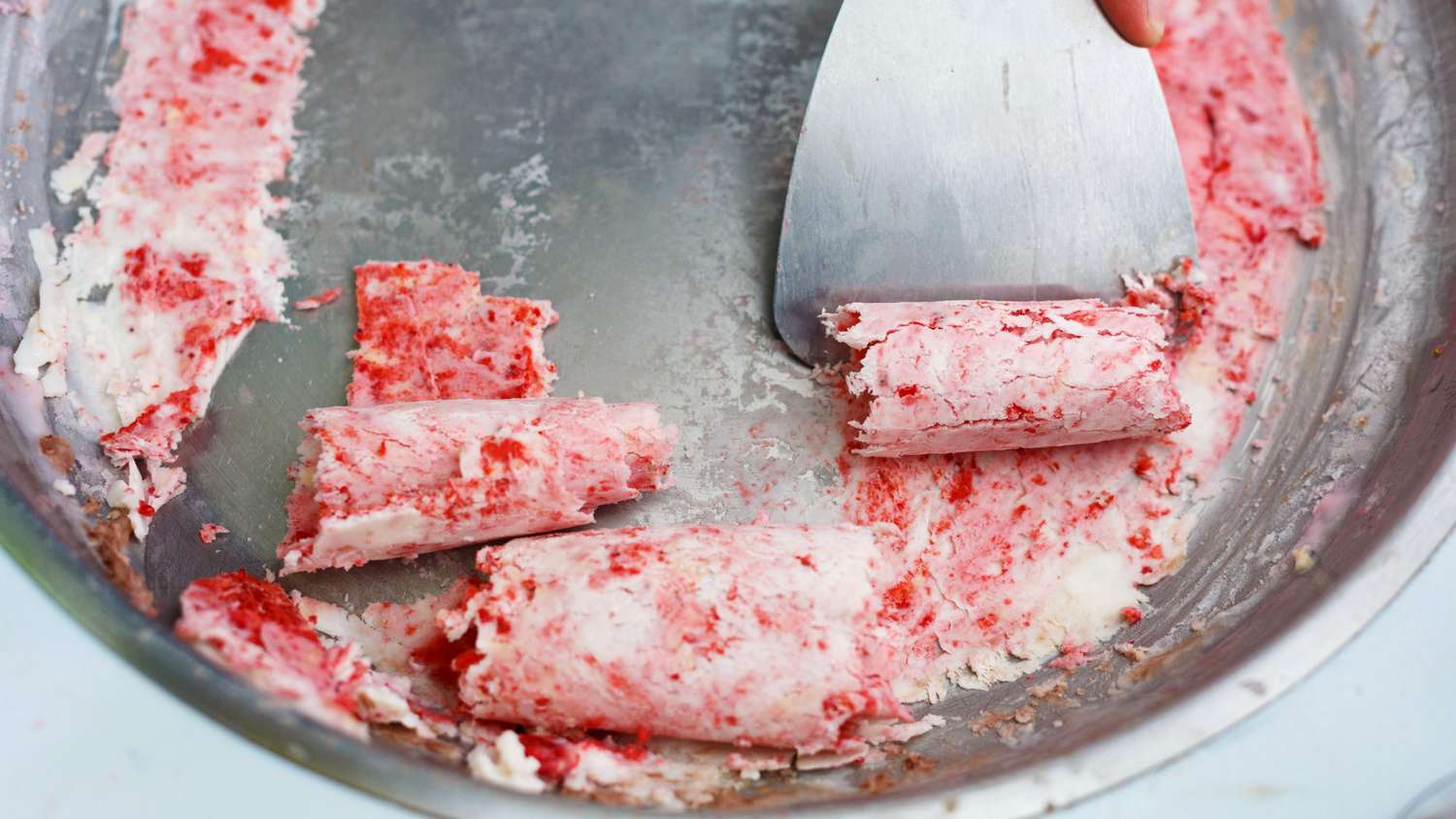

Rolled ice cream is the dessert equivalent of a magic trick: you pour a creamy base, add mix-ins, scrape it up, andta-daperfect little spirals appear.
The only catch is that most rolled ice cream is made on a super-cold metal plate you don’t typically keep next to your toaster.
The good news: you can make rolled ice cream at home with everyday tools and a little freezer strategy. In this guide, you’ll learn two reliable
ways to get those satisfying “ice cream rolls,” plus the best base, mix-ins that behave, and fixes for the most common problems (yes, including “why did
my rolls turn into ice cream confetti?”).
What Is Rolled Ice Cream (and Why It’s Different)?
Rolled ice cream (often called “Thai rolled ice cream”) is made by freezing a thin layer of sweet cream on a cold surface, chopping in flavor add-ins,
and then scraping the frozen sheet into curls. Because it freezes fast and stays relatively dense (not whipped full of air like some churned ice creams),
the texture can feel extra creamy and “rich” when you nail it.
At home, your freezer won’t freeze as instantly as a shop’s cold plateso the trick is working with a thin layer, a cold metal pan,
and the right no-churn style base that stays rollable instead of turning into an ice brick.
Two Ways to Make Rolled Ice Cream at Home
Method 1: The Sheet-Pan Roll Method (Most Foolproof)
This method freezes the base in a thin sheet first, then you slice and roll it. It’s less “made-to-order show,” more “I can actually pull this off on a Tuesday.”
If you want neat rolls with minimal drama, start here.
Method 2: The Cold-Pan Rapid Method (More Like the Shop Experience)
You pre-chill your pan hard, pour a small portion, and scrape/roll quickly while it’s semi-frozen. This is the closest to the classic rolled-ice-cream vibe,
but it’s more sensitive to timing and freezer temperature.
Either way, you’ll use the same base and the same toolsso consider this a “choose your adventure” situation, except the adventure ends with dessert.
Equipment You’ll Need
- Rimmed metal baking sheet (quarter or half sheet pan). Metal mattersglass is a no-go for fast chilling.
- Flat metal spatula or bench scraper (a straight edge makes clean rolls).
- Mixing bowl + hand mixer (or stand mixer).
- Parchment paper (optional, for easier lifting/portioning in Method 1).
- Chilled bowls/ramekins for serving (your rolls melt slower in cold dishesscience AND manners).
Safety note: Some DIY tutorials use dry ice or liquid nitrogen to mimic a professional cold plate. Those can be dangerous without proper training and
protective gear. This guide sticks to normal kitchen-safe methods.
Ingredients for a Rollable Base (No-Churn Style)
The simplest at-home rolled ice cream base is basically a no-churn ice cream base. It works because sweetened condensed milk adds sugar and milk solids, which helps
keep the frozen mixture smoother and less icy, while whipped cream adds air and fat for a softer, scoopable texture.
Base Ingredients (Makes about 4–6 servings)
- 2 cups cold heavy cream (very cold helps it whip faster)
- 1 (14-ounce) can sweetened condensed milk
- 1 teaspoon pure vanilla extract (optional but recommended)
- Pinch of salt (small pinch, big impact)
Mix-In Guidelines (So Your Ice Cream Doesn’t Get Icy)
Rolled ice cream loves mix-insuntil the mix-ins bring too much water. Fresh fruit can work, but you’ll get better texture with jam, compote, freeze-dried fruit,
or fruit that’s been cooked down. Crunchy bits like cookies, nuts, and chocolate chips are naturally low-moisture and roll-friendly.
- Best roll-friendly mix-ins: crushed cookies, brownie bits, mini chocolate chips, chopped candy, toasted nuts, cereal, sprinkles, cookie butter
- Use with strategy: fresh berries (chop small), banana (thin slices), citrus zest (great), peanut butter (swirl or soften first)
- Avoid dumping in: lots of juice, watery fruit chunks, big spoonfuls of liquid syrup (save those for topping)
Step-by-Step: Make the Base
- Chill everything: Put your mixing bowl and beaters in the freezer for 10 minutes (optional, but it helps).
-
Whip the cream: Pour cold heavy cream into the bowl and beat to stiff peaks.
You want it thick enough that it holds shapelike it could stand up in court and testify. -
Fold in condensed milk: Add sweetened condensed milk, vanilla, and salt.
Fold gently until just combined. Don’t overmix; you’ll deflate the air that helps keep the base soft. - Pick your flavor plan: Decide whether you’re mixing add-ins into the base (even distribution) or saving them for chopping on the pan (more “rolled ice cream” style).
Method 1: Sheet-Pan Roll Method (Clean Rolls, Low Stress)
This is the best method for picture-perfect rolls because the ice cream freezes evenly first, then you roll it like a chilled dessert carpet.
Steps
- Prep your pan: Line a rimmed sheet pan with parchment (optional). Chill the pan in the freezer for 15–20 minutes.
-
Spread thin: Pour the base onto the cold sheet pan and spread into an even layer.
Aim for about 1/8 inch thick if possible. Too thick = cracking; too thin = sad, fragile shards. - Freeze until firm: Freeze 2–4 hours, or until solid enough to slice cleanly.
- Slice strips: Remove pan from freezer. Using a flat metal spatula or bench scraper, cut 2–3 inch wide strips.
-
Roll at an angle: Push the spatula forward at roughly a 45-degree angle to curl each strip into a tight roll.
Transfer to a chilled bowl. - Serve fast (or refreeze briefly): Top with sauce, whipped cream, sprinkles, etc. If your kitchen is warm, pop the rolls into the freezer for 5 minutes before serving.
Why this works
You’re not racing the melting clock while trying to freeze a liquid on a not-quite-cold-enough surface. Instead, you freeze first, then roll with control.
It’s the difference between “I made rolled ice cream” and “I made a dairy abstract painting.”
Method 2: Cold-Pan Rapid Method (More Showy, More Timing)
This method tries to mimic the shop technique using a deeply chilled metal pan and smaller portions. It’s fun for parties because people can “order” flavors
but you’ll want to move quickly and keep the pan cold between rounds.
Steps
- Deep-chill your pan: Freeze a rimmed metal baking sheet for at least 4–6 hours (overnight is better).
- Set up your station: Have mix-ins chopped and ready. Chill serving bowls in the freezer.
-
Work in small portions: Remove the pan from the freezer. Pour a small ladle of base (about 1/2 cup) onto the pan.
Spread thin and even. - Add mix-ins and chop: Sprinkle your add-ins over the base and use the scraper to chop and smear them into the soft-freezing mixture.
-
Let it set, then roll: Return the pan to the freezer for 2–5 minutes (time varies).
When the sheet is frozen but still workable, scrape into rolls and serve. - Re-chill between batches: Put the pan back in the freezer for 10 minutes before the next round.
Pro tip for home freezers
If you can’t get rolls because things stay too soft, don’t fight physics. Freeze a little longer and then roll once it’s firm. The “rapid” method is still doable,
but it’s less instant than a commercial cold plate.
Flavor Ideas That Roll Like a Dream
1) Cookies & Cream Crunch
- Crushed chocolate sandwich cookies
- Mini chocolate chips
- Optional: a spoonful of cookie butter (swirl lightly)
2) Strawberry Cheesecake “Vibes”
- Strawberry jam or compote (better than watery berries)
- Crushed graham crackers
- Optional: tiny cubes of cream cheese (use sparingly so it blends in)
3) Peanut Butter Cup
- Chopped peanut butter cups
- Drizzle of peanut butter (warm slightly so it swirls)
- Pinch of flaky salt on top (trust the process)
4) Mocha Chocolate Chip
- 1–2 teaspoons instant espresso powder stirred into the base
- Mini chocolate chips
- Optional: cocoa nibs for crunch
Troubleshooting: When Rolls Don’t Roll
Problem: It cracks and breaks into big pieces
- Likely cause: The layer is too thick or too frozen-solid.
- Fix: Spread thinner next time (around 1/8 inch). If it’s already frozen, let the sheet sit for 30–60 seconds to soften slightly before scraping.
Problem: It won’t curljust smears or melts
- Likely cause: The pan isn’t cold enough or the base is too soft.
- Fix: Freeze longer, and keep portions small. If it’s consistently too soft, adjust the base by using slightly more heavy cream or reducing very wet mix-ins.
Problem: It sticks to the pan like glue
- Likely cause: The mixture is semi-melted or the edge isn’t sharp enough.
- Fix: Use a sharp-edged metal scraper and scrape confidently. If needed, re-freeze the pan for 2 minutes before rolling.
Problem: The texture is icy
- Likely cause: Too much water (fresh fruit, juice, thin syrups).
- Fix: Use jam, cooked-down fruit, or freeze-dried fruit. Keep mix-ins chunky but dry. If using fruit puree, reduce it on the stove and cool before adding.
Serving and Storage Tips
Serving
Serve in chilled bowls and top immediately. Rolled ice cream looks fancy, but it melts like any ice creamespecially once it realizes you’re taking photos.
If you’re serving a crowd, keep finished rolls in the freezer on a cold tray for up to 15–20 minutes.
Storage
Rolls are best the same day. If you need to store them, place rolls in a single layer in an airtight container, press parchment between layers, and freeze.
Let sit at room temperature for a few minutes before eating so the texture softens.
FAQ
Do I need an ice cream maker?
Nope. This recipe uses a no-churn base and a sheet pan method that’s designed for normal kitchens.
Can I make it dairy-free?
You can try a coconut-based version using full-fat coconut cream and sweetened condensed coconut milk. The texture won’t be identical, but it can still roll if you
freeze it in a thin sheet and work quickly.
What’s the easiest way to get neat rolls?
Use Method 1 (freeze into a thin sheet, slice strips, roll). It’s the most repeatable and least dependent on having a freezer that behaves like an arctic wind tunnel.
Real Kitchen Experiences: What Making Rolled Ice Cream at Home Feels Like (and Why It’s Worth It)
If you’ve only ever watched rolled ice cream videos online, your brain probably believes it happens in real time: pour cream, chop Oreos, roll perfection, applause.
In a home kitchen, it’s more like: “Okay, everyone movemy sheet pan needs to lie flat in the freezer like it pays rent here.”
The first experience most people have is learning that rolled ice cream is as much about prep as it is about rolling.
Chop mix-ins first. Clear freezer space first. Chill bowls first. Otherwise, you’ll find yourself holding a melting roll in one hand and rummaging for sprinkles with the other,
like a dessert-themed action movie.
The second big “aha” moment is realizing the base matters more than you expect. A standard custard ice cream base can be delicious, but it often freezes harder and needs a churn
to stay scoopable. The no-churn style base (whipped cream + sweetened condensed milk) is forgiving: it sets firm, but it doesn’t turn into an ice slab that requires a pickaxe.
In real kitchens, that means less waiting and fewer “why is my spatula bending?” moments. People also notice that a pinch of salt is not optional if you want the flavor to pop.
It’s the difference between “sweet” and “sweet with personality.”
Then there’s the rolling itselfoddly satisfying, but also mildly humbling the first time. When you push the scraper forward and a tight curl forms, it feels like winning a tiny
culinary trophy. When it doesn’t curl, you learn fast: thickness is everything. Too thick and the sheet cracks. Too thin and it shatters. Most home cooks end up finding their
personal “sweet spot” after one practice round, usually right after they’ve invented at least three new freezer-related words.
The most fun part, honestly, is turning it into an interactive dessert bar. At parties (or just family nights), people love calling out combinations like they’re ordering at a boutique
ice cream shop: “Can I get strawberry cheesecake but with extra cookie crumble and a chocolate drizzle?” The base becomes your blank canvas, and mix-ins are the paintexcept you can eat
your mistakes, which is a strong argument for edible art. The best combos in real life tend to be the ones with texture contrast: something crunchy (cookies, nuts, cereal) plus something
sweet and sticky (caramel, jam, cookie butter). It’s also where you learn the “wet ingredients rule.” Fresh fruit is delicious, but a handful of juicy berries can turn your sheet icy.
Switching to jam or compote is a game-changer, and people who try both usually notice the difference immediately.
Finally, rolled ice cream has a sneaky superpower: it makes a simple dessert feel special. Even if your rolls are more “rustic curls” than “perfect spirals,” the presentation is still
a crowd-pleaser. You can line them up in a bowl, add toppings, and suddenly it looks like you planned the whole thing days in advance (you don’t have to tell anyone it was a freezer-space
negotiation at 9 p.m.). And once you get comfortable with the method, it becomes a reliable go-to for birthdays, movie nights, or the very specific emotional need known as “I want dessert,
but I also want an activity.”