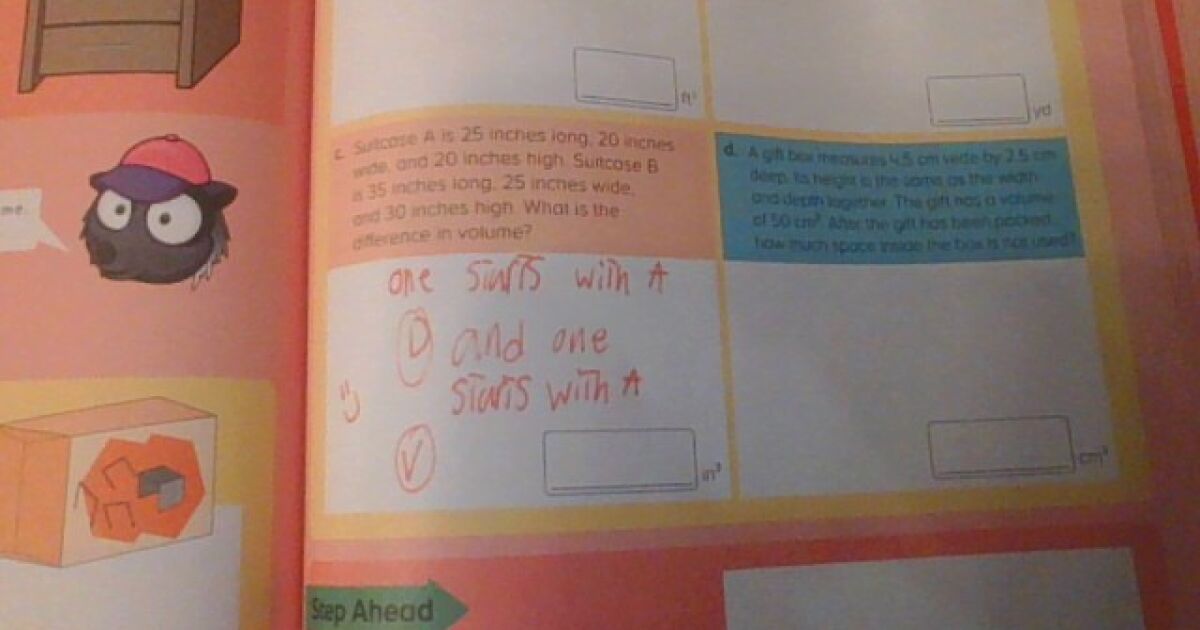

If you’ve ever helped a kid study for a test, you know the heartbreak of watching them forget everything the moment the pencil hits the paper. But sometimes, what lands on that paper isn’t just wrong — it’s so wildly, absurdly creative that you end up laughing way too hard to care about the grade.
That’s exactly the chaotic energy behind posts like “Hey Pandas, Post Your Most Ridiculous Kid Test Answers.” Parents, teachers, and random internet strangers share hilarious test answers from kids who apparently decided that if they’re going to be wrong, they might as well be legendary.
In this article, we’re taking that Bored Panda spirit and running with it: breaking down why ridiculous kid test answers are so funny, what they say about how children think, and how adults can turn these “epic fails” into epic learning moments. We’ll mix in real-world examples, insights from education and psychology experts, and a few gentle reminders that creativity and correctness don’t always show up to class on the same day.
Why Ridiculous Kid Test Answers Crack Us Up
At first glance, funny kid test answers are just that — funny. But there’s a reason these screenshots go viral again and again. We’re not only laughing at the answer; we’re also admiring the sheer audacity and creativity behind it.
Sites that collect funny test answers from kids and teens show the same themes over and over: clever wordplay, brutal honesty, and perfectly literal thinking that accidentally turns into comedy gold. Bored Panda, teacher blogs, and even teacher-misery style humor sites are packed with examples where a “wrong” answer reveals a surprisingly sharp mind — just one that’s operating on a completely different wavelength than the test writer intended.
Literal Thinking: When Kids Take the Question Way Too Seriously
One classic style of ridiculous answer comes from kids who interpret the question literally, not academically. For example:
- On a science test: “What is a digital footprint?” — Answer: “When you step on your iPad.”
- On geography: “What is the capital of England?” — Answer: “E.”
- On a math worksheet: “Write five words you can spell.” — Answer: The kid writes five simple words, then adds, “I did what you asked.”
From an adult perspective, these answers are “wrong.” But they’re also logically consistent. The child has connected the prompt to a real-world meaning, just not the one the curriculum had in mind. This kind of literal thinking is developmentally normal — younger kids often latch onto the most concrete interpretation of a word or phrase, especially when the test language is vague or overloaded with labels.
Comedy Through Logic: When the Answer Is Technically Not Wrong
Some kids turn their tests into a stand-up routine without even realizing it. Viral examples show students answering questions with a sort of “Well, if you think about it…” logic:
- “Would you rather be stuck on a deserted island alone or with someone you hate?” — Answer: “With someone I hate, so I’d have something to eat.”
- “Solve the maze.” — The kid draws a straight line cutting through all the walls to the exit, bypassing the path entirely.
- “Explain how twins happen.” — Answer: “When you get twice as lucky.”
They’re not giving the school-approved answer, but they are giving an answer that’s internally consistent. They’re applying logic, just not in the way the test designer expected. And that’s part of what makes these answers so irresistible — they expose the gap between how kids see the world and how adults try to measure it.
Brutal Honesty: When Kids Answer the Question You Didn’t Mean to Ask
Then there are the answers that remind us kids don’t have the social filter adults do. For instance:
- “Who is your hero?” — Answer: “My mom. My dad is afraid of her too.”
- “What are you good at?” — Answer: “Being annoying. Ask my teacher.”
- “What did you learn this year?” — Answer: “That tests are useless.”
These are less about misunderstanding and more about complete transparency. Kids will often use a test as a tiny confession booth because they don’t yet grasp how much adults expect polite, prepackaged answers. As hilarious as these responses are, they can also reveal how a child feels about school, family, and stress.
What Ridiculous Test Answers Reveal About How Kids Think
It’s easy to look at a silly answer and assume the child just wasn’t paying attention. Sometimes that’s true (hi, daydreamers). But research into child development, metacognition, and creativity suggests there’s more going on when kids go “off script.”
Creativity Thrives Where There Isn’t Just One “Right” Answer
Creativity experts point out that environments obsessed with standardized testing tend to push kids toward believing every problem has exactly one acceptable answer. That mindset can actually dampen creativity over time, because real creativity depends on being able to imagine multiple solutions and take risks with ideas.
Ironically, ridiculous test answers are often a sign that a child’s imagination is very much alive. Instead of choosing from a canned list of possibilities, they’re inventing fresh responses from scratch. When kids create puns, twist meanings, or deconstruct the question itself, they’re flexing the same creative muscles that later help with problem-solving, innovation, and flexible thinking.
Modern surveys of children and creativity have found that most kids feel more confident when they’re allowed to express original ideas and experiment, even if those ideas aren’t always “correct.” A wrong answer that’s clever can be a sign that a child sees school not just as a place to repeat information, but as a stage where their inner comedian, philosopher, or lawyer gets some airtime.
Metacognition: Kids Learning From Their Own Mistakes
Metacognition — basically “thinking about your thinking” — is a big deal in education research. Studies show that when children are guided to reflect on how they solved a problem, why an answer was wrong, and what they could try next time, their learning improves dramatically over time.
Funny test answers can become powerful metacognitive moments. After the laugh, a teacher or parent can gently walk the child through questions like:
- “What did you think this question was asking?”
- “What clues did you use to decide on that answer?”
- “If you saw this again, what might you do differently?”
Instead of shaming the mistake, adults can treat it like a window into the child’s reasoning. This helps kids realize that being wrong isn’t a dead end; it’s part of the learning process. Educational psychologists emphasize that students learn more effectively when they can analyze their own errors and adjust their strategies, rather than just memorizing the “right” response.
Errors As Fuel for Learning (and Better Jokes)
Recent research on learning from errors shows that mistakes can be a powerful driver of understanding — but only when the environment is safe enough for kids to be honest. When students feel like one wrong answer will define them, they’re more likely to freeze, guess, or disengage. When they feel like mistakes are tolerated (and sometimes even laughed about), they’re more likely to take intellectual risks.
Ridiculous kid test answers, when handled with kindness, become a double win: kids get to see that adults enjoy their quirky thinking, and adults get an honest snapshot of how kids are processing information. Over time, this can foster both stronger academic skills and healthier attitudes toward failure.
For Parents and Teachers: How to Respond to Ridiculous Answers Without Killing the Fun
So, you’ve just graded a test and discovered that instead of writing “photosynthesis,” a student wrote “plants eat sunshine salad.” What now?
Step 1: Laugh — But Not at the Child
It’s okay to laugh. In fact, it’s good for everyone. But make sure the student doesn’t feel mocked. Laugh with them, not at them. You might say:
- “Okay, that answer is pretty hilarious, but let’s also talk about what the book meant by this question.”
- “This made my day. Now, can we figure out the science side of it together?”
This approach validates the child’s creativity while still reinforcing the academic goal.
Step 2: Use the Answer as a Mini-Lesson
Instead of just marking it wrong and moving on, turn the moment into a bite-size lesson:
- Clarify vocabulary: “Digital footprint doesn’t mean stepping on your iPad. It’s actually about the trail of data you leave online.”
- Highlight multiple meanings: “The word ‘capital’ can mean a city, a letter, or money. On this test, we meant the city.”
- Discuss problem-solving strategies: “Next time, what are some ways you could check that you’re reading the question the way the test writer meant it?”
These small conversations build skills that help kids on future tests — and in life.
Step 3: Protect Creativity While Teaching Accuracy
It’s tempting to clamp down and say, “No more jokes on tests.” But research on creativity and confidence in kids suggests that shutting down playful thinking can backfire. Children who feel free to experiment with ideas — even in structured contexts like school — tend to develop stronger problem-solving skills and greater resilience over time.
A healthier balance is to make the expectations clear (“Tests are where we show what we know”) while also leaving room in the school day for humor, storytelling, and more open-ended tasks. That way, kids don’t feel like they have to choose between being funny and being “good at school.”
What These Test Answers Tell Us About School Culture
The popularity of posts like “Hey Pandas, Post Your Most Ridiculous Kid Test Answers” also says something about how adults feel about education. There’s a quiet relief in seeing kids push back against rigid, standardized systems with a little mischief.
Teachers who share these answers (usually anonymously) often do it because they’re torn: they have to prepare students for tests, but they also see the spark in a kid who hacks the question with humor. Parents share them because they’re proud that their kid thought of something nobody else would. It’s a reminder that behind every bubble sheet and rubric is a real, live brain that doesn’t always color inside the lines.
When we share these ridiculous answers online, we’re also making a statement: we don’t just value correct responses. We also value wit, boldness, and the ability to see the world just a little bit sideways. Those are traits that tests rarely capture, but the internet loves.
Experiences and Reflections: When Ridiculous Kid Test Answers Hit Home
Beyond the screenshots and meme posts, these test answers often come with rich personal stories. The “Hey Pandas” style threads are full of people reminiscing about tests they took as kids or ones their children brought home in crumpled backpacks.
The Parent Perspective: “I Didn’t Know Whether to Laugh or Panic”
Many parents describe the same emotional whiplash: they open a test expecting to see how their child is doing, and instead they discover something like:
- On a health quiz: “Name one way to prevent disease.” — Answer: “Don’t lick strangers.”
- On social studies: “What is one problem early settlers faced?” — Answer: “They didn’t have Wi-Fi.”
At first, there’s panic: Do they really think this is the answer? But then, after the initial shock, comes recognition. The child is not clueless; they’re making a joke about how different life used to be, or how silly some safety rules sound when you strip them down. Once parents talk with their kids, they often find that the child knew <emsomething about the real answer but wanted to be funny instead.
These moments can actually deepen parent-child connection. Instead of turning every graded paper into a performance review, parents get to say, “Okay, this is hilarious. Let’s laugh, and then let’s also make sure you know the answer for next time.” It sends the message that love and acceptance don’t disappear when a grade isn’t perfect.
The Teacher Perspective: Humor as a Lifeline
Teachers, especially those who’ve been in the classroom for years, often rely on funny test answers as emotional oxygen. In a job full of pressure, paperwork, and high-stakes exams, a kid writing, “I don’t know, but you’re a great teacher” in the blank can be oddly comforting — even if it still earns zero points.
Many educators say that funny answers help them see the whole child, not just the academic data. A student who bombs a math test but writes a perfectly timed joke in the margin might be struggling with the content but thriving in verbal creativity. That insight can guide how teachers support the student: maybe more scaffolding in math, but also more chances to shine through writing, drama, or class discussion.
Some teachers even keep a private folder or photo album of the best ridiculous answers they’ve seen over the years. They look back through them on tough days as a reminder of why they teach in the first place: kids are unpredictable, frustrating, and absolutely, wonderfully funny.
The Kid Perspective: Tests as a Tiny Act of Rebellion
From the child’s point of view, a ridiculous test answer can be a mini protest. Students sometimes feel trapped by questions that don’t make sense to them, or by content that doesn’t seem connected to their real life. Writing something funny gives them a feeling of control: if they can’t win by getting it “right,” they’ll win by being memorable.
Kids also live in a world where humor is social currency. Being the funny one can earn them acceptance or admiration from peers. So when tests are handed back and a ridiculous answer gets passed around and whispered about, that moment becomes a kind of social highlight reel. Even if the grade is low, the laugh is high value.
Of course, there’s a balance. If a student constantly uses humor to avoid engaging with the material, that’s a red flag that they might be feeling anxious, discouraged, or just lost. But when the occasional joke pops up in an otherwise serious effort, it’s often a sign that the child’s personality is intact and thriving, even in a system that loves to measure and label.
Turning Viral Moments into Real Learning
In the end, the charm of posts like “Hey Pandas, Post Your Most Ridiculous Kid Test Answers (Closed)” is that they remind us of a simple truth: education is a human process, and humans are messy. Kids will misread questions, misinterpret vocabulary, and occasionally weaponize dad-level puns in the middle of a spelling test.
Instead of seeing these moments as pure failure, we can treat them as opportunities:
- To teach kids how language works and why context matters.
- To help them practice metacognition by reflecting on how they reached an answer.
- To keep creativity alive while also building accuracy and critical thinking.
- To remind ourselves that school isn’t just about perfect scores; it’s about growing real, complex people.
The tests may get recycled, but the stories live on — in family group chats, teacher lounges, and yes, in Bored Panda threads full of Pandas sharing the internet’s favorite kind of “wrong.”
Wrapping It All Up (Before the Next Hilarious Answer Comes Home)
Ridiculous kid test answers are more than just a guilty pleasure scroll. They’re snapshots of how children make sense of the world: with literal logic, bold creativity, blunt honesty, and a sense of humor that adults often forget to use.
When we collect and share these answers, we’re really celebrating something deeper — a belief that intelligence isn’t just about circling the right bubble. It’s also about seeing the sideways possibility, taking a risk on a joke, and refusing to let fear of being wrong erase curiosity.
So the next time a test comes home with an answer that makes you snort-laugh into your coffee, don’t just reach for the red pen. Take a second to appreciate the tiny comedian, philosopher, or future copywriter who lives in that kid’s brain. Then, once the laughter fades, help them figure out the textbook answer too. Because in the long run, the combination of knowledge and creativity is the real A+.