
Content note: This article discusses a real-life child death and a criminal investigation. Details are kept non-graphic.
There are news stories that land with a thudand then there are the ones that linger. Not because they’re “mysterious” in a fun, bingeable way,
but because they highlight how quickly a community can shift from hopeful to heartbroken, and how investigators have to stay both compassionate and
skeptical at the same time.
In July 2025, a 9-year-old girl who had been reported missing in upstate New York was later found deceased. Police publicly cited “inconsistencies”
in the father’s account of what happened, and the case moved rapidly from a missing-child alert to a homicide investigation and criminal charges.
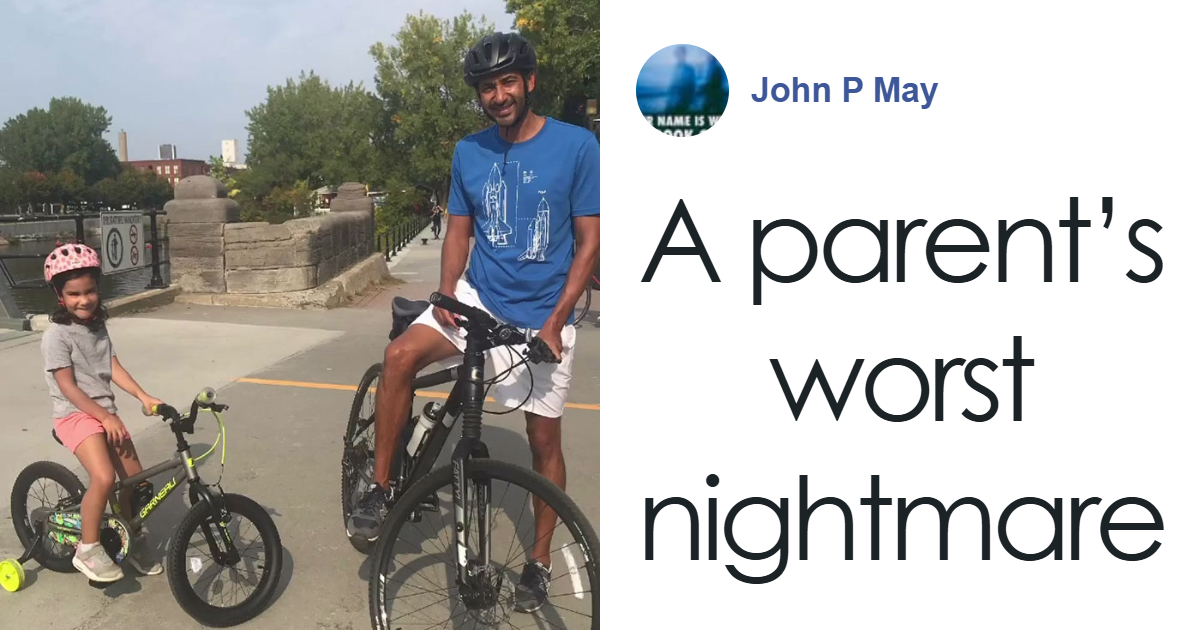
Online, people also circulated a “haunting” father-daughter clip, which added a layer of social-media whiplash to an already devastating situation.
This article breaks down what authorities said, what “inconsistencies” typically mean in real investigations, why Amber Alerts and multi-agency searches
move so fast, and what families can learn about safety planningespecially when traveling. It also addresses the human side: the lived experiences
communities describe when a child is missing and the world is watching.
What Authorities Said Happened
The missing-child report and the Amber Alert
According to law enforcement briefings and subsequent reporting, the father called 911 late on July 19, 2025, reporting that his daughter was missing
and alleging an abduction scenario near the Lake George area in upstate New York. Because time is everything in missing-child cases, authorities
mobilized quickly. An Amber Alert was issued, and multiple agencies joined the search, including specialized units and coordinated response teams.
That early phase is intense by design: investigators try to identify a child’s last known location, confirm who was with them, gather descriptions,
check nearby cameras, and coordinate search patternsoften simultaneously. In the public’s mind it can look like chaos. In practice, it’s controlled urgency.
Where “inconsistencies” enter the picture
As the investigation progressed, police said they identified “inconsistencies” in the father’s accountspecifically involving the timeline and how the
alleged abduction was described. In plain English, that means parts of the story weren’t lining up with what investigators could verify.
Importantly, investigators don’t use the word “inconsistencies” lightly in a public setting. It’s a careful way to say:
“We’re finding factual conflicts, and we need the public to understand we’re not treating this as the original report described.”
The discovery and the criminal case
The child was found deceased the following day in the Ticonderoga area, roughly 30 miles from where she was reported missing. Authorities later
announced charges against the father, including second-degree murder and concealment of a human corpse. A preliminary autopsy finding publicly reported
in the case indicated the cause of death was consistent with drowning, and the manner of death was classified as a homicide.
Even when a case moves quickly into charges, it doesn’t mean investigators “skip steps.” It typically means the steps happen fast:
interviews, digital checks, camera canvassing, forensic timelines, and corroboration (or contradiction) of statementsoften within hours.
What “Inconsistencies” Usually Mean in a Missing-Child Investigation
“Inconsistencies” can sound vague, but it’s a workhorse concept in investigations. When detectives say a narrative is inconsistent, they’re usually
referring to measurable conflictstime, location, physical evidence, or independent verification.
1) Timeline conflicts: the story vs. the clock
People misremember times all the time, especially in stress. But investigators compare a story to things that don’t forget:
phone logs, GPS data, toll records, receipts, and surveillance footage. If a person says, “We were here at 8,” but a camera shows them elsewhere,
the timeline becomes a problem.
In this case, reporting described investigators using surveillance footage and phone contact with the child’s mother earlier in the evening to help
establish a clearer timeline. When a timeline is solid, shaky stories don’t stay upright for long.
2) Narrative conflicts: details that change when they shouldn’t
Investigators expect normal variation: a witness might forget the color of a shirt. But core detailswho did what, where, and whenshould not
keep morphing. When they do, detectives start asking: Is this a stress response, or is it a strategy?
3) Physical reality: does the scene match the claim?
Allegations like a roadside abduction create expectations: footprints, disturbance patterns, vehicle sightings, camera hits, witness reports.
If none of that materializes, investigators reconsider the working theory. Sometimes that leads to alternate suspects. Sometimes it points back to the reporter.
4) Digital breadcrumbs: modern cases are rarely “just a story”
Today’s investigations often include rapid digital triage: locating devices, reviewing texts and calls, mapping movement, and identifying the last
confirmed proof-of-life moments. It can feel invasive, but it’s also how investigators find missing people quicklyespecially children.
Why Amber Alerts and Multi-Agency Searches Move So Fast
When a child is reported missing under potentially dangerous circumstances, time is the enemy. Amber Alerts exist to widen the search instantly by
notifying the public, pushing information to phones and road signs, and encouraging immediate tips.
Amber Alert basics (and why criteria matters)
In most jurisdictions, Amber Alerts require specific criteria (such as a confirmed abduction and a belief the child is in imminent danger).
When law enforcement believes the criteria are met, they activate a system designed for speednot certainty.
That can be emotionally jarring when later information changes the picture. But it’s also why the system can help recover children quickly in cases
where the initial report is accurate. In other words: it’s built for “act fast,” not “wait until every detail is perfect.”
What the public doesn’t see: coordination behind the scenes
In high-priority child cases, multiple groups may be involved at once: local dispatch, state police, forest rangers, K9 handlers, aviation assets,
and investigators assigned to interviews and digital review. The work splits into tracks:
search operations, investigative validation, and communications/tips management.
If you’ve ever wondered how police can say “there’s no ongoing threat to the public” while still running an intense search,
that’s the reason: they’re constantly updating risk assessments based on what they can confirm.
The “Haunting” Clip and the Social Media Effect
The word “haunting” showed up repeatedly in online reactions because people unearthed a father-daughter video after the child was found.
When a tragedy becomes public, the internet tends to do what it does best and worst: locate old posts, loop them endlessly, and assign meaning to every frame.
Why old videos feel different after new information
A normal clip can become emotionally disturbing when viewed through the lens of a later death. That’s not “proof” of anythingit’s human psychology.
Our brains re-tag memories when we learn an outcome, and the past starts to look like it was “warning” us.
Sharing responsibly: curiosity vs. harm
It’s worth saying plainly: spreading family videos, speculating about motives, or turning a child’s death into content can deepen harmespecially for
surviving relatives and for communities already grieving. If you wouldn’t want strangers narrating your worst day for clicks, you’ve found a decent rule of thumb.
Lessons for Families: Safety Planning Without Panic
No article can “solve” what happened in a single case. But families can take practical steps to be more preparedparticularly while traveling,
when routines are disrupted and unfamiliar places add confusion.
Simple travel safeguards that actually help
- Update your child’s photo daily on trips (same-day clothing matters more than you think).
- Know your last-known-location plan: if separated, pick a confirming spot (“the big clock,” “the front desk,” “the lifeguard stand”).
- Use check-ins for older kids: brief, predictable “I’m here” touchpoints.
- Keep identifiers private online (avoid posting real-time locations publicly).
What to do immediately if a child is missing
In the U.S., you don’t need to “wait 24 hours.” Call 911 right away if a child is missing. Provide a recent photo, clothing description,
last known location, and any medical or behavioral factors that could increase risk (such as wandering).
Early accuracy helps responders deploy the right resources fast.
Supporting Kids Who Hear About Scary News
Even if your family wasn’t involved, kids can absorb these stories through overheard conversations, social media, or school chatter.
The goal isn’t to pretend nothing happenedit’s to offer steadiness and boundaries.
How to talk about it (without amplifying fear)
- Start with what they heard and correct misinformation calmly.
- Use simple facts (“Police are investigating; adults are working to keep people safe.”).
- Limit exposure to looping videos and sensational commentary.
- Give them agency: teach safe steps (stay with a buddy, find a uniformed worker, memorize a caregiver number).
Experiences People Describe Around Cases Like This (Extended Section)
When a child is reported missing, communities often describe the first hours as surreallike time speeds up and slows down at once.
Phones buzz with alerts, group chats turn into command centers, and everyday life becomes background noise. People who have lived through
local missing-child searches frequently mention the same emotional cocktail: urgent hope, creeping dread, and a kind of helpless focus
where you need something to do with your hands (print flyers, check trails, call neighbors) because doing nothing feels impossible.
Dispatchers and first responders describe a particular kind of pressure: they’re trained to be calm, but they’re also human.
They may replay the initial call in their minds later, wondering which detail mattered most. In many communities, that first night becomes a blur
of logisticswho has flashlights, who can search safely, who can coordinate with police without getting in the way. Volunteers often remember how
quickly strangers become teammates. Someone brings water. Someone else makes a sign-in sheet. A local business offers a parking lot as a staging area.
It’s grief-prevention by pure momentum.
Families who have experienced a missing-child event (even one that ends safely) often talk about the “information overload” problem:
tips pour in, rumors spread faster than facts, and every new post can feel like both a lead and a threat. When a case becomes high-profile,
they may also feel judged in real timepeople critiquing body language, tone, or wording as if trauma should follow a script. That’s one reason
investigators tend to communicate carefully. A single phrase can send a community spiraling.
There’s also the “haunting” aspect people mean when they use that word online: the recontextualizing of ordinary moments.
A normal photo, a quick video, a casual lineafter tragedy, everything looks like a clue. Communities describe this as emotional whiplash:
one day you’re scanning woods and roads, the next you’re learning the outcome and trying to make your brain accept it. Even when details are limited,
the mind fills gaps, which can be distressing for adults and confusing for kids.
In the aftermath, people often look for ways to translate shock into something useful. Sometimes it’s fundraising for local search-and-rescue teams.
Sometimes it’s advocating for child-safety education, better lighting on trails, or stronger support for families in crisis.
Sometimes it’s smaller: parents double-check travel routines, talk through “what if we get separated,” or teach a child how to find help.
None of these actions undo the harm in a specific casebut they can help a community feel less powerless.
And finally, many people who have watched a child-centered tragedy unfold say the hardest experience is the quiet afterward
when the search ends, the headlines move on, and the community is left with the emotional residue. That’s where support matters most:
grief counseling, school resources, and patient, non-sensational conversations that prioritize the child’s humanity over the internet’s appetite.
Conclusion
The case of a 9-year-old reported missing near Lake George and later found deceased is a brutal reminder of how quickly circumstances can changeand
why investigators pay close attention to “inconsistencies,” especially when a timeline can be tested against real-world data. It also shows how public
alert systems and coordinated searches can mobilize communities at speed, and how social media can intensify emotions in ways that aren’t always helpful.
If there’s a constructive takeaway, it’s this: practical safety planning beats panic, and responsible sharing beats speculation. When a child is missing,
facts and fast action matter most. When a community is grieving, compassion matters even more.