
Most people remember sunscreen for their nose, shoulders, and that one shin that somehow always burns first. But hair and scalp protection? That gets forgotten faster than a beach umbrella on a windy day. The truth is that your scalp is still skin, your hairline is not magically invincible, and your hair fibers can absolutely take a beating from the sun.
That is where hair sunscreen comes in. It sounds a little fancy, a little niche, and maybe a little like something invented by a marketing team wearing linen. But the idea is real. Sun exposure can damage both the scalp and the hair shaft, especially if you have thinning hair, a visible part, color-treated hair, gray hair, curls that dry out easily, or a shaved head that now has zero shade and a lot of confidence.
This guide breaks down the science behind hair sunscreen, the different product types, how to use them, and the most common questions people ask. In other words, this is your no-nonsense, no-greasy-residue roadmap to keeping your scalp safer and your hair happier in the sun.
What Is Hair Sunscreen?
Hair sunscreen is a broad term for products and strategies designed to reduce sun damage to the scalp, hairline, exposed part lines, and hair shaft. Some products are true sunscreens meant for skin on the scalp. Others are hair-care products with UV filters, film-forming ingredients, antioxidants, or conditioning agents that help reduce cosmetic damage such as dryness, fading, roughness, and brittleness.
That distinction matters. If you can see scalp skin, that area needs actual sun protection, not just a hopeful mist of beachy hair spray. If your goal is to keep dyed hair from looking fried, faded, or straw-like by late August, a hair-focused UV-protective product can help. Ideally, many people need both.
Why Your Scalp and Hair Need Sun Protection
Your scalp is skin, not an afterthought
The scalp is vulnerable to ultraviolet radiation just like the face, ears, and neck. If your hair is thin, parted, braided, shaved, or naturally sparse at the crown, sunlight can hit that skin directly. That raises the risk of sunburn and contributes to cumulative damage over time. Dermatology and skin-cancer experts consistently warn that the scalp is one of the most commonly overlooked places during sun protection.
Hair only gives partial protection
Yes, hair offers some physical shading. No, it is not a perfect roof. Thick hair may reduce direct exposure, but it does not create a force field. Part lines, hairlines, cowlicks, bald spots, and areas of thinning let UV through with surprising efficiency. That is why people are often shocked to discover a scalp burn after a picnic, hike, baseball game, or long drive.
Sunlight can damage the hair shaft, too
Hair damage from sun exposure is not just cosmetic drama. Research on hair photodamage shows that ultraviolet and visible light can affect the lipids, proteins, melanin, surface smoothness, and mechanical strength of hair fibers. In plain English, too much sun can leave hair drier, rougher, weaker, duller, and more likely to fade or frizz. The result is hair that feels less silky and more like it has been negotiating with a toaster.
Certain hair types face extra challenges
Sun exposure can be especially frustrating for color-treated hair, bleached hair, gray hair, and hair that is already dry or textured. Dyed shades can fade faster. Bleached hair may feel rougher. Gray and lighter hair often show yellowing, dullness, or loss of shine more easily. Curly and coily hair, which is often naturally drier, may feel the effects of heat and UV stress more dramatically.
The Science Behind Hair Sunscreen
Broad-spectrum sun protection matters because UVA and UVB do different kinds of mischief. UVB is more strongly associated with sunburn. UVA penetrates more deeply and plays a major role in long-term photoaging. When a scalp sunscreen says broad spectrum, it means it is designed to help protect against both.
On exposed scalp skin, sunscreen ingredients work much like they do elsewhere on the body. Chemical filters absorb UV energy and convert it into a tiny amount of heat. Mineral filters such as zinc oxide and titanium dioxide sit more on the surface and reflect or scatter UV. Either way, the goal is the same: reduce how much radiation reaches the skin.
Hair sunscreen products for the hair shaft work a bit differently. Many rely on a thin protective film that coats the hair fiber. Some include UV filters, while others use silicones, conditioning agents, oils, or antioxidants to reduce dryness, friction, color fading, and surface roughness. Think of them less as armor plating and more as a raincoat for your strands. Helpful? Yes. Invincible? Absolutely not.
One more important nuance: not every hair product marketed for “sun protection” has the same testing standards as a sunscreen intended for skin. So if you are protecting a visible scalp, bald head, or part line, choose a true sunscreen for skin or pair a hair-specific product with a hat.
Types of Hair Sunscreen
1. Scalp sunscreen sprays and mists
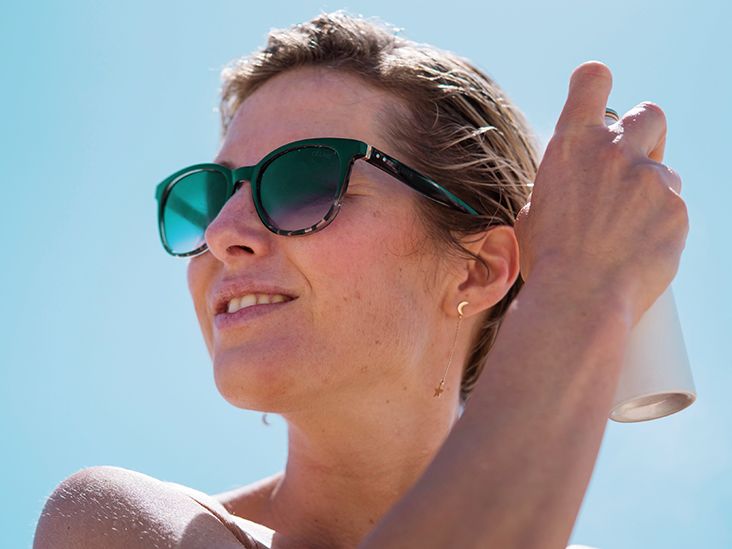
These are among the most popular options because they are lightweight, quick, and easier to apply around hair than a traditional lotion. They work best on visible scalp areas such as the part, crown, temples, and hairline. Many people like them because they are less likely to leave the hair looking like it lost a fight with a deep fryer.
2. Powder sunscreen for the scalp
Brush-on mineral powders can be useful for part lines, thinning areas, oily scalps, and midday touch-ups. They are especially convenient when you do not want to flatten your hairstyle or add shine. They can be practical, but coverage can be less obvious than with lotion or spray, so application needs to be deliberate rather than wildly optimistic.
3. Lotions, creams, and sticks for exposed skin
If you have a shaved head, a bald spot, very thin hair, or a clearly exposed hairline, a traditional broad-spectrum sunscreen lotion or stick can be the most reliable option. These are often easier to spread evenly on skin and may provide more confidence that the area is actually covered. The trade-off is that some formulas can feel heavier in hair-bearing areas.
4. Leave-in conditioners and hair products with UV filters
These are best for protecting the hair shaft rather than acting as a primary sunscreen for scalp skin. They can help reduce dryness, fading, loss of shine, and rough texture, especially for color-treated hair. They are useful for beach days, pool days, vacations, and outdoor sports, but they should not replace scalp sunscreen where skin is visible.
5. Hats, scarves, and UPF accessories
Technically not a bottle, but absolutely part of the conversation. Wide-brimmed hats often provide the most dependable scalp protection because they create continuous shade without depending on perfect reapplication. If you spend a lot of time outdoors, this may be the smartest “hair sunscreen” you ever own.
How to Choose the Right Hair Sunscreen
- For thinning hair or bald spots: choose a real broad-spectrum sunscreen with SPF 30 or higher, ideally in a lotion, stick, or targeted scalp spray.
- For a visible part line: a scalp mist or mineral powder can be handy for precise application and reapplication.
- For color-treated or bleached hair: add a leave-in UV-protective hair product to help reduce fading and dryness.
- For oily scalps: powders and lightweight sprays are often more comfortable than creams.
- For curly, coily, or dry hair: look for formulas that combine UV protection with conditioning ingredients.
- For long outdoor days: do not rely on product alone; wear a hat.
How to Use Hair Sunscreen Correctly
Application is where good intentions usually go to die. Use enough product to actually coat the exposed skin or hair section you want to protect. For scalp sprays, part the hair and aim at the skin, not just the top layer of hair. For lotions or sticks, spread evenly over exposed areas, including the hairline and ears. For powders, go section by section instead of dusting one polite puff and declaring victory.
Choose a broad-spectrum product with at least SPF 30 for exposed scalp skin. Apply it before sun exposure, and reapply at least every two hours when you are outdoors. Reapply sooner if you are sweating heavily, swimming, towel-drying, or generally living the kind of summer life that makes sunscreen work overtime.
And remember: no sunscreen is waterproof. Water-resistant formulas help, but they still need reapplication. If your scalp is truly exposed, the best backup is a hat with a decent brim. Not glamorous? Maybe. Effective? Very.
Common Mistakes to Avoid
- Assuming thick hair means your scalp is fully protected.
- Protecting the face but forgetting the part line and hairline.
- Using a UV hair product on strands but leaving scalp skin unprotected.
- Applying too little product to avoid a greasy feel.
- Skipping reapplication on hot, sweaty, windy, or beach days.
- Thinking cloudy weather means your scalp gets the day off.
- Believing a quick spritz somewhere near your head counts as coverage.
Who Should Be Extra Careful?
Anyone can benefit from scalp and hair sun protection, but some groups should be especially mindful: people with thinning hair, shaved heads, bald spots, fair skin, a history of sunburns, a history of skin cancer, outdoor jobs, frequent sports or beach exposure, color-treated hair, and anyone taking medications or treatments that can make skin more sun-sensitive.
People experiencing hair loss from medical conditions or treatment also need to be careful. When hair coverage decreases, the scalp loses a layer of physical protection, so sunscreen and hats become much more important.
Hair Sunscreen FAQs
Does hair itself need sunscreen, or just the scalp?
Both can benefit, but in different ways. The scalp needs true sun protection because it is skin and can burn. The hair shaft benefits from UV-protective products because they help reduce dryness, fading, roughness, and breakage.
Can I use regular body sunscreen on my scalp?
Yes, especially on exposed or thinning areas. A regular broad-spectrum sunscreen can work well on scalp skin. The catch is cosmetic elegance: some lotions may feel greasy or leave residue in the hair. That is why scalp-specific sprays, sticks, and powders exist.
What SPF should I use on the scalp?
SPF 30 or higher is a smart baseline for exposed scalp skin. Higher SPF can offer a bit more UVB protection, but it does not last all day and it does not replace reapplication.
Is hair oil enough to protect hair from the sun?
Not by itself. Some oils can help with softness and reduce moisture loss, but they are not a dependable replacement for a tested broad-spectrum sunscreen on exposed scalp skin. Treat oil as supportive hair care, not a beach bodyguard.
Can I use scalp sunscreen on color-treated hair?
Yes. In fact, color-treated hair often benefits from extra sun protection because UV exposure can contribute to fading and dryness. A lightweight scalp sunscreen for exposed skin plus a UV-protective leave-in for the strands is a strong combo.
Do I need hair sunscreen indoors?
Usually not as a daily full-head ritual, unless you spend long periods by sunny windows, in a car, or near intense reflective light. Most people should focus on outdoor exposure and any scalp areas that get regular direct sun.
What is better: sunscreen or a hat?
The real answer is both. If you must pick one for the scalp, a hat often gives more dependable physical protection because it does not wear off. Sunscreen is still essential for exposed areas and for times when hats are impractical.
Can people with dark hair skip scalp sunscreen?
No. Darker hair may offer somewhat more natural shielding than lighter hair, but it does not make the scalp immune to UV exposure. If skin is visible, protect it.
Real-World Experiences: What Hair Sunscreen Actually Feels Like
In real life, the need for hair sunscreen usually becomes obvious in one of three ways. First, there is the classic “why does my scalp hurt?” moment after a sunny afternoon. People often assume their hair covered everything, only to discover a bright red part line or crown later that evening. Shampoo day becomes an act of bravery. Brushing feels rude. A blow-dryer feels like betrayal. That is often the moment scalp sunscreen goes from “interesting idea” to “where have you been all my life?”
Then there is the cosmetic experience. People with color-treated hair often notice that a week of poolside lounging or outdoor commuting can make their hair feel rougher and look duller. Blondes can go brassy. Reds can fade. Gray hair can lose its clean brightness. Curls may feel thirstier than usual. What many people describe after adding UV-protective hair products is not a magical movie-montage transformation but a quieter kind of win: less dryness, less fading, and hair that does not feel as crispy by the end of summer.
People with thinning hair or shaved heads tend to have the most immediate relationship with scalp protection. They notice how quickly the top of the head catches sun, even on errands that seem too short to matter. Walking the dog, driving with the sunroof open, watching a weekend game, gardening for half an hour, or sitting near water can all add up. Many say the easiest routine is not heroic layering but simple habits: sunscreen near the toothbrush, a hat by the door, and a travel-size spray in the bag or car.
Product feel matters more than people expect. If a formula is sticky, greasy, heavily fragranced, or flattening, it tends to get abandoned after two uses and a dramatic sigh. That is why powders, mists, and lightweight scalp sprays have become so popular. They fit into real routines better. Someone with fine hair may prefer a powder because it avoids shine. Someone with coils or braids may like a targeted spray for the scalp without disturbing the style. Someone with a shaved head may skip the dance entirely and use the same reliable facial sunscreen they already trust.
There is also a small emotional side to all of this. For people dealing with hair loss, scalp visibility can feel personal. Sun protection becomes about more than just preventing a burn. It can be part of caring for skin that suddenly feels more exposed than before. In that sense, hair sunscreen is not vanity. It is maintenance, comfort, and prevention rolled into one very unglamorous but highly useful habit.
The biggest shared experience is this: once people start protecting their scalp and hair consistently, they tend to notice the absence of problems. Fewer scalp burns. Less tenderness at the part. Less fading after vacations. Less end-of-summer straw texture. Less regret. And honestly, “less regret” is one of the strongest beauty and health outcomes available to humankind.
Final Takeaway
Hair sunscreen is not a gimmick. It is a practical response to a simple fact: the sun does not stop at your forehead. Your scalp can burn, your hair can photodamage, and both deserve more attention than they usually get. The smartest approach is layered: broad-spectrum SPF on exposed scalp skin, UV-protective products for vulnerable strands, and a hat whenever possible.
If you remember just one thing, make it this: if you can see scalp, protect scalp. Your future self, your hair color, and your tender little part line will all be grateful.