
Supervillain powers are like movie trailers: they look straightforward, they feel loud, and they’re definitely
hiding the fine print. One minute you’re watching a villain “shoot lasers,” the next you realize it’s actually
a cosmic energy effect powered by a metaphysical concept that sounds like it came from an evil graduate seminar.
This matters because the most iconic comic book villain abilities (Marvel and DC especially) aren’t just “powers.”
They’re systemsbuilt on science-ish rules, magical loopholes, and storytelling shortcuts. And once you look
closer, you start noticing the weird truth: a lot of famous supervillains don’t do what people casually think
they do. They do something both cooler and far more complicated.
Why Supervillain Powers Get Misunderstood
The biggest culprit is shorthand. Movies and cartoons have limited time, so they compress powers into a single
visual: lightning = electricity, green vines = “plant magic,” metal flying = “magnet guy.” Meanwhile, comics love
two things: (1) expanding a concept until it becomes a Swiss Army knife, and (2) introducing one exception that
makes the whole thing terrifying.
Add in comic book science (which is like real science after three espressos and zero sleep), and you get powers
that are easy to mislabel. Below are famous supervillains whose abilities are widely recognizedbut often
misunderstood in how they actually function, what limits them, and why they’re so dangerous when written
consistently.
1) Magneto: Not “Metal-Bending,” But Electromagnetism on Hard Mode
What people assume: Magneto controls metal. Full stop. If it’s shiny and clanks, he’s the boss.
How it really works: Magneto’s core power is manipulation of magnetic fieldsan electromagnetism
toolkit that can go way beyond tossing cars. In many stories, he can generate force fields, unleash EMP-like
effects to disrupt electronics, and influence metal with ridiculous precision. That’s why he’s often portrayed
as a walking “physics exploit,” not just a villain with a scrapyard hobby.
Here’s the twist: the famous “iron in your blood” idea is often cited in-universe as something he can do, but
in real biology the iron in hemoglobin isn’t a loose pile of magnetic filings. That’s why the ability reads less
like normal magnetism and more like comic-grade control over electromagnetic interactions. Translation: he’s not
a fridge magnet. He’s an electromagnetic storm with opinions.
2) Poison Ivy: Not “Talking to Plants”It’s Botany, Biochemistry, and Manipulation
What people assume: Poison Ivy commands plants like a Disney princessexcept everyone loses an eye.
How it really works: Ivy is typically framed as a botanical mastermind with plant control, plus
a terrifying chemistry set. Depending on the era, her abilities include toxins, spores, and pheromone-like
influence that can sway human behavior. That means a lot of her “mind control” is delivered the way nature does it:
by hacking biology with chemicals.
And here’s a fun reality check: “human pheromones” are still debated in real science, which makes Ivy’s seductive
control feel less like guaranteed magic and more like a heightened, comic-book version of chemical signaling.
Also, plant control has practical limits: no plants nearby, no quick army; hostile environment, weaker growth; fire,
drought, or defoliants, and suddenly the Floral Femme Fatale needs a Plan B.
3) Mysterio: The “Illusion Guy” Who’s Actually an Effects Engineer with Malice
What people assume: Mysterio creates illusions by “messing with your mind.”
How it really works: Mysterio is famously rooted in practical trickeryspecial effects, staged
environments, misdirection, and tech-driven sensory deception. He wins not because he’s mystical, but because
he’s prepared, theatrical, and shameless.
The underrated part is that a “fake” threat can still be lethal if it causes real consequences. A hologram might
not be solid, but it can lure someone into danger, trigger panic, or hide real weapons. Real-world holograms also
have limitations (viewing angles, lighting, how “present” they can truly look), which is why Mysterio’s best
portrayals mix multiple tricks at once: visuals, sound, environmental hazards, and psychological profiling.
He’s not bending reality. He’s weaponizing perception.
4) Doctor Doom: Not Just ArmorA Hybrid of Science, Sorcery, and State Power
What people assume: Doom is “evil Iron Man,” but with a cape budget.
How it really works: Doom is dangerous because he stacks advantages: genius-level engineering,
mystical knowledge, and political authority. His armor isn’t merely a suitit’s often portrayed as a platform for
weapons, shielding, life support, and advanced tools. Add sorcery, and his “power set” becomes flexible in a way
most villains can only dream of.
The misconception is treating Doom like a single gimmick. His real “power” is that he’s a system: Doombots,
diplomacy, demon deals, and enough contingency plans to make Batman ask for a nap.
5) Mr. Freeze: He Doesn’t “Make Cold”He Removes Heat (Which Is a Much Bigger Problem)
What people assume: Mr. Freeze shoots “cold rays” like cold is a substance you can squirt.
How it really works: Temperature is about particle motion and energy. To “freeze” something fast,
you must pull thermal energy out of itrapidly, efficiently, and at scale. That’s why Freeze is typically depicted
relying on a freeze gun, cryogenic systems, and protective gear. His tech is the point, not a supernatural aura.
Also, pop culture loves to say “near absolute zero,” but absolute zero is a physical limit on the Kelvin scale.
In reality, reaching anything close to that in a handheld device would be a thermodynamic nightmare. Freeze is
scary because his stories treat cold as engineering: insulation, coolant, energy demands, and the brutal practicality
of keeping a human alive under extreme conditions.
6) Mystique: Shapeshifting Isn’t Copying PowersIt’s Copying the Wrapper
What people assume: Mystique can become anyone, therefore she can do anything they can do.
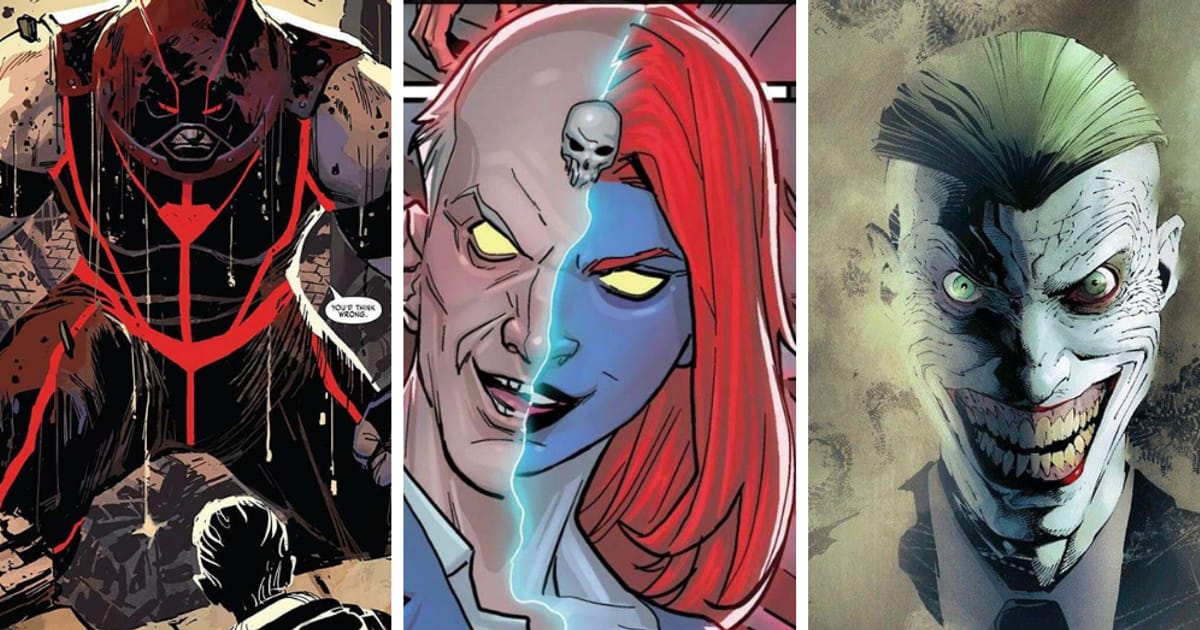
How it really works: Mystique’s shapeshifting is primarily about altering appearanceface, body
structure, voice, and physical presentation. In most interpretations, she can mimic what you look like, not what
your internal biology can do at a superhuman level. She can impersonate a hero, but she doesn’t automatically gain
their healing factor, laser eyes, or cosmic metabolism.
The practical villain advantage is social, not flashy: infiltration, misinformation, framing, and manipulation.
Mystique doesn’t need to outpunch you if she can turn your team against itself before the first punch lands.
Her “power” is sabotage with perfect makeupand the makeup is her body.
7) Sandman: Not Just “Sand Body”Particle Control, Density Tricks, and Big Weaknesses
What people assume: Sandman is a walking sandcastle that can’t be hurt.
How it really works: Sandman is often described as being able to convert his body into a sand-like
substance and mentally control the particlesforming weapons, changing shape, and boosting size by incorporating
nearby material. That’s more than “turning into sand.” It’s fine-grained control over structure and density.
But sand has properties. Water can clump it, wash it away, or turn it into heavy sludge. Extreme heat can fuse it
into glass-like forms. Binding agents can lock it into cement. In other words, Sandman is powerful, but he’s also
uniquely vulnerable to chemistry and environment. He’s not invinciblehe’s just annoyingly hard to punch in the
usual way.
8) Clayface: Shapeshifting Is Also a Materials Problem
What people assume: Clayface can morph into anything, therefore he’s basically unstoppable.
How it really works: Clayface’s shape-changing usually comes with tradeoffs tied to mass, cohesion,
and stability. He can become larger, harder, or more fluid, but each state has weaknesses: drying out, freezing,
being chemically destabilized, or losing fine detail under stress.
The scariest versions of Clayface combine disguise with brute force: he’s the perfect infiltrator who can also
turn into a wrecking ball. But he’s still a “material” that can be disruptedby extreme temperatures, targeted
chemicals, or sustained damage that prevents him from re-forming cleanly.
9) Reverse-Flash: Time Travel Isn’t a Cheat CodeIt’s a Self-Inflicted Paradox Trap
What people assume: Reverse-Flash can time travel, so he can just go back and “win.”
How it really works: Many versions of Reverse-Flash hinge on a nasty rule: he’s entangled with
the Flash’s existence. Some official descriptions emphasize that he can’t simply erase the Flash, because his
own origin depends on that inspiration. That turns his time travel into something more sinister and more limited:
he targets moments, relationships, reputations, and turning pointstrying to ruin a life without breaking the
timeline that keeps him alive.
The misconception is thinking time travel equals freedom. For villains like Thawne, it often means bondage to
causalityplus an obsession that makes every victory feel like a tantrum with a stopwatch.
10) Darkseid: Omega Beams Aren’t “Laser Eyes”They’re the Tip of a Much Bigger Power
What people assume: Darkseid shoots eye lasers. That’s it. Big guy, big lasers.
How it really works: Darkseid’s villainy is cosmic and ideological. His signature toolslike the
Anti-Life Equationrepresent control over will itself. And the Omega Beams are often portrayed as more than straight
shots: they can be directed, relentless, and “personal,” like the universe is being told to sit down and listen.
In other words, the beams are branding. Darkseid’s real power is dominationphysical, psychological, and metaphysical.
The lasers are just the punctuation mark.
11) Thanos: Not Just StrengthCosmic Endurance, Strategy, and the “Infinity” Fine Print
What people assume: Thanos is a strong villain who wants magic stones because villains love shiny
rocks.
How it really works: Thanos is often written as a blend of superhuman durability and massive
intellectsomeone who can endure, out-plan, and outlast. When the Infinity Gauntlet enters the story, people treat
it like a permanent “I win” button, but the Gauntlet is a device: it depends on being assembled, wielded, and
protected. It’s not Thanos’s default state; it’s an artifact that turns a dangerous villain into a reality-level
problem.
The misconception is focusing on the punch. Thanos’s real threat is that he can treat a cosmic conflict like a
logistics projectand still show up personally to make sure the spreadsheet is “motivating.”
What These Misunderstood Powers Have in Common
If you want a quick way to “read” a villain’s real ability, ask three questions:
- Is the power a system? (Doom, Mysterio, Freeze: tech + planning matters.)
- Is it environmental? (Ivy, Sandman, Clayface: context can supercharge or sabotage them.)
- Is the limitation the point? (Reverse-Flash and time travel: the chain is part of the horror.)
Once you see those patterns, “supervillain powers explained” stops being a trivia game and starts looking like
narrative engineeringwhere the best villains win because their powers are misunderstood by everyone except the
writer who’s about to ruin the hero’s week.
Fan Experiences: The “Wait…That’s Not How It Works” Moment (Extended)
There’s a specific kind of joy that hits fans when they realize a supervillain’s power is deeper than the pop-culture
summary. It usually happens in one of three places: a rewatch, a reread, or a late-night argument that starts as
“Magneto controls metal” and ends as “Okay, but electromagnetic fields interact with basically everything, so…”
Suddenly you’re not casually enjoying a storyyou’re stress-testing the physics of fictional terror, like a hobbyist
engineer with a cape problem.
One common experience is the reframe shock: you revisit a villain you thought you understood and
realize you’ve been underselling them for years. Mysterio is the classic example. As a kid, you might file him under
“illusion guy.” As an older fan, you recognize him as a weaponized production studio: logistics, deception, social
engineering, controlled environments, and exploiting the fact that human senses are gloriously hackable. That shift
changes the whole tension. The hero can’t just punch harder; they have to think clearer.
Another experience is the fine-print panicthat moment you understand the limitation and it somehow
makes the villain scarier. Reverse-Flash can’t simply erase the Flash without wrecking his own existence? Great. Now
he’s free to do something worse: attack the seams of a life. Fans often describe this as more unsettling than
straightforward violence, because it turns villainy into sabotage across time, relationships, and identity. It feels
like the story is whispering, “You can’t guard every second of your own history,” which is rude, honestly.
Then there’s the science-adjacent spiral. You start by asking, “Could Mr. Freeze really do that?”
and you end by reading about absolute zero, thermodynamics, and why “cold” isn’t a thing you shootit’s energy you
remove. Even when you know comics exaggerate, learning the real concept makes the fiction richer. Freeze stops being
a gimmick and becomes a walking engineering nightmare: insulation, power supply, heat transfer, and the tragic human
cost of living inside a machine. Fans often report a weird emotional whiplash heresympathy and fear in the same
breathbecause understanding the mechanics makes the character feel more grounded.
Cosplay and fan art communities get their own version of this: power visualization. People who draw
Magneto sometimes shift from “floating metal shards” to more field-based imageryrippling air, distorted space,
arcs of energybecause the concept is bigger than metal. Poison Ivy designs often lean into botanist/chemist vibes
(spores, toxin vials, greenhouse aesthetics) rather than pure vine sorcery, because fans recognize her power is
part science, part eco-myth. When fandom starts depicting the “how” instead of just the “wow,” it’s a sign the power
system has landed.
The most relatable experience might be the group debate: friends ranking villains not by strength,
but by how unfair their toolkit becomes once you stop simplifying it. That’s when you hear things like, “Darkseid
isn’t scary because of lasers; he’s scary because he wants your free will,” or “Thanos with the Gauntlet is obvious,
but Thanos without it is still terrifying because he’s patient.” These conversations aren’t just nerdythey’re a way
fans appreciate storytelling craft. A well-built villain power isn’t only spectacle. It’s a rule set that creates
dilemmas, forces clever solutions, and makes the hero’s victory feel earned.
And once you’ve had a few of these “powers don’t work the way you think” moments, you start watching everything
differently. You stop asking, “What can the villain do?” and start asking, “What can the villain do consistently,
under pressure, with consequences?” That’s where the best comic book villain abilities liveright between imagination
and rulesmaking you laugh, argue, and occasionally stare at the ceiling wondering how anyone in that universe sleeps.
Sources Consulted (No Links)
- Marvel (official character profiles and articles)
- DC (official character profiles and blog features)
- Encyclopaedia Britannica (electromagnetism and magnetic fields)
- National Institute of Standards and Technology (Kelvin scale and absolute zero)
- NIH / NCBI Bookshelf (human pheromones and chemical communication)
- PubMed Central (peer-reviewed articles on pheromone signaling research)
- Science.org (coverage of pheromone debates and chemical signaling)
- Smithsonian Magazine (hologram history and limitations)
- Scientific American (holograms and technical foundations)
- Smithsonian Institution Collections (historical hologram notes)
- HowStuffWorks (plain-language hologram explanations)