
Love the clean, modern lines of West Elm and CB2 but not the way your cart total looks like a car payment?
Same. The good news: you don’t need a designer budget to get a high-end home. With a little DIY, some
thrift-store magic, and a hot glue gun that has seen things, you can recreate those luxe pieces for a
fraction of the price.
Home decor creators all over the internet have been turning pricey West Elm and CB2 favorites into
affordable DIY dupes using dollar-store finds, cardboard tubes, plaster, paint, and thrifted treasures.
Many of these projects come in at 80–90% cheaper than the originals, while still delivering the same
sculptural, modern look.
In this guide, we’ll walk through how to think like a high-end brand on a shoestring budget, then dive
into specific DIY West Elm & CB2 dupe ideas you can actually pull off in a weekend. If you’re a
Hometalk-style DIYer who loves a challenge and hates overpaying for furniture, you’re in exactly the
right place.
Why DIY Designer Dupes Are Having a Moment
West Elm and CB2 specialize in modern, elevated pieces: fluted side tables, sculptural vases, chunky
boucle chairs, and textured lamps that look like they walked off an interior design mood board. The
catch? Those pieces often come with triple-digit (or higher) price tags.
That’s where DIY dupes come in. Home decor bloggers and YouTube creators have shown that you can
recreate the same shapes and textures for far less, sometimes saving hundreds of dollars per project.
With careful planning and smart material choices, people are building West Elm–inspired dining tables,
sculptural planters, and faux-ceramic vases that look like they came straight from a catalog.
There’s also a sustainability bonus. Instead of buying new, many DIYers hunt for secondhand pieces
at thrift stores or Facebook Marketplace and transform them with paint, plaster, and new hardware.
You get the “designer look for less” and keep old items out of the landfill.
How to Think Like West Elm & CB2 on a Dollar-Store Budget
Before you grab the spray paint, it helps to understand what makes West Elm and CB2 decor look
expensive in the first place. Most of their designs follow a few consistent principles:
- Shape first, color second. High-end pieces usually have simple, strong silhouettes: cylinders, cubes, arches, and smooth curves.
- Texture is everything. Think matte ceramic, plaster, bouclé, linen, and raw wood instead of shiny plastic.
- Neutral, cohesive palette. Lots of whites, creams, blacks, and warm wood tones, with the occasional accent color.
- Intentional scale. Oversized lamps, chunky tables, and large vases that make a statement.
When you’re creating DIY dupes, your job is to match those qualitiesnot necessarily the exact
item. Find the right shape in a cheap material, then use paint, plaster, fabric, or filler to
upgrade the texture and finish.
Where to Source Budget-Friendly “Base” Pieces
High-end dupes start with low-cost foundations. Look for:
- Thrift stores & yard sales: Vases, lamps, side tables, and chairs with good bones but ugly finishes.
- Dollar stores: Glass vases, planter pots, plastic trays, and candlesticks that can be glued together into sculptural forms.
- Big-box stores: Simple side tables, mirrors, and ottomans that can be hacked with trim, plaster, or fabric.
- Recycling bin: Cardboard tubes, scrap wood, and leftover tiles frequently show up in West Elm dupe projects.
Once you train your eye to spot shape and structure instead of color and finish, everything starts
looking like a potential West Elm or CB2 dupe.
DIY West Elm & CB2 Dupe Ideas You Can Actually Make
Let’s get into the fun part: specific project ideas. Use these as inspiration and tweak them to match
your style, color palette, and skill level.
1. Textured Faux-Ceramic Vases (West Elm & CB2 Inspired)
West Elm and CB2 are famous for their sculptural vasessmooth, matte, and often priced like you’re
adopting them, not buying them. The DIY version is surprisingly easy and uses thrifted vases or
cheap glass cylinders as the base.
What you’ll need:
- Thrifted or dollar-store vase
- Matte paint (acrylic or latex)
- Baking soda or joint compound for texture
- Primer (optional but helpful on glass)
- Paintbrush or small roller
How to do it:
- Lightly sand the vase if it’s super glossy, then wipe it clean.
- Prime if needed to help the paint stick.
- Mix paint with baking soda or dab on joint compound for a gritty, ceramic-style texture.
- Apply 2–3 coats, letting each coat dry. Add subtle color variations for a “collected” look.
- Seal with a clear matte topcoat if the vase will be handled a lot.
This simple faux-ceramic technique shows up in countless high-end decor dupe tutorials and can turn a
$2 vase into something that looks like it came from a designer showroom.
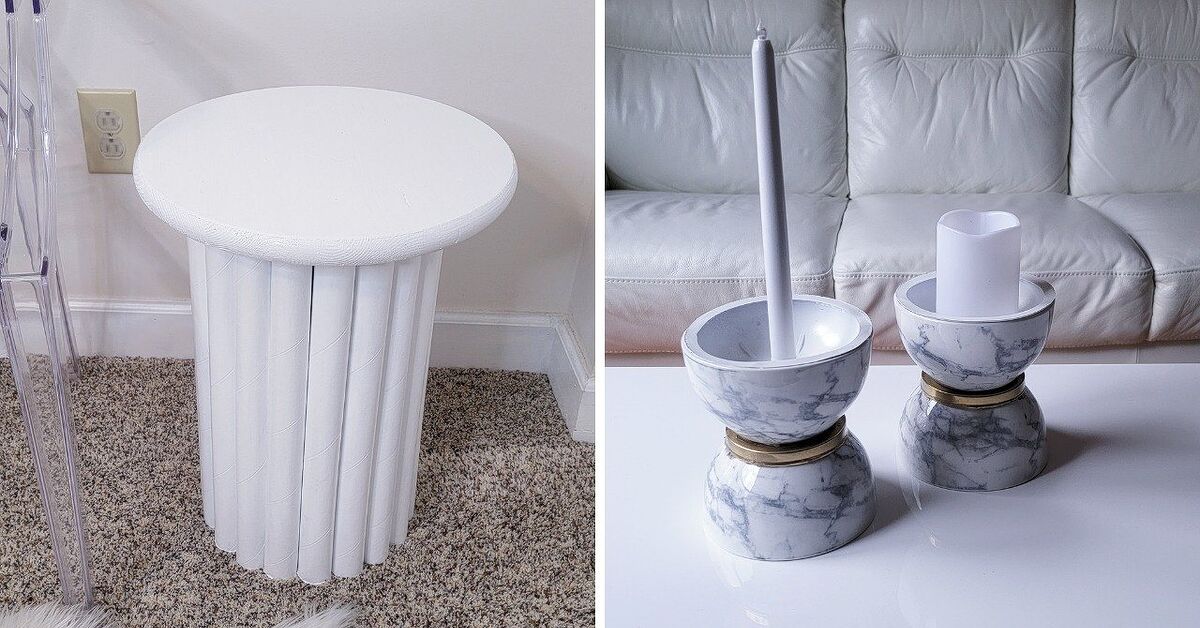
2. Fluted or Pedestal Side Table (CB2 & West Elm Dupe)
Fluted and pedestal tables are a staple in modern catalogsand a frequent cause of budget-related tears.
But DIYers have recreated these pieces using items like cardboard tubes, round wooden tops, and even
stacked planters.
Option A: Cardboard Tube Pedestal Table
- Save inner tubes from gift wrap or ask a store for discarded cardboard tubes.
- Cut them to the same length and glue them around a solid core (like a small round stool base or PVC pipe).
- Top with a pre-cut round tabletop or a thrifted wooden tray.
- Prime and paint everything a solid neutral (warm white, black, or taupe) in a matte finish.
Some creators have used this method to mimic modern end tables from West Elm using mostly cardboard,
a bit of lumber, and inexpensive paint, coming in at a tiny fraction of the retail price.
Option B: Stacked Planter Table
- Buy two or three large, sturdy plastic planters.
- Flip them upside down and glue them together to create a column.
- Add a wood round or leftover tabletop on top.
- Coat everything in textured stone spray paint or plaster and matte paint for a sculptural look.
3. Sculptural Bowls & Planters (Designer Look for Less)
CB2 and West Elm both lean into chunky, sculptural bowls for coffee tables and consoles. You can
recreate them using paper mache, air-dry clay, or plaster.
Basic method:
- Use a cheap plastic bowl as a base or mold.
- Build up thickness with paper mache or air-dry clay, keeping the shape simple and organic.
- Add subtle texture with a sponge, brush, or even a balled-up plastic bag.
- Paint in layered neutralswarm white, beige, or stone grayand finish with a matte sealer.
Add decorative beads, moss, or wooden orbs inside the finished bowl to style it just like the catalogs,
without paying catalog prices.
4. DIY Bouclé or Textured Accent Chair
Bouclé chairs are everywhere in high-end storesand also everywhere in your “this is cute, but I can’t
spend this much on one chair” internal monologue. A DIY dupe starts with a basic, well-shaped chair
and a cozy fabric.
Steps:
- Find a simple accent chair with a good silhouette (curved back, chunky legs, or clean lines).
- Clean or lightly sand any wood or metal legs and repaint them in black, walnut stain, or a warm oak tone.
- Reupholster with bouclé-style fabric or use a fitted slipcover in a textured, neutral fabric.
- Add a lumbar pillow in linen or faux leather for a layered, designer look.
This type of project often comes in under the cost of one high-end designer chair, especially if you
score the base chair secondhand.
5. High-End Wall Art & Mirrors on a Budget
Designer mirrors and oversized artwork can be eye-wateringly expensivesometimes more than the furniture
they’re hanging over. DIYers have gotten extremely creative with wall decor dupes.
Blob or Organic Mirrors:
- Start with inexpensive rectangular or round mirrors (IKEA, discount stores, or dollar stores).
- Create a wavy, organic frame using foil and air-dry clay, or foam and plaster.
- Paint the frame in matte white, beige, or black for a high-end sculptural feel.
One viral project used inexpensive IKEA mirrors plus clay to recreate the look of a trendy designer
mirror that sold for hundreds of dollars, proving that dramatic, sculptural wall pieces don’t have to
come with dramatic price tags.
Textured Canvas Art:
- Use a cheap canvas or even the backside of an old framed print.
- Apply joint compound or spackle with a putty knife to create raised lines and pattern.
- Paint in tonal neutrals to keep it minimal and modern.
- Frame it with simple wood trim or leave it frameless for a gallery look.
Styling Your DIY Dupes So They Look Genuinely Expensive
Even the best DIY dupe can fall flat if it’s styled randomly. High-end brands are masters of
presentation, so borrow their tricks when you style your pieces.
- Group in odd numbers. Style vases and decor in sets of three or five, varying height and texture.
- Use negative space. Give each piece room to breathedon’t cram every surface full.
- Stick to a tight color story. Choose 3–4 core colors (e.g., white, black, oak, and tan) and let everything else support them.
- Layer heights and shapes. Mix tall vases with flat bowls and low candles for a balanced arrangement.
- Add natural elements. Branches, greenery, books, and woven baskets soften modern shapes and make them feel lived-in.
If a surface looks “off,” remove one item, then another, until only your favorite pieces remain.
High-end spaces tend to look edited, not crowded.
Common Mistakes to Avoid with DIY Decor Dupes
Designer dupes walk a fine line between “wow, where did you buy that?” and “ah, yes, you clearly
made that at 1 a.m. with hot glue and regret.” Avoid these common pitfalls:
- Skipping prep work. Glossy surfaces need sanding or primer, or your paint will chip and peel.
- Using the wrong scale. If you’re duping a chunky West Elm table, don’t choose a tiny, flimsy base.
- Overdoing texture. A little plaster or baking soda texture looks expensive. A lot can look lumpy and messy.
- Choosing high-gloss finishes. Most high-end pieces lean matte or satin. Ultra-glossy finishes can cheapen the look.
- Rushing the dry time. Thick paint and plaster need time to cure for a durable finish.
Take your time, step back often, and don’t be afraid to sand something back and repaint. The beauty
of DIY is that you can keep tweaking until it looks right.
Budget & Sourcing Cheat Sheet
Want high-end decor on a budget without endlessly scrolling? Here’s a quick mental checklist
when you’re out hunting for dupe materials:
- Thrift stores: Look for vases, lamps, heavy glassware, and solid wood side tables to transform.
- Discount chains & dollar stores: Great for glass vases, basic trays, candlesticks, and planter pots.
- Hardware stores: Joint compound, plaster, spray paint, primer, inexpensive lumber, and concrete mix.
- Online marketplaces: Search for “solid wood,” “real marble,” or “solid metal” pieces with outdated finishes that you can modernize.
- Fabric outlets: Bouclé-style, linen, and textured upholstery fabrics for hacks and slipcovers.
Many interior design guides recommend mixing a few actual mid-range pieces with DIY or “look for less”
options. Use your DIY West Elm & CB2 dupes for sculptural, trendy pieces, then strengthen the overall
look with solid basics like a good sofa and quality rug that will last.
Real-Life Lessons from DIY West Elm & CB2 Dupes
After you’ve tried a few “high-end decor on a budget” projects, a pattern starts to emerge. The first
project usually begins with one specific obsessiona fluted side table, a chunky vase, or a sculptural
mirror that costs way more than you’re willing to spend. You save the photo, stare at your cart total,
then decide, “Nope. I can make this.”
The first attempt is rarely perfect. Maybe your cardboard tubes don’t line up exactly, or your faux
ceramic vase ends up with one very suspicious lumpy patch. But once the paint dries and you style it
with a branch or a stack of books, something clicks: it looks good. Not “good for DIY.” Just… good.
People don’t usually notice that something is a dupe unless you tell them. Guests comment on the shape,
the texture, the way it ties the room together. They’re not zooming in to see whether you used joint
compound or imported plaster from Italy. And there’s a special satisfaction in being able to say,
“Oh, that? I made it,” when someone assumes it’s from a designer store.
Over time, you start to choose projects more strategically. Instead of trying to dupe every single
thing you see on West Elm’s site, you focus on high-impact items: the coffee table centerpiece, the
console table styling, the statement lamp in the corner. A single DIY CB2-inspired vase on a sideboard
can shift the entire vibe of a room, especially when paired with thrifted books and a simple tray.
You also get better at reading product photos. You learn to identify which details actually matter.
Is it the texture of the “stone” finish? The thickness of the tabletop? The proportion between base
and top on a pedestal table? Once you understand that, you can re-create the feel of a $300 piece with
$30 in materialssometimes less if you already have paint and tools on hand.
Another unexpected perk: DIY dupes give you permission to be bolder. It’s a lot easier to try a sculptural
mirror or oversized bowl when you didn’t spend half your paycheck on it. If you change your mind in a year,
you can repaint it, restyle it, or pass it along guilt-free. That flexibility is something traditional
high-end shopping doesn’t always offer.
Finally, doing your own West Elm and CB2 dupes changes the way you see your home. Instead of feeling like
you’re constantly “not finished” because you don’t have every trending piece, you start to see your space
as a creative project in progress. Every corner becomes a place where you can experimentanother shelf to
style, another thrifted vase to transform, another small upgrade that makes your home feel more like you.
That’s the real magic of DIY high-end decor on a budget. Yes, you save money. Yes, your rooms look like
they belong in a modern design magazine. But more importantly, you’re not just copying West Elm or CB2you’re
using their style as a starting point and building a home that tells your own story, one dupe at a time.
Conclusion: Your Home, Your Budget, Your Rules
You don’t have to choose between a stylish home and a realistic budget. By thinking like a designer,
sourcing clever base pieces, and using simple DIY techniques, you can create West Elm and CB2 dupes
that look high-end, feel custom, and cost a fraction of the originals.
Start small with a faux-ceramic vase or textured art piece, then work your way up to fluted tables,
sculptural bowls, and statement mirrors. As your skills and confidence grow, so will the character and
polish of your home. High-end decor on a budget isn’t just possibleit’s honestly way more fun.