
Soundbars are the “sweatpants of home theater”: comfortable, easy, and somehow still acceptable in public (your living room counts as public if your friends can see your questionable snack choices).
In 2022, soundbars hit a sweet spotDolby Atmos got mainstream, HDMI eARC became less mysterious, and you could get legit cinematic sound without turning your space into a speaker museum.
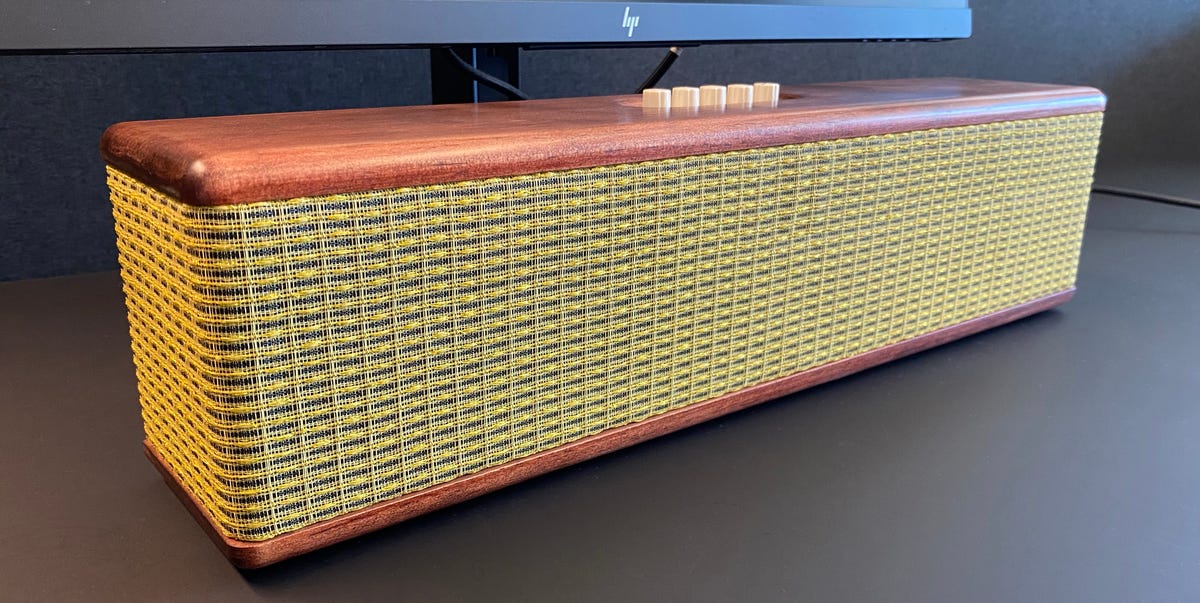
But there’s another path: building your own. A DIY sound bar can look cleaner than most store-bought black rectangles, fit your exact TV setup, and scratch that “I made this” itch that no online cart can satisfy.
This guide covers both worlds: what made certain models stand out as the best sound bars in 2022, and how to plan (and actually finish) a DIY sound bar that doesn’t sound like a shoebox with confidence.
What Makes a Soundbar “Good” (and Why TV Speakers Keep Losing)
Modern TVs are engineering miracles… until they try to speak. Thin screens leave almost no room for decent drivers, and downward-firing speakers love one thing: bouncing dialogue straight into the coffee table.
A good soundbar fixes the “what did they say?” problem first, then adds width, bass, and immersion.
- Clear dialogue: A strong center channel or a smart dialogue mode keeps voices from getting steamrolled by explosions.
- Soundstage width: Even without rear speakers, better driver layouts can make audio feel wider than the TV.
- Real bass (or at least believable bass): Many great 2022 setups paired a bar with a subwoofer for impact you can feel.
- Simple connection: A single HDMI cable (ARC/eARC) can handle most setups cleanly and reliably.
The 2022 Soundbar Checklist (What Smart Shoppers Looked For)
1) HDMI ARC vs eARC: The One-Port Drama
If you remember one thing, make it this: ARC is handy; eARC is ARC with a gym membership and a better work ethic.
ARC can simplify wiring (one HDMI cable between TV and soundbar), while eARC is built for higher-bandwidth audio and more consistent support for modern formats.
In 2022, eARC mattered most if you cared about higher-quality audio paths (especially from external sources) and wanted fewer compatibility headaches.
If your TV and soundbar both supported eARC, it was usually the “set it and forget it” choice.
2) Dolby Atmos: Real Height vs “Trust Me, It’s Tall”
Dolby Atmos became a major selling point in 2022, but not all Atmos soundbars were created equal.
Some use up-firing drivers to bounce sound off the ceiling for height effects. Others use virtual processingclever, sometimes impressive, but more dependent on your room and seating.
Practical tip: if your ceilings are very high, heavily textured, or angled, “bounce” Atmos can lose some magic.
In that case, prioritize a bar that excels at dialogue and surround imaging firstAtmos becomes a bonus, not the whole pizza.
3) Channels, Subs, and Rears: How “Big” Do You Want to Go?
A lot of the best sound bars in 2022 fell into a few real-life categories:
- All-in-one bars: Clean setup, fewer boxes, great for apartmentsbass is the usual tradeoff.
- Bar + sub: The “most people should start here” combo.
- Full packages (bar + sub + surrounds): The closest thing to “real home theater” without a receiver.
4) Room Tuning and Dialogue Modes: The Hidden MVP Features
The best setups in 2022 didn’t just blast louderthey helped you hear better.
Room correction and voice enhancement features mattered because living rooms are acoustically chaotic: bare walls, hard floors, open layouts, and that one decorative vase that vibrates like it’s auditioning for a percussion section.
5) Gaming and Passthrough: Nice-to-Have, Not Always Necessary
If you game, you may care about input lag and how devices route through your setup.
Some soundbars offer HDMI inputs for passthrough; others lean on eARC so the TV acts like the traffic controller.
In 2022, many people simply connected consoles to the TV and let eARC send audio back to the bareasy, clean, and often the best compatibility route.
Best Sound Bars 2022: Standout Picks (and Who They Fit)
The “best” soundbar depends on your room, your ears, and your tolerance for extra speakers.
That said, several models repeatedly stood out across serious testing and reviews in 2022especially for Atmos performance, clarity, and overall value.
Best “All-In” Cinematic Package: Samsung HW-Q990B
If you wanted a one-box purchase that behaved like a full surround system, the Samsung HW-Q990B was one of 2022’s most talked-about heavy hitters.
It combined a main bar, a subwoofer, and rear speakers (with height effects) for a room-filling, immersive presentation.
- Why people loved it: Big surround impact, strong Atmos immersion, and a “home theater” feel without a receiver.
- Who it’s for: Movie lovers, action fans, and anyone who wants the couch to feel like the best seat in the house.
- Reality check: It’s a full setupspace and placement matter. If you hate extra speakers, this might feel like adopting a small audio zoo.
Best Premium Single-Bar Ecosystem: Sonos Arc
The Sonos Arc was a top premium pick for people who wanted big, polished sound from a single barplus the option to expand later with a sub and surrounds.
It was known for strong clarity, a wide soundstage, and a streamlined app-driven experience.
- Why people loved it: Elegant sound, easy ecosystem expansion, and a clean “no receiver required” approach.
- Who it’s for: People who want premium sound today and an upgrade path tomorrow.
- Reality check: If you need lots of physical inputs, you’ll want to plan your connectivity carefully.
Best for Dialogue + Polish: Bose Smart Soundbar 900
Bose’s premium bars appealed to people who value clarity, refinement, and a “works without drama” vibe.
In the 2022 conversation, the Bose Smart Soundbar 900 came up often as a strong Atmos-capable option with a smooth, controlled sound and a premium finish.
- Why people loved it: Vocal clarity, premium build, and a balanced sound that works for TV and music.
- Who it’s for: Dialogue-first households and anyone who wants a polished, modern living-room system.
- Reality check: Like many premium bars, the full “wow” factor often increases with optional add-ons (sub, surrounds).
Best Value Bar + Sub Feel: Yamaha YAS-209 (and Similar Value Combos)
Not everyone needs Atmos fireworks. In 2022, value favorites were the ones that fixed dialogue, added punch, and didn’t require a second mortgage.
Yamaha’s YAS-209 got attention as a feature-packed, affordable system that delivered clear sound and a subwoofer-backed low end.
Best Mid-Tier “Atmos on a Budget”: Vizio M-Series Elevate (and Friends)
Vizio had a reputation for packing features into reasonable prices, and systems like the M-Series Elevate aimed at giving you Atmos immersion without luxury pricing.
If you like movies and gaming but still shop with one eye on your bank account, this tier was a 2022 sweet spot.
Best Compact Pick: Sonos Beam (Gen 2)
Smaller rooms deserve good sound, too.
The Beam (Gen 2) was widely seen as a compact option with impressive performance for its size, especially for TV dialogue and virtualized spatial effects.
DIY Sound Bar: When Building Beats Buying
Buying a soundbar is fast. Building one is satisfying. Also occasionally confusing. Sometimes both in the same afternoon.
DIY makes sense when:
- You want a soundbar that perfectly matches your TV width, cabinet, or wall mount.
- You care about repairability and upgrade options (swap amps, drivers, or DSP later).
- You want better materials and aesthetics than “glossy black plastic monolith.”
- You already own a receiver or amp and want a custom passive bar.
DIY Sound Bar Planning: Choose Your Build Type
Option A: Passive Soundbar (Best if You Have a Receiver)
A passive DIY soundbar is basically a custom speaker cabinet shaped like a soundbar.
You connect it to an AV receiver (or amplifier). This is the simplest DIY path because you skip Bluetooth pairing, power supplies, and internal amps.
Option B: Powered Soundbar (All-in-One DIY)
A powered build includes an amplifier inside the enclosure, and often Bluetooth or optical input.
This can be awesomeand also the moment you discover that cable management is an extreme sport.
Option C: Hybrid (External Amp/DSP, Custom Speaker Bar)
Many builders choose a hybrid approach: build the speaker enclosure, but keep the amplifier and DSP external for easier cooling, upgrades, and troubleshooting.
It’s the “I want DIY pride, but also want to sleep at night” option.
DIY Parts List 101 (Without Making It a Science Fair Poster)
A soundbar is usually a Left–Center–Right setup in a single enclosure.
Two big design decisions decide whether your DIY sound bar sounds legit:
1) Driver Strategy
- Full-range drivers: Simplify the build (minimal crossover complexity), great for clarity, and common in compact DIY soundbar projects.
- Woofer + tweeter designs: More detailed highs and better output potential, but require crossovers and more planning.
- MTM layouts: Often used for center channelspowerful and clear, but placement and crossover design matter for consistent dialogue across seating.
2) Bass Plan
- Use a subwoofer: Most practical. Let the soundbar focus on clarity while a sub handles the heavy lifting.
- Build a 2.1 soundbar: Possible with small woofers or a clever design, but deep bass in a thin enclosure is a physics argument you will not win.
- Passive radiators: Helpful in compact builds, but require careful matching and tuning.
Enclosure Design That Won’t Ruin Your Weekend
You can go full acoustic-engineer mode, but you don’t have to.
A strong DIY soundbar enclosure usually follows these rules:
- Separate chambers: Left, center, and right sections should be isolated so each channel behaves predictably.
- Rigid construction: MDF and quality plywood both workrigidity reduces cabinet resonance and “buzzing furniture syndrome.”
- Bracing: A few internal braces can turn “drum box” into “speaker enclosure.”
- Smart baffle layout: Give drivers breathing room, avoid crowding, and keep the center channel aimed at ear level if possible.
Pro tip: if your enclosure looks amazing but rattles at 80Hz, your guests won’t say “nice craftsmanship.”
They’ll say, “Is that a bee trapped in the wall?” Build rigid first, beautiful second (then beautiful again at the end).
Connectivity: Getting TV Audio Into Your DIY Bar
Store-bought soundbars make HDMI ARC/eARC easy. DIY builds can still be cleanyou just need a plan.
Common approaches:
- Passive bar + AVR: Use HDMI eARC/ARC between TV and receiver. Receiver drives your DIY bar like normal speakers.
- Powered bar with optical in: Simple and reliable, but you may lose some advanced format handling depending on your TV and gear.
- Powered bar with HDMI ARC audio extraction: Possible, but choose hardware carefully for compatibility and format support.
Tuning: The Secret Sauce That Makes DIY Sound “Expensive”
DIY soundbars often fail for one boring reason: they’re not tuned.
Great soundbars in 2022 leaned on thoughtful tuning, DSP, and dialogue enhancement.
You can do the same:
- Start with placement: Center the bar, avoid pushing it too far into a cabinet, and keep the front edge close to the cabinet edge.
- Control the bass handoff: If you use a sub, set a crossover point that keeps voices clean and reduces boom.
- Use gentle EQ: A small cut in harsh ranges and a slight dialogue lift can do more than doubling your budget.
- Fix rattles like a professional: Foam tape, gasket tape, and tightening hardware often deliver the biggest “upgrade” per dollar.
A Practical DIY Example: “Living-Room Friendly 3-Channel Passive Bar”
Here’s a realistic concept you can adapt without needing a graduate degree in acoustics:
- Goal: Clear dialogue, wide stereo image, works with an existing receiver and subwoofer.
- Layout: Left and Right use compact driver sets; Center is optimized for voice clarity.
- Enclosure: Three isolated chambers, sealed for simplicity, with internal bracing.
- Finish: Paint, veneer, or fabric wrapanything that says “designed,” not “unfinished project in witness protection.”
This style mirrors many popular DIY approaches: keep the bar clean and accurate, then let a dedicated sub handle low bass.
It’s also very upgrade-friendlyswap the center design later if you want even better dialogue.
Common DIY Mistakes (So You Don’t Learn Them the Hard Way)
- Building too thin and expecting thunder: If you want big bass, plan for a subwoofer. Your soundbar is not a magical bass portal.
- Skipping isolation between channels: Shared air space can muddy imaging and clarity.
- Ignoring TV settings: Wrong audio output settings can kill surround formats or create delay issues.
- Mounting inside a cabinet: Cabinets can trap sound and amplify boom. If you must, pull the bar forward and add damping.
- Underestimating vibration: Tighten everything. Then tighten it again after a week.
Setup Tips That Apply to Any Soundbar (DIY or Store-Bought)
- Use HDMI eARC if you can: It usually offers the best compatibility for modern audio and simplest wiring.
- Run room tuning if available: Auto-calibration can be surprisingly helpfulespecially for dialogue.
- Prioritize placement over settings: A well-placed soundbar beats a badly placed soundbar with 47 sound modes.
- Don’t fear “night mode”: Compression can make late-night viewing clearer and less explosive.
Hands-On Experiences: What DIY (and 2022 Soundbar Shopping) Really Feels Like
Let’s talk about the part nobody puts on the product box: what it’s like to actually live with a soundbarespecially if you build one.
In my unofficial field research (also known as “watching movies and pretending it’s testing”), a DIY sound bar teaches you lessons fast.
The first lesson is humility. The moment you tighten the last screw and hit play, you realize soundbars aren’t just “speakers in a long box.”
The box matters. The driver placement matters. And the tiny gap you left around the baffle? Congratulationsyour new hobby is tracking down buzzes like an audio detective.
The fix is rarely dramatic. It’s usually gasket tape, a better brace, or moving one wire that’s gently slapping wood like it’s trying to start a slow clap.
The second lesson is how much dialogue drives happiness.
Back in 2022, the best-reviewed bars didn’t win because they were loud; they won because voices were intelligible.
When you build your own, you start listening for that “vocal presence” zone. Too little, and everyone mumbles. Too much, and voices sound like they’re being announced at a train station.
The sweet spot is where you can understand whispered lines without turning the volume into a roller coaster.
Third: bass is addictive, but it’s also a troublemaker.
A subwoofer (or even a decent “bar + sub” setup) makes everything more fununtil your room starts resonating like a giant wooden drum.
DIY makes this obvious because you can literally touch your enclosure and feel what frequencies are misbehaving.
In 2022-style soundbar setups, a big win was learning to let the sub handle the lowest lows while the bar stays clean.
If you build your own, the “I’ll just squeeze more bass out of this thin cabinet” idea usually ends with you admitting physics still runs this household.
Fourth: placement is the cheapest upgrade you’ll ever buy.
I’ve heard modest systems sound excellent just by pulling the bar forward to the edge of the stand and angling it toward ear level.
I’ve also heard expensive systems sound underwhelming because the bar was tucked into a cabinet like it was being punished.
That’s true for DIY and store-bought: don’t trap sound. Let it breathe.
Fifth: Atmos is real, but it’s not magic.
In a good room, height effects can be genuinely cool. In a challenging room, Atmos can feel subtle.
The best “2022 mindset” is to treat Atmos as a featurenot the foundation.
When your core sound (dialogue, balance, bass control) is great, Atmos becomes the cherry on top.
When your core sound is messy, Atmos is like putting sprinkles on a burnt pancake: visually exciting, emotionally complicated.
Finally, the biggest surprise: DIY soundbars feel personal in a way store-bought never will.
You notice details because you built the details.
You remember why you chose the fabric, why you separated the chambers, why you braced the center section more.
And when someone says, “Wow, this sounds amazing,” you get to do the most satisfying thing on earth:
nod casually, pretend it was easy, and resist the urge to explain every screw you tightened like it’s a documentary miniseries.
Conclusion: Pick Your PathBuy Smart or Build Proud
In 2022, the best sound bars proved you could get immersive, clear, satisfying TV audio without building a full traditional surround system.
If you want the simplest “big upgrade,” buying a proven model is the fastest route.
If you want custom fit, upgradeability, and a soundbar that looks like it belongs in your room (not a generic black stick), DIY is worth the effort.
Either way, focus on what matters: dialogue clarity, sensible connectivity (preferably eARC when available), and bass management that matches your space.
Your ears don’t care about marketing. They care about hearing every word without subtitles… unless you like subtitles, in which case: carry on, you organized genius.