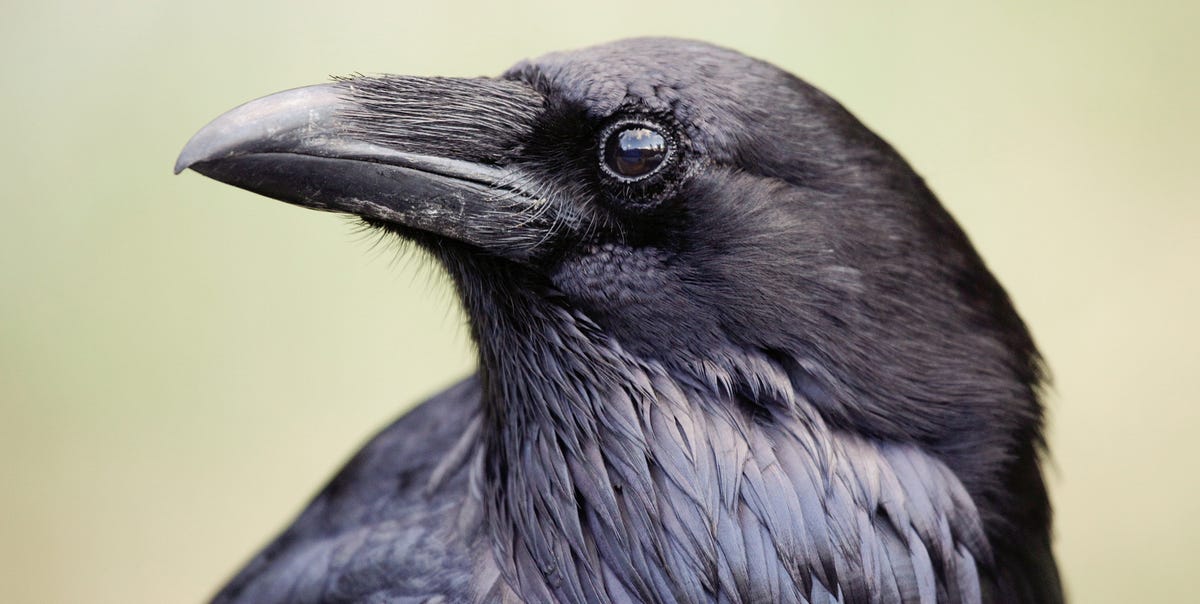

Crows have always looked like they know something we do not. They stand on streetlights like tiny black-robed judges, stare at us with suspicious confidence, and somehow locate every dropped French fry within a three-block radius. For centuries, people called them mysterious. Then scientists started testing them, and the mystery became even better: crows are not just clever birds. They may possess a form of awareness that forces us to rethink what “bird-brained” ever meant.
The phrase “crows are self-aware just like humans” needs a little scientific unpacking. No, a crow is probably not writing sad poetry in a tree or wondering whether it should change careers. But research suggests that crows can consciously perceive sensory information, remember individuals, plan future actions, use tools, learn socially, and make decisions based on what they know. In other words, they are not feathered robots reacting blindly to the world. They appear to experience, evaluate, and respond with surprising mental flexibility.
That matters because humans have long treated consciousness as a private club with a velvet rope. Mammals were allowed near the entrance. Primates got VIP wristbands. Birds, because their brains are built differently from ours, were often underestimated. Crows have now waddled into the club, stolen the snacks, and made everyone update the guest list.
What Scientists Mean by Crow Self-Awareness
Self-awareness is not one single ability. It is more like a toolbox. Humans have many tools in that box: bodily self-recognition, memory, planning, emotional reflection, social awareness, language, and the ability to think about our own thoughts. Crows do not show all of these in the same way humans do, but they show enough related abilities to make scientists pay close attention.
One important concept is sensory consciousness, sometimes called primary consciousness. This means an animal is not merely receiving information, but is aware of what it perceives. In a landmark study on carrion crows, researchers trained birds to report whether they had seen a faint visual signal. While the crows performed the task, scientists recorded activity in a higher-level area of the avian brain. Some neurons tracked not just the physical stimulus, but the crow’s reported perception of it. That is a big deal. It suggests that the bird’s brain was representing its own experience of seeing or not seeing.
To put it simply: the crow was not just reacting to light. It appeared to be responding based on whether it had consciously noticed the light. That distinction is the difference between a motion sensor and a mind.
Crow Brains Are Different, Not Inferior
For a long time, people assumed that complex consciousness required a mammal-style cerebral cortex. Humans have one. Dogs have one. Monkeys have one. Birds do not have the same layered cortex, so many scientists once assumed birds must be operating with a simpler mental engine.
Crows have made that assumption look rather awkward. Their brains are organized differently, but they contain dense networks of neurons and highly developed regions for flexible decision-making. In birds, the pallium performs many advanced functions that the cortex handles in mammals. Crows and ravens also pack a remarkable amount of processing power into relatively small brains. If the human brain is a sprawling corporate headquarters, the crow brain is a brutally efficient startup where everyone knows the Wi-Fi password and no meeting lasts longer than necessary.
This is one reason crow intelligence is so fascinating. It suggests that nature may have evolved advanced cognition more than once. Humans and corvids did not become smart by following the same exact brain blueprint. Instead, they reached similar mental destinations through different biological routes.
The Evidence: Crows Know More Than We Thought
They Recognize Human Faces
If you annoy a crow, congratulations: you may have just created a long-term relationship. Studies on American crows have shown that they can recognize individual human faces, remember people associated with danger, and share that knowledge with other crows. Researchers wearing specific masks found that crows scolded and mobbed the “dangerous” face long after the original encounter.
This is not simple memory in the “I left my keys in the refrigerator” sense. It is social memory with consequences. Crows can connect a specific face to a past event, categorize that person as risky, and communicate the warning. In the wild, this ability is useful. A crow that can remember a dangerous human, hawk, dog, or neighborhood menace has a better chance of surviving.
For humans, facial recognition is central to social life. We remember friends, rivals, teachers, neighbors, and that one cashier who silently judges our snack choices. Crows appear to use a similar social skill in their own ecological world. They do not need smartphones or yearbooks. Their memory is already doing the job.
They Use Tools Like Tiny Engineers
New Caledonian crows are famous for making and using tools. They shape sticks, probe holes for insects, and solve multi-step puzzles that would make some adults quietly pretend they received an urgent phone call. In experiments, crows have used one object to obtain another object, then used the second object to get food. That kind of sequential tool use requires planning, attention, and an understanding of cause and effect.
Tool use does not automatically prove self-awareness, but it does show flexible thinking. A crow must identify a problem, choose an object, understand the relationship between tool and goal, and adjust when the first attempt fails. That is not mindless instinct. That is practical intelligence wearing feathers.
They Can Plan for the Future
Future planning is one of the abilities people once considered deeply human. Humans save money, pack lunches, set alarms, and buy vegetables with heroic optimism. Crows and their relatives show a simpler but impressive version of future-oriented cognition.
Research on New Caledonian crows has shown that they can select tools for later use in specific tasks. That means the bird is not only responding to what is in front of it right now. It is preparing for a later situation. Ravens, close relatives of crows, have also performed well in studies involving delayed rewards and future tool use.
This matters because planning requires a mental bridge between present action and future need. A crow that saves the right tool for later is doing more than grabbing a random stick. It is behaving as though the future exists in its mind.
They Count Out Loud
In one of the most delightful recent findings, carrion crows were trained to produce a specific number of vocalizations in response to visual or auditory cues. When shown a cue linked to “three,” for example, a crow could produce three calls. When given a cue linked to “four,” it could produce four. The first call even contained acoustic clues that predicted how many total calls the bird planned to make.
That is not exactly the same as a human child proudly shouting “one, two, three!” at a birthday cake. But it is close enough to make the phrase “Counting Crows” scientifically funnier than it used to be. The finding suggests purposeful vocal control combined with numerical understanding, a combination once thought to be rare outside humans.
Do Crows Pass the Mirror Test?
Whenever people talk about animal self-awareness, someone brings up the mirror test. In this test, an animal receives a mark on its body in a place it can only see with a mirror. If the animal uses the mirror to inspect or touch the mark, researchers may interpret that as evidence of self-recognition.
Some corvids, especially magpies, have shown intriguing results in mirror experiments. But the overall picture is mixed. Many corvids do not clearly pass the mirror test, and scientists debate how much weight the test should carry. A crow may fail a mirror test not because it lacks awareness, but because mirrors are not especially meaningful in crow life. After all, if someone judged human intelligence by our ability to echolocate in a cave, most of us would not look brilliant either.
The mirror test measures one form of bodily self-recognition. It does not capture all kinds of awareness. Crows may not admire their reflection, but they can still show sensory consciousness, memory, planning, social learning, and problem-solving. Self-awareness is bigger than a bathroom mirror.
Are Crows Self-Aware Just Like Humans?
The honest answer is: crows appear to be self-aware in some important ways, but not exactly like humans. The headline is exciting because the comparison is real enough to be meaningful, but it should not be stretched into fantasy. A crow’s mind is not a miniature human mind with wings. It is a crow mind, shaped by flight, danger, food, family, territory, and survival.
Humans use language to describe inner life. We can say, “I know I saw something,” or “I think I might be wrong,” or “I should not have sent that text at 1:00 a.m.” Crows cannot tell us their thoughts in English. Scientists must infer mental states from behavior and brain activity. That makes the research difficult, but also fascinating.
What the evidence suggests is that crows have subjective perception. They can respond based on what they seem to experience, not merely what physically appears. They can remember who treated them badly. They can pass social information to others. They can use tools, solve problems, count small quantities, and plan for future needs. These abilities overlap with pieces of human cognition, even if the full human version remains much more complex.
So yes, crows are self-aware in a serious scientific sense. But “just like humans” should be read as “more like humans than we once believed,” not “secretly preparing tax returns in the oak tree.”
Why Crow Intelligence Feels So Uncanny
Crows live near us. That is part of what makes their intelligence feel personal. Dolphins may be brilliant, but most of us do not see dolphins judging us from a telephone pole. Crows share our cities, parks, farms, parking lots, and schoolyards. They watch our routines. They learn traffic patterns. They raid trash cans with the timing of professional burglars. They know when people are distracted. They notice patterns because patterns help them survive.
This urban intelligence makes crows especially good at studying humans. A crow that understands when cars stop, when restaurants throw out food, or when a person is likely to chase it away has a clear advantage. Their world is full of puzzles, and many of those puzzles are created by us.
That is why people often feel that crows are watching them. They probably are. Not in a supernatural way, but in a practical, deeply intelligent way. To a crow, every human is a possible source of food, threat, opportunity, or confusion. Honestly, that is also how many humans see other humans before coffee.
What Crows Teach Us About Consciousness
Crow cognition challenges human arrogance. For a long time, we treated intelligence like a ladder, with humans at the top and other animals arranged below us. The more we study animals, the more that ladder looks like the wrong metaphor. Intelligence is more like a forest. Different species grow different abilities depending on their needs.
Octopuses solve problems with nervous systems spread through their arms. Elephants remember social relationships across decades. Bees communicate food locations through dance. Crows recognize faces, use tools, and may consciously perceive what they see. Nature did not make one version of mind. It made many.
For humans, this should inspire humility. We are extraordinary, but we are not alone in having inner lives. Crows remind us that consciousness may not require a human-shaped brain. It may emerge wherever evolution builds the right kind of information processing, memory, attention, and behavioral flexibility.
How This Changes the Way We Should Treat Crows
If crows are aware, intelligent, and socially complex, then our relationship with them deserves more respect. This does not mean we must let them steal every picnic sandwich in the country. Boundaries are still allowed. But it does mean we should avoid treating them as pests without thought.
Crows clean up carrion, disperse seeds, control insects, and adapt to environments humans constantly change. They are part of urban ecosystems, not just background noise with beaks. People who feed crows should do so carefully, if local rules allow it, and should avoid unhealthy foods. People who dislike crows should use humane deterrents rather than cruelty. And everyone should remember one practical rule: do not start a feud with an animal that can remember your face and recruit cousins.
Respecting crows does not require pretending they are little people. It requires recognizing that they are intelligent birds with their own rich way of being alive. That may be even more interesting.
Experiences and Everyday Lessons Related to “Crows Are Self-Aware Just Like Humans”
Spend enough time watching crows, and the science starts to feel less surprising. You do not need a laboratory to notice that these birds behave with intention. A crow at a crosswalk does not look random. It watches the cars, waits for the right moment, hops forward, grabs what it wants, and leaves with the confidence of someone who has read the traffic manual. Another crow may perch nearby, not participating, but observing. It looks less like instinct and more like a small committee meeting with feathers.
One common experience is the feeling of being recognized. People who regularly walk the same route often report that neighborhood crows react differently to familiar humans. The person who tosses safe food scraps may be followed calmly. The person who once disturbed a nest may receive loud scolding. Even if some stories become exaggerated, they fit what science already shows: crows are excellent at remembering individual people and sorting them into social categories.
There is also something strangely human about their curiosity. Crows inspect objects. They test things. They pick up items, drop them, hide them, retrieve them, and sometimes appear to play. Anyone who has watched a crow tug at a shiny wrapper or investigate a strange object has seen behavior that feels exploratory rather than automatic. Like children, they seem to learn by interacting with the world. The difference is that children ask “why,” while crows ask the same question by poking it with a stick.
Crows also teach patience. They do not rush into every situation. A crow approaching food in an open area may pause, scan, move closer, retreat, and try again. That cautious intelligence is not cowardice. It is risk assessment. Humans do the same thing when reading a restaurant bill with too many service charges. The crow’s brain is constantly balancing reward and danger.
The most powerful lesson is that awareness does not have to look like ours to be real. A crow’s life is not organized around human ambitions, language, or culture. It is organized around flight, memory, family, food, danger, and opportunity. Yet within that life, there appears to be perception, judgment, learning, and perhaps a sense of experience. That should make us look at the natural world differently.
When a crow looks back at us, it may not be thinking human thoughts. But it is not an empty machine either. It is a living mind meeting another living mind across a very old evolutionary distance. That moment is small, ordinary, and easy to miss. It is also astonishing. The crow on the fence is not just part of the scenery. It is paying attention. The polite thing, scientifically and spiritually, is to pay attention back.
Conclusion: The Crow Mind Is Closer Than We Thought
Crows are not humans in black feathers, and they do not need to be. Their intelligence is impressive because it is their own. Studies of crow consciousness, facial recognition, tool use, future planning, and vocal counting show that these birds possess mental abilities once thought to be uniquely human or limited to a few mammals. They can consciously perceive, remember, learn, plan, and adapt with remarkable skill.
The title “Crows Are Self-Aware Just Like Humans” captures a real shift in science: humans are no longer the only obvious example of complex awareness. The better we understand crows, the more we realize that consciousness may come in many forms. Some wear shoes. Some wear feathers. Some steal fries and judge us from rooftops.
Note: This article uses “self-aware” in a careful scientific sense, focusing on sensory consciousness, self-related cognition, memory, planning, and social intelligence. It does not claim that crows have the same full reflective inner life, language-based identity, or autobiographical self-concept as adult humans.