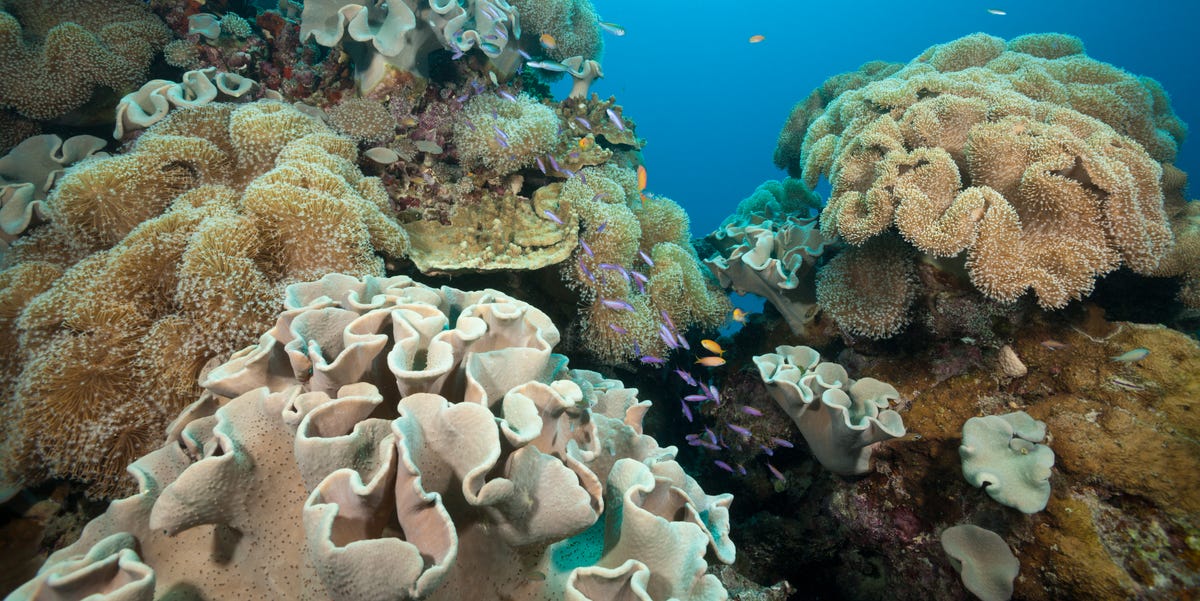

Coral reefs are in trouble, and not the “forgot my sunscreen” kind of trouble. Warming oceans, mass bleaching, pollution, disease, and acidification are squeezing reefs from nearly every direction. Now scientists are asking a bold question: could CRISPR help corals survive a hotter future?
The Coral Crisis: Why the Ocean’s Tiny Cities Are Under Siege
Coral reefs look like underwater rock gardens, but they are living neighborhoods built by tiny animals. These reefs shelter fish, protect shorelines, support tourism, feed communities, and make the ocean look like it hired a very expensive interior designer. Although reefs cover a small fraction of the seafloor, they support roughly a quarter of marine life at some point in its life cycle.
The problem is heat. When ocean temperatures climb too high, corals become stressed and expel the colorful algae living inside their tissues. These algae, called zooxanthellae, provide corals with much of their food. Without them, corals turn pale or white, a process known as coral bleaching. Bleached coral is not automatically dead, but it is weakened, hungry, and more vulnerable to disease. Think of it as the reef equivalent of pulling three all-nighters and then being asked to run a marathon.
Since 2023, the world has been experiencing the fourth global coral bleaching event on record. NOAA and the International Coral Reef Initiative confirmed the event in April 2024, and NOAA Coral Reef Watch later reported bleaching-level heat stress across a major share of the world’s reef areas. The Great Barrier Reef, Florida Keys, Caribbean reefs, Pacific islands, and many other reef systems have all faced intense heat stress. That is not a local headache. That is an ocean-wide emergency siren.
What Is CRISPR, and Why Are Coral Scientists Interested?
CRISPR is a gene-editing tool that allows scientists to make targeted changes to DNA. In plain English, it is like a molecular search-and-edit function, except instead of fixing typos in a document, researchers can study how specific genes affect traits such as heat tolerance, growth, disease response, or skeleton formation.
In coral science, CRISPR is not currently a magic wand that turns fragile reefs into superhero reefs overnight. The more realistic value is research. Scientists can use CRISPR to identify which coral genes matter when temperatures rise, when symbiotic algae become stressed, or when juvenile corals build skeletons. Once researchers understand those genetic pathways, they may be able to support coral conservation through selective breeding, assisted evolution, restoration planning, and possibly carefully controlled future gene-editing applications.
A real example: CRISPR in reef-building corals
In 2018, Stanford researchers and collaborators demonstrated CRISPR-Cas9 editing in reef-building coral. The work showed that gene editing could be used in coral embryos to study gene function. Later research used CRISPR to test genes involved in coral heat stress response, including work showing that the loss of a suspected heat-stress regulator reduced coral thermal tolerance. That matters because it moves coral genetics from “we suspect this gene is important” to “we tested it, and yes, this gene affects survival under heat.” Science loves receipts.
How CRISPR Could Help Save Coral Reefs
1. Identifying heat-tolerance genes
The first major promise of CRISPR is discovery. Corals are genetically diverse, and some naturally tolerate heat better than others. CRISPR can help researchers test which genes influence that resilience. If scientists can identify the genetic switches involved in heat tolerance, they can better understand why one coral colony survives a marine heatwave while another nearby colony bleaches like a forgotten white T-shirt.
This does not mean researchers will immediately edit wild reefs. More likely, CRISPR will help scientists build a map of coral resilience. That map can guide restoration teams as they choose parent corals for breeding, select nursery stock, or prioritize reef areas with the best chance of long-term survival.
2. Improving assisted evolution
Assisted evolution is a broad term for helping corals adapt faster than they might on their own. It can include selective breeding, assisted gene flow, conditioning corals in warmer water, pairing corals with heat-tolerant algae, or testing beneficial microbes. CRISPR fits into this toolbox as a way to understand the biology behind these strategies.
For example, if selective breeding produces baby corals that tolerate heat better, CRISPR-based research can help reveal which genes or pathways are involved. That makes restoration less like guessing and more like cooking with a recipestill complicated, still messy, but less likely to end with smoke alarms.
3. Studying coral-algae partnerships
Corals do not live alone. They form partnerships with algae, bacteria, fungi, viruses, and other microorganisms. This community is often called the coral holobiont. A coral’s survival may depend not only on its own genes but also on the algae and microbes living with it.
CRISPR could help scientists understand how coral genes influence these partnerships. Do some corals manage heat better because they host different algae? Do certain genes help corals recover after bleaching? Could beneficial bacteria reduce disease risk or improve resilience? These questions are central to future reef restoration.
4. Supporting coral nurseries and restoration programs
Across places like Florida, Hawaii, the Caribbean, and Australia, coral nurseries are growing fragments and baby corals for restoration. Many programs now focus on genetic diversity, heat tolerance, disease resistance, and reproductive success. CRISPR research can help these programs make smarter choices.
Instead of planting only the fastest-growing corals, restoration teams may need to plant corals with a mix of traits: heat tolerance, disease resistance, strong reproduction, and compatibility with local reef conditions. CRISPR may help identify those traits earlier, reducing the risk of spending years growing corals that cannot handle tomorrow’s ocean.
The Big Catch: CRISPR Is Not a Substitute for Climate Action
Here is the uncomfortable truth: gene editing cannot air-condition the ocean. Coral reefs are declining mainly because marine heatwaves are becoming more frequent and severe, while ocean acidification makes it harder for corals to build calcium carbonate skeletons. Pollution, sedimentation, overfishing, coastal development, and disease add more pressure.
Even if CRISPR helps scientists produce more heat-tolerant corals, those corals still need livable water. There is a limit to how much biology can adapt when the environment keeps turning the temperature dial like someone trying to roast marshmallows with the planet.
That means CRISPR should be seen as a supporting tool, not the whole rescue mission. Cutting greenhouse gas emissions, improving water quality, protecting herbivorous fish, reducing coastal runoff, controlling disease, and managing marine protected areas remain essential. CRISPR may help buy time, but climate action is what gives reefs a future worth buying time for.
Ethical and Ecological Questions Scientists Must Answer
Should edited corals ever be released into the wild?
One of the biggest questions is whether genetically edited corals should ever be placed on natural reefs. Reefs are complex ecosystems. A change that helps one coral survive heat might affect reproduction, growth, competition, or relationships with algae and fish. Scientists must study these trade-offs carefully before any real-world release.
Could edited corals reduce genetic diversity?
Genetic diversity is one of nature’s best insurance policies. If restoration programs rely too heavily on a few “super coral” lines, reefs could become less diverse and more vulnerable to future threats. The goal should not be to create one perfect coral. The ocean does not need a monoculture with abs. It needs diverse, adaptable reef communities.
Who decides what gets edited?
Coral reefs belong to ecosystems, coastal communities, Indigenous peoples, tourism economies, fisheries, and future generations. Decisions about gene editing should include scientists, local communities, regulators, conservation groups, and people who depend on reefs for food, culture, and income. Public trust matters because conservation is not just biology; it is also governance.
CRISPR vs. Other Coral-Saving Tools
CRISPR gets attention because it sounds futuristic, but it is only one part of a much larger reef rescue toolkit. Selective breeding may help produce corals that inherit natural heat tolerance. Assisted gene flow can move resilient coral genes between populations. Coral nurseries can grow threatened species such as elkhorn and staghorn coral. Probiotics may help corals manage stress. Heat-conditioning can prepare some corals for warmer conditions. Better water management can reduce local stress. Marine protected areas can improve reef recovery.
The best strategy will likely combine many tools. A reef restoration project might use genetic screening to choose diverse parents, selective breeding to produce resilient offspring, microbial treatments to improve survival, and local management to reduce pollution. CRISPR may help scientists understand why those tools work and how to improve them.
In other words, CRISPR is not the entire toolbox. It is more like the microscope, instruction manual, and precision screwdriver rolled into one. Helpful? Absolutely. Enough by itself? Not unless it also learns to negotiate international climate policy, which seems unlikely.
What Would Success Actually Look Like?
A successful future for CRISPR and coral conservation may not look like edited coral colonies being dropped across the ocean by drones. It may look more practical and less Hollywood.
Success could mean scientists identifying key heat-tolerance genes and using that knowledge to improve breeding programs. It could mean restoration teams selecting coral parents with better odds of producing resilient offspring. It could mean discovering why some coral-algae partnerships survive bleaching events. It could mean creating better tests for coral nursery stock before restoration teams invest years of labor.
Eventually, if safety, regulation, and community consent align, CRISPR-edited corals might be tested in highly controlled environments. But that step would require careful ecological risk assessment, long-term monitoring, transparent rules, and strong public oversight. The ocean is not a laboratory drawer. Once something enters a reef ecosystem, the consequences must be taken seriously.
Experiences and Lessons From the Front Lines of Coral Conservation
Anyone who has followed coral restoration closely knows the work is both inspiring and humbling. In a coral nursery, hope can look like rows of tiny coral fragments hanging from underwater trees. Divers clean algae from nursery structures, monitor growth, check for disease, and transplant corals back onto reefs. It is careful, physical, repetitive work. Reef conservation is glamorous only if your definition of glamour includes wet gloves, boat fuel, spreadsheets, and the occasional fish judging your life choices.
The most powerful lesson from coral restoration is that survival depends on details. A coral that grows beautifully in a nursery may struggle after outplanting if the reef is too warm, too polluted, too algae-covered, or too damaged. A coral that survives one heatwave may fail during the next. A site that looks promising in spring may become stressful in late summer. Conservation teams learn quickly that reefs are not static gardens. They are living systems shaped by temperature, light, water flow, grazing fish, storms, diseases, and human decisions on land.
This is where CRISPR-related research becomes valuable. Field teams need more than enthusiasm; they need better predictions. If gene-editing studies can reveal which traits improve heat tolerance or recovery, restoration programs can make smarter choices before corals are planted. For example, a nursery may prioritize parent colonies that show natural resilience after bleaching. Genetic research can help confirm whether that resilience is heritable, whether it comes with trade-offs, and whether offspring are likely to perform well in future conditions.
Another experience from coral conservation is that local communities matter. In reef regions, people often know the water intimately. Fishers notice changes in fish behavior. Dive operators see bleaching before it appears in official reports. Coastal residents understand how storms, runoff, and development affect reefs. Any future involving advanced tools such as CRISPR must include these voices. A technology that ignores local knowledge may be clever in the lab but clumsy in the real world.
There is also an emotional side to reef work. Scientists and divers who return to the same reef year after year can watch favorite coral colonies bleach, recover, or die. That experience can be heartbreaking. Yet it can also be motivating. Some reefs still show resilience. Some corals survive extreme heat. Some restored colonies reproduce. Some baby corals settle successfully and begin building new structure. These wins may be small, but in conservation, small wins are not small at all. They are proof that the story is not finished.
The practical takeaway is simple: CRISPR should serve the reef, not the headline. The best coral-saving strategy will combine advanced genetics with old-fashioned conservation basics: cleaner water, lower emissions, protected habitats, diverse nurseries, careful monitoring, and public support. The future of coral reefs will not be saved by one breakthrough alone. It will be saved by many tools working together, guided by humility and urgency.
Conclusion: Is CRISPR the Key to Saving Coral?
CRISPR could become one important key, but it is not the whole keychain. Its greatest near-term value is helping scientists understand coral biology with much more precision. By identifying genes linked to heat tolerance, skeleton formation, stress response, and coral-algae partnerships, CRISPR can strengthen restoration and assisted evolution efforts.
Still, coral reefs cannot be edited out of a climate crisis. Without serious action to reduce ocean warming, even the toughest corals will face limits. CRISPR may help reefs adapt, but humans must also reduce the pressure forcing them to adapt so quickly in the first place.
The hopeful answer is this: CRISPR may help scientists give corals a fighting chance. The honest answer is this: the fight also requires cleaner water, lower emissions, smarter restoration, stronger protection, and a global decision to stop treating coral reefs like disposable decorations for vacation brochures.
Note: This article is written for educational and informational publishing purposes. It summarizes current scientific understanding and should not be read as a claim that CRISPR-edited corals are ready for broad release into natural reef ecosystems.