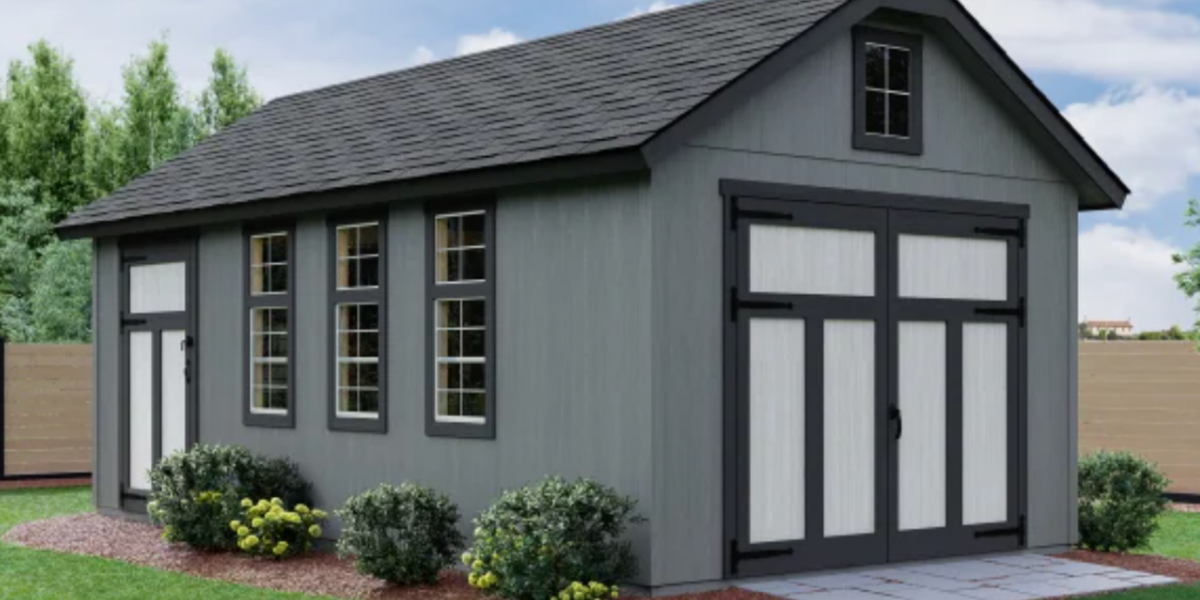

If your garage has become a museum exhibit titled “Stuff I Swore I’d Organize Someday”, Costco has entered the chat
with a shed so big it can realistically swallow a car. Not a toy car. Not a “Hot Wheels, vroom vroom” situation. A real, adult,
insurance-paying, oil-changing car.
The internet has been calling it everything from a “pop-up garage” to a “tiny home starter kit” (people are enthusiastic, okay?).
The real headline is simpler: Costco is selling oversized shed kitssome around 12’ x 24’with extra-wide doors, windows,
and enough floor space to make your SUV feel emotionally supported.
What’s the Shed Everyone’s Talking About?
The viral star of this story is a large wood shed kit sold through Costcocommonly the Yardline Upton 12’ x 24’ style:
a big-footprint, workshop-ready structure that can be ordered as DIY assembly and, in many areas, also offered with professional installation.
Think of it as IKEA, but instead of a wobbly bookcase and existential regret, you end up with a backyard building the size of a one-car garage.
Big-shed highlights (the “yes, that’s a real door” edition)
- Footprint around 12’ x 24’ (that’s 288 square feetaka “bigger than some studio apartments”).
- Extra-wide double doors that open up to about 8 feet of clearancewide enough for many cars to drive in.
- A service door on the side (because crawling under your bumper to grab a rake is not a lifestyle).
- Multiple windows for natural light and that “I totally meant to build a workshop” vibe.
- Overhead storage loft options on some models for seasonal gear, bins, and your collection of extension cords.
- Optional flooring on certain packagesimportant if you don’t want your “garage shed” to feel like a fancy tent on dirt.
Costco rotates shed inventory like it rotates snack aisles: suddenly, there’s a new favorite, it’s on sale, and someone’s neighbor
has already bought two. That means availability, pricing, and package options can change fast.
Can It Actually Fit Your Car? Let’s Do the (Very Fun) Math
“Big enough to fit your car” sounds like marketing until you remember most cars aren’t that huge. A typical sedan is roughly
6 feet wide (without mirrors) and 14–16 feet long. A compact SUV might be similar width, just a bit taller and longer.
Door width matters more than the floor plan
A shed can be 12 feet wide, but if the door opening is tight, you’ll be doing a three-point turn at 0.2 mph while your neighbors
silently rate your driving technique. The good news: the popular “garage shed” setups often include an extra-wide double door
opening around 96 inches (8 feet). That’s enough for many vehiclesespecially if you fold mirrors.
Realistic fit check: what works, what’s iffy
- Likely fits: most sedans, many crossovers, small-to-midsize SUVs, motorcycles, ATVs, riding mowers, and a shocking number of bicycles.
- Maybe fits (measure twice): full-size SUVs, wider vehicles with big mirrors, anything with roof racks you forget about until it’s too late.
- Probably not a great match: full-size pickups (length + width + turning clearance), especially if you want space to open doors comfortably.
The “fits your car” promise is most believable when you treat the shed like a one-car bay: park carefully, leave room for walking,
and accept that the driver’s door might not swing fully open like you’re arriving at a red-carpet event.
Why This Costco Shed Is Going Viral
The excitement isn’t just “wow, that’s big.” It’s what big solves. For many households, the garage is a mythical place where cars
once livedbefore being evicted by storage bins, tools, sports gear, holiday décor, and that one treadmill you swear you’re keeping.
1) Winter protection without building a full garage
If you’ve ever scraped ice off a windshield while questioning all your life choices, a car-sized shed is basically a wellness product.
It’s a roof and walls between your vehicle and “freezing rain that turns door handles into booby traps.”
2) A workshop that doesn’t require sacrificing your laundry room
Large sheds make excellent hobby headquarters: woodworking, bike maintenance, DIY projects, home gym setups, or a place to finally
organize tools so you stop buying duplicates because you “couldn’t find the other one.”
3) Flexible space that can evolve
Today it’s car storage. Next year it’s a home gym. Then it becomes your “seasonal overflow” buildingwhere Halloween décor goes to rest
after doing its duty scaring the neighborhood kids.
How Much Does a Car-Size Costco Shed Cost (Really)?
This is where the story goes from “fun viral find” to “responsible adult decision with a spreadsheet.”
The shed kit itself may be advertised around a few thousand dollars and can climb higher depending on flooring and installation options.
But the true cost of a garage shed is the kit plus everything that makes it safe, legal, and functional.
The “it’s not just the shed” cost checklist
- Foundation/base: gravel pad, concrete slab, or pier system (often the biggest add-on).
- Permits/inspections: likely required for sheds over common size thresholds in many cities and counties.
- Delivery logistics: large pallets, heavy materials, and the need for access to your yard.
- Roofing + finishing: shingles/underlayment, paint/stain, caulk, hardware upgrades.
- Optional electrical: lighting, outlets, ventilation fansusually triggers permitting and inspections.
- Security: better locks, motion lights, and smart placement so it’s not a “free tool store” for strangers.
The practical takeaway: treat it like a small construction project, not a patio purchase.
If you plan well, it can still be dramatically cheaper (and faster) than building a traditional detached garageespecially if you mainly want
protected storage and flexible workspace.
Before You Buy: Site Prep, Permits, and “Please Don’t Put It on Mud”
A shed this large is not the kind you plop down on uneven ground and hope for the best. If you want doors that close properly,
walls that stay square, and a structure that doesn’t slowly become a modern art sculpture, your base matters.
Foundation options that make sense for a garage shed
- Gravel pad: great drainage, usually lower cost, and forgiving in freeze/thaw climates when built correctly.
- Concrete slab: the gold standard for parking vehicles and rolling heavy equipment; more expensive but extremely stable.
- Piers/blocks: helpful for sloped yards and some local requirements, but plan carefully for load and leveling.
Permits and HOA rules: the unglamorous part that saves you later
Many U.S. jurisdictions use size-based thresholds (often around 120 square feet) for when a permit is required.
A 12’ x 24’ shed is 288 square feetso you should assume some level of permitting, setbacks, or review is likely.
Add electricity or a more permanent foundation, and the odds of needing permits usually go up.
Also: HOAs can be the final boss fight. Check rules on placement, height, exterior color, roof style, and whether “it looks like a garage”
is allowed in your neighborhood.
DIY Assembly vs. Professional Installation
Large shed kits are typically pre-cut and designed for assembly, but “DIY-friendly” is a spectrum. On one end: a weekend warrior with a tool belt
and a playlist. On the other: someone staring at a pile of lumber thinking, “I should’ve paid for installation.”
If you DIY, plan like you’re hosting a small construction festival
- Helpers: big panels and long boards are easier (and safer) with at least 2–3 adults.
- Tools: drill/driver, level, square, ladder, safety gear, and patience.
- Weather window: you want dry conditions for framing, roofing, and sealing.
- Organization: stage parts, label hardware, and don’t let screws become “mystery confetti.”
If you go pro, you’re paying for speed and fewer mistakes
Professional installation can be worth it if you’d rather not spend weekends building, or if you want tighter fit-and-finish.
The best approach is to budget for the base separately (because many installers assume you already have a ready, level foundation).
How to Use a Car-Size Shed Like a Pro
Make it a real “garage shed,” not a big closet
- Add lighting: even basic LED fixtures make the space instantly more usable.
- Ventilation matters: cars bring moisture; tools hate moisture; your future self hates moisture.
- Storage zones: keep the parking bay clear and use wall shelving, loft storage, and labeled bins for everything else.
- Protect the floor/base: if you’re parking inside, think about tire drip mats or a sealed slab for easy cleanup.
- Security upgrades: better locks + motion lighting = fewer worries.
Not Married to Wood? Costco Also Sells Other “Garage-Adjacent” Options
If the idea of painting, staining, and long-term wood maintenance makes you tired in your soul, Costco also sells large resin sheds.
One popular example is a Lifetime 11’ x 21’ shed-style structure with a steel-reinforced frame, skylights, windows,
and a wide door openingmore “low maintenance” and less “weekend carpentry marathon.”
Resin sheds can be a great fit if you want weather resistance and easier upkeep. Wood sheds win when you want the classic look,
easier customization, and that workshop feel (plus the ability to mount things without negotiating with plastic).
Who Should Buy This Costco Car-Size Shed?
This is a smart buy if you have the space, want a protected parking/work area, and are willing to handle site prep and permitting properly.
It’s especially compelling for:
- Homeowners whose garage has been taken hostage by storage.
- DIYers who want a workshop without remodeling the house.
- People in snowy or stormy climates who want easier mornings.
- Anyone with expensive gear (bikes, motorcycles, tools) that deserves a safer home than “under a tarp.”
It’s less ideal if your yard is steep, your access is tight, your HOA hates joy, or you want to store a giant truck with room to swing doors wide.
In those cases, consider a carport, a smaller shed plus organized garage storage, or a more traditional prefab garage solution.
FAQ: Quick Answers Before You Hit “Add to Cart”
Is a 12’ x 24’ shed basically a garage?
Functionally, it can be a one-car garage shedespecially for smaller vehicles. Structurally and legally, it’s still an accessory building,
so treat it like a permitted shed project unless your local rules say otherwise.
Can you park a car on a gravel pad?
You can, but it depends on how the pad is built and how the shed floor/base is designed. For frequent parking, a concrete slab is often the
easiest long-term solution. For occasional storage, a properly compacted and framed gravel base can work well.
Does Costco include installation?
It varies by item and location. Some listings offer professional installation as an add-on (and some areas have restrictions).
Always check the specific product listing details for your ZIP code.
of “Been There, Built That” Experiences (So You Don’t Learn the Hard Way)
People who buy a car-sized shed tend to fall into two camps: the planners and the “we’ll figure it out on delivery day” optimists.
The planners measure everythingyard access, gate width, setbacks, slope, and where the shed will sit relative to drainage paths. They
talk to the local building department, skim HOA rules, and map out a base like they’re landing a rover on Mars.
The optimists… discover that a pallet the size of a small whale needs a place to live temporarily.
The most common “I wish someone told me” moment is the base has to be truly level. “Mostly level” is the enemy of doors that close.
A shed this big amplifies tiny imperfections. If the front corner is even slightly high, you’ll feel it every time you latch the door.
That’s why so many experienced buyers prioritize site prep: a compacted gravel pad with a solid frame, or a concrete slab if they plan to park inside.
It’s not the glamorous part of the project, but it’s the part that keeps your shed from slowly turning into a creaky trapezoid.
Another shared experience: assembly is easier when you treat it like a team sport. Even if the kit is “DIY,” wall sections and roof pieces
are big. Most successful DIY builds involve at least one helper whose job is essentially “hold this while I screw it in and try not to panic.”
People also recommend staging parts in piles, keeping hardware organized, and reading the instructions before you’re standing on a ladder
whispering, “What is a gable, really?”
Then there’s the “what will you actually store?” reality check. Many owners start with noble intentionscar parking, clean workshop,
neatly labeled bins. Over time, the shed becomes a magnet for anything that doesn’t have a home. The happiest outcomes come from zoning the space:
keep a dedicated parking bay (even if it’s a motorcycle or mower) and build storage vertically with shelves, pegboards, and a loft.
Otherwise, you’ll eventually be playing Tetris with holiday decorations while your car sits outside giving you side-eye.
Finally, long-term owners talk about comfort upgrades that pay off fast: better lighting, a dehumidifier in humid climates,
weather stripping, and a sturdier lock. If you’re using the shed as a workspace, a simple fan and a couple of outlets can transform it from
“dark storage cave” into “I can actually do projects in here without a headlamp.” The moral of the story: the shed is the start.
The way you set it up is what turns it into a garage shed you’ll love for years.
Conclusion
Costco’s car-sized shed trend is popular for a reason: it’s a big, flexible, backyard-friendly way to reclaim spacewithout committing to a full
detached garage build. If you’re willing to plan for a proper foundation, check permits, and think through how you’ll use the interior,
a 12’ x 24’ garage shed can be an absolute game-changer. And if nothing else, it’s a very entertaining way to say,
“Yes, I bought a building at Costco,” while holding a giant pack of paper towels.