
Marvel Comics is basically a long-running family group chat: thousands of voices, decades of inside jokes, and the occasional message that makes everyone go
quiet and pretend the Wi-Fi cut out. The Marvel Universe has produced some of pop culture’s most beloved characters and storiesyet it’s also stacked up a
few infamous plot choices that fans still side-eye like they just found mayo in the peanut butter jar.
To be clear, “controversial” doesn’t always mean “bad.” Sometimes it means bold, messy, or ahead of its time. Other times it means a story swung for shock
value, whiffed, and then tried to moonwalk away like nobody saw it. Either way, these moments are worth examining because they reveal how superhero
storytelling works: editorial mandates, shifting cultural norms, deadlines, sales pressure, and the eternal question, “Wait… are we sure this is a good idea?”
Why Marvel’s “Regret Shelf” Exists (And Why It Keeps Getting Dustier)
Marvel is built on continuitycharacters aging slowly, histories piling up, and consequences that sometimes stick… until they don’t. That’s both the magic
and the trap. When a story choice lands poorly, it doesn’t just flop for a month; it can haunt a character for years, like a cursed post-credit scene.
Then come the clean-up tools: retcons, recontextualization, alternate universes, memory wipes, demonic contracts (we’ll get there), and the classic
“It was actually a Skrull” emergency exit.
The controversial details below fall into a few repeating categories: stories that mishandled consent or abuse, plotlines that leaned on cheap shock,
twists that clashed with a hero’s core identity, and editorial decisions that felt like they were made with a marketing spreadsheet instead of a human soul.
Let’s open the vaultcarefully, like we’re handling a fragile collectible… that is also on fire.
Controversial Comic Details Marvel Would Love You To Misremember
1) The Carol Danvers “Avengers #200” Fallout
If Marvel had a “please don’t bring this up at Thanksgiving” list, the events surrounding Avengers #200 would be printed in bold and highlighted.
The issue has long been criticized for how it treats Carol Danvers (Ms. Marvel) in a storyline involving coercion and sexual abuse, framed in ways many
readers found disturbing even for its era. The backlash didn’t just come from fans reading with modern eyes; it’s been debated for decades as a major
misstep in characterization and ethics.
What makes it especially notorious is that the story’s tone and framing don’t match the seriousness of what happens to Carol. Later stories attempted to
address the damage, but the original remains a cautionary tale: you don’t get to treat trauma as a twist ending and expect readers to clap politely on the
way out.
2) Hank Pym’s Darkest Turn (And How Adaptations Tiptoe Around It)
Hank Pym is one of Marvel’s foundational science-hero brains, but his comic history includes moments that permanently altered how audiences see him.
Among the most discussed: domestic violence against Janet Van Dyne (the Wasp) and a spiral of instability that writers later leaned into as part of his
“flawed genius” profile.
What’s telling is how strongly Marvel’s live-action adaptations have worked to soften or reroute that legacyoften shifting the spotlight to Scott Lang as
Ant-Man while portraying Hank more as a stern mentor than a cautionary headline. It’s not subtle. It’s more like a neon sign that says,
“We would like to keep this franchise fun, thanks.”
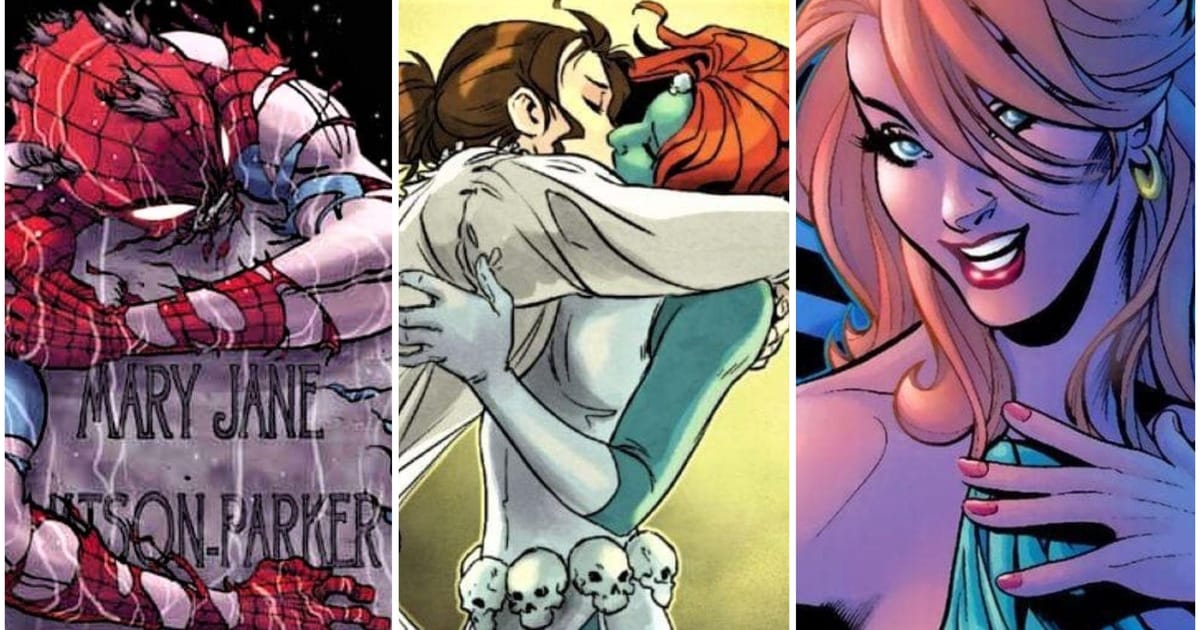
3) “One More Day” And the Infamous Deal That Wouldn’t Die
If you say “controversial Marvel retcon” into a mirror three times, a demon shows up and erases a Spider-Marriage. That’s basically the premise of
Spider-Man: One More Day: Peter Parker, desperate to save Aunt May, makes a bargain with Mephisto that effectively wipes his marriage to Mary Jane
from history.
The outrage wasn’t just about shipping wars. Fans felt the decision undercut years of character growth and replaced it with magical bookkeeping. Even news
coverage at the time emphasized how unusual it was for Marvel to “undo” a major relationship milestone in such a sweeping way. “One More Day” became a
shorthand for editorial power overriding storytellingan example people cite whenever comics feel less like narratives and more like corporate resets.
The twist is that Marvel has never fully escaped the shadow of this story. Writers keep circling it, referencing it, teasing fixes, or using it as a
gravitational force that pulls other plotlines into its orbit. It’s the comic equivalent of knocking over a glass of water, then deciding the best solution
is to set the entire table on fire so nobody notices the stain.
4) “Sins Past” And the Spider-Man Revelation Fans Wanted Unseen
Some storylines are disliked. Others are disliked in a way that feels personal, like the comic reached through the page and rearranged your childhood.
For many Spider-fans, that’s Sins Past, which attempted to reframe Gwen Stacy’s history with a deeply unpopular revelation tied to Norman Osborn.
The reason it hit so hard is that Gwen isn’t just a charactershe’s a symbol of one of Marvel’s most famous tragedies. Rewriting her legacy into something
lurid felt exploitative to readers who valued the emotional weight of her original story. In later years, Marvel took steps that readers widely interpreted
as an effort to back away from the most hated implications, using the comic universe’s favorite sponge: the retcon.
5) “Ultimatum” And the Era of Shock-Value Catastrophe
The Ultimate Universe began as a clever “modern entry point” for readers who didn’t want to memorize 40 years of continuity. But its darkest reputation is
tied to a streak of stories that escalated grimness into spectaclenone more infamous than Ultimatum.
The event became notorious for heavy-handed destruction, abrupt deaths, and violence that many critics and fans viewed as more sensational than meaningful.
Even people who weren’t deeply invested in Ultimate continuity could feel the intent: “Look! Big stakes! Please be shocked!” The problem is that shock
wears off; consequences remain. The Ultimate line continued afterward, but “Ultimatum” is often discussed as a turning point where the brand’s promise
started to collapse under its own edgy ambitions.
6) HydraCap: When Captain America Became the Wrong Symbol
Few Marvel twists hit the culture as hardor as instantlyas the reveal that Steve Rogers was (or had become) aligned with Hydra. The reaction wasn’t just
“wow, plot twist.” It was anger, confusion, and genuine hurt from readers who saw Captain America as a moral counterweight in a messy world.
Part of the controversy was historical: Captain America was created by Jewish creators as an explicitly anti-Nazi symbol in an era when that stance was
dangerous. Turning him into an agent of a fascist-adjacent organization (even temporarily, even with later explanations) felt like flipping the meaning of
the character inside out. Marvel publicly asked readers for patience and emphasized that the story would unfold with contextbut the initial impact was
already baked into fandom memory like a panel burned into a retinas.
7) When “Edgy” Became a Substitute for “Interesting”
Marvel has had phases where stories leaned into darknesssometimes brilliantly, sometimes like a teen writing poetry in the rain because someone didn’t
text back. The controversial moments often share a common feature: grim material introduced to jolt readers rather than deepen character.
It’s not that comics can’t explore heavy topics. They can, and they should when handled thoughtfully. The issue is framing: trauma treated like a
twist, violence used as a shortcut to seriousness, and characters pushed into out-of-character acts just so the next issue’s cover can shout,
“YOU WON’T BELIEVE WHAT HAPPENS!”
8) The Retcon Habit: Marvel’s Most Powerful Superpower
Retcons aren’t automatically evil. They can fix continuity snarls, modernize outdated depictions, or repair stories that aged poorly. But Marvel’s
controversial history shows a pattern: big swings sometimes get replaced by big erasers. When readers invest emotionally, constant resets can feel like the
universe is telling them, “Your feelings were non-refundable.”
The healthiest retcons tend to do one of two things: either (1) respectfully recontextualize a past misstep while acknowledging its harm, or (2) cleanly
remove a damaging element without insulting the reader’s intelligence. The worst retcons, on the other hand, are the ones that treat fandom like a
goldfishcounting on you to forget as soon as something shiny appears.
9) Editorial Mandates vs. Character Truth
Behind every controversial Marvel moment is usually a tug-of-war: creators trying to tell a story, editors trying to protect a brand, and marketing trying
to make sure next month’s issue has a cliffhanger that can power a thousand thumbnails.
The most infamous controversiesSpider-marriage resets, shock events, identity flipsoften read like decisions made to preserve a “default setting” for
characters. The logic is simple: keep icons recognizable for new readers. The risk is also simple: long-time readers feel punished for caring. When the
brand wins but the character loses, fans notice. Loudly.
What Marvel (And Readers) Learned From These Mistakes
Here’s the optimistic takeaway: Marvel doesn’t just create problems; it sometimes responds to them. Controversial stories have prompted more careful
editorial conversations about consent, representation, and the long-term impact of “shock” storytelling. And fandom itself has matured into a force that
can push backcalling out harmful framing, demanding better treatment of characters, and rewarding runs that balance big swings with emotional honesty.
The best Marvel stories don’t rely on cheap controversy. They create tension through character choices, moral dilemmas, and consequences that feel earned.
When Marvel forgets that, it ends up with plot points readers remember for the wrong reasonsand a legacy the company would very much like you to
“accidentally” skip in the recap.
Extra: Reader Experiences With Marvel’s Most Controversial Comic Details (500+ Words)
If you’ve spent any real time in comic fandomshop pull lists, conventions, Discord servers, late-night Reddit rabbit holesyou know controversial Marvel
moments don’t just live on the page. They live in the stories people tell about the stories. Somebody mentions “that Spider-Man retcon,” and suddenly the
conversation turns into a group therapy session where half the room is laughing and the other half is staring into the middle distance like they just
remembered a cringe text they sent in 2011.
One of the most common experiences is the “hand-me-the-context” ritual. A newer reader sees an offhand referencemaybe a joke about Mephisto, a side-eye
comment about the Ultimate Universe, or a tense mention of Carol Danvers in old Avengers continuityand asks, “Wait, what happened?” Then a veteran reader
pauses, like they’re deciding whether to tell a campfire story or protect someone’s innocence. Eventually, they explain it carefully, because the details
matter, but also because you can feel how much the fandom has processed these moments over time.
Another experience: rereading. A story that once seemed like “just comics being comics” can hit completely differently when you revisit it years later.
Maybe you’re older. Maybe culture has changed. Maybe you’ve simply read more good stories since then, and you realize how unnecessary the cheap shock was.
It’s a weird feelinglike rewatching a movie you loved as a teen and thinking, “Oh… this scene is doing way too much.” That reread effect is one
reason controversial arcs keep resurfacing: not because people love them, but because every generation of readers discovers them and reacts in real time.
You also see how controversy shapes taste. Some readers become allergic to big crossovers because they associate “event” with random deaths and status-quo
whiplash. Others become skeptics of editorial promises: whenever a shocking twist hits, they immediately ask, “Is this real, or is it going to be undone
in six issues?” That skepticism isn’t cynicism for its own sakeit’s a learned survival skill in a medium where continuity is both the selling point and
the punchline.
And then there’s the most interesting experience: watching writers respond. Comics are one of the few mainstream storytelling mediums where you can
sometimes see the conversation between creators and audience happening across years. A later run might subtly repair a character’s legacy, clarify
something messy, or steer the tone back toward empathy. When that happens, it can feel genuinely satisfyingnot because the past is erased, but because the
universe grows up a little. The best “fixes” don’t pretend the mistake never existed. They treat it like a scar: visible, acknowledged, and no longer
defining.
Ultimately, these controversial Marvel details become landmarks. Not the kind you put on a postcard, but the kind that help map the medium’s evolution.
They remind us that superhero comics aren’t frozen myths; they’re living stories made by people in a specific time, with all the blind spots and pressures
that implies. Fans argue about them because fans care. And in a strange way, that ongoing argument is part of what keeps Marvel alive: the shared
experience of loving a universe enough to demand it do better.