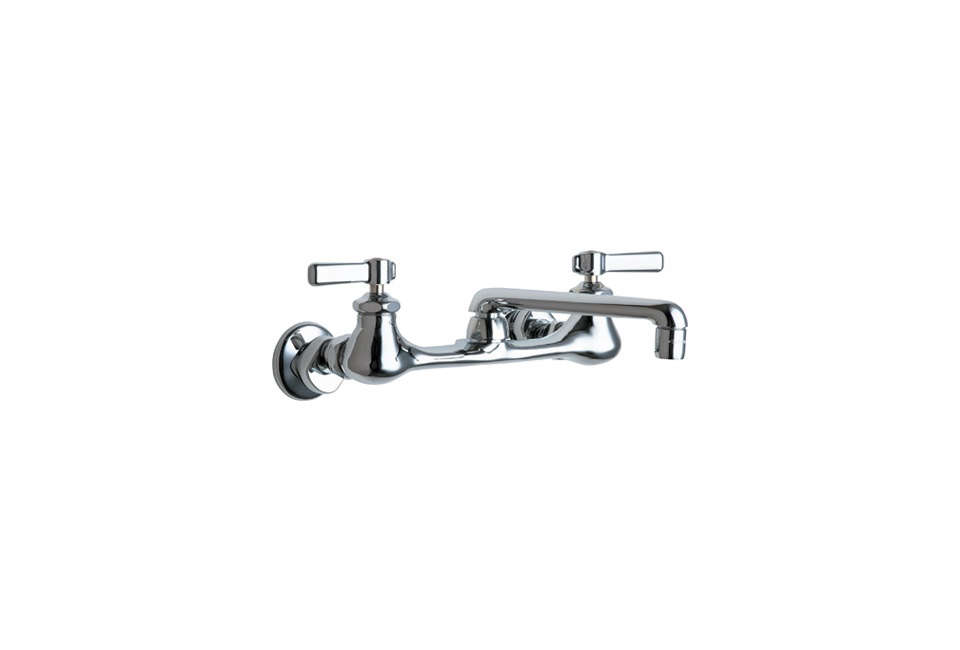

In most kitchens, the faucet is the unsung hero: always working, rarely appreciated, only noticed when it starts dripping at 2 a.m. If you’re tired of flimsy fixtures that wobble, clog, or give up right when you’re elbow-deep in dishes, it might be time to look at something built for the real world: the
Chicago Faucets wall mounted dual supply kitchen sink faucet.
This is not a trendy “influencer” tap that’s all looks and no stamina. Chicago Faucets is a century-old commercial workhorse brand, designed for restaurants, labs, hospitals, and other places where things just have to work, every single day. That’s exactly why more and more homeowners, serious home cooks, and landlords are borrowing commercial hardware for their kitchens.
In this guide, we’ll walk through what makes a wall mounted dual supply Chicago faucet special, when it’s a smart upgrade, what to think about during installation, and how it stacks up against other faucet styles. Then we’ll finish with some real-world experiences and lessons learned so you know what living with this kind of faucet is actually like.
Meet the Chicago Faucets Wall Mounted Dual Supply Faucet
When people talk about a “Chicago Faucets wall mounted dual supply kitchen sink faucet,” they’re usually referring to models like the 445-series or 540-series wall-mount units with
hot and cold inlets, an adjustable body, and a swing spout. These are commonly sold through commercial plumbing suppliers, Chicago Faucet Shoppe, Ferguson, and similar retailers.
Key specs and features (typical configuration)
- Wall mounted body with roughly 3⅜” centers and adjustable arms that usually span from about 3″ up to around 8⅜” to match existing plumbing rough-ins.
- Dual supply for separate hot and cold connections, controlled by two handles.
- Swing spout of around 8–10″ reach (often “L” type), ideal for double sinks and large pots.
- Brass construction with a polished chrome finish for durability and easy cleaning.
- Commercial-grade operating cartridges (such as Quaturn or ceramic cartridges) designed to be rebuilt instead of replaced.
- Lever or wristblade handles with red/blue index buttons for clear hot/cold identification.
- Low-lead or lead-free compliant designs to meet modern plumbing codes.
The big idea: this faucet is built to be serviceable. Chicago Faucets is known for fully rebuildable internals and widely available parts instead of “throwaway” designs. That’s a huge deal if you hate replacing the entire faucet every time a washer wears out.
Why Wall Mounted in the Kitchen?
Most residential kitchens in the U.S. use deck-mounted faucetsinstalled through holes in the sink or countertop. Wall mounted kitchen faucets are more common in commercial spaces, utility sinks, and older homes, but they’re trending with design-savvy homeowners who want a clean, functional setup.
Major advantages of wall mounted faucets
- More counter space: Because the faucet comes out of the wall instead of sitting on the sink deck, you free up that back ledge for soap bottles, scrub brushes, orlet’s be honestrandom mail.
- Easier cleaning: No more gunk building up around the faucet base on the countertop. You just wipe the flat surface and move on with your life.
- Clean, minimalist look: A wall mounted faucet makes the sink area feel open and uncluttered, especially when paired with an apron-front or undermount sink.
- Flexible sink choices: Because the faucet isn’t tied to holes in the sink, you can swap out sinks more easily in the future.
Potential downsides to consider
- More complex rough-in: The water lines must be inside the wall at the correct height and spacing. That often means opening the wall and adding blocking if this isn’t a new build.
- Less DIY-friendly: If you’re not comfortable sweating copper, setting threaded adapters, or adjusting in-wall plumbing, you’ll likely need a licensed plumber.
- Height and splash are critical: Mount too high and water can splash everywhere; too low and you’ll be wrestling big pots into the sink.
If you’re already opening up walls for a remodel or building new, these trade-offs are easier to accept. For a simple faucet swap on an existing deck-mount sink, wall mount probably isn’t worth the hassleunless you’re going for a full redesign anyway.
What “Dual Supply” Really Means
“Dual supply” here doesn’t mean filtered water vs. tap water or spray vs. stream. It’s about the hot and cold water lines and the fact that this faucet uses two separate inlets and handles.
In practice, that gives you:
- Precise temperature control: You can fine-tune hot and cold separately instead of hunting for the right spot on a single lever.
- Redundancy: If your hot water system is out, you can still run the cold side normally, and vice versa.
- Better for repetitive tasks: In commercial kitchens, staff quickly learn “how far to open hot and cold” for the perfect dish-washing temperature and can repeat it all day.
On the user experience side, dual supply, dual handle faucets have a bit of an old-school feelvery tactile, very deliberate. If you like analog knobs and switches more than glossy touchscreens, this setup will feel oddly satisfying.
Where the Chicago Wall Mount Faucet Shines
1. Serious home kitchens
If you cook a lot, you probably care more about function than fussy styling. A Chicago wall mounted dual supply faucet gives you:
- A generous swing spout for filling stockpots and canning kettles.
- Clear, separate hot and cold control for rinsing greasy pans or blanching vegetables.
- A tough chrome finish that shrugs off splashes, steam, and the occasional enthusiastic scrub.
The look is clean and utilitarian. It pairs especially well with stainless-steel counters, deep single basins, or apron-front sinks where you’re going for a “chef’s kitchen” aesthetic rather than a farmhouse-chic vibe with ornate handles.
2. Rental units and accessory dwelling units (ADUs)
Landlords love hardware that can be repaired instead of replaced. Because Chicago Faucets makes rebuildable cartridges and widely available parts, a wall mounted dual supply faucet can stay in service for decades with periodic maintenance. That’s great for a busy rental kitchen or small ADU where you want durability first.
The wall mount also means the sink itself is a little easier to swap out later. If a tenant manages to destroy a cheap sink (it happens), you’re not locked into the original faucet hole pattern.
3. Light-commercial, studio, or laundry spaces
The Chicago Faucets wall mounted dual supply faucet is right at home in:
- Pottery studios and maker spaces where you’re rinsing clay, paint, or other messy materials.
- Laundry rooms with a deep utility sink for pre-spraying stains or cleaning tools.
- Back-of-house prep sinks for small food businesses, coffee shops, or catering operations.
Anywhere you need something sturdy, simple, and easy to sanitize, this style of faucet punches above its price tag compared with designer residential brands.
Installation and Compatibility Basics
While every model has its own instructions, installation for a Chicago wall mounted dual supply faucet generally includes:
- Setting rough-in height: Many installers aim for the centerline of the faucet outlets a bit above the top of the backsplash, high enough to clear tall pots but low enough to reduce splashing.
- Aligning centers: The rough-in plumbing typically needs to match a nominal 3⅜” or 8″ center, with adjustable arms on the faucet to fine-tune the fit.
- Anchoring into blocking: The faucet body should be secured into a properly blocked wall, not just drywall, so it doesn’t wiggle loose over time.
- Connecting threaded or sweat adapters: Your plumber will use appropriate fittings (e.g., NPT adapters) to connect the in-wall supply lines to the faucet’s inlet arms.
Because the faucet and plumbing live partly inside the wall, it’s smart to:
- Work with a licensed plumber, especially if local code requires it.
- Double-check that your wall finish (tile, stone, paneling) allows a tight seal around the escutcheons or flanges.
- Decide on faucet location before finalizing backsplash height and layout.
If you’re converting from a deck-mount to a wall-mount, budget for extra labor. The wall will likely need to be opened, and the old sink holes may need to be covered with a new sink, a cover plate, or a new countertop.
Maintenance, Durability, and Parts
One of the big selling points of Chicago Faucets is the serviceability of their fixtures. Instead of sealed cartridges that get thrown away, many of their components are designed to be rebuilt with inexpensive kits.
Typical maintenance over the years might include:
- Replacing or rebuilding cartridges if handles start to drip.
- Swapping out O-rings or washers in the spout if it begins to leak at the swivel.
- Cleaning or replacing outlet aerators or screens to maintain good flow.
Because Chicago Faucets is a long-established brand, you can find parts from multiple suppliers rather than hunting for obscure, discontinued components. For a long-term kitchen, that’s one of the most underrated benefitsyou’re not locked into the lifespan of one proprietary cartridge.
How It Compares to Other Faucet Types
Wall mount vs deck mount
If you’re deciding between staying with a deck mount or moving to a wall mount like the Chicago dual supply faucet, here’s the quick comparison:
- Deck-mount pros: Easier retrofit, plumbing remains under the sink, and many pull-down and pull-out sprayer models are designed this way.
- Deck-mount cons: More clutter at the back of the sink and more nooks for grime to collect.
- Wall-mount pros: Cleaner look, more counter space, easy sink swaps, and an undeniably “pro kitchen” vibe.
- Wall-mount cons: More complex installation and less forgiving if rough-in height/spacing is wrong.
Chicago Faucets vs trend-driven brands
Many trendy residential faucet brands emphasize style, finishes, and fancy features; Chicago Faucets leans into:
- Longevity: Heavy brass bodies and rebuildable internals designed for commercial wear and tear.
- Consistency: Models that stay in production for years, so it’s easier to find matching parts.
- Utility over flash: Fewer gimmicks, more reliability. It’s not the “Instagram star” faucet; it’s the one still running perfectly after your Instagram account is long forgotten.
If you’re building a show kitchen that will be photographed more than used, a delicate designer tap might make sense. If you’re building a working kitchen, the Chicago wall mounted dual supply faucet is the type of fixture that quietly earns its keep every single day.
Real-World Experiences with Chicago Faucets Wall Mounted Dual Supply Kitchen Faucets
So what is it actually like to live with a Chicago Faucets wall mounted dual supply faucet day in, day out? Let’s talk experiences, quirks, and small victories that don’t show up on spec sheets.
The home cook who went “commercial”
Imagine a home cook who bakes every weekend, meal-preps for the week, and treats the kitchen like a tiny restaurant line. For them, the old builder-grade pull-out faucet just wasn’t cutting itweak flow, wobbly base, and a sprayer that liked to spray sideways more than downward.
Swapping to a Chicago wall mounted dual supply faucet immediately changed how the sink felt. The swing spout made it easy to slide pots around, and because it sits slightly higher above the basin, tall stockpots finally fit without leaning at weird angles. The separate hot/cold handles also meant they could quickly dial in a “standard” dish-washing temperature: one full turn on hot, half turn on cold, done.
The surprise benefit? Cleaning. With no faucet base on the deck, crumbs and soap scum had fewer places to hide. A quick wipe with a sponge across the back of the sink was enough to make things look freshly scrubbed, even after a hectic Sunday cook-up.
The landlord who was tired of replacing faucets
In a small rental building, the owner had gone through several big-box store faucets in a few years. Tenants reported leaks, drips, and wobbly spouts, and every “cheap fix” turned into another full faucet replacement.
Switching to a Chicago wall mounted dual supply faucet meant investing a bit more up frontbut the landlord gained a fixture that a plumber could rebuild instead of replace. When a handle started dripping after a few years, the plumber changed the cartridges rather than uninstalling and reinstalling a whole new faucet. The repair was faster and the long-term cost lower.
The landlord also liked that the faucet was anchored to the wall rather than the thin stainless sink deck, which made it feel solid even when tenants weren’t exactly gentle with it.
The maker studio that needed something “unfussy”
In a shared maker studio with woodworking, ceramics, and painting, the sink sees everything: brushes, clay tools, resin cups, and the occasional coffee mug that somehow appears covered in sawdust. The studio needed a faucet that could handle frequent on/off use, sometimes with messy hands, and be easy to rinse down at the end of the day.
A Chicago wall mounted dual supply faucet hit the sweet spot. The chrome finish is easy to wipe clean, and the handles are simple enough that no one has to “learn” how to use the faucet. The staff know that if the flow gets weird, there’s likely just debris in the aeratorand that parts are easy to find if something eventually wears out.
Lessons learned and practical tips
- Get the height right: Spend time mocking up the ideal height with cardboard or tape before committing. This one detail heavily affects splash, ergonomics, and how the faucet lines up visually with tile or windows.
- Plan your backsplash around it: The faucet becomes a visual anchor. Make sure tile patterns, grout lines, or slab seams don’t fight with the faucet’s mounting points.
- Don’t skip quality shut-off valves: Because you have a dual supply faucet, investing in good in-wall or under-sink shut-offs makes maintenance easier.
- Think about future you: Choose a model with widely available cartridges and spout parts. Chicago Faucets is strong on this front, which is a big reason people pick the brand.
Overall, the real-world experience of a Chicago Faucets wall mounted dual supply kitchen sink faucet is very straightforward: it’s a serious, low-drama fixture. It doesn’t try to be a showpiece. It simply delivers steady water, day after day, in a layout that makes cleaning and cooking easierexactly what a hard-working kitchen needs.
Conclusion: A Quietly Brilliant Upgrade
If your idea of a perfect faucet is something you never have to think about, the Chicago Faucets wall mounted dual supply kitchen sink faucet is worth a very close look. It offers commercial-grade durability, genuinely practical wall mount advantages, and the long-term comfort of knowing that parts and service are built into the brand’s DNA.
It may not be the flashiest chrome in the showroom, but it’s the one most likely to still be running smoothly long after the flashy ones have been replaced. For busy home cooks, landlords, and anyone designing a serious working kitchen, that quiet reliability is exactly the kind of luxury that matters most.