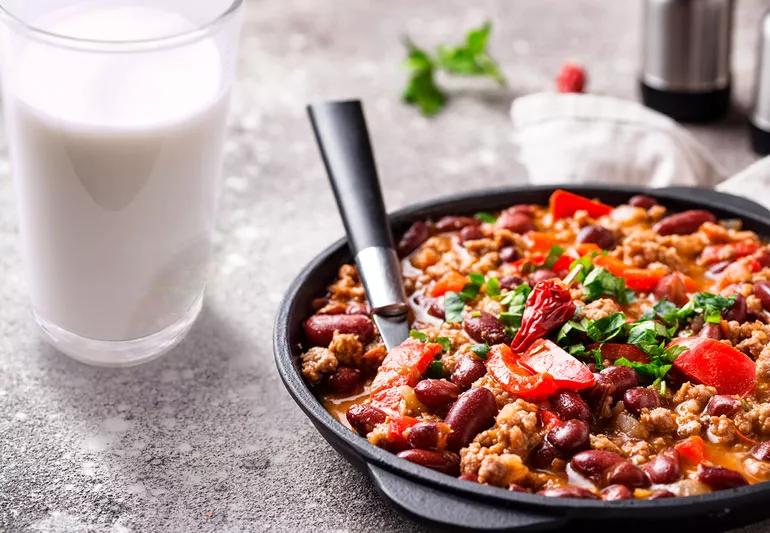

You take one confident bite of a fiery taco, a vindaloo, or a chicken wing that looked innocent but turned out to have the personality of a flamethrower. Your mouth starts buzzing, your lips tingle, your eyes water, and suddenly you are bargaining with the universe over a glass of milk. It is one of food’s oldest little emergencies: does milk actually help with spicy food, or is that just culinary folklore dressed up as science?
The short answer is yes, milk really can relieve the burning pain from spicy food. But the smarter answer is this: milk often helps a lot, especially when the burn is in your mouth, because it can interact with the spicy compound that caused the problem in the first place. It is not magic. It is chemistry. Delicious, fridge-cold chemistry.
That distinction matters. Milk does not erase every kind of discomfort linked to spicy food, and it is not always the best solution for every person. Still, when your tongue feels like it has been challenged to a duel, milk is one of the most reliable remedies in the kitchen. Here is what is really happening, why water usually disappoints, and what to do when your dinner suddenly starts fighting back.
Why Spicy Food Hurts in the First Place
Spicy food does not technically “burn” you the way hot coffee or pizza fresh from the oven can. The main culprit is capsaicin, the compound in chili peppers that creates heat. Capsaicin latches onto pain and heat receptors, especially a receptor called TRPV1, which is the body’s built-in alarm system for high temperatures and irritation.
So when you eat something spicy, your mouth is not literally on fire. It is being tricked into thinking it is. Your nervous system receives the message, your brain sounds the alarm, and suddenly your body reacts as if danger has arrived wearing a jalapeño costume. That is why spicy foods can make you sweat, tear up, flush, and reach for help with the urgency of someone defusing a tiny edible bomb.
This is also why spicy food is not really a “taste” in the same way sweet, salty, sour, bitter, or umami are tastes. It is closer to a pain and heat response. In other words, your salsa is not just flavorful. It is pressing your body’s panic button in a surprisingly entertaining way.
So, Can Milk Relieve Pain from Spicy Food?
Yes. In many cases, milk can noticeably reduce the pain and burning sensation caused by spicy food, especially in the mouth and on the lips. The classic explanation is that milk contains casein, a protein that helps pull capsaicin away from the receptors it has attached to. Think of casein as the cleanup crew that arrives after capsaicin has made a mess of the place.
For years, people assumed the fat in milk did most of the heavy lifting because capsaicin is oily and does not mix well with water. That idea was not wrong, exactly, but newer research suggests the story is more interesting. Protein matters too, and perhaps more than many people realized. In short, milk works not because it is white and comforting, but because it is built with the right mix of proteins, fats, and liquid to help remove or reduce the lingering capsaicin in your mouth.
That is why the answer is not just “grandma said so.” There is real science behind the emergency carton.
Why Milk Works Better Than Water
Capsaicin and water are not friends
One of the most frustrating moments in any spicy-food crisis is the giant sip of water that does almost nothing. Sometimes it even seems to make the burn travel around your mouth like it is going on tour. That is because capsaicin does not dissolve well in water. Water may cool things briefly, but it does not do a great job of clearing the compound away.
Milk, on the other hand, brings better tools to the party. It contains casein and fat, both of which can help interact with capsaicin more effectively than water can. Instead of just sloshing around the problem, milk helps loosen capsaicin’s grip and wash it away.
Cold temperature helps too
There is another reason milk feels especially good: it is usually cold. That chill provides a temporary soothing effect while the proteins and fats get to work. So if milk feels like a superhero in your mouth, part of that is chemistry and part of it is simple temperature relief. It is science in a cape, but also in a chilled glass.
Does Whole Milk Work Better Than Skim Milk?
Surprisingly, not by as much as people used to think. Research comparing beverages for capsaicin burn found that both whole milk and skim milk performed well. That matters because it suggests relief is not only about fat. Protein appears to play a major role too.
This is good news for anyone staring into the refrigerator in a panic and wondering whether low-fat milk is too weak for battle. It usually is not. If it is real dairy milk, it has casein, and that gives it a legitimate chance to help.
More recent work has gone a step further, showing that fat, protein, and temperature may each contribute to relief. That means the best spicy-food fix is not just “pick the richest milk you can find.” It is more like “pick a cold, protein-containing option that can actually interact with capsaicin.” That is a little less dramatic, but far more useful.
What the Research Suggests About Other Drinks
Milk is a star player, but it is not the only liquid ever tested. In one well-known beverage comparison, other drinks also reduced burn to some extent, but milk stood out as one of the strongest performers. A sweet drink also did better than plain water, which suggests sugar may provide some relief in certain situations.
That said, not every alternative is equally helpful. Beer is mostly water, so normal-strength beer is usually not the mouth-saving champion some people hope for. Carbonated drinks can be hit or miss, and bubbles may actually irritate an already angry mouth. Water remains the classic “I tried, but wow, this was not the answer” choice.
If you do not have milk, a sweet drink may take the edge off a little, and some people find a sugar cube helpful. Dry foods such as bread or crackers may also help distract the mouth and absorb some of the oily residue. But if we are ranking emergency remedies, milk still tends to sit at the cool-kid table.
What If You Do Not Drink Dairy?
This is where things get interesting. Traditional advice often says plant milks are not as helpful because they do not contain casein, which is unique to dairy. That is still an important point. But newer research suggests that protein-rich plant beverages, especially soy-based options, may provide more relief than thin, watery substitutes.
In other words, all plant milks are not created equal. A low-protein almond beverage may not do much beyond offering a cool sip. A higher-protein soy milk may perform better because protein appears to matter, even if it is not dairy casein. Still, the classic science-backed remedy remains dairy milk, particularly because it combines protein, some fat, and cold temperature in one easy package.
If dairy bothers your stomach or you avoid it for dietary reasons, cold yogurt, kefir, or a higher-protein soy drink may be worth trying. Just do not expect every trendy oat beverage to behave like a fire extinguisher.
When Milk Helps, and When It Does Not
Milk can help mouth burn
If your problem is that your tongue, lips, and mouth feel like they just lost a boxing match with a habanero, milk is often a smart move. That is the classic capsaicin scenario where milk shines.
Milk is not a universal fix for heartburn
But spicy food can also trigger heartburn or worsen acid reflux in some people. That is a different issue. If the discomfort is in your chest or throat and feels more like reflux than surface-level mouth burn, milk is not a guaranteed solution. In fact, some people may still feel uncomfortable after drinking it, especially depending on the type of dairy and their own digestive sensitivity.
That is why it helps to separate two problems that people often mash together. “My mouth is on fire” and “I have reflux after spicy food” are related, but they are not the same. Milk is more consistently useful for the first one.
Best Ways to Cool Down After Eating Something Too Spicy
1. Drink cold milk slowly
Do not just take a heroic half-second sip and expect a miracle. Swish it around your mouth for a moment before swallowing. Give the proteins and fats time to do their thing.
2. Try yogurt or another dairy food
If milk is not available, yogurt can be a strong backup. It is cool, creamy, and still brings dairy proteins to the rescue.
3. Reach for bread, rice, or crackers
These foods may help absorb some of the spicy oils and shift your mouth’s attention away from the burn. They are not glamorous, but neither is crying over noodles.
4. Skip plain water as your main fix
Water may feel refreshing for a second, but it is usually not the best way to reduce capsaicin. Use it for hydration, not as your top strategy.
5. Be careful with alcohol and carbonation
Normal beer and fizzy drinks are not usually the heroes of this story. They may help a little, do nothing, or occasionally make things feel worse.
6. Know when the problem is bigger than “too much hot sauce”
If you develop chest pain, severe vomiting, trouble swallowing, or significant swelling of the lips, tongue, or throat, that is not the time for another dairy experiment. That is the time to get medical help.
Why Some People Seem Built for Heat
Have you ever watched someone casually eat a scorching pepper while you are suffering from one aggressive spoonful of salsa? Annoying, yes. Mysterious, no. Repeated exposure to capsaicin can reduce sensitivity over time. People who eat spicy food often may experience less burn than those who only wander into heat territory on special occasions.
That does not mean they are immune. It just means their system has become more familiar with the sensation. Their mouth has had more training. Yours is still in rookie season.
There is also a psychological side to all this. Spicy food can trigger a rush of excitement and even a kind of reward response in some people. So yes, the person ordering “extra hot” may be suffering a little, but they may also be enjoying the thrill. Human beings are weird, and hot sauce companies are deeply aware of that.
Common Myths About Milk and Spicy Food
Myth: Whole milk is always much better than skim
Not necessarily. Both can help, and research suggests skim can perform surprisingly well.
Myth: Water is just as good if it is cold enough
Cold water may feel nice briefly, but it does not tackle capsaicin nearly as effectively as milk does.
Myth: Milk cures all spicy-food problems
Milk can relieve mouth burn, but it is not a universal answer for reflux, stomach irritation, or every digestive complaint triggered by spicy meals.
Myth: Non-dairy milk always works the same way
Not true. Protein-rich plant options may help somewhat, but dairy milk still has the strongest reputation because of its casein content and overall composition.
Spicy-Food Experiences in Real Life: What the Milk Test Actually Feels Like
Anyone who has eaten something unexpectedly spicy knows the experience unfolds in stages. First comes confidence. Then confusion. Then the weirdly dramatic realization that your mouth is now hosting its own weather system.
Picture the classic taco scenario. You take a bite, notice a nice kick, and think, “Oh, this is manageable.” Two seconds later, the heat climbs the ladder. Your lips start tingling. The back of your throat joins the protest. You grab water because it is right there, take a huge sip, and learn one of life’s more disappointing lessons: your mouth is now just wet and on fire. Then you try milk. The relief is not always instant like flipping a switch, but it is often noticeable. The burn stops spreading. The edges soften. Your face stops negotiating with the ceiling fan.
Now imagine the hot-wing challenge experience. Everyone at the table is pretending to be brave, which is how many bad food decisions begin. The heat builds with each bite. Someone starts sweating through their eyebrows. Someone else insists they are fine while clearly seeing through time. In that setting, milk often feels less like a beverage and more like a peace treaty. Even a few mouthfuls can reduce the sharpness of the burn in a way water rarely does.
There is also the quieter, more common version: the homemade chili that got a little too enthusiastic, or the restaurant curry that casually ignores the meaning of “medium.” In those moments, milk is useful because it is practical. It is usually nearby, it is easy to drink, and it does not require a chemistry degree to deploy. It is the culinary equivalent of saying, “Okay, nobody panic, we have a plan.”
Of course, real-life experience also shows milk has limits. If the spicy food has triggered reflux later in the evening, the issue may feel deeper than a simple mouth burn. That is when the story changes. A glass of milk may still feel soothing for a moment, but it is not always the fix people hope for. This is where many people realize the difference between a mouth problem and a stomach problem, usually around bedtime, when regret becomes strangely educational.
And then there are the seasoned spice lovers. They still feel the heat, but often in a more controlled way. They know when to pause, when to sip, and when to respect the pepper. Their relationship with spicy food is less “surprise attack” and more “old rival, we meet again.” For beginners, though, milk remains the great equalizer. It will not make you a chili legend overnight, but it can absolutely help you survive dinner with your dignity mostly intact.
Conclusion
So, can milk relieve pain from spicy food? Yes, and not just as an old kitchen rumor. Milk can genuinely help reduce the mouth burn caused by capsaicin, largely because its proteins, along with fat and cold temperature, do a better job than water at easing the fiery sensation. It is not a cure-all for every digestive complaint linked to spicy meals, but for classic mouth-on-fire moments, it is still one of the best first moves.
If you eat something blazing and need fast relief, cold dairy milk is a smart choice. Skim can work. Whole milk can work. Yogurt can help. Some higher-protein non-dairy drinks may offer support too. Water, meanwhile, remains the well-meaning but underqualified intern of spicy-food relief.
In the ongoing war between capsaicin and human confidence, milk may not win every battle. But it definitely deserves a medal.