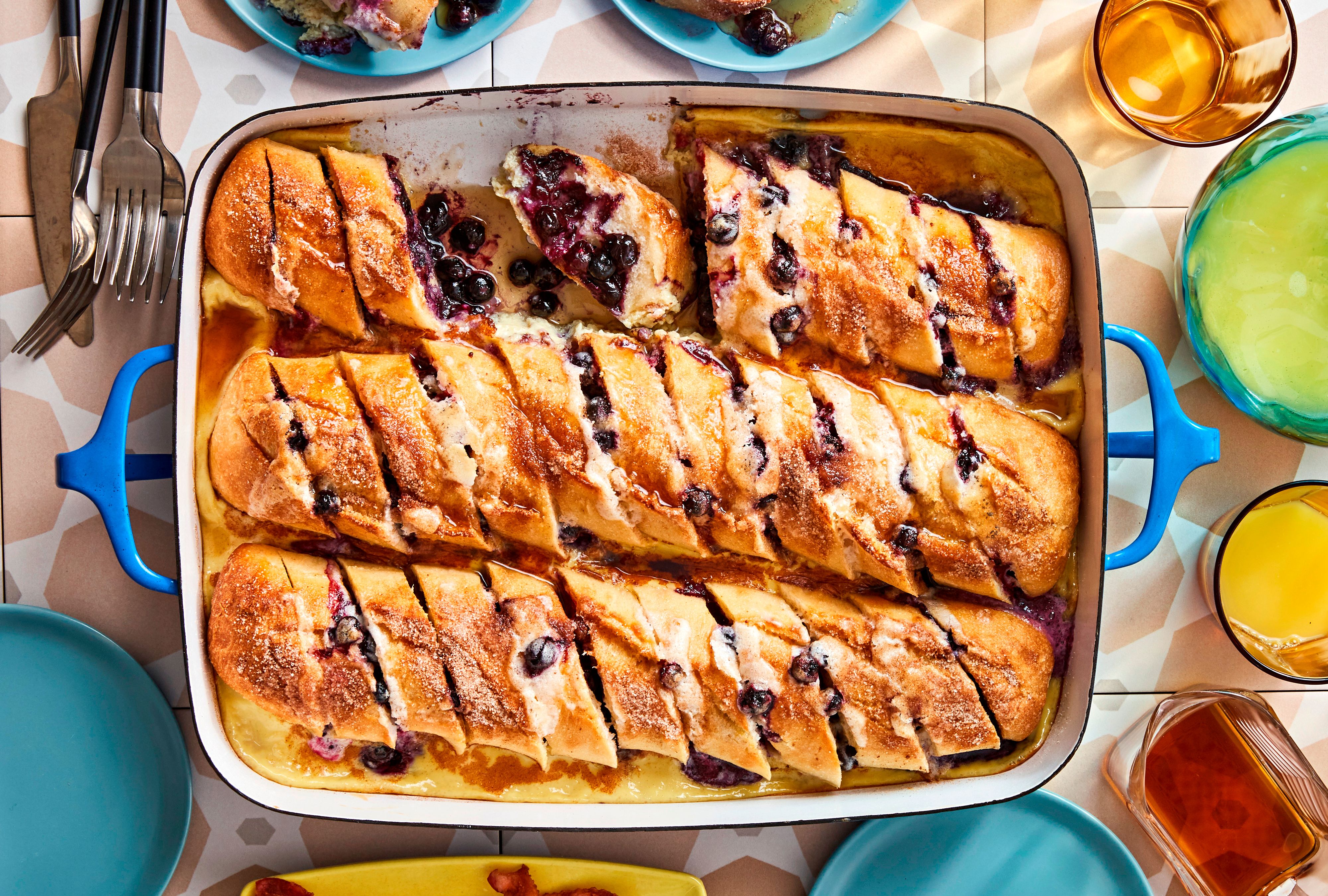

Some breakfasts whisper, “Good morning.” This one kicks your door open and says, “Brunch is a lifestyle.”
A Blueberry and Mascarpone-Stuffed French Toast Casserole is what happens when classic French toast
decides it’s tired of being flipped one slice at a time and wants to be baked like the star it is.
You get pillowy, custard-soaked bread with pockets of lightly sweet mascarpone, bursts of juicy blueberries,
and a top that can be as simple as powdered sugaror as dramatic as a buttery cinnamon streusel. Best part?
It’s a make-ahead breakfast casserole, which means you can do the work the night before and pretend
you “just threw something together” in the morning. (Oscar-worthy performance, honestly.)
Why This Casserole Works (a Quick, Delicious Breakdown)
1) Mascarpone makes it feel fancywithout making it complicated
Mascarpone is ultra-creamy and rich, with a mellow flavor that’s less tangy than cream cheese. In a baked French toast,
that means the filling tastes like a soft, sweet cloud rather than “cheesecake for breakfast” (though that’s not exactly a problem).
If you can’t find mascarpone, softened cream cheese works beautifully, too.
2) Blueberries bring brightness and balance
French toast casserole leans cozy and sweet. Blueberries keep it from becoming a sugar lullaby by adding fruity pop,
slight tartness, and that jammy goodness that happens when berries bake and burst.
3) The overnight soak is not optional… but it is your best friend
Letting the bread sit in custard overnight gives the center time to absorb liquid and bake up tender (not dry, not “wet sponge”).
Many make-ahead French toast casseroles recommend an overnight rest for best texture, and some recipes allow soaking up to about a day.
Ingredients That Matter (and What to Use If You’re Improvising)
Bread: choose something sturdy
The best French toast casserole starts with bread that can drink custard without turning to mush. Brioche and challah are rich and tender.
French bread or baguette is sturdy and bakes up with a slightly chewier bite. Whatever you choose, slightly stale or dried-out bread
absorbs better and helps prevent sogginess.
- Best picks: brioche, challah, French bread, baguette, sourdough
- Shortcut if bread is fresh: cube it and toast it briefly in a low oven until the outside feels dry
Mascarpone filling
For the filling, you want a spreadable, creamy mixture that won’t disappear into the custard. Room-temperature mascarpone blends smooth
and easy, especially with a little sugar and vanilla. If using cream cheese, soften it well so you don’t end up with “surprise lumps”
(which is not a fun surprise).
Blueberries: fresh or frozen
Fresh blueberries are ideal, but frozen works, too. If using frozen, don’t thaw firsttoss them in frozen to reduce purple bleeding.
(A little purple is charming. A whole casserole that looks like it joined a tie-dye club? Less charming.)
The custard: eggs + dairy + flavor
Custard is the engine. Eggs give structure; milk (or a mix of milk and cream) brings richness. Cinnamon, vanilla, and a pinch of salt
make it taste like French toast instead of “bread, but wet.” You can use whole milk, half-and-half, or a blend.
Optional topping: streusel for crunch
If you want that bakery-style top, a simple streuselflour, brown sugar, cinnamon, butterbakes into crisp, sweet pebbles.
Totally optional, highly encouraged.
The Recipe: Blueberry and Mascarpone-Stuffed French Toast Casserole
Yield and timing
- Makes: 10–12 servings
- Prep: 25–35 minutes
- Chill/soak: 8–12 hours (overnight is ideal)
- Bake: 45–60 minutes
What you’ll need
- 9×13-inch baking dish
- Mixing bowls
- Whisk
- Spatula
- Foil
Ingredients
For the casserole
- Bread: about 12 cups (roughly 1-inch cubes) brioche/challah/French bread/baguette
- Blueberries: 2 cups fresh (or frozen, used straight from the freezer)
- Butter: for greasing the dish
For the mascarpone filling
- 8 oz mascarpone, room temperature (or 8 oz cream cheese, softened)
- 1/3 cup powdered sugar (adjust to taste)
- 1 1/2 tsp vanilla extract
- Pinch of fine salt
- Optional: 1 tsp lemon zest (makes the berries taste extra “blueberry-ish”)
For the custard
- 6 large eggs
- 2 1/2 cups whole milk (or 2 cups milk + 1/2 cup half-and-half for extra richness)
- 1/2 cup granulated sugar (or 1/3 cup if you like it less sweet)
- 1 tbsp vanilla extract
- 1 1/2 tsp ground cinnamon
- 1/4 tsp nutmeg (optional but cozy)
- 1/2 tsp fine salt
Optional cinnamon streusel topping
- 1/2 cup all-purpose flour
- 1/2 cup packed brown sugar
- 1 tsp cinnamon
- Pinch of salt
- 6 tbsp cold unsalted butter, cut into small cubes
Step-by-step instructions
Step 1: Dry out the bread (if needed)
If your bread is already day-old, you’re golden. If it’s fresh and soft, spread cubes on a baking sheet and bake at
300°F for about 10 minutes, just until the outside feels dry. This helps the casserole soak evenly without getting soggy.
Step 2: Make the mascarpone filling
In a bowl, mix mascarpone, powdered sugar, vanilla, salt, and (optional) lemon zest until smooth. If it feels too stiff,
let the mascarpone sit at room temp a few more minutes. The goal is creamy and spreadable.
Step 3: Assemble the “stuffed” layers
- Butter a 9×13-inch baking dish.
- Add half the bread cubes in an even layer.
-
Dollop the mascarpone mixture over the bread (small spoonfuls across the surface). Don’t worry about perfect coverage
pockets are part of the magic. - Sprinkle 1 cup blueberries over the filling.
- Top with the remaining bread cubes, then scatter the remaining 1 cup blueberries on top.
Step 4: Mix and pour the custard
In a large bowl, whisk eggs, milk, sugar, vanilla, cinnamon, nutmeg (if using), and salt until well combined.
Pour evenly over the casserole. Press the bread down gently so the top layer gets a good drink of custard.
Step 5: Cover and chill overnight
Cover tightly with foil and refrigerate for 8–12 hours. This rest is where texture happens: the bread absorbs custard,
flavors mingle, and tomorrow-you gets to look like a breakfast genius.
Step 6 (optional): Add streusel topping
If using streusel, mix flour, brown sugar, cinnamon, and salt. Cut in cold butter until the mixture looks like small pebbles.
Keep it chilled until baking time so it stays crumbly.
Step 7: Bake
- In the morning, let the dish sit at room temp for 15–20 minutes while the oven heats.
- Preheat oven to 350°F.
- Remove foil, add streusel (if using), and bake 45–60 minutes.
- If the top is browning too quickly, loosely tent with foil for the last 10–15 minutes.
Step 8: Know when it’s done
You’re looking for a puffed, set center and a golden top. If you use a thermometer, the custard in the center should reach
about 160°F for egg-dish doneness. Let the casserole rest 10 minutes before slicingthis helps it hold together.
Serving ideas (because toppings are basically a love language)
- Powdered sugar “snowfall”
- Warm maple syrup (classic for a reason)
- Extra fresh blueberries on top
- Whipped cream or lightly sweetened Greek yogurt
- A squeeze of lemon for a bright finish
Make-Ahead, Storage, and Reheating
How far ahead can you prep it?
Assemble the casserole and refrigerate overnight. Many overnight French toast methods suggest soaking anywhere from about
6 hours to overnight, and some approaches allow refrigeration up to roughly 24 hourshandy if you’re hosting brunch and want
one less morning task.
Leftovers
Cool leftovers, cover, and refrigerate. A practical rule for many cooked leftovers is about 3–4 days in the fridge.
Reheat slices in the microwave for speed, or warm in a 325°F oven until heated through for a fresher texture.
Freezing
You can freeze baked portions: wrap slices tightly and freeze. Reheat from thawed (best texture) or warm from frozen in a low oven.
Expect the topping to soften a bitstill delicious, just less crunchy.
Troubleshooting: Common Problems (and how to avoid breakfast heartbreak)
“My casserole is soggy in the middle.”
- Use drier bread (day-old, or toasted briefly).
- Press bread into the custard so it absorbs evenly.
- Bake until the center is set; if needed, add 5–10 minutes.
- Let it rest after bakingcarryover heat helps it finish setting.
“It’s dry.”
- Don’t skimp on soak time; overnight helps the center stay custardy.
- Use richer dairy (whole milk/half-and-half) if you like a softer interior.
- Avoid overbakingstart checking around 45 minutes.
“The filling disappeared.”
- Make sure the mascarpone is thick and spreadable (not runny).
- Dollop it in pockets rather than smearing ultra-thin.
- Chill overnight so the filling stays in place during baking.
Flavor Variations (Keep the concept, remix the vibe)
Lemon-Blueberry Mascarpone
Add lemon zest to the filling and a teaspoon of lemon juice to the custard. Blueberries and lemon are basically best friends.
Almond-Vanilla Bakery Style
Replace 1/2 tablespoon vanilla with almond extract in the custard, then top with sliced almonds before baking.
It tastes like something you’d pay too much for at a cute caféand that’s the point.
Mixed Berry “Brunch Board” Edition
Use a mix of blueberries, raspberries, and blackberries. If raspberries are delicate, add them mostly on top to reduce breakage.
Less sweet, more “everyday breakfast”
Reduce sugar in the custard to 1/3 cup and use a lighter dusting of powdered sugar. You still get indulgent flavor, but it won’t
feel like you ate dessert before coffee (unless you want tono judgment).
Brunch Pairings That Make It Feel Like a Whole Event
- Something salty: bacon, breakfast sausage, or a veggie frittata
- Something fresh: citrus salad, melon, or a simple berry bowl
- Something sippable: coffee, iced latte, or sparkling water with lemon
Quick Food-Safety Notes (Because Brunch Shouldn’t Come With Regrets)
This dish contains eggs and dairy, so keep it refrigerated during the overnight soak and don’t leave it sitting out for long.
When baking, aim for a set center; egg-based casseroles are commonly considered safely cooked when the center reaches about 160°F.
After serving, refrigerate leftovers promptly.
Kitchen Experiences: The Real-Life Joy (and Lessons) of Blueberry Mascarpone French Toast Casserole
Here’s the funny thing about a casserole like this: it’s not just breakfastit’s a strategy. People make it for holidays,
weekend guests, or “I need to impress someone but I also want to sleep in” mornings. And in real kitchens, the experience tends to
follow a few familiar beats.
First, there’s the night-before confidence boost. You assemble everything, pour the custard, tuck it into the fridge,
and suddenly tomorrow looks manageable. That’s the magic of make-ahead brunch: you’re basically gifting future-you a calmer morning.
If you’ve ever hosted people who wake up hungry and chatty, you know how valuable that is. No one wants to be flipping individual
slices of French toast while trying to smile, make coffee, and pretend the kitchen isn’t a mild disaster zone.
Then comes the “what bread did we buy?” moment. Many home cooks discover that the bread is the difference between
“custardy masterpiece” and “sweet bread soup.” A soft sandwich loaf can work in a pinch, but it’s more likely to collapse.
Sturdier breadsbrioche, challah, French breadhold their shape and still soak up plenty of custard. That’s why so many people end up
buying bakery bread on purpose for this dish, even though it started as a clever way to use up stale bread. (Yes, we have become the
kind of adults who get excited about “a good loaf.”)
The mascarpone filling also creates a classic learning curve: room temperature matters. If the mascarpone is cold,
it won’t blend smoothly and can be difficult to distribute. When it’s soft, it mixes into a silky filling that tucks neatly into the
casserole in creamy pockets. And those pockets? That’s the payoff. Someone always finds one of the extra-generous dollops and reacts
like they discovered buried treasure.
Blueberries add their own personality. In a lot of households, there’s a “berry debate”:
fresh vs. frozen. Fresh looks prettier and bleeds less. Frozen is budget-friendly, always available, and still delicious
but it can tint the custard a little purple. The good news is that most people stop caring the second they taste it. If you want a neat
look, you can save some berries for the top and fold the rest in gently. If you want maximum berry flavor, go all in and embrace the
purple. It’s brunch, not a paint inspection.
Another real-life moment: the resting period after baking. It’s tempting to cut right away because the smell is unfairly good.
But giving it 10 minutes helps it slice cleanly and keeps the center from collapsing. This is the casserole equivalent of “let the steak rest,”
except the reward is a warm, creamy square of French toast bake that holds its shape like it took a finishing school class.
Finally, the dish becomes a tradition faster than you’d expect. People remember the breakfast that felt specialespecially when it required
minimal morning effort. This casserole is one of those recipes that quietly earns a permanent spot in the “holiday morning” and “company’s coming”
rotation. Because it’s cozy, it’s generous, it feeds a crowd, and it makes everyone in the room feel like they’re getting away with something:
dessert… but socially acceptable… because we said the word “breakfast.”
Conclusion
A Blueberry and Mascarpone-Stuffed French Toast Casserole is the sweet spot between comfort food and “wow factor.”
You get make-ahead convenience, creamy filling, bright berries, and that baked French toast flavor that feels like a warm hug.
Whether you keep it simple with powdered sugar or go full brunch-legend with streusel and extra toppings, it’s the kind of dish that
turns any morning into a reason to gather.