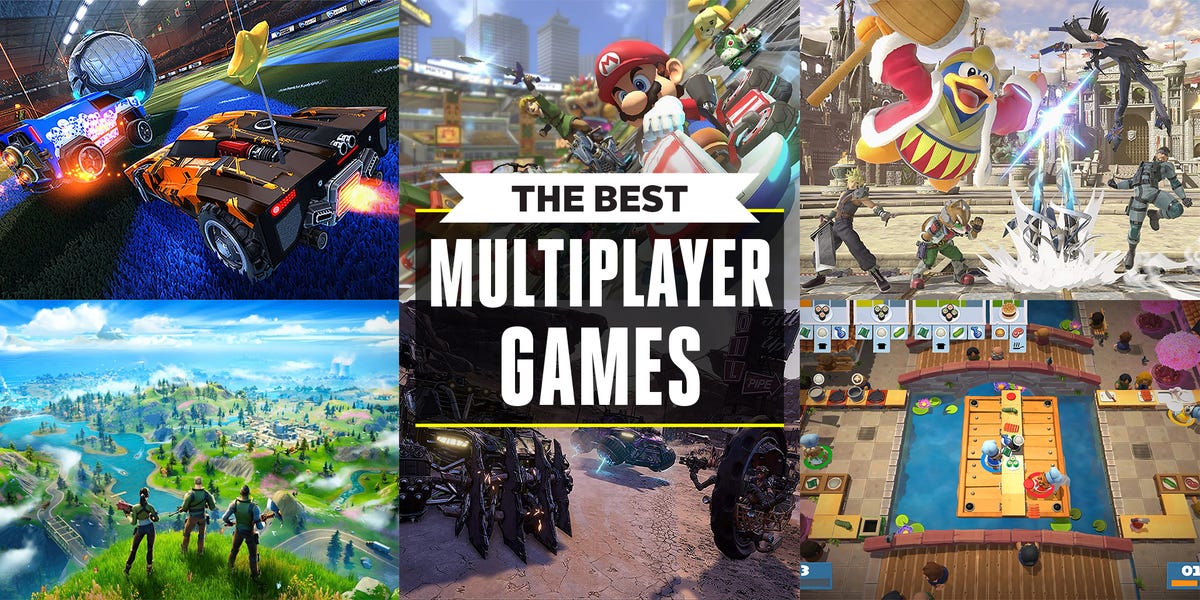

Multiplayer games are the modern campfire. You show up with snacks, somebody “just warms up” for three matches, and suddenly it’s 1:47 a.m. and your group chat has
devolved into conspiracy theories about who keeps stealing the good loot.
But “best multiplayer games” isn’t one listit’s a menu. Some nights you want competitive intensity (ranked ladders, clutch plays, the sweet sound of victory).
Other nights you want co-op chaos (friendly screaming, accidental friendly fire, and that one friend who insists they’re “support” while hoarding every healing item).
This guide breaks down the best multiplayer games by vibecompetitive, co-op, couch co-op, party, and “we just want to hang out.” Along the way, you’ll get
practical tips for picking the right game for your group, plus specific examples of what makes each title shine in real play.
What “Best Multiplayer” Means Now
In 2026, the best online multiplayer games aren’t just funthey’re frictionless. Your friends are on different platforms, your schedules don’t line up, and nobody
wants to spend 30 minutes troubleshooting a lobby. Great multiplayer games usually nail four things:
- Low friction: Easy invites, stable servers, and matchmaking that doesn’t feel like a coin flip.
- Clear teamwork: You can help the team even if you’re not the cracked aim-god of the squad.
- Cross-platform or broad availability: Because “what do you play on?” shouldn’t end the conversation.
- Replayability: Either through variety (modes, maps, builds) or through stories you create together.
The games below are popular for a reason: they create moments that feel bigger than the match itselfcomebacks, perfect coordination, and hilarious disasters
you’ll reference for months.
How to Choose the Right Multiplayer Game for Your Group
1) Decide what kind of night you’re having
Start with mood. If your group wants a competitive “lock in” session, you want ranked modes, crisp mechanics, and strong matchmaking. If you want a relaxed
hangout, prioritize co-op, progression you can share, and gameplay that stays fun even when someone is learning.
2) Count your players (and your patience)
Two-player co-op games are a different species than four-player co-op, and both are wildly different from eight-player party games. Also be honest about your
tolerance for long tutorials and buildcrafting. A deep MMO might be incredibleunless half your group only has an hour.
3) Check the “friendship tax”
Some games are famously good at testing relationships. If your group enjoys playful chaos, pick games with shared objectives and silly failure states. If your group
is competitive enough to argue about who “threw,” choose games with clear roles and tools for communication.
4) Prioritize cross-platform multiplayer if your crew is split
Cross-platform multiplayer games remove the biggest barrier to playing together. If your friends are spread across PC, PlayStation, Xbox, Switch, or mobile,
choosing crossplay up front saves you from the “we’ll figure it out later” graveyard.
The Best Multiplayer Games, Picked by Vibe
Competitive, sweaty, and satisfying
Counter-Strike 2
If you want pure, high-stakes team shooter chess, Counter-Strike 2 remains the gold standard. Rounds are short, tension is high, and every decision matters:
economy management, utility, positioning, and timing. It’s a game where “one good smoke” can win a roundand one bad peek can turn you into a cautionary tale.
Why it’s great: Tight gunplay, iconic modes, and a competitive ecosystem that rewards teamwork and discipline.
Best for: Players who like skill expression, callouts, and steady improvement.
VALORANT
VALORANT blends precise shooting with hero abilities that create clear team roles. Even if your aim is a work in progress, smart utility can change a round.
Expect strategy, coordination, and the occasional moment where you clutch and instantly become the group’s temporary celebrity.
Why it’s great: Strong tactical structure, clear roles, and huge depth without requiring you to memorize 400 items.
Best for: Groups that enjoy planning and teamwork (and can handle a little friendly roasting).
Rocket League
“Soccer, but with rocket-powered cars” sounds like a joke until you play it and realize it’s secretly a precision sport. Rocket League is easy to learn, hard to
master, and wildly fun at every level. The early experience is pure chaos; the mid-game is “how did they aerial like that?”; the late-game is basically ballet at
120 mph.
Why it’s great: Instant action, short matches, and skill growth you can literally feel.
Best for: Competitive friends who want “one more game” energy without a 40-minute commitment.
Overwatch 2
Overwatch 2 is best when your group likes role synergytanks making space, supports keeping the party alive, and damage players trying to turn every fight into a
highlight reel. When it clicks, it feels like a coordinated heist. When it doesn’t, it feels like a group project where nobody read the instructions.
Why it’s great: Big personality, flashy team fights, and roles that let different skill sets contribute.
Best for: Groups that like teamwork, swapping roles, and learning matchups.
League of Legends
League is still one of the most enduring competitive multiplayer games because it turns teamwork into a long-form strategy puzzle. It’s not the easiest on-ramp,
but if your friends like learning togetherroles, objectives, map controlit becomes a shared hobby rather than a one-off night.
Why it’s great: Massive depth, clear progression, and endless replayability.
Best for: Groups who want a long-term “main game.”
Big lobbies, big laughs, big “how did we survive that?”
Fortnite
Fortnite is multiplayer variety in a single app: battle royale, creative modes, and rotating experiences that keep it fresh. It’s also one of the easiest games to
jump into with friends across different platforms, and it’s great at generating storiesmiracle revives, last-second escapes, and victory celebrations that feel
30% joy and 70% disbelief.
Why it’s great: Fast matchmaking, constant updates, and “drop in, do something fun” flexibility.
Best for: Friend groups with mixed skill levels who still want to play together.
Apex Legends
Apex is a squad-based battle royale with movement and gunplay that feels sharp and expressive. Team communication matters, and smart rotations can beat raw aim.
It’s also fantastic for that “we weren’t supposed to win” feeling when your squad survives a third-party party and walks out with three cracked shields and a dream.
Why it’s great: Strong team identity, satisfying movement, and clutch moments.
Best for: Squads that enjoy coordination and adapting on the fly.
Call of Duty: Warzone
Warzone remains a go-to pick for friends who want fast gunfights, high-stakes survival, and the delicious drama of a late-game circle. It’s not always the calmest
experience, but it’s reliably intenseand it’s built for “squad night.”
Why it’s great: High energy, strong social pull, and a familiar shooter feel.
Best for: Friends who want adrenaline and fast matches.
Co-op games that turn your friends into a real team
Helldivers 2
Helldivers 2 is co-op at its funniest and most chaotic: you’re a squad trying to complete objectives while everything goes wrong in the loudest way possible.
The game shines when your team learns to coordinate loadouts and call in supportbecause nothing bonds friends faster than accidentally dropping a strike on your own
feet and then immediately blaming “lag.”
Why it’s great: Shared objectives, hilarious failures, and teamwork that actually matters.
Best for: Co-op squads who like action and comedy in equal measure.
Deep Rock Galactic
Four dwarves. A cave system. Bugs everywhere. Deep Rock Galactic is one of the best co-op multiplayer games because it gives everyone a role that feels useful:
scouting, drilling, building, and defending. It’s mission-based, easy to drop into, and the teamwork feels natural rather than forced.
Why it’s great: Clear roles, satisfying progression, and co-op vibes that stay friendly.
Best for: Groups that want teamwork without sweaty pressure.
Monster Hunter Wilds
Monster Hunter is the co-op loop perfected: hunt a huge monster, craft better gear, hunt a bigger monster, repeat until your group becomes a synchronized
monster-removal service. Wilds modernizes the formula while keeping the core appeallearning patterns, coordinating loadouts, and celebrating that perfect teamwork
moment when a monster finally goes down and everyone starts yelling like you just won a championship.
Why it’s great: Skill-based co-op, satisfying progression, and long-term “we’re building something together” energy.
Best for: Friends who like progression and mastering systems over time.
Destiny 2
Destiny 2 is at its best when your group wants bigger co-op experiencesraids, dungeons, and activities that reward communication and coordination. It’s also great
for friends who like a shared hobby: buildcrafting, chasing loot, and learning encounters together. The learning curve can be real, but so is the payoff when your
team finally nails a tricky mechanic.
Why it’s great: Deep endgame co-op, memorable encounters, and strong “team accomplishment” moments.
Best for: Squads who want a persistent world and long-term goals.
It Takes Two
If you want a co-op game that feels like a date night and a carnival ride had a baby, It Takes Two is still a top pick. It’s designed around cooperationboth
players have distinct abilities and you’ll solve puzzles together. It’s a reminder that co-op can be clever, warm, and wildly creative.
Why it’s great: Constant variety, genuine co-op design, and memorable set pieces.
Best for: Two-player co-op with someone you can laugh with (and occasionally yell “WAIT, DON’T PRESS THAT!”).
Portal 2 (Co-op)
Portal 2’s co-op campaign is legendary for a reason: it turns communication into the main mechanic. You’re not just solving puzzlesyou’re solving each other.
It’s perfect for two players who enjoy clever problem-solving and don’t mind feeling like a genius one moment and a confused potato the next.
Why it’s great: Smart puzzles, great pacing, and peak “we did it!” satisfaction.
Best for: Two friends who enjoy brains over reflexes.
“We’re on the couch” multiplayer that still hits
Mario Kart 8 Deluxe
Mario Kart is the universal translator of gaming. New players can have fun instantly, veterans can flex with advanced lines, and everyone understands exactly what
a blue shell means: chaos, betrayal, and a dramatic monologue about how the universe is unfair.
Super Smash Bros. Ultimate
Smash is equal parts party and sport. You can play it casually with items and wild stages, or you can turn it into a serious competitive session with strict rules.
Either way, it’s a reliable source of laughter, rivalries, and “no rematch, I have to go… for reasons.”
Overcooked! All You Can Eat
Overcooked is cooperative cooking as performance art. You’ll coordinate orders, shout directions, and develop a new appreciation for anyone who has ever worked a
dinner rush. It’s chaotic, hilarious, and surprisingly good at making your group work as a unitright after it makes you argue about who set the kitchen on fire.
Jackbox Party Packs
Jackbox games are perfect when your group wants low-barrier fun. You can play from phones, rotate players easily, and keep the energy up even if someone isn’t a
“gamer.” It’s multiplayer built for laughter and creativity rather than reflexes.
Social sandboxes where “playing” is mostly hanging out
Minecraft
Minecraft remains one of the best multiplayer games because it adapts to your group. Build a cozy town, run a survival adventure, make minigames, or just wander
and talk. It’s the ultimate “we can do anything” playground, and it’s especially good for mixed skill levels.
Sea of Thieves
Sea of Thieves is a shared story generator. Your crew can chase treasure, fight skeletons, and get into ridiculous ship battlesthen spend the rest of the week
retelling the time you tried diplomacy and immediately got cannoned into the ocean.
Among Us
Among Us is still the fastest way to turn friends into amateur detectives and suspicious lawyers. It’s not about mechanical skillit’s about reading people,
bluffing, and watching your group’s trust level crater in real time (in a fun way, ideally).
Quick “Best Multiplayer Game” Picks for Common Scenarios
- Best competitive shooter for serious teams: Counter-Strike 2 or VALORANT
- Best “drop in for 20 minutes” game: Rocket League
- Best cross-platform group night: Fortnite or Apex Legends
- Best co-op chaos: Helldivers 2 or Overcooked! All You Can Eat
- Best two-player co-op story experience: It Takes Two or Portal 2
- Best couch multiplayer for all skill levels: Mario Kart 8 Deluxe
- Best “we just want to vibe and build” hangout: Minecraft
Conclusion
The best multiplayer games aren’t just “popular online games.” They’re the ones that fit your peopleyour platform mix, your patience level, and your preferred
flavor of chaos. If you want tight competition, pick a game with clear rules and strong matchmaking. If you want connection, pick co-op games that turn your team
into a shared problem-solving machine. And if you want laughs, pick party games that don’t punish beginners.
Most importantly: don’t chase the “perfect” game. Chase the game that gets your friends to actually show up. The real win condition is the group chat lighting up
with “same time tomorrow?”
Multiplayer Moments You’ll Actually Remember (Extra Experiences Section)
Here’s the secret reason the best multiplayer games stick: they create stories your brain files under “real memories,” even though you were technically a wizard,
a car, or a small bean-shaped astronaut the whole time. These moments are why you keep coming back.
1) The accidental hero play. In a tactical shooter, you’re the last one alive, you’re out of utility, your teammates are screaming, and you’re
thinking, “I should not be here.” Then you make the simplest playhold an angle, wait, breatheand somehow pull off the round. For the next week, your friends
will talk about you like you’re a myth. You will pretend to be humble. You will not be humble.
2) The co-op “we’re finally a real team” moment. In co-op games like Monster Hunter or Destiny raids, the early sessions feel messy. Everyone’s
learning, calls are chaotic, and someone keeps forgetting the mechanic. Then one night it clicks: everyone knows their job, your timing lines up, and the boss goes
down clean. The victory isn’t just lootit’s the feeling of shared competence.
3) The friendship stress-test that becomes a joke. Overcooked is famous for turning kitchens into panic rooms. The first time you fail a level,
it feels personal. The second time, you realize the real game is learning how your friends communicate under pressure. By the third time, you’re laughing so hard
you can’t steer, and somebody yells, “WHY IS THE RICE ON FIRE?” like it’s a philosophical question.
4) The “we meant to play one match” spiral. Rocket League, Fortnite, Apexthese games are optimized for “just one more.” It starts innocent:
“Let’s run a quick warm-up.” Then you win, so you stay. Then you lose, so you stay to “end on a win.” Then you win again, so you stay because you’re “on a roll.”
The night ends when someone remembers they’re an adult with responsibilities… and the rest of you boo them like a theater audience.
5) The couch moment that no online lobby can replace. Local multiplayer hits differently. In Mario Kart and Smash, the reactions are half the fun:
the gasp when someone gets sniped by a shell, the smug grin before a well-timed move, the immediate “THAT DIDN’T COUNT” negotiation. You’re not just playing the
gameyou’re performing it for each other. It’s the difference between sending a meme and watching someone laugh at it in person.
6) The gentle hangout game night. Minecraft and Sea of Thieves can be less about “winning” and more about companionship. You talk while you build.
You tell stories while you sail. Someone starts a ridiculous project (a lighthouse, a roller coaster, a “perfectly normal” underground room) and everyone helps
because it’s fun, not because there’s a leaderboard. These are the nights that feel like keeping in touch, not “keeping up.”
Multiplayer is basically social chemistry with a controller. Pick the experience you wantcompetition, cooperation, comedy, or pure hangoutand the “best
multiplayer game” reveals itself pretty quickly.