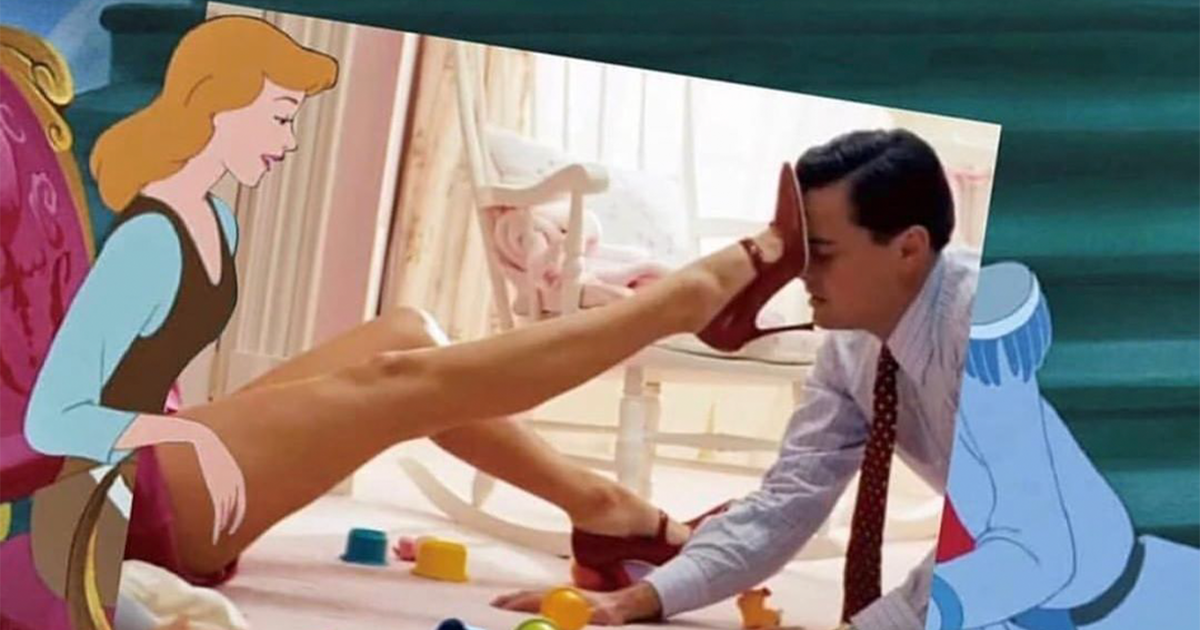

Disney characters have lived rent-free in our collective imagination for generations. They sing in forests, talk to sidekicks, survive suspiciously dramatic family situations, and still somehow maintain perfect hair. But what happens when those polished fairy-tale icons are dropped into modern, awkward, chaotic, and very non-fairy-tale situations? That is the deliciously strange question behind Japanese graphic designer Shusaku Takaoka’s viral digital collages.
The project, often shared online under the title “Artist Takes Away The Innocence From Disney Characters And Puts Them Into Wrong Scenarios (25 Pics)”, reimagines familiar animated royalty and classic cartoon faces in settings that feel wildly out of place. Instead of castles, enchanted forests, and happily-ever-after sunsets, viewers get pop-culture mashups, urban scenes, celebrity references, modern fashion, social commentary, and a wink so obvious it practically needs its own lighting team.
The result is funny, uncomfortable, clever, and oddly revealing. Takaoka is not simply giving Disney characters new outfits. He is using them as cultural symbols. These characters represent innocence, nostalgia, childhood comfort, and old-fashioned moral clarity. By placing them in “wrong” scenarios, the artist creates visual tension: the sweet meets the sarcastic, the wholesome meets the modern, and the fairy tale suddenly realizes it has a group chat full of bad decisions.
Who Is Shusaku Takaoka?
Shusaku Takaoka is a Japanese graphic designer and digital collage artist known for remixing famous images from art history, cinema, fashion, and pop culture. His work often pulls recognizable figures out of their original worlds and drops them into contemporary scenes. The Mona Lisa might look ready for a city commute. A classical portrait might suddenly feel like a street-style influencer. A Disney princess might appear in a situation that makes viewers laugh first and think second.
That combination is the secret sauce. Takaoka’s images are not random edits made for quick shock value. They are carefully constructed visual jokes. The humor works because the viewer instantly recognizes the original character and just as quickly notices the mismatch. It is the art-world version of seeing a royal carriage parked outside a convenience store at 2 a.m. Technically possible? Sure. Emotionally confusing? Absolutely.
Why Disney Characters Are So Easy to Remix
Disney characters are among the most recognizable fictional figures in the world. Their silhouettes, colors, facial expressions, costumes, and emotional roles are deeply embedded in popular culture. Even people who have not watched a particular animated classic in years can identify a princess by a dress color, a hairstyle, or a sidekick. That visual familiarity makes them perfect material for parody, collage, and cultural commentary.
Classic Disney animation also leans heavily on clarity. Heroes look heroic. Villains look suspicious before they even open their mouths. Magical helpers sparkle with good intentions. Songs arrive exactly when emotions need a stretch break. This clarity is part of the charm, but it also creates a strong contrast when an artist moves those characters into messy modern life.
In Takaoka’s edits, the comedy comes from that collision. A character designed for a storybook world suddenly looks like she has discovered coffee culture, celebrity attitude, nightlife, social media posing, or adult-level sarcasm. The viewer knows this is “wrong” because the original Disney universe taught us what “right” should look like. That gap between expectation and reality is where the joke lives.
The Art of Making Innocent Characters Look “Wrong”
The phrase “takes away the innocence” sounds dramatic, but in this context, it does not have to mean anything graphic or crude. The real transformation is tonal. Takaoka removes the protective glass case around beloved characters and lets them exist in a world that is more ironic, more fashionable, more self-aware, and much less interested in singing to birds before breakfast.
Some of the scenarios rely on modern habits: coffee cups, streetwear, music scenes, rude gestures, fashion poses, or celebrity-style attitude. Others borrow from famous movie moments or pop-culture references. The characters are not erased; they are reinterpreted. Their original innocence becomes the setup, and the “wrong” scenario becomes the punchline.
This is why the images spread so easily online. They are instantly readable. You do not need a museum degree, a film-studies textbook, or a fairy godmother with a PowerPoint presentation. You see the character, recognize the reference, and understand the twist in seconds. That speed is perfect for social media, where attention spans are shorter than a pumpkin carriage’s warranty.
Why the 25 Pics Became So Shareable
1. They Use Nostalgia as a Shortcut
Nostalgia is powerful because it arrives pre-loaded with emotion. Disney characters often connect to childhood memories, family movie nights, school backpacks, theme-park dreams, and songs people pretend they do not still know by heart. When Takaoka alters those characters, the viewer feels the change immediately.
2. The Humor Is Visual, Not Complicated
The best collage humor does not need a long caption. It works through contrast. A princess placed in a modern, sarcastic, or oddly glamorous setting becomes funny because the visual contradiction is clear. It is the same reason a knight checking his smartphone would be funny. The worlds do not belong together, and that is exactly the point.
3. The Images Invite Debate
Some viewers see the edits as hilarious parody. Others feel protective of the original characters and think the scenarios go too far. That disagreement fuels comments, shares, and reactions. In internet terms, the artwork does not just sit politely in the corner. It walks into the room, rearranges the furniture, and asks everyone why they are so tense.
4. The Collages Feel Both Familiar and New
A successful mashup gives people two pleasures at once: recognition and surprise. Takaoka’s Disney-inspired collages deliver both. Viewers get the comfort of familiar characters and the novelty of seeing them behave as if they have escaped the studio archive and wandered into contemporary culture.
Is This Parody, Fan Art, or Social Commentary?
The answer is: probably a little of all three. Takaoka’s work belongs to a broader tradition of digital collage and visual remixing, where artists combine existing cultural images to create new meanings. In the United States, conversations around parody and transformative use often center on whether the new work adds a different message, purpose, or character rather than merely copying the original.
That does not mean every fan edit is automatically protected or legally risk-free. Copyright and trademark questions can be complicated, especially when famous characters are involved. But from an artistic point of view, Takaoka’s collages are clearly designed to comment, joke, and reframe. They ask: What happens when childhood icons meet adult culture? What happens when perfect fairy-tale behavior meets the messy real world? And why is it so funny when a princess looks like she has had enough of everyone’s nonsense?
The best way to understand the series is as visual satire. It pokes at the polished innocence of classic animation while also celebrating how strongly these characters still live in public imagination. A weak character would not survive this kind of remix. Disney icons do survive it because they are already larger than their original stories.
The Bigger Meaning Behind the “Wrong Scenarios”
At first glance, the images are simply funny. Look again, and they reveal something deeper about how modern audiences relate to childhood stories. We do not only consume fairy tales anymore; we remix them, question them, meme them, and drag them into whatever cultural moment we happen to be living through.
That does not necessarily destroy the magic. In some ways, it proves the magic is still alive. A character who can be placed in a modern joke and remain instantly recognizable has become more than a character. She has become a symbol. Takaoka’s collages work because Disney’s visual language is so strong that even when the setting changes completely, the character’s identity remains readable.
There is also a generational element. Adults who grew up with Disney often return to those stories with different eyes. As children, they may have accepted the fairy-tale logic without question. As adults, they notice the strange lessons, the dramatic shortcuts, the old-fashioned romance, and the very convenient timing of magical solutions. Takaoka’s work gives that adult perspective a visual form. It says, “What if these characters knew what we know now?”
Why Some People Love It and Others Do Not
Any artwork that plays with beloved childhood icons will divide opinion. For some viewers, the images are clever, stylish, and refreshing. They enjoy seeing familiar characters break out of their expected roles. For others, the edits feel like someone scribbled sunglasses on a family photo. The attachment is emotional, not logical, and that is understandable.
Disney nostalgia can be surprisingly personal. People do not just remember the movies; they remember where they were when they watched them, who watched with them, and how those stories made them feel. When an artist twists that memory, even playfully, it can feel like a tiny cultural prank. A harmless prank, yes, but still one that knocks on the door wearing muddy shoes.
That tension is part of why the series works. Art that remixes pop culture does not always need universal approval. Sometimes its job is to create a reaction. Takaoka’s collages do exactly that. They make people laugh, cringe, defend their favorite princess, or send the image to a friend with the classic internet message: “Why is this so accurate?”
Digital Collage as Modern Folk Art
Digital collage has become one of the defining art forms of internet culture. It is fast, referential, layered, and built for visual literacy. Today’s viewers are trained to understand memes, screenshots, edits, filters, and remixes. Takaoka’s work fits neatly into that environment while also showing a high level of design skill.
Good collage is not just cutting and pasting. It requires matching lighting, scale, color, mood, and composition so the impossible scene feels weirdly believable. If the edit is too rough, the joke falls apart. If it is too seamless, the viewer might miss the tension. Takaoka often finds the sweet spot: polished enough to impress, strange enough to disturb the fairy-tale furniture.
His Disney-inspired images also remind us that pop culture is now a shared visual language. A single character can carry decades of meaning. A single pose can reference fashion photography, cinema, advertising, or social media. The collage becomes a conversation between old media and new habits.
Should Disney Fans Be Offended?
Not necessarily. A playful remix does not erase the original. Cinderella is still Cinderella. Snow White is still Snow White. Ariel is still Ariel. The classic films remain untouched, safely available for anyone who wants the original magic without extra irony sprinkled on top.
In fact, parody often depends on affection. Artists usually remix icons because the icons matter. If nobody recognized the characters, the joke would collapse like a poorly engineered gingerbread house. The humor is possible only because Disney’s designs are so durable and emotionally powerful.
That said, not every image is for every audience. Parents, teachers, and younger fans may prefer the original stories over more adult-leaning visual jokes. That is fair. The internet contains many rooms, and not every room needs a singing teapot.
Experience Section: Viewing the 25 Pics Like a Pop-Culture Detective
Looking through a collection like “Artist Takes Away The Innocence From Disney Characters And Puts Them Into Wrong Scenarios (25 Pics)” feels less like browsing a normal gallery and more like playing a visual guessing game. The first reaction is usually recognition: “Oh, I know that character.” The second reaction arrives half a second later: “Wait, why is she there?” That tiny delay is where the fun begins.
The experience is especially interesting because the viewer becomes part of the joke. Takaoka does not explain every reference with a giant label. He trusts the audience to connect the dots. Maybe you notice the pose first. Maybe you recognize a film reference. Maybe the modern accessory gives it away. The image rewards cultural memory, which makes the viewer feel clever for understanding it. Congratulations, your years of watching animated movies and scrolling the internet have finally become a combined academic discipline.
Another enjoyable part of the experience is noticing how quickly the mood of a character can change. A tiny shift in setting, expression, outfit, or body language can turn a sweet fairy-tale figure into someone who looks rebellious, exhausted, glamorous, sarcastic, or completely over the plot. That is a reminder of how much context controls meaning. Put a princess in a castle and she reads as romantic. Put her in a modern street scene and suddenly she looks like she has errands, opinions, and maybe a playlist called “Do Not Text the Prince.”
The gallery also makes viewers think about how adulthood changes nostalgia. As kids, many people saw Disney characters as models of goodness, courage, beauty, or hope. As adults, we can still love those qualities, but we also understand irony. We know life is rarely as tidy as a musical finale. Seeing innocent characters placed in awkward modern situations becomes funny because it mirrors our own shift from childhood wonder to grown-up realism. The magic is still there, but now it has emails to answer.
For content creators, bloggers, and art fans, the series is a useful lesson in why mashups perform well online. The images are easy to understand, emotionally loaded, and visually bold. They encourage sharing because every viewer has a slightly different relationship with the characters. One person laughs at the attitude. Another admires the editing. Another complains that their childhood has been mildly rearranged. All three responses help the artwork travel.
Ultimately, the experience is not about ruining Disney. It is about testing how flexible these cultural icons can be. Takaoka’s collages prove that beloved characters can survive outside their original worlds. They can become jokes, critiques, fashion statements, memes, and mirrors for modern life. The innocence may be interrupted, but the fascination remains very much alive.
Conclusion
Shusaku Takaoka’s Disney-inspired collages are funny because they are built on contrast, but they are memorable because they reveal how deeply these characters are rooted in culture. By placing innocent animated icons into “wrong” modern scenarios, the artist creates a playful clash between childhood fantasy and adult reality. The 25 pics are not just visual gags; they are tiny pop-culture essays wearing stylish shoes.
Whether you see the series as parody, fan art, digital collage, or mischievous internet commentary, its appeal is easy to understand. It takes something familiar, bends it just far enough, and invites viewers to laugh at the collision. Disney gave the world characters designed to live happily ever after. Takaoka asks what might happen if they stepped outside the castle and discovered modern life. Spoiler: it gets weird, and that is exactly why people keep looking.