
Note: This article is an educational overview of a DIY automatic cat feeder concept. Any feeding schedule, portion size, or diet change should be tailored to an individual cat with guidance from a veterinarianespecially for kittens, seniors, or cats with medical conditions.
Some cat feeders need Wi-Fi, an app, a firmware update, three passwords, and possibly a small ritual under a full moon. This one does not. An automatic cat feeder built with a 4060 binary counter proves that a practical pet project can be wonderfully old-school: one timer chip, a few supporting components, a motor, a rotating food drum, and a healthy distrust of unnecessary complexity.
The result is a feeder that quietly measures time, releases a controlled portion of dry food, and resets itself for the next cycle. No cloud account. No subscription. No push notification informing you that your cat has stared at the feeder aggressively for seven minutes.
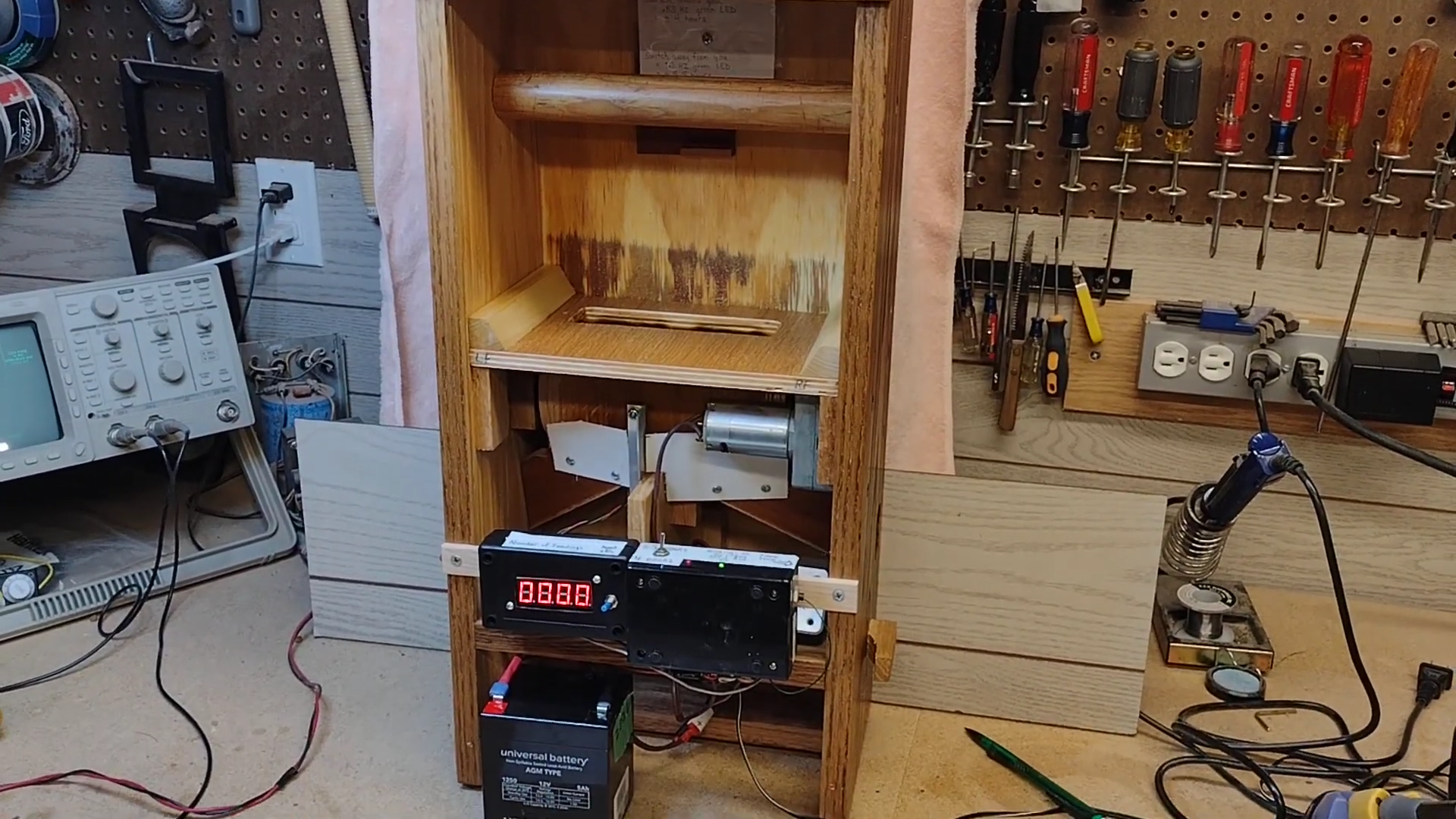
At its heart, this design uses a 4060-series binary counter as a long-delay timer. The chip counts electrical pulses, eventually reaches a chosen threshold, activates a motor, and allows the feeder to dispense kibble. A Hall-effect sensor then detects the drum’s completed rotation and resets the timing cycle. It is a deceptively simple arrangement that blends digital logic, mechanical design, and real-world pet care into one compact project.
Why a 4060 Binary Counter Makes Sense for a Cat Feeder
The 4060 is not glamorous. It will not connect to your phone, generate a dashboard, or send a celebratory email when your cat eats breakfast. What it does offer is something often more valuable in a feeder: predictable timing with very little software drama.
A 4060-family integrated circuit combines an oscillator and a multistage binary counter. In plain English, it can create a repeating electrical pulse and count that pulse over a long period. Each counter stage divides the frequency, allowing the circuit to transform a relatively quick clock signal into delays measured in minutes or hours. The device also includes a reset input, making it useful for timers, frequency dividers, and time-delay circuits.
That makes the 4060 ideal for a feeder that only needs to do one job well: wait, activate a motor, confirm that food has been released, and begin waiting again. It is a little like hiring a very dependable employee whose only responsibility is watching a clock. There is no social media scrolling, no coffee break, and no mysterious “firmware unavailable” message at 6 a.m.
The Basic Timing Principle
A simple RC oscillatorbuilt from resistors and a capacitorcreates the clock pulses. The 4060 counts those pulses in binary. Because binary counters divide timing signals by powers of two, a modest oscillator frequency can become a much slower output suitable for scheduled feeding.
For example, a design may use an oscillator running around one pulse per second. After thousands of counts, the feeder reaches the trigger point. The timing output then energizes a transistor, relay, or motor driver that starts a 12-volt gearmotor. Once the motor completes one rotation, the feeder drops a measured amount of dry food into the bowl and resets the counter.
The original featured build used two selectable schedules: approximately every four hours or every five and a half hours. It counted upward until the target was reached, activated a geared DC motor, rotated a drum, and used a Hall sensor to reset the circuit after one full dispensing cycle. The feeder reportedly remained in service for roughly a decade, which is a fairly impressive résumé for a plywood box full of kibble.
How the Automatic Cat Feeder Works
The feeder can be understood as four systems working together: food storage, timing electronics, motion control, and reset feedback. Each system is simple on its own. The cleverness comes from making them cooperate without turning dinner into a science fair disaster.
1. The Food Hopper and Rotating Drum
Dry kibble sits in a hopper above a rotating drum or wheel. The drum contains one or more compartments sized to hold a controlled serving. When the motor turns the drum one full revolution, a compartment passes beneath the hopper, fills with food, and then rotates toward an opening above the bowl.
Gravity does much of the work. The motor simply moves the compartment from “full” to “empty.” This is one reason a drum feeder can be more dependable than a system that tries to push food through a narrow auger. Kibble comes in many shapes, including little fish, tiny triangles, strange stars, and chunks that appear to have been engineered by a committee of enthusiastic accountants. A wide rotating compartment gives awkward food shapes more room to behave.
2. The 4060 Timer Circuit
The 4060 binary counter begins counting as soon as power is applied and reset is released. Its oscillator provides a steady stream of pulses, while its internal counter stages divide that signal into progressively slower outputs.
The challenge is not getting the chip to count. The challenge is selecting a time interval that matches the feeding plan. A cat that receives meals every few hours needs a different timer setup than one that receives two meals a day. The resistor and capacitor values determine oscillator speed, while the selected counter output and trigger logic determine the final waiting period.
This is where the 4060 earns its keep. A single chip can create long delays without a microcontroller, real-time clock module, or complicated programming environment. The design remains understandable years later. Open the enclosure, trace the wires, inspect the components, and you can usually figure out what is happening without needing to locate a forgotten laptop from 2018.
3. Motor Driver and Gearmotor
The 4060 output cannot directly power a motor. Logic chips are excellent at thinking in tiny electrical signals, but they are terrible at hauling mechanical loads. A transistor, MOSFET, relay, or dedicated driver stage must sit between the counter and the motor.
A low-speed geared DC motor is a good fit because the feeder needs torque more than speed. The drum should rotate reliably even when the hopper is full, the kibble is uneven, or the cat is standing nearby offering deeply unhelpful supervision.
The motor should also be electrically isolated from the timing circuit as much as practical. Motors can create electrical noise when starting and stopping, so proper filtering, wiring, and protection components matter. A clean power arrangement helps prevent accidental resets, false triggers, and the dreaded midnight meal that nobody requested.
4. Hall Sensor Reset System
A Hall-effect sensor detects a magnetic field. In this feeder design, a small magnet mounted on the rotating drum passes near the sensor once per revolution. When the sensor recognizes the magnet, it signals that the drum has completed its cycle.
That signal resets the 4060 counter back to zero. The motor turns off, the timer begins counting again, and the feeder prepares for the next scheduled meal. A Hall sensor is useful because it can detect movement without a physical contact switch that might wear down, collect food dust, or become another object for the cat to investigate with extreme prejudice.
Why an Automatic Feeder Can Help Cat Care
An automatic feeder is not a substitute for attention, play, fresh water, veterinary care, or noticing that your cat has suddenly decided the laundry basket is a better bedroom than the expensive cat bed. Still, scheduled feeding can be useful for many households.
Veterinary guidance commonly emphasizes that feeding routines should be adjusted for a cat’s age, health, activity level, and body condition. Kittens usually require more frequent meals than adults, while many healthy adult cats can be fed once or twice a day. Cats with diabetes, kidney disease, dental problems, obesity, or other conditions may need a more specialized plan.
Timed feeding can help households avoid accidental double-feeding. One person feeds breakfast, another person forgets that breakfast happened, and suddenly the cat has successfully negotiated a second breakfast. Cats are charming little labor unions when food is involved.
Portion control also matters. Free-choice feeding can encourage overconsumption in some cats, and maintaining a healthy weight requires monitoring calorie intake and body condition over time.
Automatic feeders may also support smaller, more frequent meals for cats that benefit from a steadier feeding routine. Feline behavior experts note that cats often naturally prefer frequent small meals and may benefit from feeding arrangements that encourage foraging, reduce stress, and provide safe access to food in multi-cat homes.
Important Design Decisions Before Building
Choose Dry Food, Not Wet Food
A rotating mechanical feeder is best suited for dry kibble. Dry food stores more easily in a hopper and moves predictably through a drum mechanism. Wet food is a different creature entirely: it can spoil, dry out, attract insects, and turn a beautiful electronics project into an unpleasant biology experiment.
Dry food generally works best in automatic feeders, while cats eating only dry food should always have access to plenty of fresh water.
Calibrate the Portion Mechanically
The timer controls when</em food is released. The drum geometry controls how much food is released. That distinction matters.
Before trusting the feeder, run repeated test cycles with the exact kibble your cat eats. Weigh or measure the food dispensed each time. Small changes in kibble size, dust level, humidity, or drum angle can affect the serving. A feeder that releases one tablespoon today and half a cup tomorrow is not a feeder. It is a very confusing casino.
Build the drum compartment so it can be adjusted. Removable inserts, interchangeable cups, or a sliding divider can make calibration easier. This lets the same feeder accommodate different kibble sizes and different portion requirements without rebuilding the whole mechanism.
Plan for Power Interruptions
Power loss is one of the most important practical concerns. A feeder that forgets its timing every time the wall power flickers may either delay meals or behave unpredictably when power returns.
The featured project used a 12-volt wall adapter with battery backup, allowing the feeder to continue operating during outages. A backup battery can be useful, but it adds responsibility: the battery must be appropriate for the circuit, securely housed, periodically checked, and protected against short circuits.
For a simpler build, consider designing the feeder so that a power interruption causes a safe reset rather than an immediate feeding event. The goal is predictable behavior, not a surprise buffet every time someone trips over a power strip.
Common Problems and Practical Fixes
Problem: The Kibble Bridges Inside the Hopper
Food bridging happens when kibble forms an arch or clump above the drum rather than falling into the dispensing compartment. It is especially likely with irregularly shaped food or a hopper that narrows too sharply.
Fix: Use steeper hopper walls, smoother interior surfaces, and a wide opening above the drum. Test the feeder using the actual food brand and kibble shape you plan to use. A prototype that works perfectly with rice or cereal may suddenly become philosophical when introduced to fish-shaped kibble.
Problem: The Motor Runs but the Drum Does Not Turn
This usually points to insufficient torque, a slipping shaft connection, or too much friction. A motor may seem powerful when unloaded, then surrender dramatically once a hopper full of food sits on top of the drum.
Fix: Use a gearmotor with enough torque, reinforce the drum axle, and reduce friction with proper bushings or bearings. Keep the drum balanced and avoid making it unnecessarily heavy.
Problem: The Feeder Dispenses Twice
A double dispense can occur when the Hall sensor misses the magnet, the reset signal is noisy, or the motor coasts past the intended stopping point.
Fix: Adjust magnet position, test sensor spacing, add debouncing or signal conditioning where needed, and confirm that the motor shuts off promptly when the reset point is detected. The sensor should be mounted firmly so that a curious paw cannot turn it into a removable accessory.
Problem: Your Cat Learns to Break Into It
This is not a hypothetical concern. Some cats treat automatic feeders as puzzle boxes designed specifically for their personal enrichment.
Fix: Use sturdy materials, secure the hopper lid, prevent access to the dispensing drum, and anchor the feeder if necessary. A feeder should not become a tipping hazard, especially in homes with energetic cats or multiple pets.
4060 Cat Feeder vs. Smart Wi-Fi Feeder
A 4060-based feeder is not automatically better than a commercial smart feeder. It is simply better for a different type of owner.
Choose a DIY binary-counter feeder when you value repairability, enjoy electronics, prefer local control, and want a project that can keep working without an app. Choose a commercial smart feeder when you need flexible daily schedules, remote monitoring, multiple portion settings, camera features, or easy setup for a caregiver.
The 4060 design is especially appealing because it is understandable. You can troubleshoot it with basic tools, replace common components, and modify its timing without waiting for a manufacturer to release an update. That simplicity has charm. It also has teethmuch like the cat waiting beside it.
Experience Notes: What a 4060 Automatic Cat Feeder Teaches You in Real Life
Building an automatic cat feeder with a 4060 binary counter teaches a lesson that is easy to forget in a world full of apps: reliability often comes from reducing the number of things that can go wrong. A simple feeder does not need an internet connection to know that four hours have passed. It only needs a stable clock, a working counter, a motor that can turn the drum, and a reset sensor that does not get buried under a mountain of kibble dust.
The first practical lesson is that timing accuracy matters less than consistency for many ordinary feeding routines. A resistor-capacitor oscillator may drift slightly with temperature, component tolerance, and aging. That sounds alarming until you remember that a cat is unlikely to file a formal complaint because lunch arrived seven minutes late. Still, if a strict medical feeding schedule is needed, a more accurate timing source or a veterinarian-approved commercial feeder may be the better choice.
The second lesson is that mechanical testing takes longer than electronic testing. The circuit may work perfectly on a bench, with an LED blinking proudly at the expected interval. Then the real feeder is assembled, the hopper is filled, and the motor suddenly discovers that rotating a cardboard-and-plywood drum full of food is more demanding than blinking an LED. Builders quickly learn to test under realistic load conditions. Fill the hopper. Run the motor repeatedly. Shake the feeder gently. Try different kibble shapes. Assume the cat will eventually attempt to sit on it.
Another experience-based takeaway is that portion control comes from the dispenser geometry, not from the timer alone. A perfectly timed feeder can still overfeed if its drum compartment is too large. It can underfeed if food bridges in the hopper. The safest habit is to measure output across multiple cycles and compare it with the cat’s planned daily ration. This turns the project from a clever gadget into a useful care tool.
The Hall sensor is also a reminder that feedback changes everything. Without feedback, the motor would run for a guessed amount of time. With a magnet and sensor, the feeder knows when the drum has completed its rotation. That is a small upgrade with a big effect: it compensates for minor differences in motor speed, battery voltage, and mechanical resistance. In engineering terms, it is closed-loop control. In cat terms, it is the difference between dinner and a very loud complaint.
Perhaps the most satisfying part of the project is its repairability. A feeder made from common logic parts, a motor, a sensor, and a simple power supply can often be diagnosed with a multimeter and patience. A damaged wire can be replaced. A loose magnet can be glued back. A worn motor can be swapped. There is something reassuring about a device that does not become electronic landfill just because a company stops supporting an app.
Finally, the feeder should never become invisible. Automation is helpful, but it does not replace daily observation. Check whether food is actually being dispensed. Watch your cat’s appetite, water intake, energy, and body condition. Clean the feeder regularly. Refill it before it gets low enough to turn feeding time into an existential crisis. The best automatic cat feeder is not the one that removes people from the equation; it is the one that makes routine care more consistent while leaving more time for the important jobs, such as playtime, brushing, and pretending not to notice that the cat is sitting directly on your keyboard.
Conclusion
An automatic cat feeder built with a 4060 binary counter is a smart example of practical DIY engineering. It uses a simple timer chip to create long feeding intervals, a geared motor to rotate a portioning drum, and a Hall-effect sensor to reset the system after each dispensing cycle.
The project is not about making a cat feeder more complicated. It is about making it understandable, repairable, and dependable. With thoughtful mechanical design, proper electrical protection, reliable portion calibration, and a feeding plan tailored to the cat, a 4060 feeder can be both a rewarding electronics project and a genuinely useful household tool.