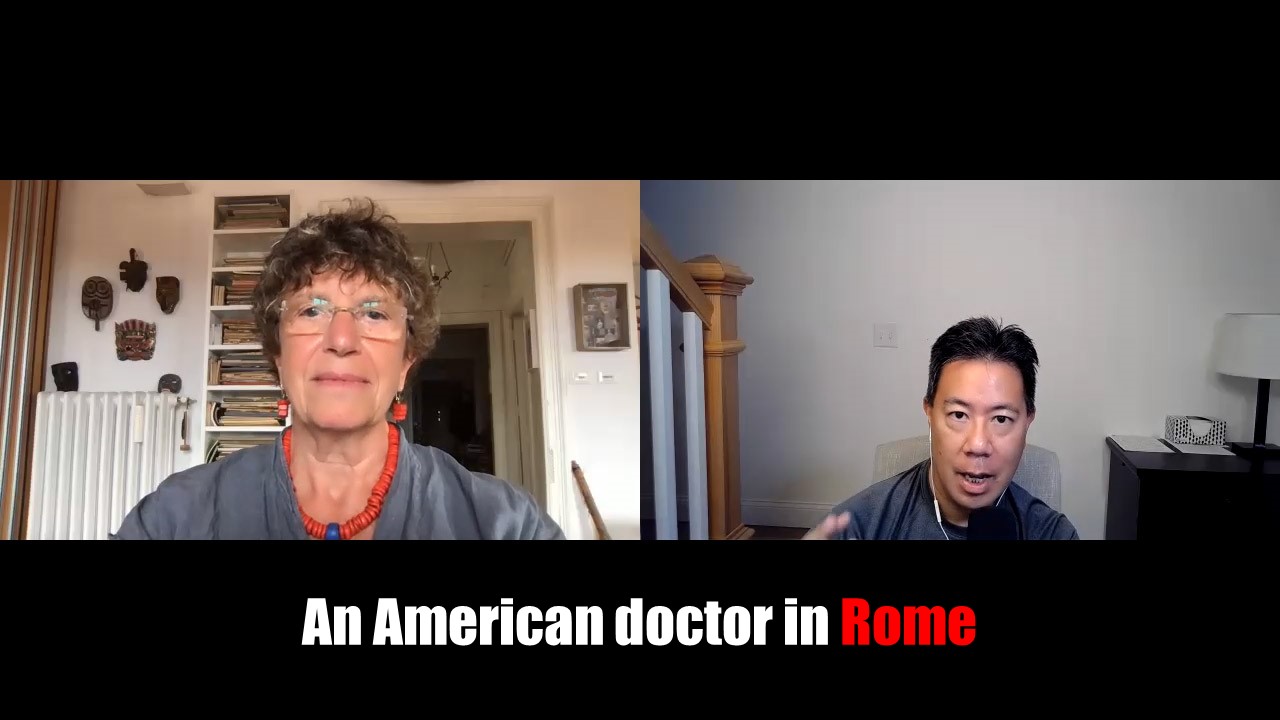

Some podcasts are like a warm cup of coffee. This one is more like an espresso shot you accidentally took while standing in line at an Italian government office: strong, a little chaotic, and oddly life-affirming.
An American doctor in Rome follows a very specific kind of adventure storyone where the dragon is bureaucracy, the treasure is a medical license, and the plot twist is that you might actually like the dragon once you get to know it.
If you’ve ever daydreamed about dropping your American routine for a life in Romecobblestones, cappuccinos, and sunsets that look suspiciously like a movie setthis episode offers a reality check with a grin.
It’s a story about medicine, yes, but it’s also about identity, patience, and what happens when your carefully planned “one-year experiment” turns into a whole life.
What the podcast is really about (besides Rome)
On the surface, the premise is simple: an American physician moves to Rome and tries to practice medicine. Underneath, it’s a master class in how culture changes the way people get sick, ask for help, and expect to be cared for.
The episode centers on the messy middle: the paperwork, the language, the unspoken rules, the different paceand the emotional whiplash of realizing that your competence doesn’t automatically translate across borders.
Think of it as a behind-the-scenes look at what “starting over” means for a professional who’s used to being the person with answers.
In Rome, even the person with a stethoscope may find herself asking questions like: “Where do I stamp this?” and “Why do I need a certificate proving I have a certificate?”
Meet the voice behind the story: an American internist who stayed
The doctor at the center of this episode isn’t dabbling in an extended vacation. She’s a practicing physicianan internistwho built a career in Rome and learned how to care for patients in a system that doesn’t behave like the one she trained in.
Her story matters because it’s not a postcard version of relocation. It’s what happens after the honeymoon phase, when the romance of “living abroad” collides with the very unromantic reality of credentialing and clinical practice.
The podcast connects her experience to a bigger point: medicine is not just science. It’s communication, trust, expectations, and the rituals of a cultureeverything that happens before the prescription is written.
The real antagonist: paperwork with a plot
Every good story needs conflict. In this one, the conflict arrives wearing a suit, carrying a folder, and requesting “just one more document.”
The episode describes a process that feels almost ceremonial: gathering diplomas, transcripts, certifications, and proof of trainingthen translating and validating them so they can live a second life in a different bureaucracy.
It’s funny in the way only painfully true things are funny. The same way you laugh at a delayed flight when you’ve already accepted you’ll be sleeping near Gate C12.
There’s a particular kind of comedy in watching a very capable professional discover that “efficiency” is not a universal languageand that persistence sometimes matters more than perfection.
Why it hits home for American listeners
Many Americans are raised on a cultural myth that says: if you’re organized, you’ll be fine.
The Rome version is more like: if you’re organized, you’ll still be waiting, but you’ll be waiting with better snacks.
The episode quietly flips the American instinct to control everything into something more adaptable: learn the system, respect the pace, and don’t confuse “different” with “wrong.”
How Italy’s healthcare system feels different from the inside
Once you get past licensing and logistics, you run into the real differencesthe ones patients notice and clinicians feel in their bones.
Italy’s system is built around universal coverage through a national health service structure, but it’s also regionally managed, which can shape how care is delivered in practice.
The podcast doesn’t turn into a policy lecture, but it invites you to compare the day-to-day lived experience of getting care.
Universal coverage changes the tone of the conversation
In the U.S., a medical visit can come with invisible questions hovering in the room: “Can I afford this?” “Is this covered?” “How much will it cost later?”
In a system designed around universal access, the emotional weather can change. Patients may still be anxiousbecause illness is scary everywherebut the anxiety may be less entangled with billing uncertainty.
That doesn’t mean everything is perfect. It means the friction points are different.
Instead of battling surprise bills, patients might battle wait times, referrals, or regional variations in access.
The trade-offs are real; they’re just not the same trade-offs.
Primary care can feel more like a relationship than a transaction
One of the most interesting undercurrents in stories like this is how people define a “good doctor.”
In many American settings, speed and throughput are treated like survival skills.
In Rome, the pace can feel differentsometimes slower, sometimes more conversational, often more centered on continuity.
That shift can be surprisingly emotional for an American clinician. When you’re trained to move fast, slowness can feel like inefficiency.
But the podcast suggests another interpretation: slowness can also be a form of attention.
And attentionreal attentionis its own kind of medicine.
Rome as a classroom: what practicing abroad teaches you
Listening to this episode, you realize the “American doctor in Rome” story isn’t just about medicine in Italy.
It’s about what happens when your professional identity loses its automatic privileges.
Your accent is different. Your humor lands differently. Your clinical shorthand doesn’t translate.
Even your confidence has to be rebuilt in a new context.
Lesson 1: competence travels, but context drives
Medical knowledge is portable. Human systems are not.
A smart clinician still has to learn how patients describe symptoms in another language, how families participate, what people expect from tests, and how local norms shape decisions.
In other words: the science stays, but the stage directions change.
Lesson 2: culture shapes “when to worry”
In any country, a patient’s idea of urgency is influenced by culture, lived experience, and what they’ve seen happen to others.
An American patient might expect extensive testing quickly; an Italian patient might expect reassurance and watchful waiting in some casesor the reverse, depending on the situation.
The point is not that one approach is better; it’s that every system trains its people, quietly, over time.
Lesson 3: you can’t outwork a system, but you can learn it
The podcast’s bureaucratic episodes land because they’re universal.
Everyone who’s ever moved, immigrated, or tried to work in another country recognizes the feeling: you are doing everything right, and the system still shrugs.
The coping strategy that emerges is both humbling and freeingstop treating the system like a personal opponent and start treating it like weather.
Prepare for it. Dress appropriately. Don’t take it personally.
Healthy Italy stereotypes: what’s true, what’s incomplete
Americans often talk about Italy like it’s a wellness fair with better architecture.
There’s truth in the admiration: the Mediterranean-style pattern of eating has strong evidence behind it, and the broader lifestylemovement, social connection, and meals treated as events rather than obligationsgets attention for good reason.
But the episode’s bigger point is that “health” is never one factor.
It’s access to care, yes, but also social networks, daily rhythms, and the way a culture supports (or fails to support) people when they’re vulnerable.
The Mediterranean pattern is more than a menu
U.S. health organizations often describe Mediterranean-style eating as a plant-forward approach emphasizing fruits, vegetables, legumes, whole grains, olive oil, and lean proteinsespecially fish.
But what people forget is that the “diet” is attached to a way of living: walking to places, eating with others, and not treating lunch like a crime you committed between meetings.
In Rome, food isn’t only fuel. It’s a daily ritual that reinforces community.
And communitywhen it’s supportivecan become a health asset.
Practical takeaways for Americans visiting or living in Rome
The episode is a great story, but it also nudges listeners toward practical awareness. If you’re traveling, studying, relocating, or just daydreaming responsibly, a few basics can help you feel less like a confused extra in someone else’s movie.
Know how emergencies work
- Save Italy’s emergency number: 112 is widely used for emergencies.
- Understand that systems differ: ambulance availability is strong in many areas, but expectations and processes may not mirror U.S. norms.
- Have a plan: know where you’d go for urgent care, how you’d communicate key medical info, and who you’d contact if you needed help navigating.
Travel health: don’t let your vacation be your immune system’s surprise party
Basic travel guidance still applies: be up to date on routine vaccines and think ahead if you have chronic conditions.
If you take daily medications, bring enough for the full trip plus extra in case travel plans change.
Keep a list of prescriptions (generic names help) and a brief medical summary you could show a clinician if needed.
If you’re moving long-term, expect paperwork and build buffer time
If the podcast teaches one universally useful lesson, it’s this: life logistics expand to fill the space you don’t reserve for them.
If you’re relocatingespecially for professional workassume credentialing, residency paperwork, and administrative steps will take longer than you want.
Not because anyone is out to get you. Because systems have their own tempo.
Why stories like this resonate in 2026
There’s a reason listeners keep clicking on “doctor stories,” even if they’re not in medicine.
Healthcare is one of the rare places where everyoneno matter how competenteventually becomes a beginner.
We all end up in a waiting room. We all try to describe symptoms. We all hope someone will take us seriously.
An American doctor practicing in Rome gives you a double mirror: you see the Italian system through American eyes, and you see the American assumptions you didn’t realize you were carrying.
It’s not just a story about moving abroad. It’s a story about what we think healthcare should feel likeand what we’re willing to trade to get it.
Conclusion
An American doctor in Rome works because it refuses to be either fantasy or complaint.
It’s a funny, grounded look at professional reinventioncomplete with translated transcripts, cultural curveballs, and the slow realization that “home” can be rebuilt in a place you once considered temporary.
If you listen for policy, you’ll hear it. If you listen for lifestyle, you’ll hear that too.
But if you listen closely, the real message is simpler: medicine is human everywhere, and learning how another culture cares for its people can make you rethink how you want to be cared forno matter where you live.
Bonus: of real-world experiences tied to “An American doctor in Rome”
People love the idea of an “American doctor in Rome” because it’s a shortcut into a bigger set of questions: What is it like to live in a place where everything feels older than your entire family tree? What is it like to care for patients when your accent gives you away before you even say “hello”?
And what does “health” look like when it’s stitched into daily life instead of squeezed between calendar alerts?
Americans who relocate to Rome often describe the first year as a translation project that has nothing to do with language and everything to do with expectations.
You learn quickly that “making an appointment” can mean different things depending on whether you’re in a public system, a private clinic, or a specialist’s office that runs on its own internal calendar logic.
Some people say they felt less like customers and more like participants in a community processsometimes comforting, sometimes maddening.
Expat clinicians and long-term residents frequently mention that the most practical skill is not medical knowledge, but administrative endurance.
Paperwork can be repetitive, requirements can seem circular, and the “right office” can feel like a moving target.
Yet many also report an unexpected upside: once you’re knownonce you’ve proven you can navigate the ritualsdoors open faster.
The system may feel slow to outsiders, but it often runs on relationships and familiarity as much as on formal checklists.
Then there’s the everyday health culture. People talk about how walking becomes default: to the market, to the pharmacy, to meet a friend, to “just grab one thing” that turns into a small expedition.
Meals can stretch longer, not because anyone is performing leisure, but because social connection is treated as normal.
Visitors notice it immediately; long-term residents start to realize it’s not a cute habit, it’s infrastructure for mental health.
Another common experience is how pharmacies function as a first stop for minor concerns.
Many Americans say they’re surprised by how often a pharmacist becomes a practical advisorsomeone who can suggest next steps, explain options, and tell you when something sounds serious enough to escalate.
It doesn’t replace doctors, but it can reduce the feeling that every small symptom must become a formal medical event.
Finally, people who’ve dealt with illness in Rome often describe a different emotional tone.
When access is structured around a public system, the fear sometimes shifts away from “How much will this cost?” and toward “How long will this take?” or “Who do I call first?”
Those are different anxieties, but anxieties all the same.
And that’s why the podcast lands: it’s not pretending Rome is perfect. It’s showing what it feels like to become a beginner againwhile still being a professionaland discovering that care is always a blend of medicine, culture, and the stubborn, hopeful decision to keep going.