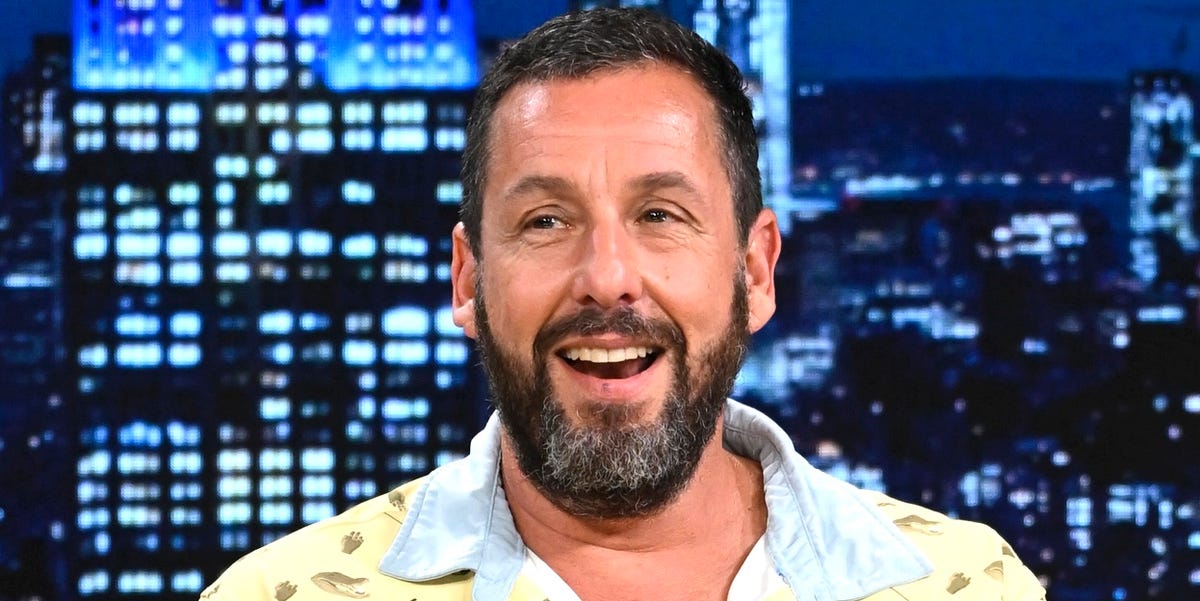

If you have followed Adam Sandler long enough to quote Happy Gilmore, defend Big Daddy like it is constitutional law, and argue that Uncut Gems deserved more awards than it got, then buckle up. Sandler’s latest career news is not just another “new movie coming soon” blurb tossed onto the internet like a stale breadstick. It is a full-blown reminder that one of Hollywood’s most underestimated stars is somehow doing three things at once: feeding nostalgia, chasing prestige, and staying unmistakably, stubbornly, gloriously Adam Sandler.
That is what makes this moment so fun. Sandler is not quietly coasting on old hits. He is actively reshaping the second half of his career in a way that feels both smart and weirdly personal. On one side, he gave fans the long-awaited return of Happy Gilmore 2, a sequel many people joked about for years and then immediately screamed about once it became real. On another, he stepped back into the cultural spotlight with a warm, emotional performance during SNL50, reminding everyone that he is not just a punchline machine with a guitar. And now, in the twist nobody saw coming with full certainty, he is heading into darker dramatic territory again with Time Out, a psychological Netflix drama that sounds a lot less like “pass the silly voice” and a lot more like “pass the awards-season binoculars.”
In other words, Adam Sandler fans are not just getting news. They are getting a whole buffet. There is comfort food on one plate, prestige drama on another, and a side dish of “wait, he is doing that next?” This is the kind of career moment that makes longtime fans feel smug in the best possible way. Because while plenty of people spent decades acting like Sandler was just a guy in oversized basketball shorts making nonsense comedies with his friends, the truth is more interesting. He has built one of the most durable careers in modern entertainment by understanding something Hollywood often forgets: audiences like talent, sure, but they also love authenticity. Sandler has both.
The Big Career News Is Bigger Than One Headline
When people hear “career news,” they often expect one announcement to do all the heavy lifting. Maybe it is a trailer. Maybe it is a casting update. Maybe it is a release date. With Sandler, though, the story is bigger because the headlines are stacking in a way that reveals a pattern.
First, there was the return of Happy Gilmore, which instantly hit that sweet spot between nostalgic fan service and modern streaming event. Then came renewed attention on Sandler’s dramatic credibility through Jay Kelly, the Noah Baumbach film that paired him with George Clooney and gave him fresh awards-season attention. Then there was his spotlight moment on Saturday Night Live’s 50th anniversary special, where he mixed jokes, affection, and real feeling in a way that only he can. Now comes Time Out, which signals that Sandler is not done stretching, not done surprising, and definitely not ready to become a human museum exhibit of old comedy clips.
That combination matters. It shows a star who knows exactly how to use every lane available to him. He can make the crowd laugh. He can make them sentimental. He can make them nervous. He can do all that while still seeming like the most casually dressed man within a hundred-mile radius of any red carpet.
Yes, Happy Gilmore 2 Actually Mattered
Nostalgia was only part of the story
At first glance, Happy Gilmore 2 looked like a very simple proposition: bring back a beloved character, hand him a golf club, stir in cameos, and let the internet do cartwheels. But the sequel mattered for Sandler’s career for a deeper reason. It proved that his brand of comedy nostalgia still has serious weight in the streaming era.
That is no small thing. Plenty of stars can make people say, “Oh wow, I remember him.” Fewer can turn that reaction into a true event. Sandler did. The sequel did not just exist as a wink to old fans; it arrived like a cultural roll call. Everybody showed up for the reunion, or at least wanted to know what kind of delightful chaos Sandler had cooked up. That kind of sustained affection is rare, especially for a comedian whose career has spanned sketch comedy, blockbuster silliness, family hits, weird experiments, and serious dramas.
The real lesson is this: Sandler did not revisit Happy Gilmore because he was out of ideas. He revisited it because he had enough career leverage to turn nostalgia into a major win. That is a big difference. One is desperation. The other is confidence wearing Timberlands.
Why the sequel boosted the larger Sandler narrative
For years, critics and fans alike have treated Sandler as if he has two separate careers living in the same closet. There is “goofy Adam,” who yells, falls down, sings weird songs, and somehow ends up fighting Bob Barker. Then there is “serious Adam,” who locks into dramatic performances and makes people say, “Wait, he can really act.” The success of Happy Gilmore 2 did not erase that split, but it did make it feel less important.
Why? Because the movie reminded everyone that his comedy persona is not some embarrassing early chapter he needs to outgrow. It is the foundation of the whole operation. Sandler’s dramatic work lands precisely because audiences already trust him. His funny side makes the vulnerable side more believable. His goofball energy makes his emotional beats feel earned instead of polished to death. He is not switching identities. He is using the full set.
SNL50 Showed Why Sandler Still Connects
He did not just appear; he reminded people who he is
Sandler’s appearance during SNL50 hit the exact sweet spot longtime fans know well. It was funny without being flippant, sentimental without becoming syrupy, and personal without feeling manufactured by a committee of branding experts in expensive shoes. That is one of Sandler’s secret weapons. He can be corny and sincere in the same breath, and instead of canceling each other out, those qualities somehow work better together.
In a media culture where many celebrity moments feel vacuum-sealed and optimized within an inch of their life, Sandler still comes across like a real person who wandered onstage with a guitar and a memory. That authenticity has been part of his appeal since the beginning. He is not trying to convince people he is cooler than he is. He is not pretending to be more elegant than he is. He is basically saying, “Here is the joke, here is the heart, and here is a song that might make you laugh and tear up in the same minute.” Turns out, people like that.
The career value of that moment is easy to miss if you only look at it as fan nostalgia. But it did something important: it refreshed Sandler’s public image in real time. It reminded viewers that his legacy is not just a pile of movie quotes. It is a relationship. Audiences have grown up with him. That connection is currency, and he knows how to spend it wisely.
The Prestige Track Is No Longer a Surprise
Jay Kelly keeps the dramatic conversation alive
If Happy Gilmore 2 reminded the world that Sandler’s comedic instincts are still strong, Jay Kelly helped underscore something else: his dramatic lane is not a novelty anymore. It is part of the package. Teaming up with Noah Baumbach and George Clooney gave Sandler another opportunity to operate in a more restrained, emotionally textured mode, and that matters because it continues a trend rather than starting one from scratch.
At this point, nobody should be reacting to a good Sandler dramatic performance like they just saw a bear do taxes. This man has already done the work. He has already proven he can bring sadness, tension, weariness, gentleness, and lived-in humanity to the screen. What Jay Kelly seems to confirm is that the industry is finally catching up to what fans have known for a while: Sandler is not an accidental dramatic actor. He is a legitimate one.
That recent awards attention only strengthens the argument. Once you move from “surprisingly good in drama” to “regularly discussed in serious acting circles,” you are no longer dabbling. You are established. And that status gives Sandler something powerful: freedom. He can choose bigger crowd-pleasers, smaller character pieces, or something in between without looking like he is trying to prove himself every single time.
Why Sandler works so well in drama
Sandler’s dramatic appeal comes from his unpredictability. He has always had that slightly off rhythm, that feeling that a character might say something sweet, sad, or completely unhinged at any second. In comedy, that quality makes him funny. In drama, it makes him watchable. He feels human because he never seems polished into blandness.
He also brings built-in emotional history. Audiences have seen him as the lovable loser, the chaotic husband, the overgrown teenager, the frantic hustler, the underdog dad, the guy trying way too hard, and the guy pretending not to care when he obviously does. All of that feeds his dramatic performances. He arrives on screen with layers, even before the scene starts doing any heavy lifting.
And Now for the Career Twist: Time Out
This is the news that changes the mood
If the Sandler story ended with a successful sequel and another wave of affectionate applause, fans would already have enough to celebrate. But the truly interesting career news is his next move: Time Out, a psychological drama for Netflix directed by Scott Cooper. That announcement changes the tone of the whole conversation.
Why? Because it suggests Sandler is following one of his biggest nostalgia-fueled wins with something moodier, stranger, and more psychologically loaded. That is not the decision of an artist who wants to play it safe forever. That is the decision of someone who enjoys keeping the machine slightly off-balance.
This is where Sandler becomes especially fascinating. He knows he can make broad comedy. He knows audiences will show up for familiar characters. He also knows there is artistic juice left in taking darker, more interior roles. And instead of choosing one path and pretending the others do not exist, he keeps hopping between them like a guy who brought sneakers to a black-tie event and somehow still looks comfortable.
Why this move matters for his long game
A lot of performers reach Sandler’s level of recognition and start managing decline. They preserve the brand. They revisit safe things. They accept the lifetime-achievement compliments and settle into legacy mode. Sandler does not seem especially interested in that script. Even when he takes the easy layup, he often follows it with something odder, riskier, or more emotionally ambitious.
Time Out is exciting because it fits that pattern. It suggests Sandler is still choosing variety over autopilot. He is not just building a catalog; he is shaping a late-career identity that can hold comedy, drama, memory, and surprise all at once. For fans, that is the dream scenario. You do not want your favorite actor to become predictable. You want him to stay recognizably himself while still finding new rooms to walk into.
What This Means for Adam Sandler Fans
The best part of all this career news is that fans do not have to pick a favorite version of Sandler anymore. You can love the ridiculous voice guy and the dramatic actor. You can adore the man who made silly songs on SNL and the one who can hold a quiet, aching close-up. You can root for the sequel king and the prestige chameleon. The current Sandler era is generous that way.
It also means the old jokes about his career feel increasingly outdated. For too long, the lazy line was that Sandler just made movies to hang out with his friends on vacation. First of all, that sounds kind of great. Second, even when that criticism had a grain of truth, it missed the larger reality: Sandler has always been more strategic than people gave him credit for. He built a loyal audience, understood his own commercial power, and preserved enough goodwill to take genuine artistic swings when he wanted to.
Now the payoff is obvious. He has nostalgia. He has credibility. He has streaming muscle. He has emotional goodwill. And perhaps most impressively, he has longevity without feeling over-manufactured. That is not easy to pull off in Hollywood, where image management often becomes a full-time sport and sincerity can feel as rare as a normal comment section.
The Fan Experience Right Now Feels Different
There is also an emotional side to this moment that numbers and release calendars do not fully capture. Being an Adam Sandler fan in 2026 feels a little like watching the class clown from high school walk into the reunion and somehow turn out to be the most beloved person in the room. Not because he suddenly became someone else, but because everyone finally understands what was there all along.
For many fans, Sandler is attached to entire eras of life. Maybe he was part of your teenage years, when quoting Billy Madison and Happy Gilmore felt like a personality trait. Maybe he was part of your college years, when his dumbest jokes somehow got funnier at 1 a.m. Maybe later, he became part of family movie nights, background comfort viewing, or that specific kind of streaming scroll where you land on a Sandler title and think, “You know what? Sure. This man has earned two hours.”
That long relationship changes how this career news lands. Fans are not just reacting to a celebrity update. They are reacting to a timeline. When Sandler returns to a role like Happy Gilmore, it is not just a sequel; it is a portal. It brings back the feeling of watching the original for the first time, laughing at the same ridiculous lines, and being reminded that certain performers do not just entertain you. They travel with you.
And then he does something dramatic or heartfelt, and the experience shifts again. Suddenly the guy who made you laugh in one decade is making you feel weirdly emotional in another. That creates a different kind of loyalty. It is not only based on fandom. It is based on trust. You trust Sandler to stay recognizably Sandler, even when the material changes. You trust him to keep one foot in nonsense and one foot in something real. That balance is hard to fake, which is probably why audiences keep responding to it.
There is also something satisfying about seeing wider culture catch up. Longtime fans have been living in the “actually, he is better than people say” zone for years. So when he gets praise for a dramatic turn, when he gets honored for his career, when people talk seriously about his range, there is a natural urge to point at the screen like a proud relative and say, “Yes, thank you, we have been trying to tell you.” It is the rare case where mainstream validation does not ruin the fun. It enhances it.
That is why this moment feels bigger than one movie or one announcement. It feels like a reward for sticking around. Fans get the silliness they came for, the maturity they hoped he would keep exploring, and the excitement of knowing the next move might still surprise them. That combination keeps a career alive in a deeper way than hype ever could. Hype burns hot and disappears. Affection sticks. Sandler has affection. Lots of it. Enough to make a sequel feel like a celebration, a dramatic role feel like progress, and a new project announcement feel like the start of another chapter instead of an afterthought.
So yes, Adam Sandler fans really may not be ready for his career news. Not because it is shocking in a tabloid way, but because it confirms something bigger. He is not winding down. He is expanding. He is turning a career that used to be dismissed as goofy into one that now looks surprisingly complete. Comedy icon. Streaming draw. Dramatic actor. Cultural comfort figure. Honestly, that is a ridiculous résumé. In the best possible way.
Final Take
Adam Sandler’s current career moment is not about one lucky headline. It is about momentum. Happy Gilmore 2 proved that his comedy legacy still has huge pull. SNL50 reminded audiences why he remains personally beloved. Jay Kelly reinforced the idea that his dramatic work deserves real attention. And Time Out suggests he is still eager to take fresh creative risks.
That is the real story here. Sandler is no longer just the lovable chaos agent from a different entertainment era. He is one of the few stars who can move between nostalgia, prestige, streaming success, and genuine audience affection without looking fake in any of those lanes. For fans, that is fantastic news. For Hollywood, it is a reminder that staying power is not always built by being trendy. Sometimes it is built by being unmistakably yourself for decades and getting better at using that power over time.
So no, Adam Sandler fans were probably not ready for this career news. But they should absolutely enjoy it. The Sandman is still standing, still swinging, and still finding new ways to make his career look a lot smarter than the skeptics ever expected.