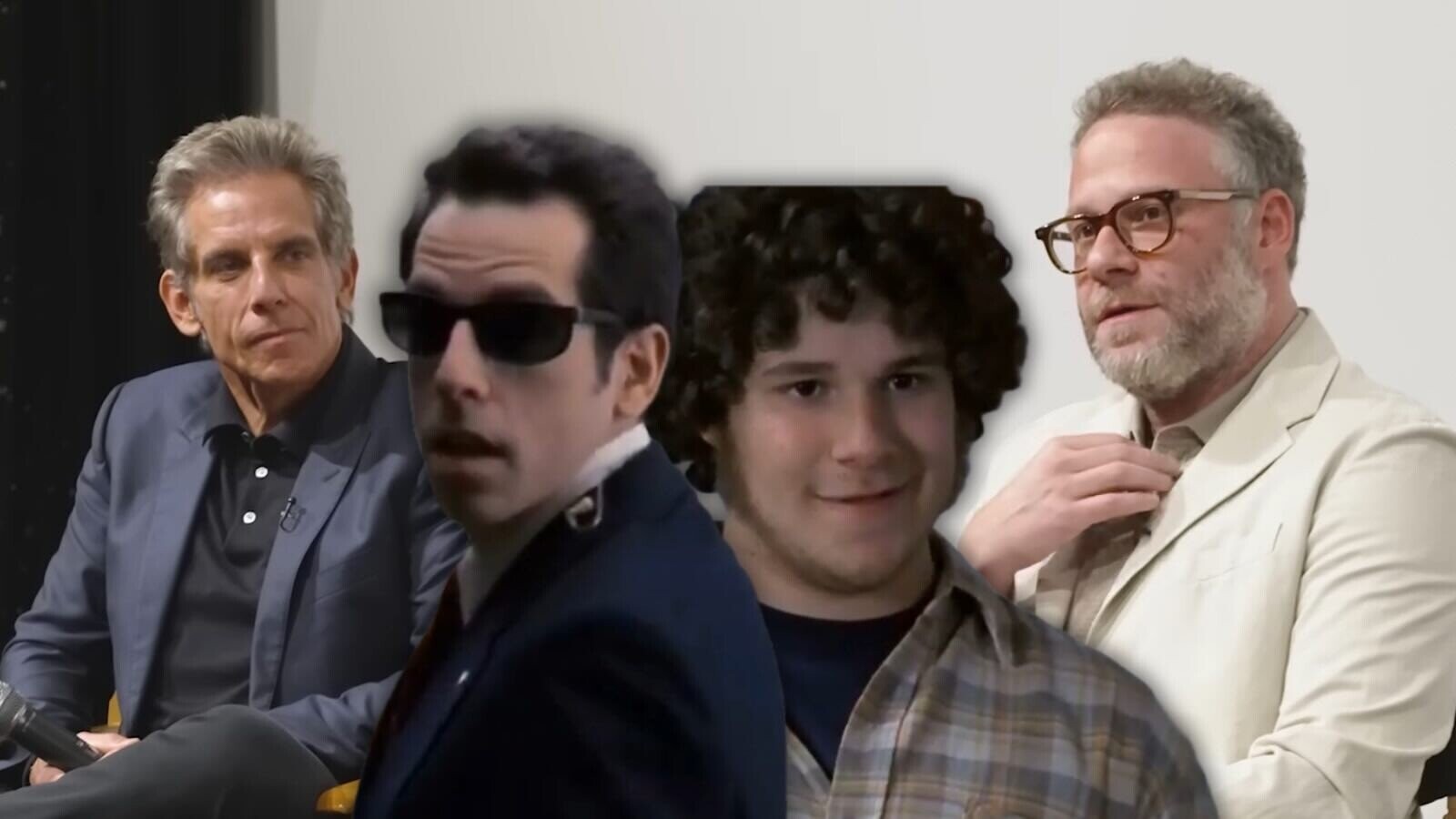

There are few things funnier than hearing a grown adult remember the exact moment they thought another grown adult was basically a fossil. And Seth Rogen recently gave us a perfect example.
During a live conversation with Ben Stiller, Rogen looked back on their first meeting and delivered the kind of brutally honest, teenage-age math only a 16-year-old can produce: if someone is in their 30s, they are not just olderthey are practically carved into a mountain somewhere. In Rogen’s retelling, young Seth saw Stiller and thought, in essence, this man is ancient. Stiller’s comeback? A wonderfully dry acknowledgment that he has, in fact, “been old for a long time.”
The moment is hilarious on the surface, but it also says something surprisingly human about Hollywood, memory, and the strange way age feels when you’re just starting out. It’s a story about perspective. It’s about career timing. And it’s about what happens when two comedians from different generations meet at a very specific point in their livesthen reunite years later as peers.
Why This Story Hit So Hard (and Why It’s So Funny)
The line works because it is painfully relatable. Most people can remember being a teenager and assuming anyone over 30 had already lived 12 lifetimes, paid off a mortgage, and probably used the phrase “back in my day” at least twice before lunch.
Rogen’s memory also lands because he said it to Ben Stiller, a comedian and filmmaker whose face has been part of pop culture for decades. Stiller already had a real career footprint when Rogen was just getting started, so to a teenager on a set, he likely didn’t feel “32-ish.” He felt established. And to a teen, established often translates to “historically significant.”
The humor comes from the contrast:
- A teenage Seth Rogen using teenager logic (“32 = nearly retirement”).
- An older Seth Rogen retelling it with perfect comedic timing.
- Ben Stiller responding like a man who has heard every age joke and decided to weaponize calmness.
It’s a great comedy exchange because both men understand the bit. Rogen gets to play the blunt kid he used to be. Stiller gets to play the straight-faced veteran. Everybody wins, including the audience.
When They First Met: The Freaks and Geeks Connection
The backstory matters here. Rogen and Stiller first crossed paths around Freaks and Geeks, the cult-favorite series that became a launchpad for a ridiculous amount of talent. Rogen played Ken Miller, one of the show’s standout “freaks,” and he was very young when he joined the cast.
In oral histories and retrospective coverage, Rogen’s age at the time has long been part of the show’s mythology: he was a teenager, still forming his voice, still figuring out acting, and already giving off the sharp sarcasm that would become a signature. That’s what makes his memory of Stiller so vivid. This wasn’t just “young actor meets famous person.” It was a teenager meeting someone who already represented a whole tier of Hollywood adulthood.
Stiller’s connection to the show is also a fun little footnote that fans love: he appears in the episode “The Little Things” as Agent Meara. It’s one of those classic Freaks and Geeks detailssmall enough to feel like a trivia prize, big enough to become legendary if you’re into comedy history.
And because Freaks and Geeks became such a cultural touchstone, moments like this don’t just feel like random anecdotes. They feel like behind-the-scenes origin stories. You can almost see the scene: teen Seth, dry as ever, clocking Ben Stiller’s age and mentally filing him under “grown-up man of the ancient world.”
Teenage Time Is Weird
At 16, Everyone Over 30 Looks Like a Full Department Manager
Let’s defend teenage Seth for a second: the man was 16. At that age, your sense of time is wildly distorted. A summer feels endless. A two-year age gap feels enormous. Someone who is 25 may as well be a senator. So when Rogen met Stiller in his early 30s, his brain probably didn’t process a normal age difference. It processed a category difference.
Teenagers don’t just see age in numbers. They see it in roles. One person is “me” (a kid). The other person is “adult” (a giant umbrella category that includes everyone from 30 to 85). That’s why Rogen’s quote is funny, but also psychologically accurate. In teen logic, Stiller wasn’t merely olderhe was from another era.
Hollywood Makes the Gap Feel Bigger
Add a film set into the mix and the effect gets stronger. On a set, hierarchy is visible: call times, trailers, producers, guest stars, directors, studio notes, deadlines. If you’re 16 and relatively new to the machine, a seasoned performer like Ben Stiller doesn’t just feel older. He feels official.
That “official” vibe can add ten imaginary years instantly. You’re not seeing a person. You’re seeing a person plus reputation, confidence, credits, and the fact that everyone seems to know their name. No wonder young Seth had a mini existential reaction.
The Secret Ingredient Here Is Respect
The joke lands because it’s not mean. It’s affectionate.
Rogen isn’t mocking Stiller so much as replaying his own younger perspectiveand how absurd that perspective now seems. That’s a subtle but important difference. This is not “aging panic” comedy. It’s “memory and growth” comedy.
Stiller’s reply works for the same reason. He doesn’t push back defensively. He leans in. That kind of response usually comes from people who are secure in their body of work and comfortable with where they are. In other words, the exchange feels funny because both men are clearly in on the same joke: time passed, careers happened, and now they get to laugh about it.
From “Whoa, You’re Old” to Creative Peers
What makes this anecdote even better is where both men are now.
Stiller has become one of those rare Hollywood figures who can move between acting, directing, and producing prestige television and big-screen comedy with ease. His work on Severance helped reinforce something longtime fans already knew: he’s not just funny on camera, he’s deeply effective behind it, too.
Rogen, meanwhile, has evolved into one of the most versatile comedy creators of his generation. Yes, he still has the laugh. Yes, he still has the timing. But he’s also become a major producing and writing force, and projects like The Studio show just how sharp his industry satire can be.
So the “you were so old” story has a nice built-in arc:
- Phase 1: Teen Seth sees Ben Stiller as a fully formed Hollywood adult.
- Phase 2: Seth Rogen becomes Seth Rogen.
- Phase 3: They sit together, discuss their careers, and laugh about the age gap like two guys who understand the business from the inside.
That’s why this anecdote traveled so quickly. It’s a one-liner with a whole career narrative hidden inside it.
Why Fans Love Stories Like This
It Humanizes Famous People
Celebrity stories can get repetitive fast: premieres, trailers, red carpets, “here’s what he said on a podcast.” But this one feels different because it’s human-scale. It’s just a memory about being young and bad at estimating age.
The best celebrity anecdotes are the ones that make famous people sound exactly like everybody else. In this case, Seth Rogen sounds like every teenager who has ever whispered, “Wait… he’s only 32?” Ben Stiller sounds like every adult who has accepted that younger people think 35 is basically wizard age.
It Celebrates Generational Comedy Without Making It a Competition
Entertainment coverage sometimes frames comedy generations like sports rivalries. Who changed the game? Who was bigger? Who came first? Who stayed relevant?
This moment is better than that. It reminds us that comedy careers often overlap in interesting ways. One person is a mentor figure without officially being a mentor. Another person is a newcomer who later becomes a creative powerhouse. Then, years later, both are just two extremely funny people comparing memories and letting the audience enjoy the weirdness of time.
A Quick Reality Check on “Old” in Hollywood
Hollywood has always had a weird relationship with age. Sometimes 28 is treated like “young and rising.” Sometimes 41 is treated like “legend.” Sometimes a person gets described as a veteran while they still look like they could plausibly host a college game show.
That’s part of what makes Rogen’s story so satisfying. It cuts through the usual industry language and gets back to the truth: age is relative, memory is dramatic, and everyone becomes “the older person” in someone else’s story eventually.
Also, if we’re being honest, Stiller probably looked exactly like what he was: a successful guy in his early 30s. But through a 16-year-old’s eyes? He was approximately 97, very experienced, and perhaps one step away from giving life advice near a fireplace.
What This Anecdote Reveals About Seth Rogen’s Comic Voice
Rogen’s best stories often work because they combine bluntness with warmth. He says the thing people think but usually don’t say out loud, then he frames it in a way that feels playful rather than cruel.
In this case, the structure is classic Rogen:
- Start with a memory.
- Make it painfully specific.
- Say the impolite part out loud.
- Let the honesty become the punchline.
It also shows why he remains such a strong interview guest. He doesn’t just answer questions. He produces scenes. You can picture the younger version of himself. You can picture Stiller. You can picture the exact look of shock on a teenager’s face when he realizes adults are everywhere.
Ben Stiller’s Response Is the Other Half of the Magic
A story like this lives or dies on the response, and Stiller’s reaction is exactly what you want: dry, quick, and self-aware.
Instead of acting surprised, he treats “old” like an old friend. That’s veteran-comic energy. No overexplaining. No fake offense. Just a line that says, essentially, “Yes, yes, I understand the assignment.”
It also reflects something that has made Stiller’s public persona last for so long: he can be the butt of the joke without losing authority. That balance is harder than it looks. It’s one reason he works so well in both absurd comedy and more serious, controlled projects.
Final Take
“A young Seth Rogen thought Ben Stiller was so old when they met” is a great headline because it sounds like a throwaway joke. But it’s actually a tiny comedy masterclass in perspective, timing, and generational overlap.
It gives us teen Seth Rogen in one line. It gives us Ben Stiller’s dry confidence in one reply. It gives fans a fun callback to Freaks and Geeks. And it quietly reminds everyone that age on paper and age in memory are two very different things.
Most of all, it’s a reminder that the funniest stories in Hollywood are often the smallest ones: two talented people, one old memory, one perfectly timed joke, and an audience instantly thinking, “Yep. I’ve done that too.”
Related Experiences: Why So Many People Have Had a “They Seemed So Old” Moment (Extended Section)
This story resonates because it mirrors a common life experience that has nothing to do with fame. Almost everyone has had a moment when they were young and met someone oldersometimes only 10 or 15 years olderand mentally placed them in the category of “fully grown adult from another universe.”
Think about a first job in high school. A supervisor might be 29. In reality, that person is still figuring out rent, work stress, and whether cereal counts as dinner. But to a 16-year-old employee, that manager can seem unbelievably polished and mature. The job title, the authority, and the confidence all make the age gap feel bigger than it is.
The same thing happens in school activities. A young athlete might look at a 31-year-old coach and assume they have endless wisdom, a perfectly organized life, and a secret filing cabinet full of life answers. Then you become 31 and realize you are still Googling basic things and hoping your plants survive the week.
Creative fields make this effect even stronger. On a set, in a studio, or in a writer’s room, experience carries visible weight. People who know the process seem not just older, but somehow more permanent. That’s likely part of what young Seth Rogen felt around Ben Stiller. Stiller didn’t just represent an age differencehe represented a level of career stability and recognition that can feel massive to someone just starting out.
Another reason these memories stick is that our brains attach age to style. Haircuts, clothes, the way someone speaks, or the projects they’re known for can all make them seem older or younger than they are. In every decade, there’s a “grown-up look” that teenagers instantly read as ancient. Then trends change, and suddenly that same look becomes cool again, which is both funny and deeply unfair.
There’s also the emotional side: when you’re young, older people often control the room. They approve the work. They drive the car. They make the schedule. That authority gets mixed into your memory. Years later, you don’t just remember their ageyou remember how they made you feel: nervous, impressed, intimidated, motivated, or all four at once.
That’s why stories like Rogen and Stiller’s have staying power. They are not just celebrity anecdotes; they are identity markers. They remind us what it felt like to enter a room before we knew who we were, and to see someone who seemed completely formed. Then time passes, and one day we realize we’re now that person in someone else’s story.
And that realization is its own comedy bit. One day you’re the kid whispering, “Wow, they’re old.” The next day you hear a teenager call a 34-year-old “sir” and suddenly you understand every Ben Stiller reaction in history.
In that sense, Rogen’s joke is more than a funny memory. It’s a little snapshot of growing up. You start by seeing age as a cliff. Later, you see it as a staircase. And if you’re lucky, you end up with enough perspective to laugh about how dramatically wrong your teenage brain was the whole time.