
Death is the one appointment nobody gets to skip, though most of us would prefer to arrive fashionably late. Across the United States, the ways we handle the dead have changed dramatically. Traditional burial still matters deeply to many families, but cremation, green burial, water cremation, human composting, anatomical donation, and highly personalized memorials are reshaping modern death care.
This article explores 15 real, respectful, and surprisingly varied funeral options and after-death practices. Some are ancient. Some are modern. Some are practical. Some are poetic. All of them reveal something about how humans turn grief into ritual, memory, responsibility, and love.
Whether you are planning ahead, supporting a grieving family, writing about funeral traditions, or simply curious about death care in America, this guide explains the major ways people care for human remains while honoring personal values, cultural beliefs, budgets, environmental concerns, and family wishes.
1. Traditional Burial: The Familiar Path
Traditional burial is still one of the most recognizable funeral options in the United States. It usually involves a funeral service, a casket, a cemetery plot, and a graveside committal. For many families, burial provides a fixed place to visit, leave flowers, say prayers, tell stories, or quietly stand there wondering why cemetery grass always looks better than the lawn at home.
This method often carries religious, cultural, and family significance. A burial plot can connect generations, especially when relatives are buried in the same cemetery. The grave marker gives the deceased a public record, a name in stone, and a physical place in community memory.
Costs vary widely depending on the casket, cemetery, vault, headstone, service, transportation, and local fees. Under U.S. consumer protection rules, families generally have the right to choose only the funeral goods and services they want, rather than being forced into a package that includes unnecessary extras.
2. Direct Burial: Simple, Fast, and Less Expensive
Direct burial is a simpler version of traditional burial. The body is buried soon after death, usually without a formal viewing or elaborate ceremony beforehand. Families may still hold a memorial service later, but the burial itself is more streamlined.
This option appeals to families who want a cemetery burial but prefer lower costs, fewer logistics, or a quieter farewell. It can also be helpful when relatives live far apart and need more time to gather for a later celebration of life.
Direct burial does not mean careless burial. It simply separates the physical disposition from the public ritual. The goodbye can be modest, dignified, and meaningful without requiring a ballroom-sized flower budget or a program printed on paper thick enough to build furniture.
3. Entombment in a Mausoleum
Entombment places human remains in a mausoleum crypt rather than underground. Mausoleums may be private family structures, community buildings, or indoor cemetery spaces. Some families choose entombment because it feels more protected, more architectural, or more connected to long-standing family tradition.
In areas with high water tables, limited cemetery land, or strong mausoleum traditions, above-ground placement can be especially common. Mausoleums may also provide indoor visiting spaces, which is convenient when the weather is doing its best impression of a wet sock.
Entombment can be more expensive than standard burial, depending on the cemetery and crypt type. Still, for families who value permanence, visibility, and a shared family memorial space, it remains an important part of American death care.
4. Flame Cremation: The Modern Majority Choice
Cremation has become the most common final disposition choice in the United States. Many families choose it because it is flexible, often less expensive than full traditional burial, and easier to coordinate when relatives live in different states.
After cremation, the cremated remains may be kept in an urn, buried in a cemetery, placed in a columbarium niche, scattered where allowed, divided among family members, or incorporated into memorial objects. Cremation also allows families to hold a funeral or memorial service on their own timeline.
One reason cremation has grown is that American families are more mobile than ever. People may be born in Ohio, live in Arizona, retire in Florida, and have grandchildren in Oregon. Cremation gives families more options when geography has turned the family tree into a flight itinerary.
5. Direct Cremation: Minimal Ceremony, Maximum Flexibility
Direct cremation happens without a formal funeral service beforehand. The body is cremated shortly after the required paperwork and waiting period are completed, and the cremated remains are returned to the family.
This is usually one of the least expensive options offered by funeral providers. It gives families time to plan a memorial service later at home, in a park, at a house of worship, in a restaurant, or in any meaningful location. A direct cremation does not prevent ceremony; it simply removes the pressure to arrange everything immediately.
For many people, this option feels practical and emotionally manageable. Grief already comes with enough decisions. Sometimes the best plan is to simplify the logistics so the family can focus on remembering the person, not comparing five shades of satin lining.
6. Columbarium Placement: A Permanent Home for Cremated Remains
A columbarium is a structure with niches designed to hold urns. It may be indoors, outdoors, part of a mausoleum, attached to a chapel, or built as a garden wall. For families who choose cremation but still want a permanent public memorial, a columbarium offers a middle ground.
This option provides a stable visiting place without requiring a full burial plot. Niches can often be marked with names, dates, symbols, or short inscriptions. Some columbaria also allow small keepsakes or flowers, depending on cemetery rules.
Columbarium placement is especially appealing when family members want a dignified resting place but do not want an urn kept at home. After all, not every bookshelf is ready for that level of emotional responsibility.
7. Scattering Cremated Remains
Scattering ashes is one of the most personal ways families handle cremated remains. People may choose a garden, private property, a mountain trail, a lake, or the ocean, depending on local rules and permissions.
In the United States, scattering on private property generally requires the property owner’s permission. Scattering in national parks, public lands, waterways, or at sea can involve specific regulations. Ocean scattering is allowed under federal rules when done according to EPA requirements, including distance from shore and post-scattering reporting.
Scattering often reflects the personality of the person who died. A lifelong sailor may be remembered at sea. A gardener may be returned to a rose bed. A hiking enthusiast may be honored near a favorite trail. The theme is simple: place memory where love already lives.
8. Burial at Sea
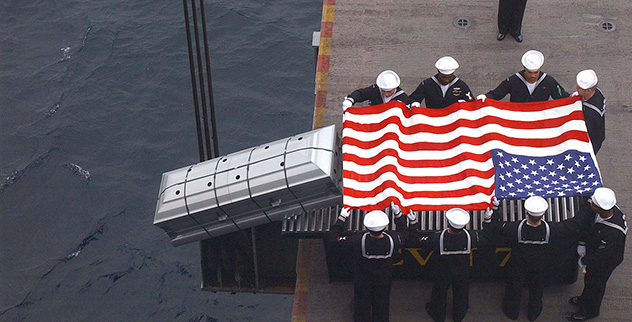
Burial at sea has a long history, especially among sailors, military families, and people who feel spiritually connected to the ocean. In modern U.S. practice, families may scatter cremated remains at sea or, under stricter rules, arrange full-body sea burial through authorized procedures.
The ocean carries powerful symbolism: movement, return, mystery, and vastness. For some families, it feels more meaningful than a cemetery. For others, it honors a life spent fishing, sailing, serving in the Navy, or simply staring at waves with a cup of coffee and a suspiciously peaceful expression.
Because sea burial is regulated, families should check current federal and local requirements before making arrangements. Done properly, it can be a beautiful and lawful farewell.
9. Green Burial: Returning Simply to the Earth
Green burial, also called natural burial, avoids many conventional funeral materials. It typically uses biodegradable shrouds or caskets, skips embalming, and may avoid concrete vaults. The goal is to reduce environmental impact while allowing the body to return to the earth in a simpler way.
Green burial appeals to people who value conservation, simplicity, and ecological responsibility. Some green cemeteries also protect natural habitat, restore native plants, or preserve land from development. In that sense, the grave becomes part of a living landscape rather than a heavily managed lawn.
This option can feel deeply human. No polished metal, no complicated machinery, no theatrical fuss. Just earth, memory, and a reminder that nature has been handling transitions longer than humans have been printing funeral brochures.
10. Water Cremation: Alkaline Hydrolysis
Water cremation, also known as alkaline hydrolysis or aquamation, uses water, alkaline solution, heat, and sometimes pressure to accelerate natural breakdown. The process leaves bone fragments that are processed into remains similar to ashes from flame cremation.
Supporters often describe water cremation as a gentler and more environmentally conscious alternative to flame cremation. It is legal in many states, though availability depends on local laws, regulations, and funeral providers. “Legal” and “available near you” are not always the same thing, which is also true of decent airport coffee.
Families who choose aquamation often do so because they want cremation-like flexibility with a different environmental profile. As awareness grows, more funeral homes are adding it to their list of modern death care options.
11. Human Composting: Natural Organic Reduction
Human composting, formally called natural organic reduction, transforms human remains into soil-like material through a controlled process using organic materials such as wood chips, straw, and alfalfa. Washington became the first state to legalize it, and more states have followed.
This option is still new, and laws vary widely. Supporters see it as a sustainable alternative to burial and cremation because it uses less land, avoids embalming chemicals, and creates material that can nourish plants where legally permitted. Critics may object for religious, cultural, or personal reasons.
Human composting is not for everyone, and that is exactly the point of modern funeral planning: different lives call for different farewells. For some, becoming part of a forest or garden feels poetic. For others, it sounds like being assigned group work with a maple tree. Choice matters.
12. Organ, Eye, and Tissue Donation
Donation is one of the most powerful ways the dead can help the living. Organ donation can save lives, while eye and tissue donation can restore sight, repair injuries, and improve quality of life for many recipients.
In the U.S., people can register as organ, eye, and tissue donors through state registries or when renewing a driver’s license. Donation after death depends on medical suitability, timing, and consent rules. Not every registered donor can donate every organ, but registration communicates a clear decision and helps families honor that choice.
Donation changes the emotional story. The death is still painful, but something generous continues. For many families, that knowledge becomes a small light in a dark room.
13. Whole-Body Donation to Science
Whole-body donation supports medical education, surgical training, research, and the development of new treatments. Medical students often learn anatomy through donated bodies, and many schools hold memorial ceremonies to honor donors and their families.
Donation programs have rules. Acceptance may depend on location, condition at death, medical history, timing, and program capacity. Families should make arrangements in advance and understand whether cremated remains will be returned after study.
For some people, body donation feels like a final act of teaching. It says, “Even after I am gone, let me help someone learn how to heal.” That is a pretty impressive final résumé line.
14. Home Funerals and Family-Led Care
Home funerals allow families to care for a loved one at home for a period after death, often with guidance from end-of-life doulas, home funeral guides, clergy, or funeral professionals. Practices may include washing, dressing, sitting vigil, decorating the room, singing, praying, storytelling, or simply being present.
Family-led care has deep roots. Before modern funeral homes became common, death usually happened at home and families handled many arrangements themselves. Today, some people are returning to that model because it feels intimate, healing, and less rushed.
Laws differ by state, especially around paperwork, transportation, permits, and the role of licensed funeral directors. Families considering a home funeral should research local requirements ahead of time. The emotional reward can be significant, but the clipboard still exists. Bureaucracy, unlike grief, loves forms.
15. Memorial Objects, Keepsakes, and Creative Remembrance
Modern memorialization goes far beyond cemeteries and urns. Families may turn cremated remains into memorial jewelry, glass art, stones, vinyl records, paintings, reef structures, tree plantings, or keepsake urns. Some options are simple and inexpensive; others are highly specialized.
These choices reflect a broader cultural shift. Many families want remembrance to feel personal rather than standardized. A musician may be honored through a record. A diver may be remembered through an artificial reef. A parent may be kept close through a small pendant or garden stone.
The best memorial object is not the most expensive one. It is the one that helps the living carry memory in a way that feels honest. Sometimes that is a polished urn. Sometimes it is a tree. Sometimes it is a recipe card with flour on it and handwriting that still makes everyone cry.
Why Funeral Choices Are Changing
The rise of cremation and alternative death care is not random. Several forces are pushing families toward more flexible options: cost, environmental concern, changing religious patterns, mobility, personalization, and the growing willingness to talk openly about death.
Older generations often followed local custom because everyone lived near the same church, cemetery, and relatives. Today, families are scattered across time zones. A memorial may happen weeks later, livestreamed for relatives who cannot travel, followed by burial, scattering, or urn placement in another state.
At the same time, consumers are asking better questions. Is embalming necessary? Can we buy a casket elsewhere? What is the simplest option? What is the greenest option? Can we hold a service at home? Can we spend less on logistics and more on a meaningful gathering? These are not disrespectful questions. They are practical questions asked by people trying to love someone well while not accidentally financing a small yacht.
How to Choose the Right Option
Start with the person’s values
The best funeral option usually reflects the life, beliefs, and personality of the person who died. A traditional burial may be right for someone who valued religious continuity. Green burial may suit someone devoted to nature. Donation may honor a person who believed deeply in science or service.
Consider the family’s needs
Funerals are for the dead, but they are also for the living. Families may need a public ritual, a private goodbye, a permanent place to visit, or a flexible plan that allows relatives to gather later. The right option should support grief rather than turn it into a project management software dashboard.
Check laws and local availability
Death care is regulated at the state and local level. Burial, cremation, scattering, transportation, water cremation, and human composting rules vary. Before choosing an option, families should confirm what is legal and available where they live.
Ask for clear prices
Funeral homes must provide price information when asked, and consumers generally have the right to choose itemized services. Comparing prices is not rude. It is responsible. Grief is emotional; billing should still be transparent.
Experiences and Reflections: What These 15 Ways Teach Us
When people first discuss funeral options, the conversation often begins awkwardly. Someone clears their throat. Someone says, “Well, this is cheerful.” Someone else suddenly becomes fascinated by the ceiling fan. But once the nervous laughter settles, something remarkable happens: people begin talking about what matters.
In real family conversations, death care choices often reveal personality more clearly than any questionnaire. The practical uncle wants direct cremation because he hates fuss and once returned a birthday cake for being “too dramatic.” The grandmother wants a church funeral because hymns carried her through every hard season of life. The gardener wants green burial because she spent forty years coaxing tomatoes from stubborn soil and sees no reason to stop participating in the ecosystem now.
One experience many families share is surprise. They are surprised that embalming is not always required. Surprised that cremated remains can be buried, placed in a niche, scattered, shared, or transformed into keepsakes. Surprised that body donation requires planning. Surprised that veteran burial benefits may cover meaningful services. Surprised, most of all, that there is no single “normal” way to say goodbye.
Another common experience is relief. Planning ahead reduces pressure on grieving relatives. When a person writes down preferences, compares funeral options, or simply tells family, “I want something simple,” it can prevent confusion later. That does not remove grief, of course. Nothing does. But it can remove the terrible guessing game that begins with, “What would they have wanted?”
There is also comfort in personalization. A memorial does not need to look like a movie funeral with perfect rain and suspiciously attractive mourners. It can be a backyard gathering with barbecue. It can be a formal Mass. It can be a jazz playlist, a military honor guard, a hike, a candlelit dinner, a beach ceremony, or a quiet afternoon around a kitchen table. The ritual works when it tells the truth about the person.
Families who choose donation often describe a complicated but meaningful comfort. The loss remains, but the knowledge that someone else may live, see, heal, learn, or teach because of that gift can soften the edges of sorrow. It gives grief a direction. It turns “gone” into “given,” and that distinction matters.
Families drawn to green burial or human composting often talk about continuity. They do not see the body as something to preserve forever but as something that can rejoin the natural world. For them, the idea of nourishing trees, wildflowers, or conserved land feels less like an ending and more like a change of address.
And then there are the families who simply want flexibility. They may choose direct cremation, hold a memorial months later, and place the urn somewhere meaningful. That does not make the farewell less loving. Love is not measured by how quickly a service happens or how expensive the casket is. Love is measured by attention, honesty, and care.
The biggest lesson from these 15 ways we handle the dead is that death care is not really about disposal. It is about meaning. It is how a society says, “This person mattered.” It is how families move from shock into remembrance. It is how communities gather around an absence and, together, make it bearable.
We handle the dead with earth, fire, water, science, ritual, law, art, and memory. We handle them through paperwork and prayer, through cemetery gates and kitchen tables, through urns and trees and stories told for the hundredth time. And if we do it well, we do not just honor the dead. We help the living keep living.
Conclusion
The ways we handle the dead are more varied than ever, and that variety is a good thing. Traditional burial, cremation, green burial, water cremation, human composting, donation, home funerals, and creative memorials all serve different needs. Some offer permanence. Some offer simplicity. Some offer environmental meaning. Some offer healing through service.
The most important choice is not the trendiest one. It is the one that fits the person, the family, the budget, the law, and the values involved. Death may be universal, but goodbye should never feel mass-produced.
Note: This article is for educational and cultural information only. Funeral laws, costs, availability, religious guidance, and paperwork requirements vary by state, provider, cemetery, and personal circumstances.