
Pulling up to the wrong side of the pump is a uniquely modern kind of embarrassment. It’s not tragic. It’s not
dangerous. But it is the automotive equivalent of waving back at someone who wasn’t waving at you.
(You’ll recover. Mostly.)
The good news: your car almost always tells you exactly where the fuel filler door is. The better news: once you
learn the “gas tank locator” trick, you’ll spot it in secondseven in a rental car you met five minutes ago.
And if your real problem is actually “Where’s the button/lever that opens the fuel door?” we’ll cover that too.
What “Gas Tank Locator” Really Means (There Are Two Things People Mix Up)
When people say “gas tank locator,” they usually mean one (or both) of these:
- Fuel door side: Is the gas cap/fuel filler on the driver’s side or passenger’s side?
- Fuel door release: Where’s the lever/button (if your car uses one) to pop the fuel door open?
You can solve the first one from the driver’s seat in about 10 seconds. The second one depends on your car’s
design, but there are reliable places to check.
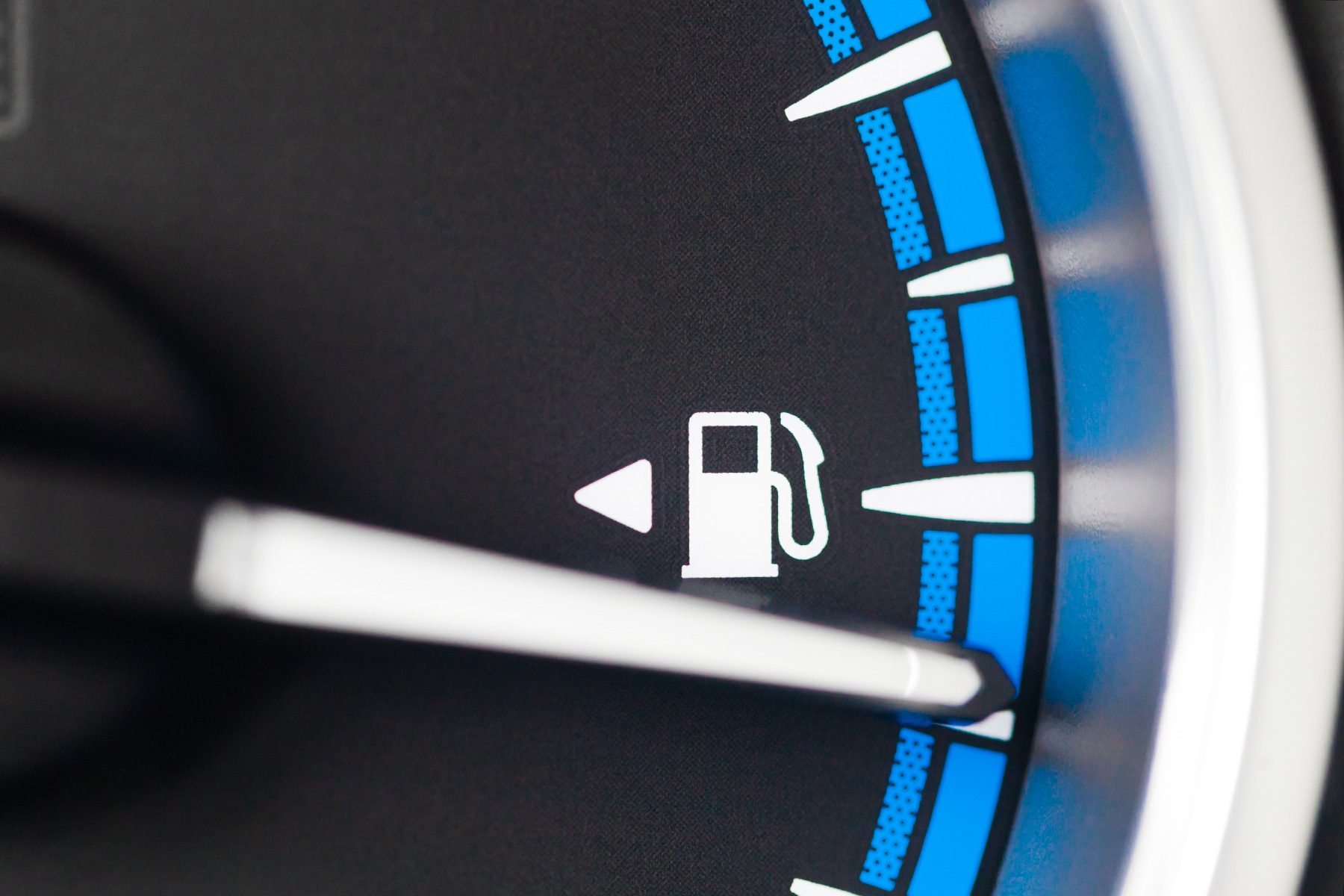
The 10-Second Trick: Find the Arrow by the Fuel Pump Icon
Look at your dashboard’s fuel gauge. Near the little gas pump icon, many cars include a tiny arrow or triangle.
That arrow points to the side of the vehicle where your fuel filler door (gas cap) is located.
Where exactly should you look?
Try these common spots:
- Right next to the fuel gauge needle (or digital fuel bar)
- Beside the gas pump icon near “E” (empty) or “F” (full)
- On some digital clusters, inside the fuel widget or next to the fuel icon
How to read it (with a simple example)
If the arrow points left, your fuel door is on the left. If it points right, your fuel door is on the right.
So if you’re approaching a pump and that arrow points right, you’ll want the passenger side closer to the pump
(in most U.S. vehicles).
What if there’s no arrow?
Don’t panic. Some vehiclesespecially older modelsmay not show a clear arrow. Here are your next-best clues:
-
Check the fuel pump icon “hose” side: In many cars, the little hose/nozzle is drawn on the same
side as the fuel door. This is common, but not as reliable as a dedicated arrow. -
Look for words: A few cars display “Fuel Door” with an indicator, especially when you’re low on fuel
or when you trigger the fuel-door release.
Heads-up: Not every arrow means “fuel door”
Here’s a sneaky detail: some dashboards use arrows for other info, like cycling through trip screens or highlighting
“distance to empty.” The fuel door locator is typically a small triangle/arrow placed right next to the gas
pump icon on the fuel gauge itselfnot an arrow floating elsewhere on the display.
Other Fast Ways to Find the Fuel Door Side (When You’re Not Sure)
1) Use the “walk-around” method (fastest if you’re parked)
If you’re already stopped, a quick glance at both rear quarter panels will settle it instantly. Most fuel doors are
on the rear side sections of the car (though some vehicles place them more forward).
2) Use your side mirrors (yes, really)
If you’re in a rental car and don’t want to unbuckle, you can sometimes spot the fuel door by angling your mirrors
slightly and looking for the outline on the body panelespecially in good light. It’s not perfect, but it beats
guessing and doing the gas-station shuffle.
3) Check the owner’s manual or quick guide (digital or paper)
Many cars tuck a quick reference guide in the glove box. If your vehicle has an infotainment system with a built-in
manual or help menu, search terms like “fuel door,” “refueling,” “fuel filler,” or “gas cap.”
How to Find the Fuel Door Release (Lever, Button, or “Push-to-Open”)
If your fuel door won’t open, the issue is usually not “Where is the gas tank?” but “How does this car release the
fuel door?” Here are the most common setups in modern cars:
Option A: Push-to-open (no lever, no button)
Many newer cars use a simple push-to-open fuel door. With the car unlocked, you press the fuel door and it pops open.
If you try to press it while the doors are locked, it may refuse to budge like a toddler at bedtime.
Try this: Unlock the car, then press on the rear edge of the fuel door. If it opens, congratulations:
your “gas tank locator” is your thumb.
Option B: A floor lever near the driver’s seat
A classic design: a small lever on the floor to the left of the driver’s seat (often near the hood release).
The lever usually has a gas pump icon on it. Pull it, and the fuel door pops open.
Option C: A dashboard/button release
Some vehicles use a button on the dashboard, driver’s door panel, or near the steering wheel. It may be labeled
with a fuel pump symbol or say “FUEL.” If you see a row of small buttons to the left of the steering column,
give those a close look.
Option D: It opens from the center console or infotainment
Less common, but it existsespecially in vehicles that lock the fuel door. You may need to press a release button
near the console, or select a “Refuel”/“Fuel Door” option in the vehicle menu.
Option E: Capless systems and locking fuel doors
Some cars have capless fuel fillers (no twist cap). Others lock the fuel door with the central locking system.
If your fuel door feels stuck, unlock the vehicle first. A surprising number of “broken fuel doors”
are just “locked fuel doors.”
If your fuel door still won’t open
- Double-check the car is unlocked.
- Don’t pry with tools. Scratched paint is forever; your impatience is not.
- Look for an emergency release. Some cars have a manual release inside the trunk/cargo area behind a panel.
- Check the manual. If there’s an emergency pull-cord or latch, the manual will point you to it.
Why Fuel Doors Aren’t Standardized (And Why That’s Actually Helpful)
People love to ask: “Why don’t all cars put the fuel door on the same side?” The short version: manufacturers
make different choices, and the mix can reduce lines at busy stations because not everyone needs the same pump side.
The result is less congestionat the small price of occasional confusion when you switch cars.
Common “Gotchas” That Make Smart People Look Unprepared
Let’s save you from the classics:
- Mistaking a menu arrow for the fuel-door arrow. The fuel-door indicator sits next to the fuel icon/gauge.
- Trusting the hose drawing more than the arrow. If there’s a dedicated arrow, follow the arrow.
- Forgetting the car locks the fuel door. Unlock first, then try push-to-open.
- Assuming “driver’s side” always equals “fuel door.” Many U.S. cars have the fuel door on the passenger side.
- Trying to stretch the hose like you’re lassoing cattle. Some hoses reach. Many don’t. Your dignity definitely won’t.
Refueling Basics (Quick Safety Notes That Actually Matter)
Refueling is routine, but it’s still dealing with a flammable liquid. Keep it simple:
- Turn off the engine.
- Avoid open flames and don’t smoke near pumps.
- Use the correct fuel type for your vehicle.
- Don’t top off excessively after the pump clicks off.
- Make sure the cap is tightened (or the capless door is properly closed) to prevent check-engine lights.
Quick FAQ: Gas Tank Locator Questions Drivers Ask All the Time
Is the gas tank always on the same side as the fuel door?
The fuel filler is always on the same side as the fuel door, but the tank itself sits under the vehicle and
can be more central. For pumping gas, what matters is the fuel door side.
Does every car have the arrow?
Many do, but not all. Older vehicles may lack it, and some digital clusters hide it in a fuel screen rather than
placing it beside a physical gauge.
What about hybrids and EVs?
Hybrids still have a fuel door, so the same logic applies. EVs have a charge port instead of a fuel door; the location
varies by model, but many EVs also provide on-screen prompts or indicators when you press a charge-port release.
Why does my fuel door not open at the pump?
The most common reasons are: the vehicle is locked, you haven’t used the release lever/button yet, or the door is
slightly stuck from cold weather or pressure. Unlock, use the release, and press gentlyno prying.
Real-World Experiences: The Tiny Arrow That Saved the Day (About )
If you want to understand why the gas tank locator arrow feels like a superpower, spend one Saturday at a busy
gas station near a warehouse club. You’ll see every version of the story play out in real timeespecially when
people are driving a car that isn’t “the usual.”
One common scenario: the rental car. You’re running late, the fuel light is on, and the return lot is expecting a
full tank. You pull into the station on autopilot, pick a lane, andbamthe pump is on the wrong side. Now you’re
doing a three-point turn while someone behind you politely pretends not to judge. The arrow trick turns that into
a calm, “I meant to do that” moment. You check the gauge, follow the arrow, and glide into the correct side like
you’re auditioning for a car commercial.
Another classic: borrowing someone’s vehicle. Maybe your friend tosses you the keys to their SUV and says, “It takes
regular.” Great. Helpful. The fuel door? A mystery. People will try to remember from memory (“I think it was… left?”),
but memory is a liar that thrives under fluorescent lighting. The arrow is the honest friend who quietly points and
says, “It’s right there, champ.”
Then there’s the “new car honeymoon” phase, where you’re still discovering features. Many drivers learn the arrow
after the first awkward pump approach, usually while sitting in the car pretending to check a text they’re not actually
reading. Once they spot it, it becomes a tiny ritual: pull into the station, glance at the gauge, confirm the side,
proceed with confidence. It’s like checking your pockets for your phone, except this time it prevents a public U-turn.
Real experiences also reveal the second half of the “gas tank locator” problem: finding the fuel door release.
Some drivers swear their fuel door is “broken” because it won’t openonly to realize the car is locked. Others spend a
minute hunting for a lever, then discover the fuel door is push-to-open. (It’s okay. Every car design has its own
personality. Some are friendly. Some are “read the manual, peasant.”)
Weather adds another twist. In cold conditions, fuel doors can feel sticky, and people instinctively pull harder. The
experienced move is gentler: unlock the car, use the release if it exists, press the door where it’s designed to pop,
and only then try again. A little patience saves you from chipped paint and from that moment where you wonder if you’re
about to become the main character in a “person vs. fuel door” video.
The funniest part? Once you learn the arrow trick, you start noticing how many people don’t. You’ll see drivers pause,
lean forward, squint at the dash, then confidently choose the wrong side anyway. You’ll want to roll down your window
and say, “Pssttiny arrow.” But you won’t. Because you’re kind. And because the last time someone tried to help at a
gas station, it turned into a ten-minute conversation about tire pressure.
Conclusion
Finding your car’s gas tank locator isn’t a test of intelligenceit’s a test of whether you’ve learned the little
cues designers built into the dashboard. Start with the fuel gauge arrow/triangle next to the gas pump icon. If your
car doesn’t have one, use the pump icon hose as a backup clue, then confirm visually when you can. And if the real
struggle is opening the fuel door, remember: unlock first, then look for a floor lever, dash button, or push-to-open
door.
Once you know where to look, you’ll stop guessingand you’ll stop doing that awkward pump-side dance that makes
everyone at the station suddenly very interested in their windshield.