
Slate is one of those materials that looks elegant, rugged, and slightly offended that you dare to cut it. It is natural stone, but unlike granite or marble, it has a layered structure that can split, chip, flake, or behave beautifully depending on how you handle it. The good news? Learning how to cut slate is absolutely doable for a careful beginner. The less-good news? Slate does not forgive rushing. If you shove it through a saw like you are feeding a parking meter, it will reward you with chips, cracks, and a tiny emotional crisis.
Whether you are cutting thin slate tiles for a backsplash, trimming slate roofing pieces, shaping pavers, or working with thick slate slabs for a hearth, countertop, step, or outdoor feature, the basic rules are the same: choose the right blade, support the stone fully, mark clearly, cut slowly, and keep dust under control. Thin slate usually cuts best with a wet tile saw or slate cutter. Thick slate slabs need more power, more patience, and usually a wet saw, masonry saw, or professional stone-cutting setup.
This complete beginner’s guide explains how to cut slate cleanly, how to handle both thick and thin slabs, what tools to use, how to avoid cracking, and how to finish the edge so your project looks intentionalnot like a raccoon installed it during a thunderstorm.
What Makes Slate Different From Other Stone?
Slate is a fine-grained metamorphic stone known for its natural layers, also called cleft. That layered structure is what gives slate its rustic texture and makes it popular for flooring, roofing, patios, fireplace surrounds, garden paths, and wall cladding. It is also why cutting slate requires a gentler touch than cutting many manufactured tiles.
Instead of being perfectly uniform, slate can contain variations in thickness, density, color, and grain direction. One piece may cut like butter on a wet saw, while the next one acts like it has a personal grudge against your renovation schedule. Natural cleft slate has uneven surfaces, so a tile may wobble unless supported well. Honed slate is smoother, but it can still chip at the edge if the blade is dull or the feed rate is too fast.
For most DIY projects, the best tool for cutting slate tile is a wet saw fitted with a diamond blade. The water cools the blade, reduces dust, and helps minimize chipping. For slate roofing, a hand slate cutter or slate hammer and stake can create the traditional beveled edge. For thick slabs, a wet masonry saw or stone saw is usually the safer and cleaner choice.
Tools and Materials You May Need
You do not need every tool on this list for every slate project. Cutting one thin tile for a bathroom corner is very different from trimming a two-inch-thick hearth slab. Match the tool to the slate thickness and the type of cut.
Essential Cutting Tools
- Wet tile saw with diamond blade: Best for most slate tiles and thin slabs.
- Wet masonry saw or bridge saw: Better for thick slate slabs, large pavers, and long straight cuts.
- Angle grinder with diamond blade: Useful for notches, curves, trimming, and small detail cuts.
- Manual slate cutter: Excellent for roofing slate and thinner pieces.
- Slate hammer and stake: Traditional roofing method for trimming and shaping slate.
- Diamond hole saw: Needed for plumbing, fastener, or fixture holes.
Measuring and Support Supplies
- Tape measure
- Straightedge or square
- Grease pencil, wax pencil, or painter’s tape
- Clamps with padded jaws
- Stable workbench or sawhorses
- Scrap plywood or foam board for support
- Rubbing stone, diamond hand pad, or sandpaper for smoothing edges
Safety Gear
- Safety glasses or goggles
- Hearing protection
- Cut-resistant gloves
- Respirator or approved dust mask, especially for dry cutting
- Non-slip footwear
- GFCI-protected outlet when using electric wet saws
Slate dust can contain respirable crystalline silica, a serious lung hazard when inhaled. Wet cutting and dust collection are not optional “fancy extras”; they are the difference between a smart project and turning your garage into a geology-flavored fog machine.
How to Choose the Right Method for Cutting Slate
The best way to cut slate depends mainly on thickness, finish, and where the cut will show.
For Thin Slate Tile
Thin slate tiles, often used for floors, walls, backsplashes, and showers, are usually cut with a wet tile saw and a continuous-rim diamond blade. This gives a clean edge and keeps dust down. If the slate is very thin roofing slate, a manual slate cutter can also work well, especially when a slightly beveled edge is desired.
For Thick Slate Slabs
Thick slate slabs require more support and a slower cutting process. Use a wet masonry saw, heavy-duty wet saw, or professional stone saw. If the slab is large, awkward, expensive, or over about 1 inch thick, consider having a stone fabricator make the cut. Sometimes the smartest DIY move is knowing when to let a machine bigger than your lawn mower handle the drama.
For Curves and Notches
An angle grinder with a diamond blade is useful for curved cuts, L-shaped notches, and trimming around pipes or posts. The trick is to make shallow passes instead of trying to chew through the whole slab at once. For interior cutouts, drill relief holes at the corners first to reduce stress and prevent cracking.
How to Cut Thin Slate Tile With a Wet Saw
A wet saw is the beginner-friendly choice for most slate tile projects. It uses a water-cooled diamond blade to cut through stone while reducing heat and dust. Here is the clean, careful way to do it.
Step 1: Inspect the Slate
Before cutting, look for cracks, loose layers, bowed pieces, or fragile corners. Tap the slate lightly. A solid piece sounds firm; a cracked piece may sound dull or hollow. Do not waste time cutting a tile that is already trying to retire.
Step 2: Measure Twice and Mark Clearly
Measure the space where the slate will go, then transfer the measurement to the tile. Use a grease pencil, wax pencil, or painter’s tape with a pencil line on top. Slate can be dark, dusty, or textured, so ordinary pencil marks may vanish at the exact moment you need them most.
Step 3: Set Up the Wet Saw
Fill the water reservoir, check that the pump works, and confirm water is flowing over the blade. Install a diamond blade suitable for natural stone or tile. A continuous-rim blade generally creates cleaner cuts than a segmented blade on brittle tile. Make sure the fence is square and the tile sits flat on the tray.
Step 4: Place the Slate Face Up
For most wet saw cuts, place the finished face up. The blade enters from the top and helps keep the visible face cleaner. If your saw cuts from below, test on scrap first. Different saw designs can chip differently, and slate loves making “universal rules” look silly.
Step 5: Cut Slowly and Steadily
Turn on the saw and let the blade reach full speed. Feed the slate into the blade with gentle, even pressure. Do not force it. Let the diamond blade grind through the stone. If you hear the motor bogging down, you are pushing too hard. If the slate vibrates, stop and improve support.
Step 6: Support the Offcut
As the cut nears the end, support the waste piece so it does not snap off prematurely. This is especially important with long, narrow strips. Many chips happen in the last inch of the cut, when people mentally celebrate too early.
Step 7: Smooth the Edge
Use a rubbing stone, diamond hand pad, or fine-grit wet/dry sandpaper to soften sharp edges. You do not need to polish slate like a gemstone; just remove burrs, flakes, and razor-like corners.
How to Cut Thick Slate Slabs
Thick slate slabs are commonly used for hearths, steps, coping, countertops, outdoor paving, and landscaping features. They can be heavy, brittle at the corners, and difficult to move safely. Cutting them requires planning, not heroic improvisation.
Step 1: Confirm the Slab Thickness
Measure the actual thickness at several points. Natural slate may vary from one edge to another. A slab labeled 1 inch thick may be slightly thicker in spots, especially if it has a natural cleft face. Your saw must have enough cutting depth to finish the job without forcing the blade.
Step 2: Use the Right Saw
A small tabletop tile saw may work for thin slate, but it is not ideal for thick slabs. For thick slate, use a wet masonry saw, stone saw, rail saw, or bridge saw. If the slab is too big for the saw tray, do not balance it like a circus act. Use a larger saw or take the slab to a fabricator.
Step 3: Support the Entire Piece
Thick slate is heavy, but that does not mean it cannot crack. Support the slab fully on a flat surface. If part of the stone hangs unsupported, the weight can cause it to break during cutting. Use foam board, plywood, or a stable cutting table to reduce vibration.
Step 4: Mark Both Sides if Needed
For deep cuts, mark the top and edges. If the saw cannot cut through in one pass, you may need to cut from one side, flip the slab, and finish from the other. Matching the lines matters. A crooked two-sided cut is the stone version of a bad haircut: technically complete, emotionally difficult.
Step 5: Make a Shallow Scoring Pass
Start with a shallow pass along the cut line. This helps guide the blade and reduces surface chipping. Then deepen the cut gradually. Multiple passes are safer and cleaner than one aggressive plunge.
Step 6: Keep the Blade Cool
Use water whenever possible. A wet blade runs cooler, lasts longer, and reduces airborne dust. If you must use an angle grinder for a small dry cut, work outdoors, use dust control, wear a proper respirator, and avoid extended dry cutting.
Step 7: Finish the Edge
After cutting, thick slate may have saw marks, sharp ridges, or small flakes. Smooth the edge with diamond pads or a rubbing stone. For a natural-looking edge, you can slightly ease the top and bottom arrises. For visible hearth or countertop edges, consider honing the edge progressively with diamond pads.
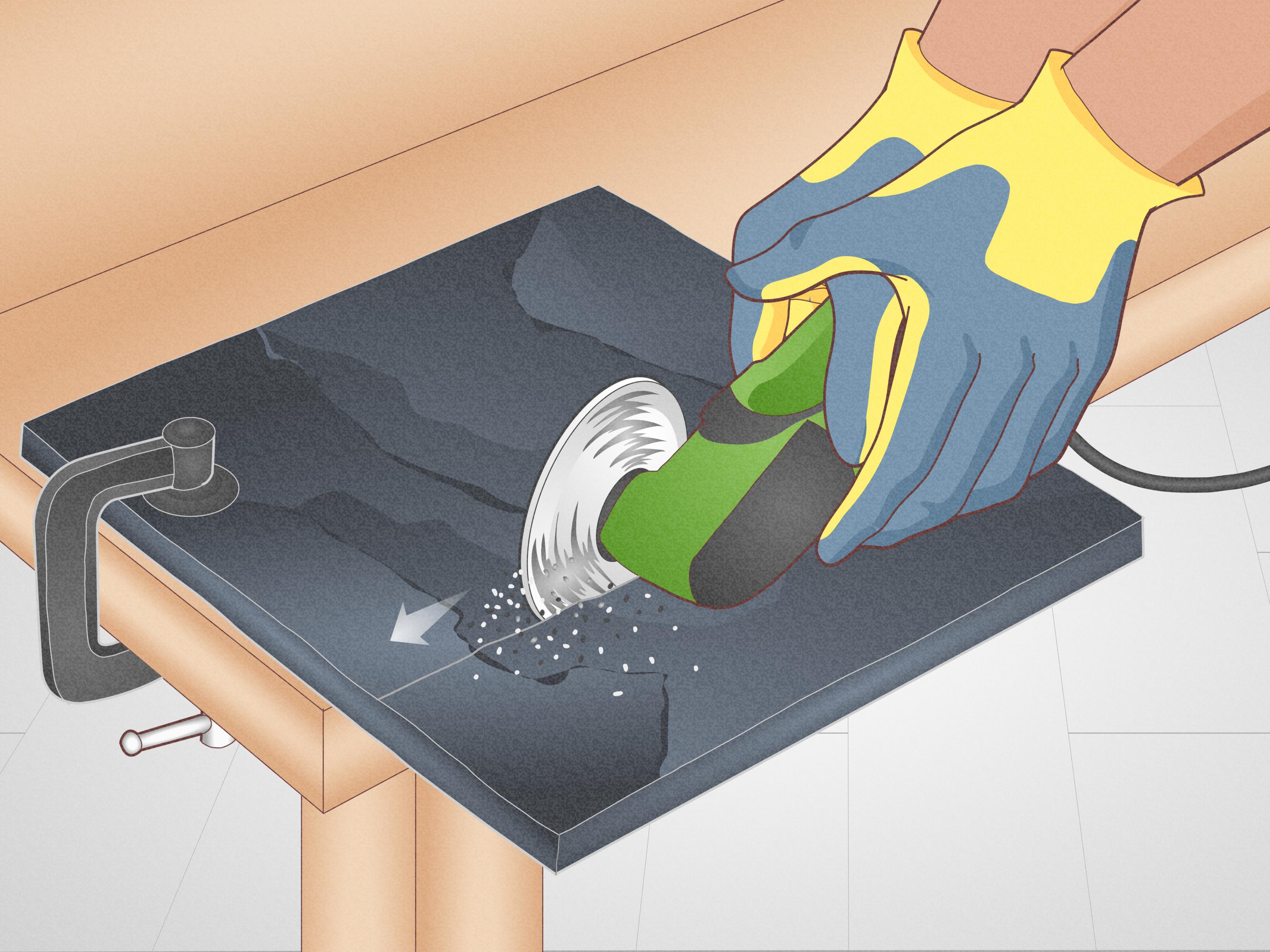
How to Cut Slate With an Angle Grinder
An angle grinder is not always the cleanest tool, but it is very handy for cuts that a wet saw cannot easily make. Use a diamond blade rated for stone, masonry, or tile. A continuous-rim or turbo diamond blade can work, depending on the cut and finish you need.
Best Uses for an Angle Grinder
- Small notches
- Curved cuts
- Trimming installed edges
- Pipe cutouts
- Corner relief cuts
- Outdoor paver adjustments
Angle Grinder Cutting Tips
Clamp the slate securely, keep both hands on the grinder, and make shallow passes. Do not twist the blade inside the cut. Twisting can bind the blade, chip the slate, or kick the grinder back. For a cleaner edge, score the line first, then deepen it gradually. If cutting a curve, make several short relief cuts up to the curve and nibble away the waste.
Because grinders create a lot of dust, wet-cutting attachments or dust shrouds are helpful. If dry cutting is unavoidable, do it outside, keep bystanders away, and wear respiratory protection. Your lungs should not have to participate in your flooring project.
How to Cut Roofing Slate
Roofing slate is often cut differently from floor tile. Traditional slate roofers use a slate hammer and stake or a dedicated slate cutter. These tools create a slightly beveled edge that blends well with natural slate roofing. In many cases, the cut is made from the back side so the exposed face has a cleaner, weathered-looking edge.
Using a Slate Cutter
Place the slate in the cutter, align the mark with the blade, and pull the handle down in small bites. Do not try to snap the whole line at once. Feed the slate forward gradually. A slate cutter is especially useful for trimming slates to width, making diagonal cuts for valleys, and shaping small repairs.
Using a Slate Hammer and Stake
Set the slate over the stake with the waste side hanging off. Strike along the marked line with controlled taps, working from one end to the other. The goal is to chip away the edge, not smash the slate into modern art. The pointed end of a slate hammer can also punch nail holes, but practice on scrap first.
How to Drill Holes in Slate
To drill slate, use a diamond hole saw or masonry bit depending on the hole size. Place painter’s tape over the drilling spot to reduce wandering, and support the slate underneath. Start slowly and keep the bit cool with water. Do not use hammer mode; it can fracture the stone. For larger holes, drill halfway from one side, then flip the slate and finish from the other side to reduce blowout.
For rectangular cutouts, drill holes at the corners first, then connect them with an angle grinder or wet saw. Rounded inside corners are less likely to crack than sharp 90-degree corners, which concentrate stress.
Common Mistakes When Cutting Slate
Using the Wrong Blade
A wood blade, metal blade, or cheap abrasive blade is not the answer. Slate needs a diamond blade. For clean tile cuts, choose a blade made for tile, natural stone, or masonry. A dull blade increases heat, chipping, and frustration.
Cutting Too Fast
Fast cutting is one of the easiest ways to chip slate. If the blade is doing its job, you should not need to force the stone. Slow pressure gives the diamonds time to grind through the material.
Poor Support
Slate cracks when it vibrates or hangs unsupported. Keep the piece flat and stable. Support both sides of the cut, especially on long pieces and thick slabs.
Ignoring Dust
Dry cutting stone can create harmful dust. Use wet cutting when possible, wear respiratory protection when needed, and clean up dust with wet methods or a HEPA-rated vacuum rather than sweeping it into the air.
Skipping Test Cuts
Slate varies. Always test your blade, saw speed, and cutting direction on a scrap piece before cutting the visible tile or slab. Five minutes of testing can save you from buying one more piece of slate while muttering in the parking lot.
How to Reduce Chipping
Chipping is the most common complaint when cutting slate. While a perfectly factory-clean edge is not always realistic on natural cleft slate, you can get a neat, professional result with the right setup.
- Use a sharp diamond blade.
- Cut with water whenever possible.
- Apply painter’s tape over the cut line.
- Keep the slate flat and fully supported.
- Start with a shallow scoring pass.
- Feed slowly and evenly.
- Support the offcut at the end of the cut.
- Smooth the edge after cutting.
If the edge will be hidden under trim, grout, flashing, or another stone, a few small chips may not matter. If the edge will be exposed, slow down and use your cleanest blade.
Finishing Cut Slate Edges
After cutting, slate edges can be sharp or uneven. For floor tile, a rubbing stone is usually enough. Run it along the edge at a slight angle to remove burrs. For a more finished look, use diamond hand pads in progressive grits. Start coarse enough to remove saw marks, then move finer until the edge matches your desired finish.
For rustic projects, do not over-polish the edge. Slate often looks best with a softened natural edge rather than a shiny one. For hearths, steps, and countertops, easing the top edge improves comfort and reduces the chance of flakes breaking off later.
Safety Tips Before You Start
Cutting slate is not dangerous when done correctly, but it does involve sharp stone, spinning blades, electricity, water, noise, and dust. In other words, it deserves respect.
- Read your saw or grinder manual before use.
- Wear eye protection every time.
- Use hearing protection with saws and grinders.
- Keep fingers away from the blade path.
- Use a GFCI outlet with wet saws.
- Do not wear loose clothing near spinning tools.
- Keep the work area clean and well lit.
- Never remove guards from cutting tools.
- Use wet cutting or dust control to reduce silica exposure.
Beginner-Friendly Example: Cutting Slate for a Fireplace Hearth
Suppose you have a slate hearth slab that needs to be trimmed by 2 inches to fit between two walls. First, measure the opening at the front, middle, and back because walls are rarely perfect. Mark the slab with painter’s tape and a straightedge. Set the slab on a stable cutting surface with full support underneath. Use a wet masonry saw if the slab is thick. Make a shallow scoring pass first, then complete the cut gradually. Support the offcut so it does not break away. After cutting, smooth the exposed edge with diamond pads and test-fit the slab before installation.
The most important part is not the cutting itself; it is the setup. A straight mark, stable support, and patient feed rate do more for accuracy than trying to “correct” the cut halfway through. Slate does not enjoy last-minute steering.
Extra Field Notes: Real-World Experience Cutting Slate
One of the first lessons you learn when cutting slate is that the stone tells you what kind of day you are going to have. Smooth, dense slate often cuts cleanly and predictably. Rustic cleft slate, especially inexpensive tiles with uneven thickness, may flake at the corners or split along a layer you did not notice. This is normal. It does not mean you are bad at cutting slate. It means slate is a natural material, and natural materials occasionally behave like they have a tiny weather system inside them.
In practice, the biggest improvement comes from better support. Many beginners focus entirely on the blade, but the stone’s position matters just as much. Thin slate tile can crack if it rocks on the saw tray. Thick slabs can break if one side hangs in the air. A simple piece of foam board or plywood underneath can make a dramatic difference. When cutting long strips, support the strip all the way through the final inch. That last inch is where slate likes to snap and leave a jagged corner, as if signing its name.
Another useful habit is sorting slate before cutting. Place the strongest, flattest, cleanest pieces where cuts will show. Save slightly chipped or uneven pieces for perimeter cuts, hidden corners, or areas under trim. Professionals do this constantly. They are not magically finding perfect stone in every box; they are choosing where each piece makes the most sense. Before you cut, dry-lay the slate and plan which edges will be visible. That one decision can make a beginner job look much more polished.
When using a wet saw, patience is everything. The blade should sound steady, not strained. If the motor pitch drops, slow your feed rate. If the tile vibrates, stop and reset it. If the cut line starts drifting, do not twist the tile aggressively. Back up slightly, realign, and continue gently. Forcing slate through a saw usually causes more problems than it solves. Think of it less like cutting lumber and more like shaving a very stubborn chocolate bar made of mountain.
For thick slabs, it is worth making a shallow scoring pass even if your saw can cut through in one go. The score line helps prevent the top face from chipping and gives the blade a path to follow. On expensive slabs, some fabricators cut slightly outside the line, then grind or hone to the final dimension. DIYers can borrow that idea by leaving a tiny margin when possible and sneaking up on the final fit.
Edge finishing is another place where small effort pays off. A cut slate edge can be sharp enough to scrape skin or catch fabric. A few passes with a rubbing stone make it safer and better looking. For visible hearth edges or stair treads, diamond pads give more control. You do not need a mirror polish. In fact, over-polished slate can look odd next to a natural cleft surface. A softened, lightly honed edge usually blends best.
Finally, clean as you go. Slate slurry from wet cutting can dry into a gritty film that gets everywhere. Rinse tiles after cutting, wipe down tools, and avoid letting sludge harden in the saw tray. If you are dry grinding outdoors, keep dust away from open windows, neighbors, pets, and anyone who enjoys breathing. Your project should end with a beautiful piece of slate, not a driveway that looks like a haunted chalkboard exploded.
Conclusion
Cutting slate is a beginner-friendly project when you respect the material. Thin slate tiles are usually best cut with a wet tile saw and diamond blade. Roofing slate can be trimmed with a slate cutter or slate hammer and stake. Thick slate slabs require stronger support, slower cutting, and often a wet masonry saw or professional stone-cutting equipment. The winning formula is simple: measure carefully, support the stone, use the right diamond blade, cut slowly, control dust, and smooth the edge afterward.
Slate may be dramatic, layered, and occasionally moody, but that is also why it looks so good when installed. Take your time, practice on scrap, and let the tool do the work. Your reward is a clean cut, a better fit, and the quiet satisfaction of turning a stubborn piece of stone into something that looks like it belonged there all along.
Note: Always follow the instructions for your specific saw, grinder, blade, and safety equipment. For oversized, expensive, or structural slate slabs, hiring a professional stone fabricator is often cheaper than replacing a cracked slab.