
Note: This article is for educational purposes only. If you think you or someone else may be experiencing a caffeine overdose, call 911 for severe symptoms or Poison Control at 1-800-222-1222 in the United States.
Introduction: When “Just One More Coffee” Becomes a Bad Idea
Caffeine is the cheerful little spark plug behind morning coffee, afternoon tea, dark chocolate, cola, pre-workout powders, headache medicines, and energy drinks with names that sound like they were invented by a caffeinated raccoon. For most healthy adults, moderate caffeine intake is usually safe. It can improve alertness, help with focus, and make Monday feel slightly less like a group project nobody signed up for.
But caffeine is still a stimulant drug. A caffeine overdose, also called caffeine toxicity or caffeine poisoning, happens when the body takes in more caffeine than it can safely process. Symptoms may start with nervous energy, nausea, shaking, or a racing heart. In serious cases, too much caffeine can cause dangerous heart rhythm problems, seizures, confusion, severe vomiting, low potassium, and even life-threatening complications.
The tricky part is that caffeine hides in more places than many people realize. A person may drink coffee in the morning, grab an energy drink at lunch, take a caffeinated pre-workout before the gym, and use a headache medicine later without noticing the total dose climbing. Caffeine overdose is not usually caused by ordinary coffee alone, but concentrated powders, energy shots, supplements, and stacking multiple caffeinated products can turn “I need energy” into “Why can I hear my heartbeat in my eyebrows?”
What Is a Caffeine Overdose?
A caffeine overdose occurs when caffeine intake causes harmful physical or mental symptoms. The exact amount that triggers symptoms varies from person to person. Body size, age, pregnancy, medications, heart rhythm conditions, anxiety disorders, liver function, caffeine tolerance, and how quickly caffeine is consumed all matter.
For many healthy adults, up to about 400 milligrams of caffeine per day is commonly considered a reasonable upper limit. That is roughly the amount in four small cups of brewed coffee, though real caffeine content varies wildly by brand, serving size, brewing method, and whether your “cup” is actually a bucket with a handle.
People who are pregnant, trying to become pregnant, or breastfeeding are often advised to limit caffeine to about 200 milligrams per day. Children and teens are more sensitive to caffeine, and major pediatric guidance discourages energy drinks for young people. People with heart disease, arrhythmias, high blood pressure, panic attacks, insomnia, or certain medication interactions may need much less.
Common Sources of Caffeine
Caffeine is not only in coffee. It may appear in:
- Coffee, espresso, cold brew, and specialty café drinks
- Black tea, green tea, matcha, yerba mate, and iced tea
- Energy drinks and energy shots
- Cola and some other soft drinks
- Dark chocolate and cocoa products
- Pre-workout supplements and fat-burning products
- Caffeine pills, powders, and liquid concentrates
- Some migraine, cold, and pain-relief medications
The highest-risk products are usually concentrated caffeine powders, liquid caffeine, high-dose pills, and supplements. A tiny measuring mistake with pure caffeine powder can equal many cups of coffee. That is why concentrated caffeine products are considered especially dangerous: the margin between “stimulant” and “medical emergency” can be disturbingly small.
Caffeine Overdose Symptoms
Caffeine overdose symptoms can range from uncomfortable to dangerous. Mild symptoms may feel like too much coffee. Severe symptoms may feel frightening and require emergency care.
Mild to Moderate Symptoms
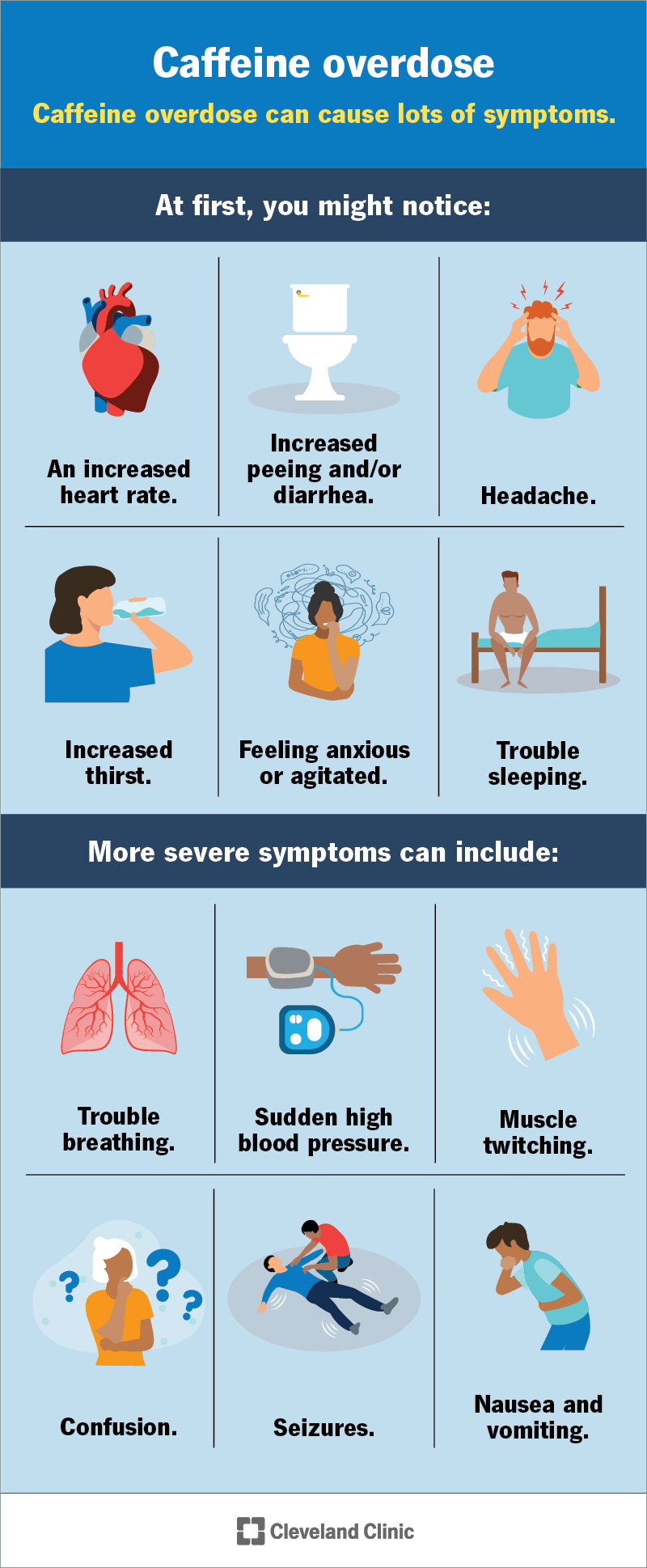
Early symptoms of too much caffeine may include:
- Restlessness or nervousness
- Jittery hands or muscle twitching
- Headache
- Nausea or upset stomach
- Diarrhea
- Frequent urination
- Sweating or flushing
- Insomnia
- Anxiety or panic-like feelings
- Fast heartbeat or palpitations
These symptoms are often your body’s way of saying, “Thank you for the productivity potion, but the nervous system would like to file a complaint.” They may improve as caffeine wears off, but they should still be taken seriously if symptoms are intense, worsening, or combined with chest pain, fainting, confusion, or vomiting.
Severe Symptoms
Severe caffeine toxicity can affect the heart, brain, muscles, and electrolytes. Warning signs include:
- Chest pain or pressure
- Dangerously fast, irregular, or pounding heartbeat
- Severe agitation or confusion
- Repeated vomiting
- Seizures
- Fainting or near-fainting
- Hallucinations or extreme disorientation
- Severe tremors
- Shortness of breath
- Weakness, collapse, or inability to stay awake
If any severe symptoms occur, treat it as an emergency. Call 911. Do not try to “walk it off,” sleep it off, run it off, or neutralize it with internet magic. A caffeine overdose can progress quickly, especially when pills, powders, or energy products are involved.
Why Too Much Caffeine Affects the Body
Caffeine works partly by blocking adenosine, a chemical that helps the brain feel sleepy. That is why caffeine can make you feel alert. It also increases the activity of stress-related chemicals, which can raise heart rate, blood pressure, and mental alertness. In normal amounts, this may feel like focus. In excess, it can feel like your body accidentally joined a high-speed car chase.
Too much caffeine can overstimulate the central nervous system and cardiovascular system. It may cause the heart to beat faster or irregularly, irritate the stomach, increase urine output, worsen anxiety, and disrupt sleep. Serious poisoning can also disturb electrolytes such as potassium, which may contribute to abnormal heart rhythms and muscle problems.
How Much Caffeine Is Too Much?
There is no single “overdose number” that applies to everyone. One person may tolerate two coffees without blinking, while another gets shaky after half a latte. However, general safety guidelines can help.
- Most healthy adults: Up to 400 mg per day is often considered a typical upper limit.
- Pregnancy or breastfeeding: Many clinicians recommend staying at or below 200 mg per day.
- Teens: Caffeine should be limited, and energy drinks are strongly discouraged.
- Children: Routine caffeine use is not recommended.
- People with heart rhythm problems, anxiety, insomnia, or high blood pressure: Lower limits may be safer.
Rapid consumption matters. Drinking several energy drinks in a short time is riskier than spreading smaller amounts over a day. Combining caffeine with intense exercise, dehydration, alcohol, stimulant medications, or pre-workout supplements may also increase side effect risks.
What to Do If You Think You Had Too Much Caffeine
If symptoms are mild, stop all caffeine immediately. That includes coffee, tea, soda, energy drinks, pre-workout products, chocolate-heavy snacks, and medicines containing caffeine. Drink water, rest in a calm environment, and avoid strenuous exercise until symptoms pass. Eating a light meal may help nausea for some people, although it will not instantly remove caffeine from your bloodstream.
Call Poison Control at 1-800-222-1222 if you are unsure what to do, if a child consumed caffeine, if you took caffeine pills or powder, or if symptoms feel stronger than ordinary jitters. Poison Control can help assess the amount, timing, product type, symptoms, and next steps.
Call 911 immediately for chest pain, fainting, seizures, severe confusion, severe vomiting, shortness of breath, or a very fast or irregular heartbeat. Emergency care is also needed if someone intentionally took a large amount of caffeine or combined caffeine with other substances.
Medical Treatment for Caffeine Overdose
Treatment depends on the amount consumed, the product, the timing, and the severity of symptoms. In a hospital or emergency department, clinicians may monitor heart rhythm, blood pressure, temperature, breathing, mental status, and electrolytes.
Possible treatments may include:
- Observation and monitoring: Mild cases may require watching symptoms until caffeine levels decrease.
- Activated charcoal: If the overdose happened recently, clinicians may use activated charcoal to reduce absorption.
- IV fluids: Fluids may help with dehydration, vomiting, or circulation support.
- Medications for agitation or seizures: Severe nervous system symptoms may require medication.
- Heart rhythm treatment: Dangerous tachycardia or arrhythmias may require specialized care.
- Electrolyte correction: Low potassium or other imbalances may need treatment.
- Hemodialysis: Rare, severe caffeine poisoning may require dialysis to help remove caffeine from the blood.
Do not induce vomiting unless a medical professional specifically tells you to. Do not take extra medications, alcohol, sedatives, or “detox” products to counteract caffeine. The body is not a chemistry set, and panic-shopping your way through the medicine cabinet can make things worse.
Short-Term Side Effects of Too Much Caffeine
Even when caffeine overdose is not severe enough for hospitalization, overdoing it can cause unpleasant short-term side effects. These may include sleep disruption, stomach irritation, acid reflux, anxiety, headaches, tremors, irritability, and heart palpitations. Some people also experience a crash later, with fatigue, low mood, or difficulty concentrating.
Caffeine can also worsen panic symptoms. A racing heart, tight chest, sweating, and trembling can feel like anxiety, and anxiety can then amplify the physical sensations. That loop can be scary, especially for people who already live with panic attacks or health anxiety.
Long-Term Side Effects of Excessive Caffeine Use
Regularly consuming too much caffeine may contribute to chronic sleep problems, dependence, withdrawal headaches, irritability, digestive issues, and elevated blood pressure in sensitive people. Poor sleep can then create a cycle: caffeine causes insomnia, insomnia causes fatigue, fatigue causes more caffeine, and suddenly your daily routine is sponsored by a mug the size of a flower vase.
People who depend heavily on caffeine may experience withdrawal when they cut back. Caffeine withdrawal can cause headaches, sleepiness, depressed mood, brain fog, irritability, nausea, and trouble concentrating. Symptoms often improve over several days, especially when caffeine is reduced gradually instead of stopped abruptly.
Who Is Most at Risk?
Anyone can experience caffeine toxicity, but certain groups have higher risk. Children and teens are more vulnerable because of smaller body size and developing brains. Pregnant people metabolize caffeine differently and are usually advised to keep intake lower. People with arrhythmias, uncontrolled high blood pressure, seizure disorders, anxiety disorders, insomnia, or certain psychiatric conditions may be more sensitive.
Athletes and gym-goers should be careful with pre-workout powders and “fat burner” supplements. These products may contain high caffeine doses plus other stimulants. Because supplement labels can be confusing, a scoop before training plus coffee plus an energy drink can accidentally become a stimulant pileup.
How to Prevent Caffeine Overdose
The easiest way to prevent caffeine overdose is to count your total daily caffeine from all sources. Read labels on energy drinks, shots, pills, powders, and supplements. Be cautious with “proprietary blends,” which may hide stimulant details. Avoid pure caffeine powder and highly concentrated liquid caffeine unless specifically supervised by a qualified professional; for most people, these products are simply not worth the risk.
Practical Prevention Tips
- Keep daily caffeine under recommended limits for your health status.
- Avoid mixing multiple caffeinated products in one day.
- Do not use caffeine to replace sleep.
- Skip energy drinks before intense workouts if you are sensitive to stimulants.
- Check medication labels for caffeine.
- Keep caffeine pills, powders, and energy drinks away from children.
- Cut back gradually if you use caffeine every day.
How to Cut Back Without Feeling Like a Tired Houseplant
If caffeine is causing jitters, insomnia, palpitations, or anxiety, reducing intake may help. A gradual taper usually works better than quitting suddenly. Try replacing one caffeinated drink per day with water, herbal tea, decaf coffee, or a lower-caffeine option. Move caffeine earlier in the day, especially if sleep is suffering. Many people do better when they avoid caffeine after lunch.
Also look at the reason you need caffeine. If the real problem is short sleep, skipped meals, dehydration, stress, or overwork, caffeine may be covering the dashboard warning light instead of fixing the engine. Better sleep habits, regular meals, movement, sunlight exposure, and hydration may not sound as exciting as a neon can promising “extreme thunder focus,” but they are less likely to make your hands vibrate.
Experience Section: What Caffeine Overdose Can Feel Like in Real Life
Many caffeine overdose stories begin innocently. Someone has a bad night of sleep, wakes up groggy, drinks a large coffee, then another. Around lunch, they grab an energy drink because work is moving at the speed of wet cement. Later, they take a pre-workout supplement because the gym bag is already packed and ambition has entered the chat. By evening, they feel shaky, sweaty, nauseated, and strangely alert in the least useful way possible. The body is exhausted, but the brain is standing on a chair shouting, “We are absolutely not sleeping tonight.”
Another common experience is the heart-scare scenario. A person may feel sudden palpitations after too much coffee or an energy drink. The heartbeat may feel fast, forceful, fluttery, or irregular. Sometimes this comes with chest tightness, tingling fingers, dizziness, or a wave of panic. Even if anxiety is part of the reaction, the symptoms should not be brushed aside. Chest pain, fainting, shortness of breath, or an irregular heartbeat deserves urgent medical attention. The safest rule is simple: when the heart feels seriously wrong, do not negotiate with it like it is a customer service chatbot.
Students and shift workers may have their own version. A deadline appears. Sleep disappears. Caffeine becomes the academic co-pilot. First comes focus, then speed-reading, then shaky handwriting, stomach cramps, and the sudden belief that every email needs six exclamation points. The final product may get submitted, but the body pays for it with insomnia, irritability, headaches, and a next-day crash. This is why caffeine is a tool, not a personality. It can help temporarily, but it cannot replace recovery.
Gym-related cases can feel especially intense because caffeine is often combined with exercise. A pre-workout powder may contain a high dose of caffeine, and the person may also have coffee earlier in the day. During exercise, they may notice pounding heartbeat, nausea, tremors, dizziness, or unusual anxiety. Heat, dehydration, and intense training can make everything feel worse. If symptoms are strong, stopping the workout is not weakness; it is wisdom wearing sneakers.
Parents may encounter accidental caffeine exposure in children. A child may drink an energy drink, swallow caffeine pills, or sip from an adult beverage without understanding what it contains. Because children are smaller and more sensitive, symptoms can appear with lower amounts. Hyperactivity, vomiting, fast heartbeat, agitation, and trouble sleeping should be taken seriously. Calling Poison Control is a smart move, not an overreaction.
The main lesson from real-life caffeine overload is that the total dose matters, the speed matters, and the product matters. Coffee is familiar, but familiarity does not make caffeine harmless. Energy drinks, pills, powders, and supplements can stack quickly. The best experience is the boring one: you notice you feel jittery, you stop caffeine early, drink water, eat something gentle, rest, and decide tomorrow’s energy plan will involve actual sleep. Boring is underrated. Boring keeps you out of the emergency room.
Conclusion
Caffeine overdose is more than “too much coffee.” It is a real form of stimulant toxicity that can affect the brain, heart, stomach, muscles, and sleep cycle. Mild symptoms may include jitters, nausea, anxiety, headache, and insomnia. Severe symptoms, such as chest pain, seizures, fainting, confusion, repeated vomiting, or an irregular heartbeat, require emergency care.
For most healthy adults, moderate caffeine intake is usually safe, but the risk rises when people combine coffee, energy drinks, pills, powders, medications, and workout supplements. The best prevention is simple: know your sources, count your total, avoid concentrated caffeine, and listen when your body starts waving the tiny red flag. Caffeine can be useful, but it should not make you feel like your nervous system is trying to leave the building.
Medical safety note: If symptoms are severe, call 911. If you are unsure what to do after consuming too much caffeine, call Poison Control at 1-800-222-1222 in the United States.