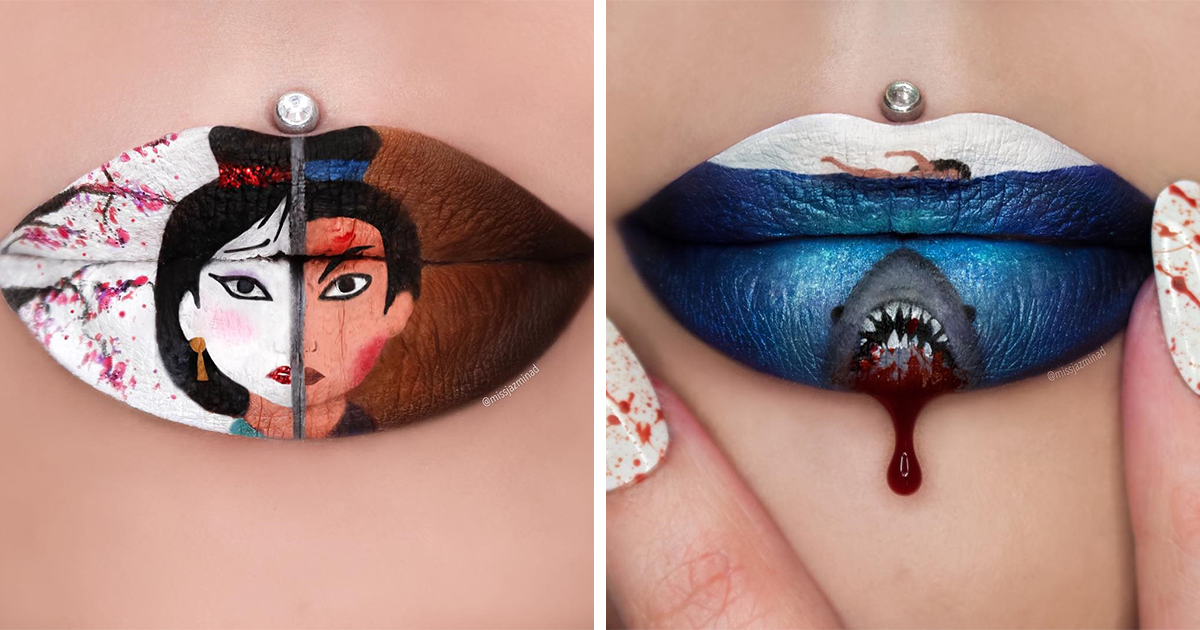

Some artists need a canvas the size of a wall. Others need a museum wing, a kiln, a studio, a kiln-sized studio, and possibly a dramatic scarf. Then there are lip artists like Jazmina Daniel, who can turn the tiniest curve of a smile into a galaxy, a Disney scene, a red-carpet tribute, or a miniature pop-culture masterpiece. Yes, the canvas is small. Yes, it moves. And yes, one sneeze could become an abstract expressionist tragedy. That is exactly what makes this art form so fascinating.
The idea behind “Artist Turns Her Lips Into Works Of Art” is more than a viral beauty headline. It is a window into a growing creative movement where makeup, body art, photography, social media, and storytelling all meet at one very unexpected place: the mouth. Lip art transforms lipstick from a finishing touch into the main event. Instead of asking, “Is this shade flattering?” the artist asks, “Can I paint an entire movie scene here before lunch?”
Modern lip art has become especially popular online because it delivers instant visual surprise. Viewers stop scrolling because the image plays a little trick on the brain. At first glance, it looks like a glossy makeup look. Then the details come into focus: tiny characters, painted landscapes, glittering textures, metallic drips, floral illusions, or portraits that look almost too precise to be real. That double take is the magic.
The Rise of Lip Art: When Makeup Became a Miniature Gallery
Makeup has always carried artistic power. Lipstick, rouge, face paint, and theatrical cosmetics have long been used to express identity, status, mood, style, performance, and rebellion. In American beauty history, lipstick became especially bold in the early 20th century, when portable tubes and fashionable lip shapes made the mouth a focal point of glamour. Today, lip art takes that history and gives it a very modern twist. The tube of lipstick is no longer just a beauty product. It is a paintbrush with attitude.
What separates lip art from ordinary makeup is intention. A classic red lip is designed to enhance. Lip art is designed to astonish. Artists use the natural shape of the lips as part of the composition. The cupid’s bow may become the roofline of a tiny castle. The lower lip may become an ocean. Teeth can turn into part of a cartoon grin. The tongue, chin, and nails sometimes join the party too, because apparently the human face has been hiding a full production studio all along.
Social media accelerated the trend. Instagram, TikTok, YouTube, and beauty blogs gave makeup artists a place to share close-up work that might have been impossible to appreciate from across a room. Lip art is made for the camera. It thrives in tight framing, sharp lighting, time-lapse videos, and dramatic before-and-after reveals. A design that takes four hours to paint can become a 20-second clip, which is both convenient and mildly unfair to the artist’s patience.
Meet Jazmina Daniel, the Artist Behind the Tiny Masterpieces
One of the best-known names in this space is Jazmina Daniel, also known online as Miss Jazmina. The Sydney-born makeup artist became widely recognized for turning lips into detailed scenes inspired by movies, cartoons, celebrities, and fantasy worlds. Her work has included everything from shimmering galaxy lips to pop-culture references, Disney-inspired imagery, floral designs, horror looks, and glossy special-effects creations.
What makes Daniel’s work so memorable is the level of detail she achieves on such a small surface. A pair of lips is not flat like paper. It curves, creases, reflects light, and moves every time the model breathes, talks, or tries not to laugh. Painting on lips is like painting on a tiny, flexible hill during an earthquake that also needs lip balm. Yet Daniel’s designs often look clean, balanced, and carefully composed.
Her story also adds emotional depth to the art. Public interviews have described how she began exploring makeup during a difficult period in her life after being diagnosed with a brain tumor as a teenager. Art became a source of focus, therapy, and happiness during long stretches away from school and normal routines. That background gives her lip art a meaning beyond technique. It is not just “look what lipstick can do.” It is also “look what creativity can do when life gets heavy.”
Why Her Lip Art Went Viral
Jazmina Daniel’s lip art became viral because it combines several things audiences love: beauty, skill, nostalgia, surprise, and storytelling. A design inspired by a beloved movie does more than show technical talent. It invites viewers to remember a scene, a character, a song, or a feeling. That emotional shortcut is powerful. If someone sees a tiny recreation of The Little Mermaid, Finding Dory, The Wizard of Oz, or a glamorous celebrity image painted on lips, they are not just admiring makeup. They are entering a familiar world through a new doorway.
Her Beyoncé pregnancy-photo-inspired lip art is a strong example. The original image was already an internet moment, and Daniel reinterpreted it on the lips with a detailed background, floral elements, and color placement that echoed the famous portrait. The result felt both playful and impressive. It was fan art, beauty content, and fine-detail painting all squeezed into a space smaller than a sticky note.
How Lip Artists Create These Looks
Every lip artist has a different process, but the best designs usually begin long before color touches the mouth. Planning matters. Because lips are small and uneven, artists often sketch first, decide where the main shapes should sit, and choose products based on texture, pigment, and staying power. Regular lipstick may be beautiful for everyday wear, but a tiny portrait needs more control than a swipe from a bullet can provide.
Common tools include liquid lipsticks, water-activated face paints, cosmetic pigments, glitter, metallic products, fine detail brushes, cotton swabs, makeup remover, mixing palettes, and sometimes temporary transfer methods. Artists who paint pop-culture scenes may sketch proportions on paper before adapting the design to the lips. Others work freehand, building the design in thin layers until the image becomes sharp enough for a close-up photograph.
Step 1: Prepare the Lips
Preparation is essential. Dry, cracked lips can make precision nearly impossible. A smooth base helps products apply evenly and prevents the design from looking rough. Artists often exfoliate gently, hydrate, and remove excess balm before painting. Too much moisture can cause makeup to slide around, while too little can make the lips look like a tiny desert with ambition.
Step 2: Map the Design
Next comes mapping. The artist decides where the central image will go and how the natural lip shape can support the illusion. For example, the opening between the lips can become a shadow, a mouth, a horizon line, or a dramatic border. The upper lip and lower lip may carry different parts of the same picture. This is where lip art becomes more like puzzle-solving than makeup application.
Step 3: Layer Color and Texture
Color layering creates depth. A galaxy look may require a dark base, blended blues and purples, tiny white stars, glitter, and high-shine highlights. A cartoon character may need crisp outlines, flat color blocks, and exaggerated features. A realistic portrait needs shading so precise that most of us would need a magnifying glass, a prayer, and possibly a snack break.
Step 4: Photograph Before It Moves
Finally, the look must be photographed. Lip art is temporary by nature. It is not meant for dinner, windy weather, or enthusiastic conversations. The finished piece may last long enough for a photo shoot, a video, or a social media post. That temporary quality is part of its charm. Like chalk art or performance makeup, lip art exists in the moment and survives through images.
Other Artists Who Helped Shape the Lip Art Trend
Jazmina Daniel is not alone in transforming the mouth into a canvas. Several makeup artists have helped push lip art into the mainstream beauty conversation, each with a distinct style.
Ryan Kelly, a Maryland-based makeup artist, became known for incredibly detailed pop-culture lip paintings. Her work often references movies, television, celebrities, and nostalgic moments. Some of her techniques include sketching designs first, transferring outlines, and then painting with tiny brushes and face paints. Her approach shows how lip art can borrow from illustration, tattoo transfer methods, and special-effects makeup.
Laura Jenkinson built a different kind of lip-art fame by turning her mouth and chin into cartoon characters. Instead of treating the lips as the whole image, she cleverly incorporates them into the character’s mouth. Her teeth, smile, and facial movement become part of the joke. The result is funny, charming, and instantly shareable. It proves that lip art does not always have to be glamorous. Sometimes it can be wonderfully silly.
Vlada Haggerty is another major name associated with high-fashion lip art. Her work often focuses on luxurious textures: metallic finishes, dripping gloss effects, gems, flowers, and optical illusions. She helped popularize the idea that lips could look like jewelry, sculpture, or editorial photography. Her style is polished and dramatic, the kind of lip art that looks as if it belongs in a beauty campaign and a museum gift shop at the same time.
Why Lip Art Feels So Fresh in the Beauty World
Lip art feels exciting because it breaks the rules of what makeup is supposed to do. Traditional beauty advice often focuses on enhancement: make the eyes bigger, the cheeks warmer, the lips fuller, the skin smoother. Lip art says, “What if your lips became a tiny cinema screen?” That shift changes makeup from correction to creation.
It also challenges the boundary between beauty and fine art. A painted lip can involve composition, color theory, scale, texture, contrast, and visual storytelling. The only difference is that the canvas can smile back. In that sense, lip art belongs to a larger movement of creative makeup artists who use faces and bodies as living canvases.
For audiences, lip art is appealing because it is both accessible and impossible. Everyone understands lipstick. Most people have seen it, worn it, bought it, borrowed it, lost it in a purse, or accidentally left it in a hot car. But not everyone can use lipstick to paint a miniature scene from a movie. That gap between familiar material and extraordinary result is what makes viewers say, “Wait, that is makeup?”
SEO-Friendly Inspiration: Popular Lip Art Themes
For readers who love creative makeup, the most popular lip art ideas usually fall into a few categories. Each theme offers a different kind of visual impact and can inspire beginners, beauty creators, or professional makeup artists looking for fresh content ideas.
1. Galaxy Lip Art
Galaxy lips are a classic because they work beautifully with dark bases, metallic shimmer, tiny stars, and blended color. The effect is dreamy, dramatic, and surprisingly forgiving compared with portrait work. If a star lands slightly out of place, congratulations: space is vast.
2. Cartoon Character Lips
Cartoon lip art uses bold outlines, bright colors, and exaggerated shapes. It is perfect for artists who enjoy humor and nostalgia. Characters with recognizable mouths, teeth, or expressions translate especially well.
3. Movie Scene Lip Art
Movie-inspired lips are more advanced because they require storytelling in a tiny frame. The artist must choose a scene that can be simplified without losing recognition. Strong silhouettes, iconic colors, and famous props help.
4. Floral Lip Art
Floral lips can be romantic, editorial, or surreal. Artists may paint petals directly onto the lips or add three-dimensional elements like dried flowers, gems, or metallic accents. These designs often look beautiful in close-up photography.
5. Dripping Gloss and Metallic Lips
Glossy drip effects became popular because they look rich, dimensional, and luxurious. Metallic lip art can mimic liquid gold, chrome, foil, or jewelry. These looks are less about tiny characters and more about texture and shine.
Can Beginners Try Lip Art at Home?
Absolutely, but expectations should be friendly. Your first attempt may not look like a magazine cover. It may look like a rainbow had a small disagreement with your upper lip. That is fine. Lip art is skill-based, and every artist starts somewhere.
Beginners should start with simple designs: ombre lips, dots, stars, hearts, stripes, or glitter gradients. A galaxy look is a great first project because it allows blending and layering without requiring perfect realism. Use cosmetic-safe products, avoid craft paint, and check labels carefully. Products designed for paper, canvas, or walls do not belong on the mouth. Your lips are not a garage door.
A tiny detail brush is essential. Many artists use small paint brushes, but they should be clean and reserved only for cosmetic use. Good lighting matters too. A mirror with magnification can help, but do not let it hurt your feelings. Magnifying mirrors are known for revealing both artistic opportunity and every pore’s autobiography.
Lip Art Safety: Beauty Should Not Bite Back
Because lip art involves products used near the mouth, safety matters. The U.S. Food and Drug Administration requires color additives used in cosmetics to be approved for their intended use, and not every pigment is approved for every area of the face. A color that is allowed for nails or hair may not be appropriate for lips or eyes. This is especially important for neon pigments, theatrical makeup, and novelty face paints.
The American Academy of Dermatology also recommends using non-irritating lip products and stopping anything that causes burning, stinging, or tingling. That “spicy” feeling is not proof that a product is working. It may be irritation wearing a tiny villain cape. People with sensitive skin, allergies, chapped lips, or a history of reactions should be extra cautious.
For safer lip art, use products labeled for cosmetic use, keep tools clean, avoid sharing lip products, remove makeup gently, and give the lips time to recover after heavy designs. If a look uses glitter, gems, or textured materials, make sure they are cosmetic grade and placed carefully. The goal is art, not an emergency snack.
Why This Art Form Matters
Lip art matters because it expands what beauty can mean. It invites people to see makeup as play, craft, performance, therapy, and storytelling. It also gives independent artists a way to build audiences without needing a traditional gallery system. A makeup artist with skill, patience, and a phone camera can reach millions of people from a bedroom, studio, or kitchen table.
That democratization is important. Beauty culture has often been shaped by brands, magazines, celebrities, and runway trends. Social media lip artists flipped part of that power dynamic. They showed that a creator could set trends by doing something original, personal, and technically impressive. In many cases, brands followed the artists, not the other way around.
There is also something joyful about seeing such effort poured into temporary art. A lip look may be wiped away after the photo, but that does not make it less valuable. If anything, it makes the work feel more alive. The artist knows it will disappear, and still chooses to create it carefully. That is commitment. That is art. That is also a very convincing reason not to answer the phone mid-application.
Experiences Related to “Artist Turns Her Lips Into Works Of Art”
Anyone who has tried creative lip makeup quickly learns that the lips are tiny drama queens. They have texture, movement, moisture, and opinions. You can sketch the perfect star, blink with confidence, and then discover that your natural lip crease has transformed it into a lightning bolt. This is why the experience of lip art teaches patience faster than almost any beauty trend.
The first experience many beginners have is surprise. Lip art looks simple when compressed into a short video, especially when the artist edits out the mistakes, corrections, and quiet moments of existential questioning. In real life, even a basic design can require steady hands and thoughtful layering. A small heart may need several attempts to look symmetrical. A clean outline can take longer than expected. Glitter may migrate to places no glitter was invited. Still, the process is fun because every attempt teaches something practical.
One useful lesson is that comfort matters. Before creating a detailed look, it helps to sit in a stable position, rest the elbow on a table, and keep tools close by. Good posture may not sound glamorous, but neither is accidentally painting a comet across your chin because your arm got tired. Lip artists often work slowly, taking breaks to let layers dry and to check the design from different angles.
Another experience is learning how much lighting changes everything. A lip design may look flat in a dim bathroom mirror and suddenly come alive near a window or under a ring light. Gloss, metallic pigments, and shimmer depend heavily on reflection. Photographers and makeup artists know this well: the camera does not simply record the art; it helps complete it. For web content, beauty posts, or social media, the final photo is part of the creative process.
Trying lip art also builds respect for professional makeup artists. It is one thing to apply lipstick evenly before work. It is another thing to paint a recognizable character, blend six colors, add highlights, keep the edges crisp, and photograph the result before the model needs to drink water. The skill combines illustration, makeup knowledge, product chemistry, photography, and endurance. Lip artists are not just “good at lipstick.” They are miniature painters working on one of the most difficult canvases available.
The most enjoyable experience, however, is the moment the design finally works. Maybe it is a galaxy lip with tiny stars. Maybe it is a floral pattern. Maybe it is a glossy red lip with a gold accent that looks more expensive than your weekend plans. That little moment of success explains why artists keep returning to this form. Lip art is temporary, but the satisfaction is real.
For creative people, the topic “Artist Turns Her Lips Into Works Of Art” is inspiring because it proves that art does not require a perfect studio or enormous materials. Sometimes the most exciting ideas come from limitations. A small canvas forces focus. A curved surface forces invention. A temporary result forces courage. Lip art says that beauty can be experimental, funny, emotional, and technically brilliant all at once. It also says you may need more makeup remover than expected, which is less poetic but equally true.
Conclusion
“Artist Turns Her Lips Into Works Of Art” is more than a catchy headline. It captures a creative movement where makeup becomes miniature storytelling and the human face becomes a living canvas. Artists like Jazmina Daniel, Ryan Kelly, Laura Jenkinson, and Vlada Haggerty have shown that lip art can be glamorous, funny, nostalgic, emotional, and technically jaw-dropping. Their work proves that beauty is not limited to looking polished. Sometimes beauty is a tiny painted movie scene, a glittering galaxy, a cartoon smile, or a glossy illusion that makes the internet collectively lean closer to the screen.
For beginners, lip art is a reminder to play. For professionals, it is a challenge in precision and originality. For viewers, it is pure visual delight. Whether the design lasts five minutes or five hours, the impact can travel far beyond the mirror. And honestly, any art form that can turn lipstick into a landscape deserves a standing ovationpreferably before anyone eats a sandwich.
Note: This article is original, web-ready content synthesized from real public information about modern lip art, professional makeup artists, cosmetic safety guidance, beauty history, and documented examples of artists who use lips as a creative canvas.