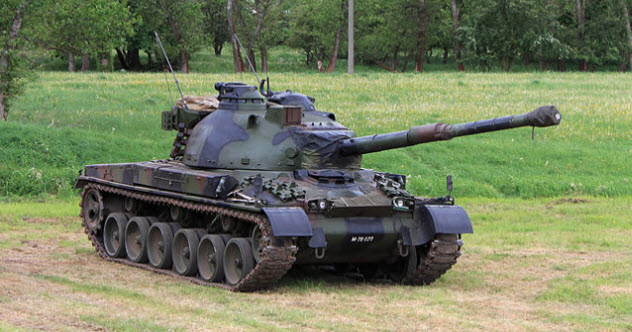

Editorial note: This article is a historical and safety-focused overview. It discusses military inventions as cautionary case studies in bad planning, overconfidence, unreliable engineering, and unintended consequences. It does not provide instructions for building, modifying, or using weapons.
Human history is full of inventions that looked brilliant on paper and then behaved like a caffeinated raccoon in real life. Military history, unfortunately, has some of the most dramatic examples. A weapon is supposed to solve a battlefield problem: cross a trench, sink a ship, breach a wall, stop an army, or scare an enemy into surrender. But sometimes the “solution” creates a larger problem than the one it was meant to fix.
The story of weapons that backfired is not just a gallery of odd gadgets and exploding hubris. It is a lesson in design limits, poor testing, rushed production, political pressure, and the dangerous belief that a dramatic idea is automatically a useful one. From torpedoes that circled back toward their own submarines to bat-based bombs that burned the wrong airfield, these cases prove that warfare plus wishful thinking is a very expensive recipe.
Below are ten real historical weapons and military projects that backfired in terrible ways. Some failed mechanically. Some failed morally. Some failed because nobody asked the simplest question: “What happens if this thing does exactly what physics says it will do?” Spoiler: physics usually wins.
1. Circular-Running Torpedoes: When “Fire and Forget” Became “Fire and Regret”
Few military failures are more horrifying than a torpedo that decides to make a U-turn. During World War II, U.S. submarines faced serious torpedo reliability problems, including cases where torpedoes made circular runs and threatened the vessel that fired them. The tragedy became brutally real with the submarine USS Tang, which was sunk in October 1944 after one of its torpedoes curved back toward the boat. U.S. Naval History records the fatal circular run, making it one of the clearest examples of a weapon literally turning on its own users.
The problem was not simply that the torpedo missed. Missing is bad; returning like an angry boomerang is worse. Submarine warfare depended on stealth, timing, and trust in equipment. When crews could not trust their own torpedoes, every launch carried an extra shadow of fear. The failure exposed a broader problem: a weapon can be powerful, expensive, and advanced, yet still become a liability if testing is incomplete or feedback from the field is ignored.
The lesson is painfully simple. In war, reliability is not a luxury feature. It is the difference between a tool and a disaster with serial numbers.
2. The Bat Bomb: A Plan That Went Up in SmokeOn the Wrong Side
The bat bomb sounds like something invented during a very strange committee meeting: attach small incendiary devices to bats, release them over enemy territory, and let the bats roost in buildings before the devices ignited. The concept came from World War II thinking about how to target flammable structures in Japan. But during testing in New Mexico, the project produced an unforgettable result: bats armed with test devices escaped and set fire to facilities at Carlsbad Auxiliary Army Air Field.
In other words, the weapon attacked its own test site. That is not ideal. It is also the kind of failure that makes even hardened military planners stare silently into the middle distance.
The bat bomb shows how biological unpredictability can ruin a neat engineering concept. Bats do not read mission briefs. They do not attend safety meetings. They do not care about military objectives. The idea tried to turn animal behavior into a guidance system, but animals are not machines. The project was eventually abandoned, and the atomic bomb made it strategically irrelevant. Still, the bat bomb remains one of history’s strangest reminders that “creative” and “wise” are not synonyms.
3. Japanese Fu-Go Balloon Bombs: A Long-Distance Weapon With Tragic Results
Japan’s Fu-Go balloon bombs were designed during World War II to cross the Pacific using high-altitude winds and reach North America. They were among the earliest intercontinental weapons in concept, and thousands were launched. Most caused little or no damage. But one balloon bomb killed six civilians near Bly, Oregon, in May 1945the only known enemy-caused deaths on the continental United States during World War II.
As a military strategy, the balloon campaign failed to produce the large-scale panic or damage its planners hoped for. As a human tragedy, however, it succeeded in the worst possible way: it harmed people who were not soldiers and had no warning of what they had found. The weapon backfired strategically because it consumed resources without changing the war’s outcome, while its most remembered result was civilian loss.
The Fu-Go campaign also shows the danger of weapons designed around uncertainty. Wind patterns, landing locations, public awareness, and recovery efforts were all unpredictable. A weapon that cannot be aimed with meaningful control is not just inefficientit is ethically and strategically reckless.
4. The V-2 Rocket: A “Wonder Weapon” With a Terrible Moral Backfire
The German V-2 rocket was technologically significant. It was the world’s first large-scale ballistic missile and influenced later rocket and space programs. But as a weapon, it did not save Nazi Germany, and its production carried a horrifying human cost. The Smithsonian and the U.S. Holocaust Memorial Museum document the use of concentration camp forced labor at Mittelbau-Dora, where prisoners suffered and died under brutal conditions linked to V-weapon production.
This is a different kind of backfire. The V-2 did not merely fail to reverse the war. It became a symbol of a regime sacrificing human beings for a desperate technological fantasy. Its military impact was limited compared with the resources poured into it, while its legacy is inseparable from forced labor, suffering, and war crimes.
The V-2 is often discussed as a milestone in rocket history, but that should never flatten the moral reality. A weapon can be advanced and still represent failure. In this case, the failure was strategic, economic, and deeply human.
5. Project Pluto: The Nuclear Missile Too Dangerous to Exist Comfortably
Project Pluto was a U.S. Cold War effort to develop a nuclear-powered ramjet engine for a supersonic low-altitude missile. The basic concept was terrifying: a missile that could fly fast and low for long distances, powered by a nuclear reactor. The program produced successful ground tests, including nuclear ramjet tests at the Nevada Test Site, but the broader weapon concept raised obvious safety and strategic problems.
Project Pluto backfired before deployment because its own strengths made it alarming. A nuclear-powered missile created environmental, testing, control, and escalation concerns. The question was not only “Can we build it?” but “Should anyone want this thing flying around?” By 1964, the project was canceled.
Its story is a classic case of technological momentum outrunning strategic sanity. Engineers proved that parts of the idea could work. Policymakers then had to face the larger reality: a weapon can be technically impressive and still be a nightmare to manage. Sometimes cancellation is not failure. Sometimes it is civilization quietly backing away from a cliff.
6. The Davy Crockett: A Portable Nuclear Idea With Giant Problems
The Davy Crockett was one of the smallest nuclear weapon systems ever deployed by the U.S. military. It was intended to give ground forces a tactical nuclear option during the Cold War. That sentence alone should make every sensible person blink twice and put down their coffee.
Brookings describes the Davy Crockett as a lightweight nuclear weapon system designed for use against Soviet troop formations in Europe. The problem was not simply its size. It was the concept: placing nuclear use closer to battlefield commanders raised enormous risks of escalation, misjudgment, and friendly danger. Even if the system was designed with procedures and controls, the strategic message was unsettling. Nuclear weapons are not ordinary artillery with a dramatic personality.
The Davy Crockett eventually left service, and it is now remembered as one of the Cold War’s most unnerving experiments. It backfired as a concept because it made nuclear war seem smaller, more tactical, and more usable. That is exactly the kind of thinking that can make a catastrophe easier to start.
7. The Great Panjandrum: The Rocket Wheel That Could Not Behave
The Great Panjandrum was a British World War II experimental weapon designed to breach German coastal defenses. Imagine a giant rocket-powered wheel intended to roll across a beach and smash into obstacles. Now imagine that same wheel wobbling, veering, shedding parts, and sending observers scrambling. That is basically the Panjandrum experience.
Tests in 1943 and 1944 showed the device was wildly difficult to control. Rockets detached, steering failed, and the machine behaved less like a precision breaching tool and more like a runaway carnival ride designed by a committee of pyromaniacs. It was never used in combat.
The Panjandrum failed because the idea confused motion with control. Moving fast toward a target is easy compared with moving accurately, safely, and repeatedly under battlefield conditions. Beaches are uneven. Rockets are temperamental. Giant wheels packed with destructive ambition do not become reliable just because someone drew a confident arrow on a diagram.
8. War Elephants at Zama: Nature Refused to Follow the Battle Plan
Long before rockets and submarines, armies tried to weaponize animals. War elephants could terrify infantry and break formations, but they could also panic, turn, and cause chaos among the troops they were supposed to help. At the Battle of Zama in 202 BCE, Hannibal’s Carthaginian elephants were neutralized by Roman tactics, with some animals becoming ineffective or disruptive rather than decisive.
The lesson is ancient but still relevant: fear-based weapons can frighten both sides. Elephants were powerful, intelligent animals, not machines. Noise, injury, confusion, and battlefield pressure could change their behavior. When that happened, the psychological weapon became a logistical and tactical hazard.
Zama is a reminder that a weapon built on panic may eventually create panic in the wrong direction. If your plan depends on a living creature staying calm in the loudest, most chaotic place imaginable, your plan may need another draft.
9. USS William D. Porter’s Torpedo Accident: A Training Error With Presidential Stakes
The destroyer USS William D. Porter became infamous for a 1943 incident during a convoy carrying President Franklin D. Roosevelt. During exercises, the ship accidentally launched a torpedo in the direction of the battleship USS Iowa, where Roosevelt was aboard. The situation was resolved without disaster, but it remains one of the most alarming naval accidents of the war.
This was not a weapon design failure in the same sense as the circular torpedo. It was a procedural and human-systems failure. The weapon did what a weapon does when launched; the backfire came from the circumstances around it. That is exactly why military safety culture matters. Machines are only part of the system. People, checklists, training, communication, and discipline are the rest.
The incident proves that even a standard weapon can become dangerous to its own side when process breaks down. In military history, “Oops” is not a small word. Sometimes it is nearly a constitutional crisis.
10. The Panzer VIII Maus: A Super-Heavy Tank Too Heavy for Reality
Nazi Germany’s Panzer VIII Maus was a super-heavy tank project meant to create an almost unstoppable armored vehicle. Instead, it became a monument to the dangers of confusing size with usefulness. The Maus was enormous, extremely heavy, mechanically difficult, and poorly suited to the mobile warfare environment Germany actually faced late in World War II.
Only prototypes were completed. The tank’s scale created transport, fuel, mobility, and reliability problems. A battlefield weapon that cannot easily reach the battlefield is less a weapon than a very expensive warehouse sculpture.
The Maus backfired because it absorbed attention and resources while offering little practical value. It reflected a broader pattern in late-war Germany: a belief that dramatic “wonder weapons” could compensate for collapsing strategy, industrial shortages, and battlefield reality. Bigger armor did not solve fuel shortages. Bigger guns did not solve logistics. Bigger dreams did not stop defeat.
Why Do Weapons Backfire?
These stories are entertaining in a dark historical way, but the underlying patterns are serious. Weapons backfire for several recurring reasons.
Overconfidence Beats Testing
Many failed weapons begin with a bold idea and insufficient testing. The concept looks persuasive in a presentation, but real conditions expose hidden flaws. Saltwater, mud, wind, animal behavior, panic, vibration, and human error do not care about confidence.
Political Pressure Rushes Bad Ideas Forward
Wartime leaders often demand miracles. That pressure can push engineers and commanders to approve weapons before they are ready. The result may be a system that is technically impressive but strategically foolish.
Complexity Creates New Failure Points
The more complicated a weapon becomes, the more ways it can fail. Nuclear propulsion, animal delivery systems, experimental guidance, massive vehicles, and delicate mechanisms all multiply risk. Complexity is not automatically bad, but unmanaged complexity is a trap wearing a lab coat.
Strategy Gets Replaced by Spectacle
Some weapons are built because they look terrifying. But terror is not the same as usefulness. The Maus, the Panjandrum, and Project Pluto all show how spectacle can distract from practical questions: Can it be controlled? Can it be supplied? Can it be used safely? Does it solve the actual problem?
Experience-Based Reflections: What These Failures Teach Modern Readers
Looking at these ten weapons from a modern perspective, the most valuable lesson is not “old engineers were silly.” Many of them were intelligent people working under pressure with limited information. The real lesson is that systems fail when decision-makers fall in love with an idea before they respect the risks around it.
In business, technology, engineering, and even everyday life, we see smaller versions of the same pattern. A team launches software without enough testing. A company buys a massive tool it cannot integrate. A manager adopts a flashy strategy because competitors will notice it. A student builds a complicated project the night before it is due and discovers that the printer, like the Panjandrum, has chosen chaos. The scale is different, but the logic is familiar.
The first experience-related lesson is to test under realistic conditions. The Panjandrum did not fail because wheels cannot roll. It failed because beaches, rockets, steering, and stability created a messy real-world environment. A prototype tested in ideal conditions may only prove that ideal conditions are pleasant. Real value comes from testing when conditions are awkward, noisy, wet, rushed, and imperfect.
The second lesson is to listen to people closest to the failure. Torpedo problems in World War II became worse when early warnings and field complaints were not handled quickly enough. In any organization, frontline feedback is gold. When the people using a system say, “Something is wrong,” leaders should not treat that as negativity. They should treat it as free disaster prevention.
The third lesson is to measure success honestly. A weapon that works technically may still fail strategically. Project Pluto showed that a nuclear-powered missile concept could be explored, but the broader implications were deeply troubling. Likewise, a modern product, campaign, or policy can hit its internal metrics and still damage trust, safety, or long-term goals. “It works” is not the same as “it is wise.”
The fourth lesson is humility. The bat bomb is funny until you remember it involved serious wartime planning and real danger. The Davy Crockett is fascinating until you consider how casually it pulled nuclear decision-making toward the battlefield. The V-2 is technologically important, but its forced-labor history demands moral clarity. These stories remind us that invention without humility can become cruelty, waste, or farce.
The fifth lesson is that simple questions save lives and resources. What happens if it misses? What happens if it turns around? What happens if the weather changes? What happens if operators are tired? What happens if the enemy adapts? What happens if it succeeds but creates a larger strategic problem? Good design is often less about genius and more about asking boring questions until the dangerous surprises have fewer places to hide.
For writers, students, and history fans, “weapons that backfired” is an attention-grabbing topic because it combines drama, irony, and consequences. But the deeper value is analytical. These cases show how technology interacts with human pride, institutional pressure, and ethical responsibility. The funniest failures are often funny only from a safe distance. Up close, they were warnings written in steel, smoke, money, and human cost.
So the next time someone calls a new idea “game-changing,” history suggests a useful reply: “Great. Has anyone tested it in mud, wind, panic, bureaucracy, and reality?” If the answer is no, congratulationsyou may be standing near the next Panjandrum.
Conclusion
The history of weapons that backfired is not just a parade of strange machines and failed experiments. It is a record of what happens when ambition outruns caution. The circular torpedo, the bat bomb, the Fu-Go balloons, the V-2, Project Pluto, the Davy Crockett, the Panjandrum, war elephants, naval accidents, and the Maus all reveal different kinds of failure. Some were mechanical. Some were strategic. Some were moral. All of them remind us that power without wisdom can turn around and bite the hand that launched it.
For modern readers, the biggest takeaway is simple: technology is never separate from judgment. The best invention is not the loudest, largest, fastest, or most frightening. It is the one that solves a real problem without creating a worse one. History’s failed weapons may seem bizarre, but their lessons are surprisingly modern. Test carefully. Listen honestly. Think ethically. And never assume that a big idea is safe just because it looks impressive on paper.