
There are ideas that sound slightly ridiculous until you try them. A 3D printed hook and loop fastener is one of those ideas. At first, it feels like asking a home 3D printer to make a sandwich, fold the laundry, and respectfully stop stringing PETG across the print bed. But the concept is real, surprisingly practical, and very much in the spirit of maker culture: take a common object, ask “Can I print that?”, and then spend the evening discovering that the answer is “yes, sort of, depending on filament, geometry, layer height, and how patient you are.”
Hook and loop fasteners are everywhere: shoes, cable ties, backpacks, medical braces, aerospace interiors, camera bags, tool rolls, kids’ costumes, and that one mystery strap in your junk drawer that looks important but has no known purpose. The classic version uses one surface covered in tiny hooks and another surface covered in loops. Press them together, and the hooks catch the loops. Pull them apart, and you get that familiar ripping sound that announces to everyone nearby, “A pocket is being opened.”
Now imagine making that mechanism on a desktop 3D printer. Instead of woven nylon, you use printed plastic. Instead of buying a roll of commercial fastener tape, you model hooks, loops, meshes, teeth, straps, or interlocking textures yourself. That opens the door to custom shapes, repair parts, experimental closures, cable management, wearable prototypes, modular fixtures, and a healthy amount of trial-and-error comedy.
What Is a 3D Printed Hook and Loop Fastener?
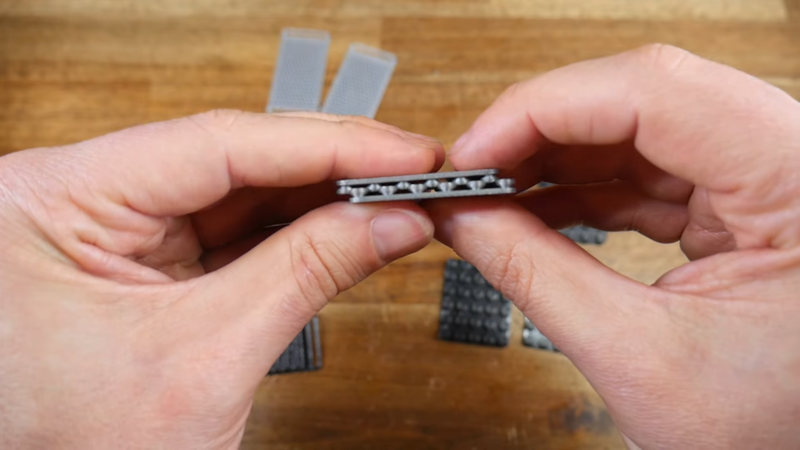
A 3D printed hook and loop fastener is a printed closure system inspired by traditional hook-and-loop tape. One printed side has small hook-like features, teeth, barbs, or ridges. The other side has loops, slots, mesh, bristles, grids, or flexible strands. When pressed together, the features mechanically catch, creating a temporary bond that can be peeled apart and reused.
The big difference is manufacturing. Traditional hook and loop tape is usually made from textile materials, often woven or molded at a very fine scale. A 3D printed version is built layer by layer from plastic filament, resin, or another printable material. That means the details are larger, the surface is stiffer, and the strength depends heavily on design and print quality.
In other words, 3D printing will not casually replace every commercial hook and loop product on Earth. Your sneakers are safe. But for custom projects, prototypes, unusual shapes, and one-off fastening problems, printed hook and loop designs can be surprisingly useful.
Why Makers Are Interested in Printing Fasteners
The appeal is not just that it is cool, although yes, it is extremely cool in a “look what my printer coughed up at 1 a.m.” sort of way. The real value is customization. A printed fastener can be shaped around the exact object it needs to hold. It can be built into a part instead of sewn, glued, or bolted on later. It can be resized, thickened, curved, reinforced, or made parametric so the design changes with a few measurements.
For makers, this is the magic zone. Need a cable strap that fits a weird bundle behind your desk? Print one. Need a temporary closure for a cosplay armor panel? Print one. Need a reusable strap for a bike accessory, drone battery, workshop jig, or small electronics enclosure? Print one, test it, break it, improve it, and print version two before dinner.
3D printing is especially useful when the fastener is part of a larger object. Instead of printing a bracket and then attaching commercial fastener tape, you can design the hook surface directly into the bracket. That reduces assembly, saves hardware, and creates cleaner prototypes.
The Trademark Elephant in the Workshop
Many people casually call hook and loop fasteners “Velcro,” but that word is a brand name. The generic term is “hook and loop fastener.” This distinction matters in published writing, product descriptions, SEO content, and professional documentation. It is also why the title says “Um” because most of us know exactly what we mean, then remember that trademarks are standing nearby with a clipboard.
Using “hook and loop” is more accurate when discussing 3D printed versions, especially if the product is homemade, experimental, or not made by the VELCRO Brand. It also helps avoid confusion between a specific commercial brand and the broader fastening mechanism.
How Hook and Loop Fasteners Work
The principle is simple: one side grabs, the other side receives. Traditional fasteners use hundreds or thousands of small hooks and loops. Each individual connection is weak, but together they create useful holding force. Pull straight across the surface, and many hooks resist at once. Peel from one corner, and the hooks release gradually.
That difference between shear force and peel force is important. Hook and loop fasteners are often strongest when the two surfaces slide against each other and weakest when peeled apart from an edge. A good 3D printed design needs to respect that same rule. If the printed hooks are too short, they do not catch. If they are too long, they snap. If the loop side is too stiff, nothing engages. If it is too soft, it becomes a sad plastic noodle festival.
What Makes 3D Printed Hook and Loop Difficult?
The challenge is scale. Commercial hook and loop tape uses tiny, dense textile features. A typical FDM printer has a nozzle around 0.4 mm wide, which is gigantic compared with textile fibers. Printing delicate hooks and loops with that limitation is like trying to carve lace with a garden hose.
Still, clever design can work around it. Instead of copying fabric exactly, printed fasteners can use larger hooks, mesh panels, flexible grids, comb-like teeth, or interlocking bristles. The goal is not microscopic imitation. The goal is functional mechanical engagement.
Resolution Matters
Small hooks need clean edges. A lower layer height can improve detail, while a smaller nozzle can help with finer features. However, tiny printed hooks may also become fragile. Strong printed fasteners often use slightly larger, more robust features rather than chasing perfect miniature textile geometry.
Material Matters Even More
A printed fastener needs a balance of stiffness and flexibility. If the hook side is too brittle, the hooks break. If it is too rubbery, they bend without grabbing. The loop or mesh side also needs enough flexibility to deform and enough resilience to spring back after release.
Print Orientation Can Make or Break It
Layer lines are not just cosmetic. In tiny hooks, they can become failure points. A hook printed so that pulling force separates layers may snap quickly. Orienting the part so stress runs along continuous extrusion paths can improve durability. This is where 3D printing becomes less “push button, receive miracle” and more “geometry chess with melted plastic.”
Best Materials for 3D Printed Hook and Loop Fasteners
Different filaments behave very differently in hook and loop experiments. The best material depends on whether you need flexibility, stiffness, toughness, or repeated use.
PETG: A Strong Everyday Candidate
PETG is often a strong choice for printed hook and loop designs because it offers a useful mix of toughness, slight flexibility, and layer adhesion. It is less brittle than PLA and less floppy than many TPU filaments. PETG can also produce fine stringing, which is usually annoying, but in this very specific case, tiny strings can sometimes help create extra catching texture. Finally, stringing has found its purpose. We should all be so lucky.
PLA: Easy to Print, But Often Too Brittle
PLA is easy, crisp, and widely available. It can create clean details, which sounds perfect for hooks. The problem is brittleness. Thin PLA hooks may snap after repeated use, especially if the fastener is bent or peeled aggressively. PLA can still work for demonstrations, light-duty prototypes, and rigid hook surfaces, but it is not always the best choice for flexible straps.
TPU: Flexible, Durable, and Sometimes Too Soft
TPU is a flexible filament with strong abrasion resistance and impact absorption. That makes it attractive for straps, wearable parts, grips, and flexible closures. However, very flexible TPU may not grip firmly as a hook surface because the hooks bend away instead of biting into the loop side. TPU can work better for the loop, mesh, or strap portion, while a stiffer material may work better for the hooks.
Nylon and Engineering Filaments
Nylon can be tough and fatigue-resistant, making it a possible candidate for durable printed fasteners. It is also more demanding to print because it absorbs moisture and often needs controlled conditions. For casual users, PETG is usually easier. For advanced users, nylon and fiber-reinforced materials may be worth testing for stronger hook structures.
Design Ideas That Actually Make Sense
The best 3D printed hook and loop fasteners do not simply copy fabric. They rethink the mechanism for additive manufacturing. Here are several practical design approaches.
Printed Hook Strip and Mesh Receiver
This is the most recognizable approach. One side has rows of small hooks. The other side has a printed mesh or grid. When pressed together, the hooks catch the openings. This can work well for straps, closures, and cable organizers.
Comb Teeth and Flexible Slots
Instead of delicate hooks, the fastener can use angled teeth that slide into flexible slots. This design is more like a reusable ratchet or snap system than textile hook and loop, but it serves the same purpose: quick, adjustable fastening.
Integrated Cable Straps
A printed strap can include a flexible band, a hook-textured end, and a receiving panel in one piece. This is useful for cable management, small tool bundles, and temporary workshop organization. For flexible straps, TPU or flexible PLA may be useful, while the gripping area may need thicker geometry to hold shape.
Modular Panels
For enclosures, wall mounts, and storage systems, hook-like printed surfaces can be built into panels. Small accessories can then attach, detach, and move around. This concept is useful for prototyping modular organizers or temporary fixtures.
Where 3D Printed Hook and Loop Fasteners Shine
Printed fasteners are best when customization matters more than mass production. A commercial roll of hook and loop tape is cheap, strong, and reliable. Competing with that directly is not the point. The point is solving odd problems that store-bought tape does not fit.
Prototyping Wearables
Wearable prototypes often need adjustable closures. A printed fastener can be integrated into a wristband, sensor mount, brace, costume piece, or ergonomic test device. Designers can quickly modify the size, angle, stiffness, and attachment point.
Electronics and Cable Management
Custom cable clips, battery straps, sensor mounts, and wire organizers are perfect candidates. A printed hook and loop strap can be made to fit a specific cable bundle or device housing.
Robotics and Soft Mechanisms
In robotics, 3D printing is already used for grippers, flexible joints, tendons, pads, and lightweight structures. Printed fastening systems can support modular robot skins, removable sensor packs, or quick-swap components.
Repairs and One-Off Parts
Sometimes the best 3D print is not glamorous. It is a weird little part that saves something from the trash. A printed fastening tab, strap, clip, or closure can extend the life of a bag, case, tool holder, or appliance accessory.
Where Printed Fasteners Fall Short
There are limits. Printed hook and loop is not usually as soft, quiet, thin, or durable as commercial textile fastener tape. It may also be uncomfortable against skin if the geometry is too sharp. Small hooks can wear down, snap, or lose grip after repeated cycles. TPU can stretch too much. PLA can crack. PETG can deform in heat. Nylon can absorb moisture. Every filament arrives with a personality, and some of them need a nap.
Another issue is print time. A small strap may take far longer to print than it would take to cut a piece of commercial tape. For mass use, buying standard hook and loop tape still makes sense. For custom geometry, integrated features, and experimental projects, printing becomes more attractive.
Practical Printing Tips
Start simple. Print a small test coupon before committing to a full strap or large panel. Try different hook sizes, spacing, angles, and receiving mesh patterns. Test shear strength by sliding the pieces apart and peel strength by lifting from one edge.
For PETG, tune retraction carefully but do not panic if a little stringing appears. In some printed fastener designs, extra texture may help engagement. For TPU, slow down the print speed and reduce extruder back pressure. Flexible filament often behaves better with direct-drive extruders, dry filament, and conservative retraction settings.
Use thicker bases for strength. Thin hook fields may curl or flex too much. Add fillets where hooks meet the base to reduce stress concentration. Avoid extremely sharp transitions. If the fastener is meant to bend, design a dedicated flexible section rather than forcing the hook field itself to do all the bending.
Is 3D Printed Hook and Loop Actually Useful?
Yes, with realistic expectations. A printed hook and loop fastener is not a universal replacement for commercial tape. It is a custom fastening tool. It works best when the shape matters, when the closure is part of a printed object, or when you need a prototype today instead of waiting for parts.
The most exciting thing is not that makers can print a familiar fastener. It is that they can redesign fastening itself. Once a closure is digital, it can be curved, scaled, embedded, combined with hinges, printed in multiple materials, or customized for a specific load. That is where 3D printing becomes more than a novelty. It becomes a design language.
Real-World Experiment: A Maker’s Experience With 3D Printed Hook and Loop Fasteners
My first experience with 3D printed hook and loop fasteners started the way many 3D printing adventures begin: with excessive optimism and a print profile that had no business being trusted. The idea seemed simple. Print a strip of hooks, print a flexible mesh, press them together, and enjoy the satisfying victory of homemade fastening technology. Naturally, the first version looked like a tiny plastic rake had lost a fight with a spaghetti monster.
The PLA version printed beautifully at first glance. The hooks were crisp, the edges were sharp, and the part looked professional enough to photograph from a flattering angle. Then I bent it. Several hooks snapped immediately, making the cheerful little cracking sound that says, “Your design review has begun.” PLA was fine for a rigid sample, but as soon as the fastener needed flex, the material became less enthusiastic.
PETG was the first version that felt genuinely promising. It was tougher, slightly springy, and more forgiving during peeling. The hooks did not look quite as sharp as PLA, but they survived better. Even the stringing, normally my sworn enemy, gave the surface a fuzzy texture that helped the hook side catch the mesh. It felt wrong to reward stringing, but engineering is full of emotional growth.
TPU was fun but tricky. As a strap material, it was excellent. It wrapped around objects nicely and handled bending without complaint. As a hook material, however, it was often too flexible. The hooks bent away instead of grabbing firmly. A thicker TPU hook helped a little, but at that point the design started acting more like a soft latch than a hook and loop surface. The best result came from combining ideas: flexible strap geometry with a stiffer gripping area.
The most useful prototype was not a perfect imitation of commercial hook and loop tape. It was a custom cable strap. The printed band wrapped around a bundle of charging cables, while a small field of angled PETG hooks caught into a printed grid. It did not have the elegant softness of textile tape, but it worked. More importantly, it fit the exact cable bundle, included a small label tab, and could be reprinted in different lengths.
The biggest lesson was that 3D printed fasteners reward iteration. Tiny changes matter. A hook angle of 35 degrees may work better than 45 degrees. A mesh opening that looks generous on screen may be too tight after extrusion. A base that seems sturdy in the slicer may flex just enough to reduce grip. Testing small samples saves time, filament, and the emotional damage of watching a six-hour print fail at being sticky.
I also learned to test fasteners in the direction they will actually be used. A design that feels strong when pulled sideways may peel open easily from one corner. For cable straps, that may be fine. For a wearable closure, it may be annoying. For a load-bearing mount, it may be a bad idea wearing a tiny plastic hat. Printed hook and loop should be treated as a functional prototype unless it has been properly tested for the job.
In the end, the experience was worth it because it changed how I thought about closures. Instead of asking, “Where can I stick commercial fastener tape?” I started asking, “Can the fastening feature be part of the printed object?” That is the real value. 3D printed hook and loop fasteners are not always prettier, cheaper, or stronger than the store-bought version. But they are customizable, remixable, and surprisingly clever. For makers, that is often enough to justify the filament, the tinkering, and yes, even the occasional spaghetti monster.
Conclusion
3D printed hook and loop fasteners sit in that delightful maker-space between practical engineering and “I wonder if this will work.” They are not perfect replacements for commercial textile fasteners, but they offer something commercial tape cannot: complete design control. With the right material, thoughtful geometry, and patient testing, printed fasteners can become cable straps, wearable closures, modular mounts, repair parts, and experimental mechanisms.
The key is to design for 3D printing rather than simply copying fabric. Use stronger hooks, printable mesh, flexible straps, smart orientation, and materials that match the job. PETG often offers a useful balance, PLA can work for rigid demonstrations, and TPU shines in flexible strap sections. The best results come from iteration, because every printer, filament, and fastening problem has its own personality.
Note: This article is written for web publishing and is synthesized from real-world information about hook and loop fastening, desktop 3D printing, flexible filaments, maker experiments, and additive manufacturing design practices.