
Opening a messy closet can feel like launching a surprise attack on yourself. A sweater slides off the shelf. A shoe disappears into the Bermuda Triangle. Three empty hangers are tangled together like they are training for a circus act. The good news? You do not need a celebrity-size walk-in closet to have a space that works beautifully. You need a clear plan, smart storage, and the courage to admit that the jeans from 2014 may have completed their service.
Learning how to organize a closet and maximize every inch of space is really about designing a system around your real life. Not your imaginary life where you fold everything into perfect rectangles while drinking cucumber water. Your actual life. The one with rushed mornings, laundry piles, favorite outfits, seasonal jackets, backup towels, and that one tote bag full of mysterious tote bags.
This guide walks you through practical, affordable, and realistic closet organization ideas that work for small closets, shared closets, reach-in closets, rental closets, and even the “technically a closet but emotionally a cave” situation. Let’s turn chaos into usable space.
Why Closet Organization Starts Before You Buy Anything
The biggest mistake people make when organizing a closet is buying bins, baskets, racks, and dividers before they know what they actually need. That is how you end up with a pile of beautiful containers holding clutter in a more expensive outfit.
Before shopping for closet organizers, start with editing. A closet cannot function well if it is packed with clothes, shoes, accessories, and random household items you no longer use. The goal is not to create a showroom closet. The goal is to make your daily routine smoother.
Take Everything Out First
Yes, everything. Remove clothes, shoes, bags, belts, hats, linens, storage boxes, and anything hiding in the back. When the closet is empty, you can finally see its real size, shelf layout, corners, dead space, rod height, and storage potential. It also gives you a rare chance to vacuum the floor, wipe shelves, and apologize to the dust bunnies for disturbing their civilization.
Place items into four simple categories: keep, donate, sell, and discard. If something is damaged beyond repair, let it go. If it does not fit, does not match your current style, or has not been worn in a long time, consider donating or selling it. If you love it and use it, it earns its place back.
Ask Better Decluttering Questions
Instead of asking, “Could I wear this someday?” ask, “Would I choose this this month?” That one word changes everything. “Someday” is where clutter goes to retire. Use questions like:
- Does this fit my body and lifestyle right now?
- Is it comfortable enough that I actually reach for it?
- Can I create several outfits with it?
- Is it worth the space it takes up?
- Would I buy it again today?
If the answer is no, the item may be living rent-free in prime closet real estate.
Measure Your Closet Like a Pro
Once the closet is empty, measure the width, depth, height, rod length, shelf height, door clearance, and floor space. Write everything down before buying a single organizer. This is not glamorous, but neither is returning a shoe rack that is half an inch too wide while questioning all your life choices.
Look for unused zones. Most closets waste space in predictable places: above the top shelf, behind the door, below short-hanging clothes, in corners, and along side walls. These areas are storage gold when used properly.
Create Closet Zones Based on How You Get Dressed
A closet should support your routine. That means items you wear often should be the easiest to reach. Occasional items should go higher, lower, or farther back. Think of your closet like a tiny apartment building. Everyday clothes get the sunny front units. Formalwear and ski pants get the attic.
Organize Clothes by Category
Group similar items together: shirts with shirts, pants with pants, dresses with dresses, jackets with jackets, workout clothes with workout clothes. This makes it easier to see what you own and prevents duplicate buying. You may discover you do not need another black T-shirt because you already have enough to outfit a small stage crew.
Then Sort by Length and Color
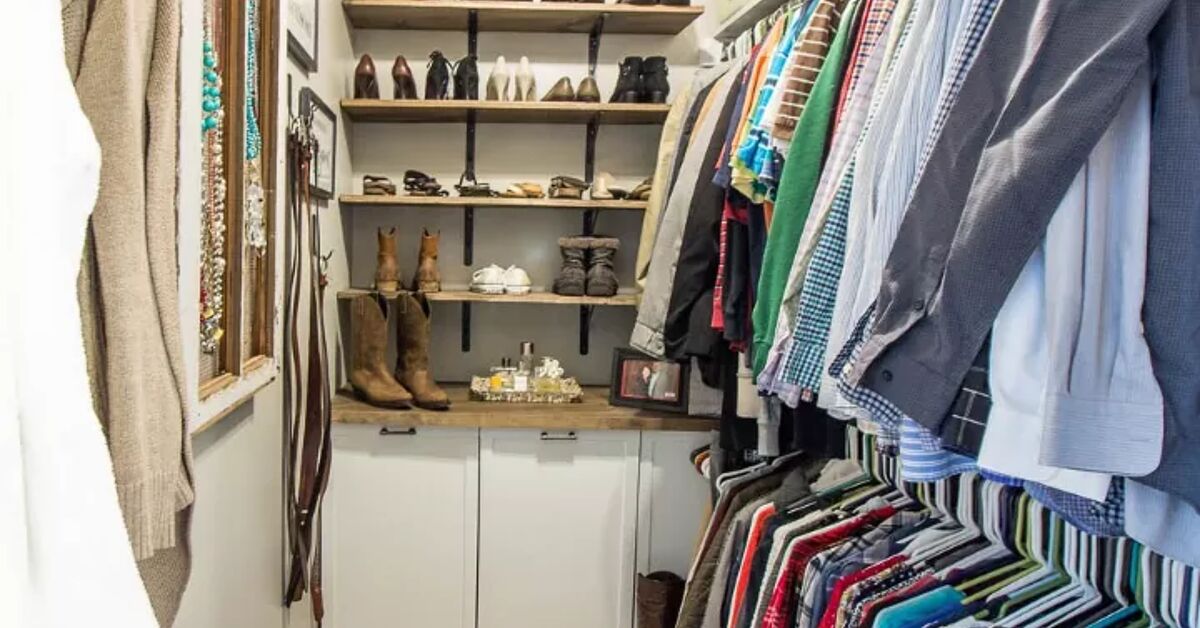
After grouping by category, arrange hanging clothes by length. Put short-hanging items like shirts, skirts, and folded pants together. Place longer items such as dresses, coats, and jumpsuits at one end. This opens valuable floor space under shorter garments for shoe racks, bins, or small drawer units.
If you want an extra polished look, sort each category by color. It is not required, but it makes the closet easier to scan and gives it that satisfying “I have my life together” feeling, even if your laundry basket tells a different story.
Use Slim Hangers to Instantly Save Space
Bulky hangers are quiet little space thieves. Swapping mismatched plastic and wooden hangers for slim velvet or non-slip hangers can make a closet feel roomier almost immediately. Matching hangers also reduce visual clutter, which helps the space look calmer and more intentional.
Keep only a small number of empty hangers in the closet. Too many empty hangers create tangles and take up unnecessary rod space. Store extras in a laundry area or bin so they are available without turning your closet into a hanger jungle.
Double Your Hanging Space
If your closet has one rod and most of your clothes are shirts, blouses, jackets, skirts, or folded pants, you are probably wasting vertical space. A second hanging rod can nearly double usable hanging storage. Put tops on the upper rod and shorter bottoms on the lower rod.
For renters or anyone who does not want to drill, a hanging rod doubler or tension rod can be a useful temporary option. Just keep weight limits in mind. A tension rod is great for scarves or lightweight garments, not for every winter coat you own plus emotional baggage.
Make the Closet Door Work Harder
The back of the closet door is one of the most overlooked storage areas. Add an over-the-door organizer for shoes, scarves, gloves, belts, small bags, hair tools, rolled T-shirts, or accessories. Clear pockets are especially useful because they let you see everything at a glance.
Hooks also work well on closet doors or side walls. Use them for tomorrow’s outfit, a robe, handbags, hats, jewelry, or reusable shopping bags. The trick is not to overload hooks until the door looks like it is wearing twelve coats. Keep it useful, not chaotic.
Use Shelves, Shelf Dividers, and Stackable Bins
Closet shelves are helpful until folded clothes start leaning like a badly planned tower. Shelf dividers solve this problem by keeping stacks upright and separated. Use them for sweaters, jeans, handbags, towels, or bulky sweatshirts.
Stackable bins or clear drawers work well for items that do not hang neatly. Think seasonal accessories, swimsuits, workout gear, small purses, hats, or folded basics. Clear bins are great because you can see what is inside. If you use opaque bins, label them. A bin labeled “winter hats” is helpful. A mystery bin is just clutter wearing a lid.
Use the Floor Without Creating a Pile Zone
The closet floor can be incredibly useful, but only if it has structure. A shoe rack, low shelf, rolling drawer, or labeled bin can turn floor space into organized storage. Without structure, the floor becomes a landing pad for shoes, bags, laundry, receipts, and one sock with no known family.
For shoes, use a tiered rack, cubbies, clear shoe boxes, or a hanging organizer. Keep your most-worn pairs at eye level or easy reach. Store special-occasion shoes higher, lower, or under the bed. If you own many shoes, group them by type: sneakers, sandals, boots, dress shoes, and everyday pairs.
Store Seasonal Items Somewhere Else
One of the easiest ways to maximize closet space is to remove what you are not using this season. Heavy coats, bulky sweaters, boots, beachwear, and holiday outfits do not all need front-row seats year-round.
Use under-bed boxes, vacuum storage bags, high shelves, or labeled storage containers for off-season clothing. Before storing anything, make sure it is clean and dry. Future you will not appreciate opening a storage bag that smells like last winter’s soup adventure.
Fold Smarter, Not Harder
Drawers and bins become more useful when clothing is folded vertically instead of stacked flat. File-fold T-shirts, leggings, pajamas, and workout clothes so each item stands upright. This lets you see everything at once and prevents the classic “pull one shirt, destroy the pile” disaster.
Rolling can also work for casual clothes, scarves, and travel items. The best folding method is the one you can maintain. If a system requires the patience of a museum curator, it may not survive laundry day.
Use Labels to Keep the System Alive
Labels are not just for people who own label makers and speak lovingly about drawer dividers. Labels reduce decision fatigue. They tell you where things belong, and they help everyone in the household follow the same system.
Use simple labels such as “workout,” “winter,” “bags,” “belts,” “sweaters,” “donate,” and “travel.” Avoid overly specific labels unless you truly need them. “Blue scarves worn during chilly but optimistic weather” may be emotionally accurate, but it is not necessary.
Design for Visibility
If you cannot see it, you probably will not use it. Closet organization works best when items are visible, accessible, and easy to return. That is why clear bins, open shelves, labeled baskets, slim hangers, and category zones are so effective.
Avoid deep piles and overstuffed containers. The moment you need to remove four things to reach one thing, the system becomes annoying. And when a system becomes annoying, clutter throws a party.
Small Closet Organization Ideas That Make a Big Difference
Use Corners Creatively
Corners are often wasted in closets. Add corner shelves, hooks, or a small basket for accessories. In a walk-in closet, an L-shaped rod or corner shelving unit can increase storage without taking up much extra room.
Add a Small Dresser or Drawer Unit
If you have open space below short-hanging clothes, place a compact dresser or drawer unit underneath. This works well for socks, underwear, folded T-shirts, accessories, or gym clothes. It is especially helpful in bedrooms without much furniture space.
Install Lighting
A dark closet feels smaller and messier. Battery-powered LED lights, motion-sensor lights, or stick-on lights can make a huge difference. Better lighting helps you see colors, find items faster, and avoid wearing navy and black together by accident unless that is the plan.
Use Matching Containers
Matching bins, baskets, or hangers make a closet look calmer even when it contains many items. The goal is visual consistency. Your closet does not need to be fancy, but it should not look like five storage systems had a disagreement.
How to Maintain an Organized Closet
Organizing a closet once is helpful. Maintaining it is the real victory. The best closet system is simple enough to reset in five minutes.
Try a weekly mini-reset. Put stray items back, remove empty hangers, return shoes to their place, and toss laundry into the hamper. Once a month, scan for items you no longer wear. Keep a small donation bag nearby so letting go becomes easy and automatic.
Another helpful habit is the one-in, one-out rule. When you buy a new sweater, donate or sell one sweater you no longer use. This keeps your closet from slowly expanding until the door requires negotiation.
Common Closet Organization Mistakes to Avoid
Buying Organizers Too Soon
Declutter and measure first. Buy storage second. Otherwise, you may organize items you should have removed or buy products that do not fit your space.
Keeping Too Many “Maybe” Clothes
Maybe clothes are dangerous. Maybe you will wear it. Maybe it will fit. Maybe it will come back in style. Maybe a raccoon will become your personal stylist. Keep clothes that serve your current life.
Ignoring the Top Shelf
The top shelf is perfect for seasonal bins, handbags, keepsake clothing, or occasional-use items. Use labeled containers so the shelf does not become a blurry pile of “I’ll deal with it later.”
Overstuffing Bins
Bins should make things easier to find, not create compact clutter bricks. Leave a little breathing room so items can be removed and returned without a wrestling match.
Creating a System That Is Too Complicated
If your closet requires too many steps, you will stop using it. Keep the system obvious. Everyday items should be easy to grab and easy to put away.
Real-Life Experiences: What Actually Works When Organizing a Closet
After helping organize closets of different sizes, the biggest lesson is simple: the closet usually is not too small at first. It becomes too small because it is asked to store too many decisions. Old decisions, future decisions, fantasy-life decisions, and the occasional “I bought this on sale and now we are legally bonded” decision.
One of the most useful real-world tricks is creating a “test zone.” Instead of forcing yourself to get rid of every questionable item immediately, place uncertain pieces in a labeled bin outside your main closet. Give yourself a set period, such as 30 to 60 days. If you do not go looking for those items, that tells you something. The closet becomes easier to edit when the pressure is lower.
Another experience-based tip: do not underestimate the emotional power of empty space. Many people try to use every inch so aggressively that the closet becomes hard to use again. A little open space is not wasted space. It is working space. It lets hangers move, shoes breathe, drawers open, and your brain relax. A closet packed to 100 percent capacity will almost always become messy again because there is no room to maintain order.
Slim hangers are also more powerful than they look. In many closets, simply replacing bulky hangers creates enough space to separate categories clearly. But the key is replacing hangers, not adding more hangers. If you buy 50 new hangers and keep all the old ones in the closet, congratulations: you have organized the problem into a larger problem.
For small closets, the back of the door is often the hero. Over-the-door pockets can hold shoes, scarves, gloves, belts, small bags, rolled leggings, travel items, or accessories. But the best use depends on your habits. If you always lose belts, store belts there. If you forget about accessories, make them visible. Organizing is not about copying a perfect photo; it is about solving the tiny frustrations that happen every day.
Seasonal rotation also works better when it is tied to a calendar moment. For example, switch your closet when the weather clearly changes, not when you suddenly become a new person with unlimited motivation. Wash items, store them in labeled containers, and keep only the current season in your main closet. This makes getting dressed faster and prevents bulky items from swallowing valuable space.
The most successful closets usually have a donation bag nearby. Not a giant guilt box. Just a small bag. When something feels wrong, itchy, outdated, uncomfortable, or ignored, it goes in the bag. Once the bag is full, it leaves the house. This habit prevents the closet from becoming a museum of almost-good clothing.
Finally, the best closet organization system is forgiving. Some weeks will be messy. Laundry will happen. Shoes will migrate. A good system can recover quickly. If you can reset the closet in five to ten minutes, you have built something realistic. That is the real goal: not perfection, but a closet that helps you start the day without fighting a pile of sweaters before breakfast.
Conclusion: Every Inch Counts, But Simplicity Wins
Learning how to organize a closet and maximize every inch of space does not require a full renovation or a luxury custom system. Start by removing what you do not use. Measure the space. Group items by category. Use slim hangers, double rods, shelves, bins, hooks, and over-the-door organizers to turn wasted areas into useful storage.
Most importantly, build a closet around your real habits. If you make items easy to see, easy to reach, and easy to put away, your closet will stay organized much longer. And the next time you open the door, nothing should fall on your head. That alone is worth celebrating.